electrocd

Blog

62 results
  • 3
  • 4
  • 5
  • 6
  • 7
  • 8
  • 9
  • 10
  • 11
  • Images nomades in To Periodiko

    “Review”, Antonis N Frangos, To Periodiko, January 16, 2021
    Monday, January 18, 2021 Press

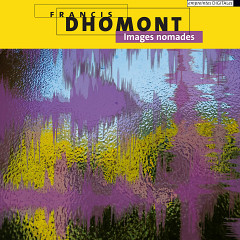
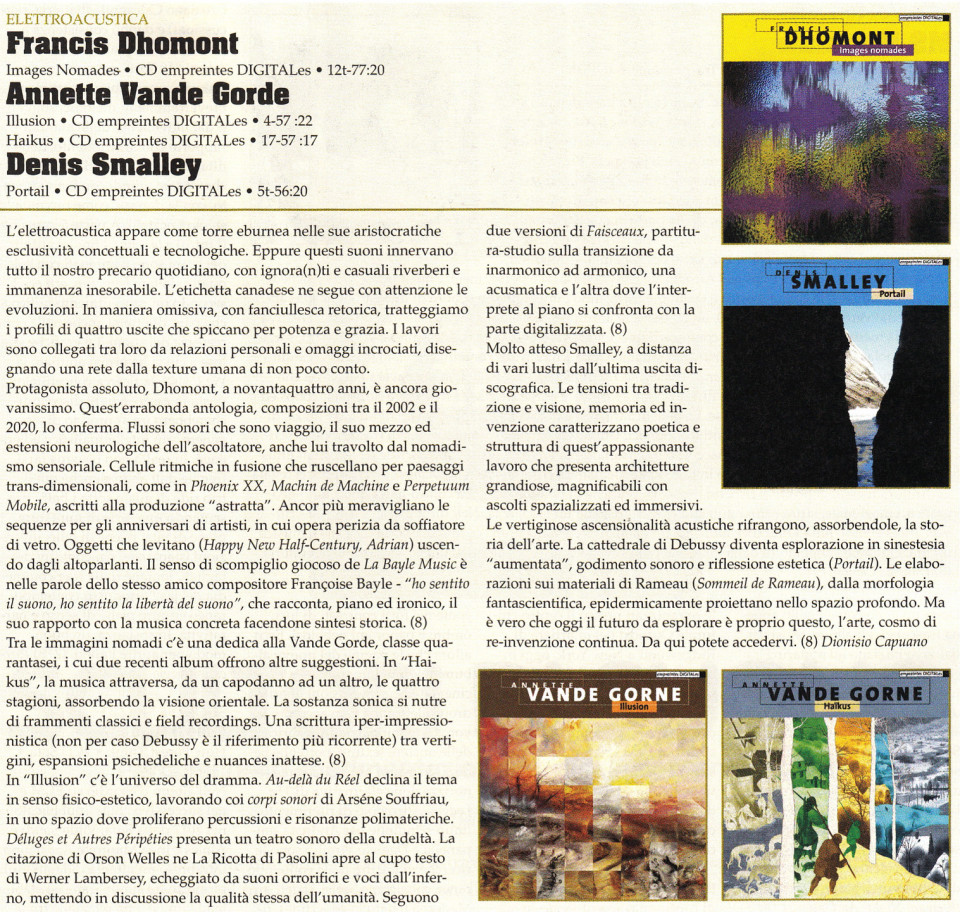
    Ο μονόφθαλμος Γάλλος συνθέτης ηλεκτροακουστικής μουσικής Francis Dhomont ηχογράφησε πρόσφατα το έργο “Images nomades” το οποίο αποτελείται από δυο μάλλον διαφορετικά στιλιστικά μέρη ιδίας χρονικής διάρκειας: το πρώτο αποτελείται από τρεις παλιότερες abstrait δουλειές, το δεύτερο αφιερώνει τα εννιά κομμάτια του σε αντίστοιχες μουσικές επετείους διαφόρων συνθετών. Υπάρχουν κατά κάποιο τρόπο «ρυθμικά μοτίβα» -διαφοροποιήσεις στην πυκνότητα και την ένταση του ήχου που συγκεντρώνεται σε clusters, με ακούσματα βροχής και με αναμόρφωση της τονικότητας και των αντηχήσεων. Ούτως, έχουμε καθαρά έργα χωρίς συμβολισμούς αλλά και έργα γεμάτα μεταφορές στην ποίηση, τη λογοτεχνία, τη ψυχανάλυση κτλ.

    Thus, we have pure works without symbolism but also works full of metaphors in poetry, literature, psychoanalysis, etc.

    Haïkus by Jean-Pierre Deleuze

    “Note”, Jean-Pierre Deleuze, January 15, 2021
    Friday, January 15, 2021 Press

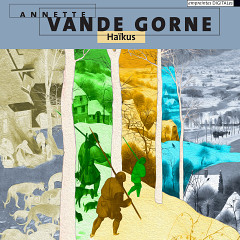
    J’ai adoré tes Haïkus. Celui du Jour de l’an m’a particulièrement impressionné; quelle luxuriance sonore! J’ai remarqué aussi un subtile mélange de timbres de cloches extrême-orientale et occidentale en un spectre très imagé et toujours en mouvement… Bravo et encore bravo!

    … quelle luxuriance sonore!

    Haïkus by Francis Dhomont

    “Note”, Francis Dhomont, January 15, 2021
    Friday, January 15, 2021 Press

    J’ai écouté tes Haïkus avec grande attention. Même en stéréo la variété et la richesse polyphonique des différents «climats» musicaux s’imposent. Je ne suis pas sûr que les références, tant musicales que saisonnières, auxquelles tu renvois soient toutes perçues par l’auditeur, mais qu’importe… elles ont guidé ta création et il en reste assurément quelque chose à l’écoute. Belle œuvre bien construite, à la fois renouvelée et homogène. Une réussite.

    Belle œuvre bien construite, à la fois renouvelée et homogène.

    Histoires d’histoire in Avant Music News

    “AMN Review”, Michael Eisenberg, Avant Music News, January 12, 2021
    Thursday, January 14, 2021 Press

    In my label introduction, I mentioned that the music on empreintes DIGITALes generally falls into the Acousmatic / Electroacoustic / musique concrète style. Well, I’m going to have to take issue (with myself at least) because, as the good Captain Beefheart said, “Labels are for cans, man”. Paul Dolden’s 2017 mega-epic does not really fit the mold. I realize this release may be an odd one to start this series with but since I’ve been bingeing on Dolden’s music for the better part of 3 weeks now, this is where we begin.

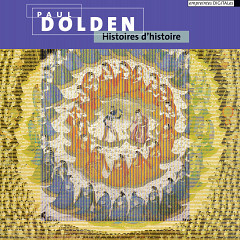
    Dolden has been composing and recording for well over 3 decades now but only has a surprisingly few releases that have made it out into the wild. Histoires d’histoire is his latest. I’ve heard and greatly enjoyed most of his material and I would feel comfortable in saying he’s a slow but extremely meticulous, exacting composer. And why shouldn’t he be? Wouldn’t you be slow too if you were layering hundreds upon hundreds of tracks on top of each other? Wouldn’t you want to take your time to get that mix just right so you can hear EVERYTHING that is going on within these layers? Wouldn’t you have to master what I can only imagine to be a huge learning curve to conquer, or at least tame the tech that allows you to create such massive monoliths of sound?

    And what about the compositions themselves? Shouldn’t it take, like forever to compose, let alone arrange this exceedingly (to my ears) complex music? Wouldn’t the painstaking work of documenting this work with scores take awhile? One would certainly think you would need some musical chops to play this complex music, right? When you’re living in Dolden’s world, the answers to all these rhetorical questions is, of course, a resounding YES?

    Defending his work ethic aside, on to the music itself. I’ve seen the term “maximalist” thrown around quite a bit when describing his work (labels/cans… I know). This music definitely inhabits the “more is more” realm. You can begin anywhere within this 80-minute album and the first thing you will probably notice (after your brain re-sets itself to assimilate the microtonal, odd tunings, and polyrhythms he liberally employs), is the sheer amount of detail in each piece. Electric guitars and keyboards (the Electro) stand proudly next to the army of flutes, brass, cello, choir, percussion, and trap sets (the Acoustic) to create a living, breathing beast of a thing. Certainly, something that takes a myriad of listens to even begin to understand, if understanding it is indeed possible. Yeah, this music takes work.

    The work will pay off though, depending on your attentiveness and personal ear it may be sooner, or later, but it will pay off. Without going into detail about each and every piece, the album is comprised of 3 long compositions. The first 44-minute piece, Music of Another Present Era is further subdivided into 5 shorter parts. The remaining 2 pieces are shorter, clocking in at 18 minutes and 16 minutes respectively. On this album, Dolden is exploring musics multi-cultural qualities by creating a mishmosh of sounds and moods that are constantly morphing in and around, and back in again to each other.

    I can’t really think of many composers working in this style. Dolden’s sound is “unique” to say the least. As possible signposts, Dirk “Mont” Campbell’s Music from a Round Tower may point you in a similar direction. Jade Warrior’s Island label releases also give off a similar vibe. Biota/Mnemonists maybe for their recording techniques? None will get you close to the breadth, depth, and overall “bigness” of sound though. Give this album a listen, and prepare to fractalize yourself.
    This music definitely inhabits the “more is more” realm. […] Dolden’s sound is “unique” to say the least. […] Give this album a listen, and prepare to fractalize yourself.

    Portail in ambientblog.net

    “Review”, Peter van Cooten, ambientblog.net, January 6, 2021
    Monday, January 11, 2021 Press

    Portail is released on the Empreintes Digitales label, which means you’re about to embark on some mind-boggling electroacoustic soundscapes. Such is definitely the case on this release, even though the music presented here may be somewhat more accessible than other releases on the label.

    Denis Smalley (b. 1946) is a veteran of the electroacoustic music scene. He studied in Olivier Messiaen’s composition class in Paris and took the electroacoustic music course run by the GRM (Groupe de Recherches Musicales). Initially, he worked with tape, but in the early 80’s he switched to using computer software. A true pioneer of electroacoustic music, its practice and its theory.

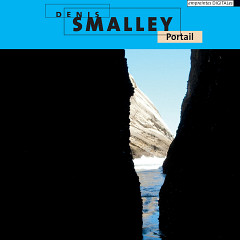
    Portail is Smalley’s third release (on Empreinted Digitales) after a 20-year ‘pause’. It presents recent multichannel works: Fabrezan Preludes (2015-2016) and Sommeil de Rameau (2014-15). Both were originally composed for 8-channels (oh man, I wish… don’t get me started…), but are converted to stereo ambisonics for this release (by Jonty Harrison) — so headphone listening is recommended.

    Also included is one of his earliest compositions: The Pulses of Time (1978), which, by the way, is quite different from the previous two compositions.

    In the two recent works, some titles refer to classical composers: Sommeil de Rameau (‘Rameau’s Sleep’), of course, and also Debussy’s Cathedral, directly referring to Debussy’s La cathédrale engloutie (The Submerged Cathedral).

    The last title alone made me think of the reinterpretation of this piece by Isao Tomita on his 1974 debut album Snowflakes Are Dancing. And from there I realized there were similarities in the approach of this material (which can best be heard in Sommeil de Rameau), even when there are fundamental differences too. Unlike Tomita, Smalley doesn’t aim to meticulously re-create the classical score: his compositions are entirely his own. And I assume that the techniques used to create this music are also completely different.

    But in taking “the transformation and development of a pair of resonant chords from Debussy’s piano prelude”, or when “drawing on characteristics of the sleep scene in French Baroque stage works and cantatas, which first occurred in a comédie-ballet by Molière and Lully the homage to Jean-Philippe Rameau ”, Smalley uses the same washes of ‘engulfing’ sound to create his musical atmospheres.

    A dreamlike atmosphere, for the most part: “When a sleep scene is invoked, a main character is exhorted to sleep, and dramatic action is suspended. The music may be solely instrumental, or may involve sung commentary, where, for example, the singers personify dreamed thoughts or suggest future courses of action. The musical style, with its slowish harmonic motion, undulating or rocking contours, and airy instrumentation (typically strings and flutes), is intended to create a contemplative atmosphere and a sense of timelessness.”

    A dreamlike atmosphere, for the most part…
  • 3
  • 4
  • 5
  • 6
  • 7
  • 8
  • 9
  • 10
  • 11