Sauter au contenu principal
electrocd

Blogue

114 résultats
  • 8
  • 9
  • 10
  • 11
  • 12
  • 13
  • 14
  • 15
  • 16
  • L’ivresse de la vitesse 1, L’ivresse de la vitesse 2, Seuil de silences, Aparanthesi, Libellune, empreintes DIGITALes dans e/i magazine

    «Territorial Imperatives: Canada’s boldest and brightest labels…», Tobias C van Veen, e/i magazine, no 4, 1 juin 2005
    mercredi 1 juin 2005 Presse

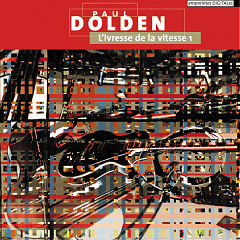
    […] The minimum one can say of empreintes DIGITALes is that it is a prolific label for electroacoustic music as well as provocative experiments in conceptual sound. A few recent releases graft the varied interests of academic and acousmatic music together via the intriguing work of, say, John Oswald. His Aparanthesi is the work of a single note that is gradually inflected along its pitch and combined with various tuned field recordings. [aparanthesi A] is an A note tuned to 440 Hz, which is the broadcast signal stations play when off-air. [aparanthesi B] is a compressed stereo image of the 8 channel performance created for 2000’s Rien à voir electroacoustic festival in Montréal. It is tuned to 480 Hz, the North American electrical standard, so it is in-tune with the hum of lighting and electrical grids. It is also a sonic impression of a complex and involved performance that uprooted the audience from the seats to the atrium and back again. We might call the album a conceptual play between electroacoustc and microsound, audience and chair, sitting and standing, tuning and silence, and for these reasons, the listening experience is very unlike the genre’s contemporaries. Roxanne Turcotte, for example, produces a melange of disjunctive sound, voice and phone recordings, environmental atmospheres and world beat rhythms on Libellune, which features work dating back to 1985. Its complexity at times is interesting, for as a survey of her œuvre it mirrors the development of Montréal electroacoustic in its infatuation with voice and, like R Murray Schafer, the natural world. That said, it remains well within the by now well-established parameters of academic composition. Paul Dolden’s work trammels from New Music composition to electroacoustic, employing repetiton and choral arrangements in a fashion not unlike that of Philip Glass, albeit with a drive toward melodrama and punch over satyagraha, throwing in all elements including the kitchen throughout L’ivresse de la vitesse 1 and 2. Like Turcotte, this work too spans from the ‘80s to the ‘90s, and so much of its feel is like listening to a beloved but aging record from that era, its metallic drums and neon wildness only appearing just a tad navel-gazing with age. Dolden is somewhat overwhelming; [L’ivresse de la vitesse] is a nightmare collage at its start that quickly gets into squeaky territory. For this, the remedy of Seuil de silences is welcome. Although from the same era, its breathing space offers more time for reflection, arrangement and thought, even if the disharmonius creeps back into the picture and becomes an ultimate ode to piano-bashing. […]

    … a prolific label for electroacoustic music as well as provocative experiments in conceptual sound.

    Délires de plaisirs, Seuil de silences, Paul Dolden dans SOCAN — Paroles & Musique

    «Paul Dolden: le plaisir du son», Guy Marceau, SOCAN — Paroles & Musique, no 12:2, 1 juin 2005
    mercredi 1 juin 2005 Presse

    Une équation se dessine d’emblée lorsqu’on écoute L’ivresse de la vitesse (1992), une des œuvres de Paul Dolden qui a fait l’unanimité des milieux musicaux contemporains ici et en Europe, et qu’on écoute le volubile compositeur parler de son art. À bientôt 50 ans, avec une propension à l’excès, l’accélération et l’accumulation des plans sonores, Paul Dolden parle aussi vite que la musique qu’il compose, mais ralentit un peu lorsqu’il clame ne pas être un vrai électroacousticien. Comment le situer?

    Paul Dolden, né à Vancouver mais vivant à Montréal, a tout du compositeur atypique mais passionné de musique. Très easy going, cheveux longs, relent du freak qu’il était dans les années 70, attitude un peu désinvolte et joyeusement pince-sans-rire, il est surtout très allumé et non élitiste. «Même si on compose la musique à l’aide de machines électroniques et numériques, il faut toujours rester dans le plaisir organique, de la même manière qu’on écoute simplement Led Zeppelin ou Brahms par exemple, explique Paul Dolden. Je ne suis pas un électroacousticien au sens de Robert Normandeau, par exemple, notre travail est très différent. J’aime notamment intégrer à ma musique des instruments acoustiques et des emprunts au rock ou au jazz, des styles que j’ai toujours eu beaucoup de plaisir à écouter. Ma musique parle plus au corps et au cœur qu’à la tête.»

    Dolden fait mentir l’adage Less is more. Il excelle dans la surimpression de styles musicaux disparates, «pas pour en faire de bêtes pastiches, précise-t-il, mais bien pour exploiter les grandes beautés de ces musiques dans une orchestration imposante que la machine me permet de réaliser et qu’aucun orchestre ne pourrait jouer. Dans mes œuvres, je peux superposer jusqu’à 400 couches musicales pour créer mes sonorités…» À l’écoute, en effet, sa musique parle à tous nos sens: puissante, obsédante et parfois décadente, toujours hautement chargée et recherchée. Il combine ce souci de l’ordre dans le désordre, l’idée de vitesse dans le contrôle, en exploitant les textures, ryrthmes et sonorités sur l’échelle élastique du temps au profit d’une plasticité des plus incarnées. On pense parfois à Varèse ou Zappa, mais toujours dans un «traitement électronique sensible».

    Autodidacte

    Rockeur dans l’âme, Paul Dolden apprend à 16 ans la guitare électrique, puis le violon et la basse en solo. Il s’est même récemment mis au violoncelle! Las de faire de la scène (rock, jazz) dans des spectacles et avec des groupes à géométrie variable de Vancouver, il se lance dans l’expérimentation électronique au joyeux temps de la technologie analogique. «La nécessité est la mère de toutes les inventions. En cherchant de nouvelles façons de faire ma musique, j’ai découvert toute la quincaillerie électronique des années 70. C’est fou ce qu’on peut faire avec ça! Mais, tout comme maintenant, la machine était un moyen, pas une fin en soi.» Ses bidouillages créatifs font mouche au Canada: dès 1981, Paul Dolden remporte des premiers prix coup sur coup. «Avec ces prix, on me disait entre les lignes que la musique que je composais était ce qui se faisait de mieux au Canada! Alors j’ai continué, pensez-donc!»

    Et des prix, il y en aura plus d’une vingtaine d’autres. Presque chaque année, une de ses œuvres reçoit une récompense par ses pairs de l’industrie musicale contemporaine et électroacoustique canadienne. La bonne nouvelle se répand ensuite hors de nos frontières et dès 1984, ses œuvres sont primées en Italie, France, États-Unis, République Tchèque, Suède, Angleterre… Un pied de nez à certains autres compositeurs canadiens, puisqu’il n’a pas le profil académique universitaire requis, mais bien seulement un baccalauréat en histoire générale…

    Revisiter ses œuvres

    Pour qui voudrait entendre le fruit de sa créativité, l’essentiel de ses enregistrernents figure chez empreintes DIGITALes. Son avant-dernier, Seuil de silences (2003), remportait en janvier dernier le Prix Opus du disque de l’année dans la catégorie Musique actuelle, électroacoustique. L’album réunit des œuvres de 1987 à 1996 où, à la trame numérique, s’ajoute le jeu de trois solistes, Julie-Anne Derome (violon), François Houle (clarinette) et Leslie Wyber (piano). «Il faut savoir qu’avec la venue du numérique, j’ai décidé de remixer toutes mes œuvres… Compte tenu que pour réussir à produire une pièce de 15 minutes, il me faut souvent plus de 50 heures de travail, j’en ai eu au total pour un pou plus de deux ans!» Paul Dolden dit avoir fait ce travail pour rendre justice aux œuvres elles-mêmes, qui devenaient ainsi plus précises, plus efficaces et plus sonores.

    Rétrospective en Suède

    Après plus de 20 ans de carrière, et quelque 40 œuvres plus tard, la reconnaissance ne s’est pas démentie. À la fin avril, Paul Dolden était l’artiste invité au Borderlines Festival en Suède où l’on présentait une rétrospective de ses œuvres (12 pièces, dont deux créations, en neuf jours). Et l’affiche était prestigieuse: aux côtés de ses œuvres, 12 signées Gyorgy Ligeti, un des importants compositeurs du 20e siècle, Ligeti et Dolden partagent certaines approches et techniques d’écriture, notamment dans la complexité polyrythmique. Dolden était en quelque sorte le porte-parole canadien d’une facette de notre paysage musical contemporain électroacoustique, ce qui visiblement l’enchante. Un projet en chantier? «Toujours! Je travaille présentement sur une installation sonore à grande échelle qui se tiendra l’an prochain pendant un mois à la Galerie Diapason de Manhattan (New York).»

    Avril a vu la parution de son dernier disque, Délires de plaisirs, regroupant des œuvres remixées dont Entropic Twilights (1997-2002) pour bande en trois mouvements, The Gravity of Silence. Resonance #5 (1996) pour flûte et bande, et The Heart Tears itself Apart with the Power of its own Muscle. Resonance #3 (1995) pour 10 cordes et bande. Aux atmosphères très prenantes s’ajoutent de larges citations musicales, dans une orgie de références très ludiques. La musique force l’écoute et ne laisse pas indifférent. On peut en écouter des extraits sur le site d’empreintes DIGITALes au www.empreintesdigitales.com.

    Aux atmosphères très prenantes s’ajoutent de larges citations musicales, dans une orgie de références très ludiques.

    Estrapade, morceaux_de_machines dans The WholeNote

    «Review», Tom Sekowski, The WholeNote, no 10:9, 1 juin 2005
    mercredi 1 juin 2005 Presse

    I was warned — the music of Montréal duo morceaux_de_machines would be loud. What I wasn’t told was just how unbearably surprising it could be. The duo made up of long-time radio collaborators on Québec’s CKIA, Aimé Dontigny and Érick d’Orion, obviously enjoy their noise with a side of the twitchings. Ever-shifting landscapes permeate their music from beginning of the disc to its’ closing 75 minutes later. Turntables, prepared CDs, live electronics, computers, samplers, drum machines — it’s all here in its most primal glory.

    Sampling queen Diane Labrosse appears on two tracks, as do tumtable artists Otomo Yoshihide and Martin Tétreault. I dont think the word noise does this duo proper justice. After all, what is defined as noise by one person is not necessarily noise to others. I found many of the pieces calming in their own bizarre way. The drones and high-pitched squeaks are in some strange way oddly appealing. Weird structure actually exists in this madness if you’re willing to listen. Feedback and ear-piercing sounds need not be your enemy. These can actually be your friends. The question remains, are you willing to take the first step towards cementing this relationship? If your answer is yes, then Estrapade [French word for a cruel form of torture used in medieval times] is waiting for your friendship now.

    I was warned — the music of Montréal duo morceaux_de_machines would be loud. What I wasn’t told was just how unbearably surprising it could be.

    Estrapade, morceaux_de_machines dans De:Bug

    «Kritik», ASB, De:Bug, 1 juin 2005
    mercredi 1 juin 2005 Presse

    Improv-Noise und Musique Concrète könnten sogar die Tanzflächen rocken, wenn man sie irgendwo ließe. Das bieten zumindest einige Tracks dieses französischen Duos an, die sich hier mit den Turntablisten Otomo Yoshihide und Martin Tétreault sowie Diane Labrosse zusammen tun. Von Tanzmusik kann allerdings wirklich nicht die Rede sein, wohl aber von spannend gemachten digitalen Lärmattacken, die eben auch durchaus mal rhythmisch oder aber ambient sein dürfen. Klasse unakademisch! 3/5

    Délires de plaisirs dans Vancouver Review

    «Tamed Beast», John Keillor, Vancouver Review, no 6, 1 juin 2005
    mercredi 1 juin 2005 Presse

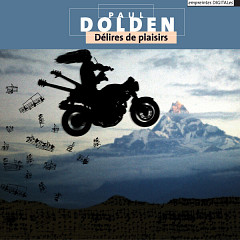
    After decades of pissing people off, Burnaby-boy-cum Montréaler Paul Dolden has written an irrefutable masterpiece. Entropic Twilights (ET), the 49-minute opening track of his new CD Délires de plaisirs, is a postmodern genre-romp of colossal scale. While the rest of the CD treads more recognizable ground, this piece is new territory for the internationally fêted, if locally ignored, electroacoustic composer, with its playful irony and original synthesis of classical, popular, and non-Western styles.

    Until this release, Dolden’s music can be summarily described as ferocious, featuring huge, raging blocks of musical colour seething with electric invasiveness. The older material’s shocking amounts of input at exceedingly high volume (in concert settings, anyway) recalibrated listeners’ blood flow by sheer aural force. Back in the ’80s, many of Dolden’s musical peers were, frankly, offended by the overwhelming character of his output, and these people will be interested to know that ET is a different sort of work. While not an artistic olive branch by any means, it is definitely approachable.

    A downright populist piece, ET features jokes, simples tunes, and pratfalls of sudden stylistic redirection: huge orchestral episodes culminating in stoner guitar rock, for example. Yet the integrity of the language doesn’t fall apart midstream; it careens on without losing steam. The work was constructed through a digitized version of his former audiotape technique. Dolden records hundreds of individual instrument and voice parts, then stretches or compresses these beyond idiomatic performance possibility. He then layers them by the hundreds to create previously unimaginable soundscapes.

    One big difference from the earlier material is the grab bag of styles from which he freely draws. Palestrina’s vocal writing can be heard alongside Ravelesque orchestration, punk rock, jazz, disco, African drumming, and gamelan gongs. In his hands, this approach is no mere crazy quilt of alternating musical genres. He not only layers sounds but also lays them out sequentially. The parts weave together thematically, reinforcing each other via four brief, friendly tonal melodies in the key of C, producing musical pranks of lightness and subtlety.

    ET even goes as far as outright, delighted cheesiness. One such moment is right at the beginning as a portentous heavy-metal guitar solo wails tearfully, metal-ballad style, over gongs and winds heard at super-low registers. The composer himself performs the solo, in real time. He’s an immaculate, feeling player, and this ballsy overture hails the central theme of the piece: Bring the entertainment factor back into classical music, for god’s sake!

    The 20th century and all its unsmiling avant-garde composers, such as Pierre Boulez and Morton Feldman (whose music I actually like), managed to alienate the world. They did so in search of a perfect musical language while ignoring the interests of the general public. Today, it’s almost impossible to sell 20th-century classical CDs. Record companies produce them in order to appear aesthetically concerned, and so they should. Today’s classical music needs all the help it can get.

    In the 19th century, classical music actually competed with all other forms of entertainment, often holding its own without patrons or government funding. Sometimes its composers did, however, have unstoppable competition. There’s a tale of one 1860’s night in Paris, where three illustrious piano virtuosos, — Sigismund Thalberg, Franz Liszt and Clara Schumann — were all performing at separate venues. Each naturally wanted to outsell the other two. But on this particular night, all three concerts were embarrassingly under-attended because there were giraffes in town for the first time, and everyone went to see them instead.

    Of course, on other evenings all three pianists made heaps of money and endured a dozen curtain calls. On those occasions, no other marketable distraction could compete with the public interest in their playing, or with the scores that had been written for them. The point, here, is that classical music used to be a competitive cultural force and now it’s moribund, swept aside by movies and cheap internet pornography-and that fact angers Dolden.

    But ET doesn’t sound angry. It’s like a rectified collusion of the musical patter we hear in public spaces. Imagine all the piped-in music from different stores in a shopping mall playing simultaneously. What Dolden hears here, I believe, is a sort of musical ship’s graveyard, filled with floating corpses of gutless reggae and world beat and flaccid Mozart and techno, lolling uselessly as the shoppers meanders about, obliviously comparing prices. Regard this situation for what it is: a consumerist victory over music, its meaning drained, its fleet broken. Dolden’s work attempts to revamp the rigging and get real music back into the battle for a place in our collective psyche.

    It’s a battle worth fighting, and, on this front, Dolden’s captaincy his producing some notable gains. Two years ago, he sold out a South American tour. More recently, he was the featured artist at the Borderline Festival in Malmö, Sweden, with half a dozen concerts showcasing his work. Some of his previous discs, such as Seuil de silences, sold out and had to be repressed. And unlike almost every other professional composer in the world, he doesn’t have to teach. He makes enough money just composing. He’s walking the walk.

    ET demonstrates how the world can be drawn back to classical music through entertaining sophistication. While the avant-garde searches for a new musical language by means of wispy dissonance, this piece consists of comically consonant counterpoint, producing a visionary artistic direction in the form of a wild ride-like a roller coaster designed by NASA. This is Dolden’s Valhalla and his Disneyland, and he is clearly enjoying himself.

    The importance of a composer’s pleasure cannot be underestimated. It brings to mind a tame about Claude Debussy’s conservatory days: Upon hearing him perform on of his youthful compositions, his affronted professors complained that their student was not following conventional harmonic rules. Debussy replied that he did not follow conventional harmonic rules. The academic rejoinder was, What rules did Debussy follow, exactly? “Mon plaisir,” he famously replied. Debussy is not perhaps the last of the avant-garde composers in history to be found in mainstream concert programs.

    Debussy’s oeuvre began with an anti-Wagnerian fire that cooled over time into something personal and impressionistic. Similarly, Dolden’s belligerence is now more genius than rebellion. Academics may still sniff at his approach, as they did at young Debussy’s. Check out ET, dear reader, with its assured grasp of today’s jumbled commercial anxiety, and decide for yourself who is right.

    The piece is Dolden’s Valhalla and his Disneyland, and he is clearly enjoying himself.

    Clair de terre dans Computer Music Journal

    «Review», Patricia Lynn Dirks, Computer Music Journal, no 29:2, 1 juin 2005
    mercredi 1 juin 2005 Presse

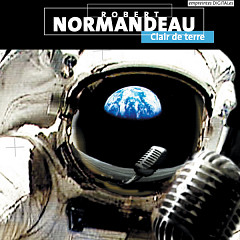
    Robert Normandeau (b. 1955) is a Canadian composer and has been an Associate Professor of Composition at the Université de Montréal since 1999. Over the past number of years, he has focused on creating acousmatic compositions, an approach that has been referred to as “cinema for the ear.” One of the most monumental visual images that marks the twentieth century has been pictures of earth taken from space. Mr. Normandeau has expressed these profound images through music and cinematic techniques in his multi-movement composition, Clair de terre.This collection contains three large-scale works, two of which were realized in the composer’s own studio. The remaining compositions demonstrate his success in writing works for the theater. This collection of finely crafted works is Mr. Normandeau’s fourth compact disc recording with empreintes DIGITALes.

    Malina (2000) features the captivating flute-like sound of the shakuhachi as played by Claire Marchand. Mr. Normandeau uses the recorded material to form the basis of this 15-min composition. Over time, the beautiful samples are transformed into a display of intricacy, creating a contemplative, meditative sonic atmosphere. Malina, as a concert piece, was commissioned by IMEB (Institut internatonal de musique électroacoustique de Bourges), where the majority of the music was produced. The composition was originally written for a play of the same name, an adaptation of the Austrian novelist Ingeborg Bachmann’s Malina. The composer makes use of silence and explores the creation of an atmosphere that attempts to reflect the poetic reading of the Bachmann novel. Thus the meditative qualities of the shakuhachi became the ideal expression of the author’s words. Mr. Normandeau takes the listener on a journey where one’s perception of time is altered and one’s sense of wonder enhanced by the subtle changes and rhythmic variance of processed effects. It is the imposing of rich sound samples upon these techniques and a complexity of overlapping rhythmic patterns that creates an array of possibilities throughout Malina.

    The second work featured on this disc was also written for the theater. Erinyes (2001) was commissioned by the Sonorities Festival in Belfast with the support of the National Lottery of the Arts Council of Northern Ireland. It was originally composed for the Sophocles’s Electra produced by Brigitte Haentjens in April 2000. Erinyes is based solely on the voice and opens with a woman uttering the simple utterance of a sigh, “ahh.” This single sound forms the basis of the 20-min composition. No specific text or words are used throughout the piece, thus an intricate soundscape emerges creating awe and excitement. Although it is a work void of language, Mr. Normandeau creates a fascinating composition through repetition, pitch shifting, and elongation of this minute sample. It is a beautiful use of the voice, expressive and provocative. I find this work reminiscent of Luciano Berio’s Thema: Omaggia a Joyce (1958), where a large-scale composition is created from the basic phonemes of language in an onomatopoeic writing technique effectively demonstrating the playfulness and richness of word sounds.

    The featured composition on this collection, Clair de terre [Earthlight] (1999) is a 36-min work consisting of twelve movements ranging in duration from 0’30” to 6’12” each. This piece of music is a true tribute to the cinema and the techniques used in expressing visual images. Mr. Normandeau creates a musical description of these techniques within each movement, keeping the theme of the entire composition on that of space and our perceptions thereof. The basis of Clair de terre is best summarized by the composer himself in his liner notes: “Electroacoustic music was born just slightly more than fifty years ago, at about the same time the first photograph of the earth was taken. This had brought about a considerable change in how we (artists) make and how we (the audience) hear.”

    The Ouverture [Overture] is the longest movement of the set. It encapsulates the entire work as a whole and sets the mood for the sonic ideas presented throughout the remaining movements. Cadre étroit (espace clos) [Narrow Frame (Close Space) ] deals with the exploration of close sounds, minute sounds not commonly heard, exposed in a riveting and stimulating movement. The next two pieces of the set, Couleurs primaires et secondaires [Primary and Secondary Colors] and Mobilité des plans [Camera Mobility], demonstrate basic electroacoustic techniques such as the Doppler effect, with a sample of an approaching train. Montage rythmique [Rhythmic Editing] displays samples that appear to be expanding over time to create rhythmic patterns that are later interjected and juxtaposed with one another; an exhilarating movement. Similar to Erinyes, the fifth movement, Montage métaphorique [Metaphoric Editing], again features the human voice, this time exploring a more frolicsome side of expression: laughter. Durée des plans [Duration of Shots] makes use of silence and segments of sounds, to give only a glimpse of a whole. Samples are presented long enough for recognition, heightening anticipation in the listener. This movement sets up a suspenseful atmosphere with the effective use of silence.

    Mr. Normandeau’s placement of each movement is superb, for out of the silence emerges a sparking soundscape with Clarté (éblouissement) [Brightness (Dazzling)]. Here, shimmering reverberant sounds twinkle, in ever-changing random-like patterns, creating the expression of a glistening night sky. Cinematic techniques again come to light in Taille des plans [Proportion of Shots] where raw sounds are processed using granular synthesis focusing on the isolation of the minute sample as part of whole sound objects. Couleurs ternaires [Ternary Colors] features recordings of captivating birdsong, juxtaposed among heavy sounds of metal objects. Micro-montage is the shortest and most active of the movements, being only 30 seconds in length. Here, short, fast-paced snippets are placed in a grand collage that acts as an explosion of sounds that seem to blast off in the darkness. The silence creates a seamless segue into the next movement, Obscurité [Darkness], of this riveting and engaging set. Here the familiar sounds of an engine roaring followed in contrast by hollow, echoing sounds, produce a soundscape of an image or illusion of space that is cold and vast.

    Rounding off the Clair de terre is the final movement, Cadre large (espace ouvert) [Wide Frame (Open Space) ]. It opens with the echoing of forlorn bagpipes in melodic lines contrasting with a rhythmic chant-like pulse. Each vastly different, these blend and exchange places between the foreground and background. Injections of mumbled voices and processed electronic chatter create the illusion of vastness leading up to the final presentation of the timpani signaling the end of all.

    Mr. Normandeau’s electroacoustic compositions included on this compact disc are presented as truly cinematic works of art for the listening mind. Each track is full of rich sounds and vivid soundscapes that take the listener on journeys beyond our Earth. His intricate treatment of each sound and its placement in the sonic landscapes is truly inspiring and convincing. Clair de terre offers a refreshing and tantalizing listening experience sure to satisfy a variety of musical palettes.

    … a refreshing and tantalizing listening experience sure to satisfy a variety of musical palettes.
  • 8
  • 9
  • 10
  • 11
  • 12
  • 13
  • 14
  • 15
  • 16