electrocd

Blog

2899 results
  • 266
  • 267
  • 268
  • 269
  • 270
  • 271
  • 272
  • 273
  • 274
  • Luigi Ceccarelli, Stéphane Roy in Le Devoir

    “Mini-opéras acousmatiques”, François Tousignant, Le Devoir, October 18, 2003
    Saturday, October 18, 2003 Press

    L’actuelle édition de Rien à voir fait découvrir des mondes encore mal connus. Jeudi soir, c’était l’électroacoustique à l’italienne. Naturellement, cela commence dans le spectacle. On entre dans la salle sur fond de foule qui murmure. Tout à coup des «chuts» sonores interrompent les conversations sur bande comme dans l’Espace Go. Le noir se fait, comme le silence, et commence Limens Limine (Cardi).

    On y lit et met en scène des textes de Jean de la Croix. Usage de quelques distorsions, de déplacements, tout est efficace, décoratif et raffiné. Que dire de plus, sinon que ce fut agréable? Pas grand-chose. L’invité du jour à la console, le compositeur Luigi Ciccarelli, présente plus tard quelques-unes de ses propres œuvres. Ici, on entre de plainpied dans le monde si typique de l’opéra italien, revu et corrigé par l’acousmatique.

    Dans les trois premières pièces qu’il propose, Ciccarelli écrit réellement des concentrés d’opéras incroyablement efficaces. Les livrets décrient soit la religion, soit le pouvoir politique,, soit une forme de totalitarisme. À propos de la chambre de Philippe II dans l’église de l’Escurial s’avére une œuvre puissante, effrayante. Les images contractées et mécanico-surréalistes du texte (nous écoutions une version française pour tout saisir) glacent déjà les sangs. La musique, elle, vient enfoncer le clou.

    Ciccarelli use de distorsions de la voix à faire baver de jalousie des concepteurs de films d’horreur de Hollywood, avec des «effets spéciaux» à faire fuir de peur les gens des salles de cinéma. Du cinéma pour l’oreille se nomme parfois l’acousmatique. C’est exactement cela et Orwell aurait adoré!

    Cela se poursuit avec Tupac Amaru, où on télescope une légende inca de la première révolution de ce peuple contre les conquistadors dans les années 1780 avec des émeutes anti-Fujimori (Funky-Fucky-Muori) dans le livret). La traduction est projetée sur écran, à la manière des surtitres à l’opéra traditionnel. L’idée du parallélisme révolutionnaire est intéressante et pourrait assurément frapper plus fort si les procédés étaient mieux creusés. L’usage de la diffusion dans l’espace est remarquable, le rythme et les citations de genres musicaux appropriés, et on se dit que voilà l’équivalent électronique d’un bon opéra de cape et d’épée de Verdi.

    Plus prenant, Exsultet commence en longue plage de paix, sur chant grégorien manipulé, et plage méditative qui se voient empoisonnées d’horreur, encore, comme si le frisson de dégoût servait d’outil de condamnation. Le déroulement est ici plus soutenu, la qualité de l’œuvre est aussi nettement plus grande que celle des deux premières par son souffle et sa direction intrinsèque. Avec un propos plus abstrait, la musique se permet de prendre plus de place et on admire le talent de Ciccarelli à nous river dans notre siège par la seule inspiration apportée par ses convictions qu’il nous force, le temps d’une pièce, à partager. Comme réussite dramatique, ce fut le grand moment du concert, car il faut oublier la pièce Birds qui suivait et qui est aujourd’hui complètement dépassée.

    Un constat s’impose cependant toute cette musique ne fait usage que de la surface des choses; elle n’arrive pas à creuser le sujet, à lui donner autre chose qu’une mise en scène sans réelle perspective critique. On dénonce, certes, mais en témoin extérieur, sans les questionnements qu’un Bayle, Chion ou Dhomont savent si adroitement provoquer. Un peu le dilemme de Verdi contre Wagner qui refait surface.

    Avant cela, Stéphane Roy a encore une fois prouvé sa virtuosité avec ses Trois petites histoires concrètes et on a surtout eu droit à deux excellentes pièces. D’abord eBss (Agostine del Scipio); inspirée, raffinée et polie par-delà la limite de la beauté, voilà une œuvre qui va devenir classique. Puis il y a l’exploit de Con brio (Giorni). Refusant les mouvements dans l’espace, le compositeur crée la densité des plans uniquement avec un va-etvient qui joue de la perspective trompe- l’oreille comme le faisait Canaletto avec ses toiles. L’écoute est fascinante, réellement, et prouve qu’avec un minimum de moyens, un grand artiste sait toujours toucher le fond du cœur; quand idée, émotion et geste se coujuguent ainsi, transcendés par une technique de si haut calibre, la musique reprend tous ses droits. Donc: on y croit.

    … Ciccarelli écrit réellement des concentrés d’opéras incroyablement efficaces.

    Bleak 1999 in Electronic Music World

    “Review”, Stefan Koopmanschap, Electronic Music World, October 16, 2003
    Thursday, October 16, 2003 Press

    Another release from the great No Type label, which have established themselves firmly in the world of independant underground electronic music. With the impressive history of the label, one can be sure that whatever is released is only of the highest quality, and always interesting and refreshing.

    Nothing is less true for this release by Tomas Jirku. Interesting and refreshing, this is rhythmic and experimental music. Dark, but crisp, with beautiful underlying drones.

    Yes, this is beautiful. It is another great addition to the already impressive discography of Tomas Jirku. A beautiful collection of tracks that fit together in style, that keeps the listener coming back for more, and that remains fresh to the ear even after multiple listens. This one will definately be coming back to my cd-player on a regular basis!

    A beautiful collection of tracks that fit together in style, that keeps the listener coming back for more, and that remains fresh to the ear even after multiple listens.

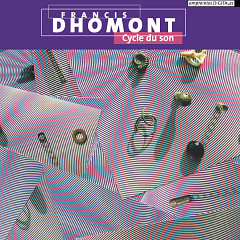
    Cycle du son, Forêt profonde, La mécanique des ruptures, Corazón Road, Figures, Parr(A)cousmatique, Libellune, Yves Beaupré, Yves Daoust, Francis Dhomont, Gilles Gobeil, Robert Normandeau, Arturo Parra, Roxanne Turcotte, empreintes DIGITALes in electrocd.com

    “Introduction(s) to the Delights of Electroacoustic Music”, François Couture, electrocd.com, October 15, 2003
    Wednesday, October 15, 2003 Press

    Electroacoustic music is an acquired taste. Like it or not, radio and television have conditioned us from an early age into accepting some musical (tonal and rhythmical) molds as being “normal.” Therefore, electroacoustics, along with other sound-based (in opposition to note-based) forms of musical expression like free improvisation, is perceived as being “abnormal.” That’s why a first exposure to this kind of music often turns into a memorable experience — for better or worse. Many factors come into play, but choosing an album that offers an adequate (i.e. friendly and gentle) introduction to the genre will greatly help in letting the initial esthetic shock turn into an experience of Beauty and mark the beginning of a new adventure in sound.

    My goal with this sound path is simply to point out a few titles that I think have the potential to encourage instead of discourage, titles opening a door to a new musical dimension. Of course, this selection can only be subjective. But it might be helpful to new enthusiasts and to aficionados looking for gift ideas that would spread good music around. After all, Christmas is only a few weeks away!

    Bridges

    We usually develop new interests from existing interests. What I mean is: we explore music genres that are new to us because a related interest brought us there. That’s why when it comes to electroacoustic music, mixed works (for tape and instrument) or works related to specific topics are often the best place to find a bridge that will gently lead the listener into the new territory. For example, people who enjoy reading travel literature will find in Kristoff K.Roll’s Corazón Road the sublimated narrative of a journey through Central America. Those still young enough to enjoy fairy tales (I’m one of them) will find in Francis Dhomont’s Forêt profonde an in-depth reflection on this literary genre as inspired by the works of psychoanalyst Bruno Bettelheim, in the form of a captivating work with multiple narratives (in many languages) and electroacoustic music of a great evocative strength. Lighter and more fanciful, Libellune by Roxanne Turcotte finds its source in childlike imagination and is in part aimed at children without over-simplifying its artistic process.

    Guitar fans can turn to Parr(A)cousmatique, a wonderful project for which classical guitarist Arturo Parra co-wrote pieces with some of Quebec’s best electroacoustic composers: Stéphane Roy, Francis Dhomont (Quebecer at heart, at the very least), Robert Normandeau, and Gilles Gobeil. The latter has just released an album-long piece, Le contrat, written with and featuring avant-garde guitarist René Lussier. Lussier’s followers and people interested in Goethe’s play Faust (and its rich heritage) will find here an essential point of convergence, another bridge.

    Essential listens

    Those who want to explore further will probably want to venture into more abstract electroacoustic art. I recommend starting with the Quebec composers. Chauvinism? No way. It’s just that the music of composers like Dhomont, Normandeau, Gobeil, Yves Daoust, or Yves Beaupré seems to me to be more accessible than the music of British or French composers. It is more immediate, has a stronger impact (Gobeil, usually hitting hard), a more pleasant form of lyricism (Daoust, Beaupré), more welcoming architectures and themes (Dhomont, Normandeau). If you need places to start, try Normandeau’s Figures, Gobeil’s La mécanique des ruptures, Dhomont’s Cycle du son, and Beaupré’s Humeur de facteur.

    That being said, there are hours upon hours of beauty and fascination to be found in the works of Michel Chion (his powerful Requiem), Bernard Parmegiani (La création du monde), Jonty Harrsison (Articles indéfinis), Denis Smalley (Sources/Scènes), and Natasha Barrett (Isostasie), but they may seem more difficult or thankless on first listen. And for those interested in where these music come from, the EMF label offers L’œuvre musicale, the complete works of Pierre Schaeffer, the father of musique concrète and grandfather of electroacoustics.

    Tiny ideas

    A compilation album has the advantage of offering a large selection of artists and esthetics in a small, affordable format. Available at a budget price, eXcitations proposes a strong sampler of the productions on the label empreintes DIGITALes. The albums Electro clips and Miniatures concrètes, along with the brand new volume of the DISContact! series, cull short pieces (often under three minutes) to trigger interrogations and discoveries in those with a short attention span.

    And finally, for those of you who want to take their time and explore in short steps, the Cinéma pour l’oreille collection produced by the French label Métamkine contains many wonderful 3” CDs, 20 minutes in duration each, for a reduced price. The catalog includes titles by renown composers such as Michel Chion, Lionel Marchetti, Michèle Bokanowski, Bernhard Günter, and Éliane Radigue. These tiny albums are perfect for gift exchanges.

    Of course, all of the above are only recommendations. The best sound path to discovery is the one you follow by yourself, little by little.

    Best listens!

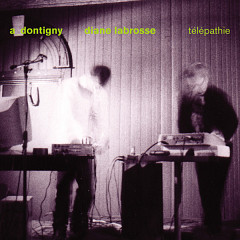
    Télépathie, May ’68, Hey Typical!, All Your Dreams Are Meaningless, We Remain Faded, Podweek in Rif Raf

    “Kritiek”, SVS, Rif Raf, October 14, 2003
    Tuesday, October 14, 2003 Press

    Vers vocht uit de druipende uiers van het Canadese No Type-label. Het duo Coin Gutter maakt niets ontziende, hard industriële en dan weer sacrale elektronische ambient en noise, vaak doorspekt met moderne compositie. Denk aan Yannis Kyriakides in een remix door Merzbow.

    Oeuf Korreckt is, ondanks zijn lullige groepsnaam, een bijzonder groovy elektronicacollectief dat met scherpe, licht industriële ritmes erg doeltreffend uit de hoek komt. Alleen jammer van die introverte, weinig verheffende productie.

    De sampling-artieste Diane Labrosse werkte de voorbije tien jaar met klinkende namen zoals Ikue Mori, Martin Tétreault en Zeena Parkins. Elektronicafreak A_Dontigny was dan weer lid van het beruchte collectief Napalm Jazz. Tesamen brengen Labrosse en Dontigny spannende, verrassende en verontrustende elektronica -en ambientpassages die je het best beluistert met de deur op slot en het huisalarm op extra sensitive.

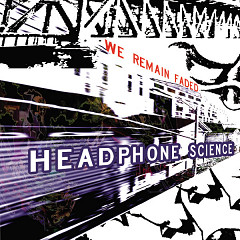
    We Remain Faded van Headphone Science is de meest beklijvende release bij No Type. Met zijn mix van stuiterende hiphop en aan flarden gesneden raps leunt dit project van Dustin Craig nog het meest aan bij Prefuse 73. Maar de epische soundtrackmuziek die Craig in zijn composities verstopt, sleept deze plaat weg uit het avanthophoekje.

    Twee erg leuke 10inch-vinylletjes zijn die van de Zweedse Claudia Bonarelli en de Amerikaan Todd Brooks a.k.a. Books on Tape. Met respectievelijk wollige clickhouse en punky elektrobeats zetten zij de street credibility van No Type extra in de verf.

    We Remain Faded in Nightlife

    “Critique”, DC, Nightlife, October 14, 2003
    Tuesday, October 14, 2003 Press

    EP regroupant des pièces précédemment impossibles à trouver, ce We Remain Faded regorge de petites surprises. C’est que l’Américain Dustin Craig porte très bien son nom. Les pièces ici présentées n’ont rien à envier à celles des plus habiles manipulateurs de sonorités. Jouxtant la frontière particulière des Boards of Canada, Headphone Science déconstruit et ressert des rythmes hip-hop sur une trame atmosphérique planante. Un exercice complexe qui a comme intention de réjouir les oreilles de ceux qui s’y attarderont.

    Un exercice complexe qui a comme intention de réjouir les oreilles de ceux qui s’y attarderont.

    Bleak 1999 in Earpollution

    “Review”, Mark Teppo, Earpollution, October 13, 2003
    Monday, October 13, 2003 Press

    I first heard Tomas’ work back in 1999 when he released his first record for No Type, Immaterial, and I was one of the lucky ones who got an actual CD in the hand-made packaging. The material was all free from No Type’s site (as many of their releases are), but I wanted the real thing — to have and to hold. Since those days, Jirku has released a couple of records on different labels and participated in the first edition of the Montréal-based electronic music festival, Mutek, where he opened for Thomas Brinkmann and turned enough heads that German label Force Inc. signed him on the spot. People have been wise to the magic of Jirku’s hand in the mix and his (triumphant!) return to No Type is a nod to his roots — to the label which gave him his first break and to the minimal beat sculpture style which he started with. Bleak 1999 is a record of staggered beats, winsome ethereal melodies, and the seemingly casual interception of radio signals.

    It is far from bleak and yet, at the same time, it most certainly is. The arrangements are sparse, uncluttered excursions into minimal loop-based space. The tracks aren’t heavily processed or tweaked into realms of spasmodic beat witchery. They are gentle, flowing pieces which build and layer simply, leaving the listener feeling as if they were floating in a bleak landscape — yes — but a landscape which supports them and cradles them and carries them along invisible streams. Haloperidol is one such stream, the awkward scrambling of worn machinery in the beginning of the track gives way to an endlessly drifting motion which lifts you out of your chair and floats you along.

    Clindamycin is nothing more than a lost radio, drifting forgotten in a white mist, its dial tuned to the very bottom of the spectrum where only noise lives. While Clindamycin doesn’t normally give way to psychosis, in this case it does as the wash of white noise is leveraged out of the way by shards of glass beats. A lone cello weaves through the impromptu beats, the tinkling of the glass enough to make the teeth at the back of your throat hum. 3.24.93 shimmers with warm synth tones over a gentle and insistent minimal techno style beat. LiCO3 is a static interlude, a breath of wind caught in a speaker cone, while Glucose is a warm drone, a stuttering note which never quite gets moving. The note isn’t sluggish, rather it is caught like a fly in amber and all that is left is for us to watch it slowly die, the buzz of its wings circling in a slow decline.

    I’m spending a little time at webmd.com as I listen to this, plugging in track names as they come up. Clindamycin. Cefuroxime. Haloperidol. Lorazepam. Tranylcypromine. There are two commonalities in the results: the drug in question either “fights bacteria in the body” or it works by “increasing the levels of certain chemicals in the brain.” Even LiCO3 was once used as a “mood stabilizer.” Music, though, doesn’t require a prescription or a visit to the doctor’s office. It’s a modern aural medication. Jirku’s recommendation for what ails you? Take a course of Bleak 1999. It’ll flush the toxins right out of you.

    … a record of staggered beats, winsome ethereal melodies, and the seemingly casual interception of radio signals.
  • 266
  • 267
  • 268
  • 269
  • 270
  • 271
  • 272
  • 273
  • 274