electrocd

More from the blog

18 results
  • 1
  • 2
  • 3
  • eD: A Women Composer Triplet

    Sunday, March 7, 2010 New releases

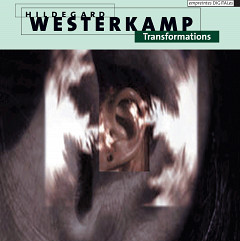
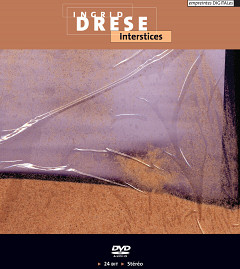
    On March 10, 2010 empreintes DIGITALes will release a triplet of discs — 2 new releases, and 1 reissue — by exceptional women composers.

    Transformations in Gonzo Circus

    “Kritiek”, PiT, Gonzo Circus, no. 47 B, December 1, 2000
    Friday, December 1, 2000 Press

    Transformations van Hildegard Westerkamp kon ons meer boeien. Westerkamp is een Duitse die eind de jaren zeventig in Vancouver strandbe. Haar opnames schipperen altijd tussen stad en natuur A Walk Through The City documenteert op een vrij conventionele wijze een wandeling door de achterbuurten van Vancouver. Interessanter zijn’Kits Beach Soundwalk’, Cricket Voice en Beneath The Forest Floorwaar Westerkamp haar natuarexploraties (krekels, kraaien en zeepokken) registreert en becommentarieert.

    Transformations, Hildegard Westerkamp in Encompass

    “Review”, Joyce Hildebrand, Encompass, October 1, 2000
    Sunday, October 1, 2000 Press

    Remember that afternoon on the beach just a few months ago? The flash of sunlight on water, the feel of hot sand under your feet, the tang of lemonade on your tongue. Chances are the sounds of children laughing and icecubes tinkling will come to mind last, if at all. Why does hearing so often take a back seat to vision or taste? Have we been suppressing unwanted noise for so long that we have dulled our capacity to hear? Vancouver-based composer Hildegard Westerkamp offers our ears a wake-up call, reminding us that sounds are as much a part of place as images and smells.

    Westerkamp records whatever reaches her microphone in a particular place and then transforms and combines those sounds electronically. Her “instruments” include everything from creeks and ravens to truck brakes and train whistles. “I transform sound in order to highlight its original contours and meanings,” she says in the extensive liner notes of her CD Transformations. “This allows me as a composer to explore the sound’s musical/acoustic potential in depth.”

    If you are thinking “Solitudes” music, you’re on the wrong track. The first composition on the CD, A Walk Through The City, explores the sounds of Vancouver’s Skid Row’ carhorns, jackhammers, voices. Although perhaps the most challenging of the five works on this recording, it captures the beauty and complexity even in those sounds that we often try to filter out.

    In Kits Beach Soundwalk the “intimate sounds of nature” like clicking barnacles and sucking mussels are set against the pervasive hum of the city, blurring the line between nature and non-nature. Beneath The Forest Floor offers an opportunity to experience the deep peace that the composer felt while recording the sounds of BC’s Carmanah Valley.

    Cricket Voice emerged from a Mexican desert region called, strangely enough, the Zone of Silence. The cricket’s high-pitched trills become the desert’s heartbeat when slowed down in the studio. Cacti spikes, dried up roots, and the echoes of an old water reservoir provide the instruments for background percussion.

    Westerkamp thinks of sound as a part of ecological systems and is careful not to overmanipulate it. “I feel that sounds have their own integrity and need to be treated with a great deal of care,” she says. She also recognizes that her compositions, played far from the places in which they originated, become part of another “soundscape.” Indeed, my dog spontaneously howled through Fantasie for Horns II, adding his voice to those of foghorns, train whistles, and a French horn!

    More recently, Westerkamp has been working with photographer Florence Debeugny on At the Edge of Wilderness, a sound/slide installation about ghost towns left by industry in BC. It opens as part of a larger exhibition on September 8, 2000 in Vancouver. She also travels widely, giving workshops, lectures, and concerts, and she plans to put out a double CD in the next year with works based on her experiences of India.

    … captures the beauty and complexity even in those sounds that we often try to filter out.

    Transformations in Rubberneck

    “Review”, Brian Marley, Rubberneck, no. 30, December 1, 1999
    Wednesday, December 1, 1999 Press

    Hildegard Westerkamp is famous for her soundwalks — audio recordings documenting a particular place at a particular time of day. Found material — out of which, using studio-based manipulations, she fashions a unique sonic event. Thus, the environment is reshaped, subjectivised, revealed anew. This extraordinary CD contains several examples of her work. Kits Beach Soundwalk begins with a description of what we can already hear: waves lapping in the foreground, bird calls, background city roar. Then Westerkamp demonstrates some of her filtering and equalising techniques. By employing several ellipses, literal description is transformed into one dream narrative affer another, each illustrated with variations on the multiple, random clicking noises made by barnacles. Eventually, the city is allowed to return (in the guise of a flapping, flailing, playful rnonster).

    Westerkamp reveals the subtle, interactive music in the hidden or unheeded sounds which surround us. She has changed the way I listen to music, and what I consider music to be.

    She has changed the way I listen to music…

    Transformations in Whole Earth

    “Review”, DR, Whole Earth, March 1, 1999
    Monday, March 1, 1999 Press

    Westerkamp began working with R Murray Schafer’s soundscape concepts in the 1970’s while recording the environments surrounding her Vancouver home. Her work is remarkable for its careful and exact transformations of natural sound into musical material. These are some of the most thoughtful environmental compositions ever recorded.

    … some of the most thoughtful environmental compositions ever recorded.

    Transformations in Computer Music Journal

    “Review”, Patricia Lynn Dirks, Computer Music Journal, no. 23:1, March 1, 1999
    Monday, March 1, 1999 Press

    Canadian composer Hildegard Westerkamp’s works have centered around environmental sounds, acoustic ecology, and the creation of soundscapes since the mid-1970s. Her latest release, Transformations, is no exception. This disc contains a collection of works that transform ordinary sound events into unique creations. Westerkamp provides a new way of listening to organized sounds, at times processed, by highlighting the minute details of individual sonic events. This technique attracts attention by making one aware of specific sounds and the environments in which they naturally occur. A Walk Through The City (1981) focuses on the people forgotten and unnoticed in today’s urban society. This work was commissioned by the Canadian Broadcasting Corporation (CBC) radio program Two New Hours, and was first broadcast in April 1981. The opening three minutes of A Walk Through The City sounds more like a walk through the airport due to the nature of the material presented. The aircraft sounds suggest the listener is about to depart on a journey; more particularly, a listening adventure. A Walk Through The City is a depiction of an urban soundscape based on a poem of the same title by author Norbert Ruebsaat, who is heard reading his poem throughout. The sounds featured in this work come from the skid row area in Vancouver, British Columbia. Everyday occurrences like low car sounds pulsating, squealing brakes, sirens, pinball machines, and street music are transformed into rhythmic gestures and lyrical passages. Homeless, drunken men, singing children, whispers, and distant shouts are present while the inanimate sounds of the city fade in and out. This composition effectively creates a vibrant aural canvas that immerses the listener in the real surroundings from which these sounds originated. A Walk Through The City forces one to face sometimes disturbing material, people on the streets, without the chance to quickly dismiss or ignore their sad experiences.

    Less heart-wrenching subject matter is found in the composition Fantasie for Horns II (1979). This work presents a variety of horn sounds, beautifully woven together, featuring Brian G’Froerer on the French horn. The tape part, Fantasie For Horns I (1978), received an honourable mention at the 1979 International Competition of Electroacoustic Music in Bourges, France. Both pieces feature a collection of various horn sounds and their echoes. Each horn is distinctly recognisable: the Doppler effect of a train horn, the distant call of a fog-horn, a boat-horn along with the gentle lapping of water, an alphorn with its grand echoes. The echo dialogue between the tape material and the French horn draws the listener into the sound experience through Westerkamp’s use of repetitive material. Fantasie for Horns II wonderfully blends the richness of the French horn, both muted and unmuted, with the recorded horns each from their separate environments. Kits Beach Soundwalk (1989) is a work for spoken voice and tape featuring Westerkamp as narrator. In this composition, the voice acts as a commentary to the sound material presented. While this soundwalk includes the sounds of birds, ducks, cars, planes and splashing water, its primary focus is the intimate sounds of barnacles. According to the narrator, the high frequencies of the barnacles increase brain activity, thus stimulating our dream experiences. When the voice is present in this composition, it adds to the peaceful soundscape with its soothing tones. Kits Beach Soundwalk contains varying ostinato patterns of faint birdsong and sparkling barnacles producing a calming and meditative composition.

    The electroacoustic work Cricket Voice (1987) is a sound exploration of a desert region in Mexico called the ‘Zone of Silence.’ In this composition, the cricket’s song is transposed, created into short themes, and looped at varying speeds. Elaborate rhythms result from the cricket’s song being played in and out of phase. The sustained high frequencies in Cricket Voice create a rich sonic canvas in which the listener’s sense of time can become blurred. There is never a dull moment, as subtle variants are always present during repetitive passages. Wonderfully playful panning tickles the ears and stimulates the mind to anticipate the unexpected.

    The final track of this CD is entitled Beneath the Forest Floor (1992). This electroacoustic composition was also commissioned by CBC Radio’s Two New Hours. It was recommended for broadcast by the International Music Council’s Rostrum of Electroacoustic Music in 1992, and received a special mention at the Prix Italia in 1994. The sounds were recorded from various forests on British Columbia’s westcoast, particularly in Carmanah Valley. This region is known for containing some of the tallest and oldest trees in the world. Clearly audible in Beneath the Forest Floor is the enormous vastness of the forest soundscapes, (punctuated only occasionally by the sounds of small songbirds, ravens, jays, squirrels, flies and mosquitoes). It is not the preservation of sounds alone which captures and transmits the desired soundscape but the imaginative placement of these sound events. It is this creativity that allows the formation of new, attractive, and stimulating acoustic environments. In Beneath the Forest Floor, there are three present. The first adds little or no processing to the recorded samples while the third adds the most processing to the sounds. The second environment fluctuates between the first and the third, representing the shadow world of the forest. Processing effects in this section act as the sun and shadows would, playing with the sound objects in the forest, hiding some in darkness while exposing others to light.

    Hildegard Westerkamp’s concern for acoustic is evident in all of her works on this disc through her selection, preservation, and imaginative placement of the sound events. This allows the sounds she records to be transformed into a new listening journey of discovery while retaining the level of magic first experienced in each particular soundscape. Transformations is an enjoyable disc and a wonderful creative accomplishment.

    … tickles the ears and stimulates the mind to anticipate the unexpected.
  • 1
  • 2
  • 3