
Interstices
Ingrid Drese
There’s a number of strong and beautiful moments here… — Monsieur Délire, Québec
- Composer(s): Ingrid Drese
- Writer(s): Marc Jaffeux, Étienne Leclercq
- Filmmaker(s)/Video artist(s): Inés Wickmann
- Author(s): Francis Dhomont
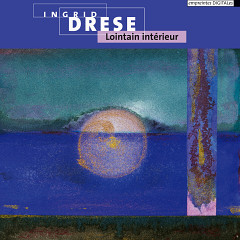
- Cover image: Inés Wickmann
- Mastering: Dominique Bassal
- Communauté française de Belgique (Direction générale de la culture, Service de la musique)
DVD-Audio (IMED 10103, 2010)
- 1Papillon, abîme, nuit (Ingrid Drese) (1999), 12:07fixed medium
- 2fixed medium
- 3Plis de la nuit (Ingrid Drese) (2008), 11:38fixed medium
- 4Voix de l’aurore (Ingrid Drese) (2006-07), 14:00fixed medium
- 5fixed medium
- 6Horloge à feu (Ingrid Drese) (1998), 11:52fixed medium
- 6
- 7Danse 1, 1:38
- 8Ligne / points, 1:42
- 9Points, 1:05
- 10Envol 1, 1:43
- 11Danse 2, 1:44
- 12Envol 2, 0:48
- 13Étirement / extérieur, 1:01
- 14Sempre dolce (Ingrid Drese) (2006), 4:40fixed medium
- 15Amaryllis (Ingrid Drese) (1996), 13:34fixed medium
- 15
- 16
- 17Balancement, 2:21
- 18Vide — strette, 3:59
- 19videomusicfixed medium
- Label: empreintes DIGITALes
- IMED 10103
- 2010
- UCC 771028100392
- Total duration: 109:48
- OGplus
- 142 mm × 125 mm × 10 mm
- 55 g
Download (IMED 10103_NUM, 2010)
- This item can be downloaded and/or listened to at empreintesdigitales.bandcamp.com.
- 1Papillon, abîme, nuit (Ingrid Drese) (1999), 12:07fixed medium
- 2fixed medium
- 3Plis de la nuit (Ingrid Drese) (2008), 11:38fixed medium
- 4Voix de l’aurore (Ingrid Drese) (2006-07), 14:00fixed medium
- 5fixed medium
- 6Horloge à feu (Ingrid Drese) (1998), 11:52fixed medium
- 7Sempre dolce (Ingrid Drese) (2006), 4:40fixed medium
- 8Amaryllis (Ingrid Drese) (1996), 13:34fixed medium
- Label: empreintes DIGITALes
- IMED 10103_NUM
- 2010
- UCC 771028100378
- Total duration: 109:48
Liner notes
About Interstices
Through these interstices, when conscience — this present to one’s self — falls asleep
These sounds are too rich of all their possible existences
Between dream and thought, your head full of desires of sounds and absolute, you hit the sinuous, uneven, unmarked road
Discovering the acousmatic world through listening to
And then, there was
In front of this other infinite world, the world of sounds, can you reinvent the rules of the game, set — conscious — limits, make choices, again and again
—
A Stunning Level of Cohesion
To step inside this universe of swarming, of innumerable rustling, is to discover the luxuriousness of a complex world inhabited by “êtricules” —
Occasionally drawing inspiration from meaningful and vocally-rich poetic texts by
—
Thanks to…
For their trust and help throughout the process, I would like to thank
—
Some recommended items
-
 Various artists
 -
-
-
-

-
-

-
-

-
-

-
In the press
Listening Diary
Electroacoustician
Translated from French.
Blog
-
Wednesday, February 28, 2018 / On the web
Today at electrothèque, listen for free to the album Interstices by Ingrid Drese.
-
Thursday, May 21, 2015 / On the web
Today at electrothèque, listen for free to the album Interstices by Ingrid Drese.
-
Wednesday, December 1, 2010 / Press
There’s a number of strong and beautiful moments here… More