electrocd

More from the blog

11 results
  • 1
  • 2
  • Oscillations planétaires, Chantal Dumas in Le Devoir

    “Chantal Dumas a transformé notre rapport au son, au silence et à l’écoute”, Sylvain Campeau, Le Devoir, July 4, 2026
    Saturday, July 4, 2026 Press

    Sa démarche artistique était à son image: respectueuse, curieuse et pleine de générosité envers autrui.

    Une artiste d’exception, pratiquant un art tout aussi exceptionnel, nous a quittés. Chantal Dumas, une figure incontournable de l’art audio, s’est éteinte à l’âge de 67 ans le 17 mai dernier. Son œuvre vibrante, toute consacrée au sonore, reste profondément humaine, transformant notre rapport au son, au silence et à l’écoute. Son départ laisse un grand vide, mais son héritage artistique continuera de résonner à travers les innombrables paysages sonores qu’elle a pu capturer et magnifier au fil de sa carrière. Son champ d’activité était des plus vastes. Il s’étendait au field recording, à l’installation interactive, à l’art radiophonique, à l’art audio et à l’électroacoustique; des moments variés et divers couvrant un large spectre de la production sonore.

    Certes, pour Le petit homme dans l’oreille, partie de Radio Roadmovies, créé et réalisé conjointement avec Christian Calon, et pour Le parfum des femmes, dont une version CD est encore disponible, il y a 86400 Seconds — Time Zones, pièce de 2015 commandée par Julie Shapiro pour l’émission Soundproof (ABC RN’s Creative Audio Unit, Sydney, Australie) et par le centre en art actuel Sporobole (Sherbrooke, Canada); ou encore Les Chantal Dumas, de 1994, commandée par le centre d’artistes en art audio et électronique Avatar et réalisée dans le studio Blue Moose, à Berlin, et dans le studio du GMEM (Marseille, France). Plus récemment, avec Oscillations planétaires, œuvre réalisée pour la Deutschlandfunk Kultur en 2018, elle évoque le monde géologique et les mouvances souterraines. De nombreuses radios étrangères ont diffusé ses travaux. Parmi celles-ci, on compte ABC (Australie), Deutschlandfunk Kultur (Allemagne), ORF Kunstradio (Autriche), Sveriges Radio P2 (Suède), sans oublier la Société Radio-Canada.

    Cette palette nous donne un simple aperçu d’une œuvre qui s’est déployée en Amérique et en Europe, avec des incursions réelles et virtuelles en d’autres lieux plus lointains.

    Mais ici, c’est sa participation à l’exposition collective C’est arrivé près de chez vous (2009) au Musée national des beaux-arts de Québec (MNBAQ) que l’on retient. Elle a aussi expérimenté ses installations et compositions au Festival international de musique actuelle de Victoriaville (Québec). On a même entendu résonner ses interventions dans une rame du métro de Montréal pour Ligne de fuite (2007) de l’artiste Rose-Marie E Goulet, à la Maison fontaine pour L’or bleu (2014), présentée par le Goethe-Institut Montréal dans le Quartier des spectacles (Montréal, Québec), ainsi qu’aux séries de concerts Experimental Intermedia (2011) et Harvestworks (2012) à New York (États-Unis).

    Elle a de plus multiplié les collaborations et les rencontres interdisciplinaires, travaillant notamment avec Marc Boivin (danse), Fortner Anderson, Nicole Brossard, Sylvain Campeau, Hélène Dorion, Geneviève Letarte, Chantal Neveu, Simon Dumas et Rhizome (poésie), Magali Babin (arts visuels), Michel Huneault (photo), Rose-Marie E Goulet (art public), Katherine Liberovskaya (vidéo), Shelley Hirsch, Christian Calon, Mario Gauthier, Martin Tétreault et les ensembles Le Grand Happening et God’Ar (sonore).

    Elle a reçu de nombreux prix pour ses œuvres. En 1993, pour La tour du vent, réalisée avec Harald Brandt, elle a été lauréate au premier concours de création radiophonique organisé par La Muse en Circuit (Alfortville) et la Société des auteurs, compositeurs et éditeurs de musique (SACEM). Elle s’est aussi distinguée aux Prix Opus (Québec, 2009-2010), au Concours international Phonurgia Nova (France, 1997, 2001) et au prix Bohemia Radio (République tchèque, 2010) pour Les petits riens (mécanique du quotidien). En 1997, la pièce Le parfum des femmes a remporté le premier prix du EAR’97 International Electroacoustic Competition (Hongrie) et le prix SACD/fiction au concours Phonurgia Nova de la création radiophonique (France). En 2001, Le petit homme dans l’oreille s’est vu attribuer le Grand Prix documentaire au concours Phonurgia Nova de la création radiophonique. Depuis 2003, elle se consacrait à des environnements et des installations sonores, dont le dispositif interactif et immersif Le vivant bruit du corps, qui a connu plusieurs variations.

    Chantal Dumas était une collectionneuse des ondes et des ondulations. Équipée de ses microphones, elle parcourait le monde et son environnement immédiat pour collecter tout le sonore disponible. Ce matériau brut, elle le triturait et le sculptait avec une sensibilité hors du commun.

    Plus que tout encore, c’était une femme d’une grande bienveillance, dotée d’une écoute extraordinaire. Sa démarche artistique était à son image: respectueuse, curieuse et habitée par une profonde générosité envers autrui.

    Elle avait, a écrit le musicologue et artiste Mario Gauthier, le don de l’entendement. Tout ce qui nous entoure résonne d’une tonalité singulière. Des gens et des choses tout à la fois émanent des résonances qui doivent bien dire quelque chose d’eux, évoquer une part de leur être, surgir d’eux comme un fragment de leur essence. Chantal Dumas avait ainsi le don d’entendre ces oscillations, de les capter et d’en faire œuvre.

    En 2019, Avatar, centre d’artistes en art audio et électronique à Québec, a fait paraître une importante publication sur le parcours créatif de Chantal Dumas, Le son refuge. En lien avec cette publication, une quinzaine de pièces de son répertoire avaient alors été mises en écoute libre.

    Un hommage sera rendu à l’artiste au Complexe funéraire du Mont-Royal le dimanche 5 juillet.

    Son œuvre vibrante, toute consacrée au sonore, reste profondément humaine, transformant notre rapport au son, au silence et à l’écoute.

    Oscillations planétaires in Neural

    “Review”, Aurelio Cianciotta, Neural, October 21, 2020
    Monday, October 26, 2020 Press

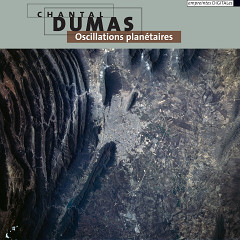
    Oscillations planétaires is the first solo album by Chantal Dumas, referencing geological phenomena and processes. Dumas seems to suggest that field recording and electroacoustic sound might have a strong correspondence with cosmic activities. The release is from Empreintes Digitales, a Montréal based label, which the German radio show Deutschlandfunk Kultur designated for this production. Dumas’ focus is mostly addressed towards geological and tectonic movements and vibrations happening on different time scales, physical events that are irregular, ethereal and subterranean. The album offers a meticulous analysis of these sounds, and highlights some of the hidden phenomena of such events. Only a limited number of these emissions are actually known, such as earthquakes and geysers. Other audio recordings are more immaterial, not exactly recognizable, and follow a series of associations that are aesthetically meaningful and outside the typical approach of the documentary form. Crackles, liquid modular recordings, heavy movements of physical masses, memories of vintage space-age are all elements of the album. Hisses, beats, minimalist and synthetic melodies: this is the sonic background Dumas plays, and she is very good at integrating the sounds with suggestion, the audio recordings with some bizarre treatments. The sonic landscape here is definitely unconventional, even if not so unusual in this musical scene, but the peculiar element is a highly controlled aesthetic result, a vibrant musicality full of low frequency oscillations, ripples and echoes, beating breaks and airy resonances. The whole ecosystem of the planet in movement is evoked here, the way the tectonic plates get in touch, or move away, the seething of magma and the underlying bubbles, the movement of the sea and the electricity the mountains hold at certain heights. Time, space, earth, listening: these themes are definitely not new for Dumas, but here she greatly broadens her range to something fascinating but difficult to capture.

    … here she greatly broadens her range to something fascinating…

    Oscillations planétaires in RNE3: Atmósfera

    “Crítica”, RNE3: Atmósfera, October 11, 2020
    Thursday, October 8, 2020 Press

    Oscillations planétaires es el primer álbum en solitario de la artista sonora afincada en Montréal Chantal Dumas con Empreintes DIGITALes, un sello creado en 1990, considerado uno de los sellos líder mundial en electroacústica y acústica.

    Oscillations planétaires evoca a la geología. En todas las capas que lo componen, desde su núcleo hasta su superficie, el Planeta Tierra está habitado por movimientos ondulantes de escalas temporales extremadamente variadas. Algunos están inscritos en un marco de tiempo geológico, mientras que otros siguen un ciclo diario. Este conjunto oscilatorio contribuye a los mecanismos que gobiernan la dinámica de la Tierra.

    En este trabajo se referencian diferentes fenómenos como lo terremotos que se cuentan entre 800.00 y 1.000.00 cada año en todo el mundo. La mayoría de estos temblores son demasiado débiles para sentirse u ocurrir en áreas deshabitadas.

    O las placas tectónicas de la placa antártica que se mueven entre sí, fenómeno al que hace referencia el tema que escuchamos ahora. La placa antártica se mueve lentamente a una velocidad de unos pocos milímetros a dos centímetros por año, dependiendo de sus zonas de contacto con la docena de placas y microplacas enganchadas a su perímetro.

    Oscillations planétaires evokes geology. In all the layers that compose it, from its core to its surface, Planet Earth is inhabited by undulating movements of extremely varied time scales.

    Oscillations planétaires in The Sound Projector

    “Review”, Ed Pinsent, The Sound Projector, June 14, 2020
    Monday, June 15, 2020 Press

    Debut solo release by the Montréal composer and sound artist Chantal Dumas is Oscillations planétaires, and it turns out to be electroacoustic music themed on various geological phenomena of planet earth. On her annotations, Dumas discourses with a certain amount of authority as she sets out brief encyclopedia entries regarding earthquakes, the shifting of tectonic plates, the formation of mountain ranges, and geysers, as well less tangible things like seismic waves and the magnetic field of the earth. The music, structured in nine episodes across a 49:21 symphony, is intended to “evoke geology”. I’ve long thought this to be a popular trope in the field of electroacoustic composition, for instance parts of Parmegiani’s La création du monde from 1986, or Tremblement de terre trés doux which François Bayle composed in 1978 (although the latter might be more of a simple landscape narrative than a journey to the centre of the earth). Dumas certainly succeeds in conveying the sense of the earth groaning to itself as it stretches its body in preparation for another day, and although the music is largely very abstract, it also feels generally rather prosaic and descriptive, with none of the imaginative leaps that Parmegiani brought to the task. However, it’s much more eventful and packed with more volume than some of the understated pieces we normally get from this Canadian label.

    Dumas certainly succeeds in conveying the sense of the earth groaning to itself…

    Oscillations planétaires in Musique Machine

    “Review”, Martin P, Musique Machine, May 11, 2020
    Monday, May 11, 2020 Press

    This is the first solo album from Chantal Dumas, released on empreintes DIGITALes, a Montréal label ‘widely considered as the world leader in electroacoustics / acousmatics’ — though I’ll admit that it’s not a name known to me. Oscillations planétaires consists of nine electroacoustic pieces built around the interesting premise that the Earth contains ‘undulatory motions of extremely varied temporal scales,’ contrasting, for example, imperceivable geological shifts with the daily movements of tides. This is an interesting, provocative idea but ultimately these things stand or fall, for me, on the quality of the sounds attached; Dumas does not disappoint.

    In the spirit of the ‘temporal scales’ I mentioned, the first track, Tremblements de terre; Plaque antarctique; Subduction; Fosse océanique, begins with wind-like sounds and low end judders, before seismic reverberations erupt cavernously. Amidst the more ‘traditional’ electroacoustic sounds, it’s notable that a ambient-esque patch flickers in and out of the piece, before ending with cascading downward shimmers. The following track is somewhat of a reversal of the first, with long ascending drones; as Convection mantellique progresses it almost sounds like a processed recording of a warehouse, with circling vehicles, alarm sounds, and general hubbub, all laid on an eerie droning underbelly. Geysers begins with sea sounds, complete with something that sounds like seagulls, though all processed and spatially disrupted; this environment is then punctured by attacking percussive sounds, and what might be whale breath, indeed the track draws attention to the comparable cadences of breath and tide. From whales we turn to the insect chirruping of the fourth piece, which builds into a dense, expansive drone that is reminiscent of early Tangerine Dream and their ilk — complete with a suitable synth solo from Dumas. Whilst Marée crustale returns to the sea, with the sound of waves (also interrupted by electro thuds, as with Geysers) building into an almost orchestral lushness from more ambient pads; Magnétisme terrestre presents more recognisably electroacoustic fare, with a constantly shifting array of electronic sounds showing Dumas’ careful attention to detail — in particular some exquisite moments that sound like tape saturation, spilling and decaying. The next two pieces, Dorsale médio-atlantique and Ondes sismiques,’ jolt the listener. Although examination of the press release reveals that Oscillations planétaires was conceived with help from a small group of acoustic musicians, utilising baritone saxophone, flute, piano, and drums, it is with the opening of Dorsale médio-atlantique that we first hear any recognisable contributions from them — even though the saxophone and flute had been previously deployed. Thus the piece begins with an encroaching piano line, before being joined by cymbals and drones in an ecstatic, if at times tempestuous, crescendo, breaking down into more disjointed interactions that contrast tidal sounds with cymbal washes. Ondes sismiques brings the drums to the fore, with processed, dulled rhythms and kinetic snares, interspersed with what sounds like animal noises being stretched and prised apart.

    The final track, Plaque antarctique de loin en loin acts as a short summarising coda to the album, again harking at ambient tones and atmospheres, and perhaps provides a neat sketch of the strength of Oscillations planétaires. This quality, in my eyes, is that the album successfully fuses electroacoustic approaches with a popular notion of ‘ambient music,’ to the extent of even using sounds that are recognisably akin to synth pads or patches. This is perhaps unusual in the ‘hard-boiled’ environment of academic electroacoustic, but it has the wonderful effect of making Oscillations planétaires feel incredibly accessible. Listeners who enjoy ambient music or 1970s synth works, but might run a mile from austere electroacoustic pieces, will find here a welcoming gateway that might encourage them to explore that austerity. This is not to suggest in any way that Dumas’ work is not rigorous or engaging; the temporal themes behind the release are engaged with, present sonically, and rooted with the use of field recordings; there is constant attention to detail, and repeated sounds and ideas give a true sense of coherency to the album. Oscillations planétaires offers a lot to the listener, on many different levels.

    Oscillations planétaires offers a lot to the listener, on many different levels.
  • 1
  • 2