electrocd

Martin Tétreault

35 results
  • 1
  • 2
  • 3
  • 4
  • 5
  • 6
  • Read & Listen Sound Art

    Friday, January 9, 2004 General

    In Montréal on January 20, 2004, Éditions Artextes launched S:on, Sound in Canadian Contemporary Art, an anthology compiled by Nicole Gingras. Amongst the artists represented on this publication we find Pierre-André Arcand, Georges Azzaria, Steve Heimbecker, Hugh Le Caine, Christof Migone, Hélène Prévost, Jocelyn Robert, R Murray Schafer, Michael Snow, Alexandre St-Onge, Martin Tétreault, and Hildegard Westerkamp.

    Ohmix, Fanfare Pourpour, Fred Frith, Klaxon Gueule, Frank Martel, Martin Tétreault in actuellecd.com

    “A Gift Idea: Expand Someone’s Horizons”, François Couture, actuellecd.com, November 25, 2003
    Tuesday, November 25, 2003 Press

    The Holidays are closing in. Are you wondering what gifts to buy this year? You’re looking for the original gift, the one that will surprise and please? Why not expand the musical horizons of a loved one, a colleague at work, or a cousin you haven’t seen since last Christmas? Here’s my highly personal selection of gift ideas to introduce someone (or yourself, you’re allowed to indulge from time to time!) to the wonderful world of “musique actuelle.”

    That good ol’ song

    It may seem a bit easy, but everyone likes a good song. That said, we don’t all have the same definition of what a good song is. And the artists in DAME’s catalog take some liberties with this format — that’s what makes things exciting. But Geneviève Letarte’s Chansons d’un jour will please anyone looking for songs with intelligent, accessible melodies and poetic lyrics. The soft melancholy of Chants des adieux, chants de la solitude will profoundly move dreamers in search of a different voice (Lou Babin’s, irresistible).

    You don’t understand French? The lyrics of Jerry Snell’s album Life in the Suicide Riots will make you think hard about the world we live in. And the chugging guitar riffs of André Duchesne ’s Locomotive will catch the attention of any rock fan, even one deaf to French. Speaking of rock, the deconstructed rock of the all-female group Justine can keep you busy for a while, lyrics or no lyrics. Their first album (Suite) is a powerful mixture of progressist rock, while their second Langages fantastiques leans more toward improvised songs. If you want a taste of what songwriting avant-garde artists can come up with, try the compilation album Chante! 1985-2000, a wide and wild selection of unusual songs.

    Party time

    A time for celebrating, letting off steam, and disobedience, the party when applied to music can give way to a distortion of admitted rules. L’Orkestre des pas perdusinjects a new form of circus life into fanfare music, an infectious R ’n’ B (rhythm ’n’ brass, of course) that will refresh any parade. Its cousin Les Projectionnistes (both bands are led by Claude St-Jean) trades circus for rock and the brass section transforms from funny fanfare to frenetic funk. Taking a different approach, the Fanfare Pourpour leaves the official parade attire behind to favor the spontaneity of a street fanfare. It’s music for “everyone” (Tout le monde, the title of their first album) without dropping to the lowest common denominator.

    In a similar spirit, but adding an East-European flavor and an incredible dose of energy is the group Interférence Sardines, which features two members of the neo-trad group Les Batinses. Jean Derome et les Dangereux Zhoms walks a jazzier road, but its frivolous side easily becomes delightfully exuberant. The group’s three albums are all highly recommended, but Carnets de voyage remains an excellent place to start. And I find the same spirit of excessiveness and raw emotion in La boulezaille (Pierre Langevin and Pierre Tanguay) and Plinc! Plonc! (Jean Derome and Pierre Tanguay), two albums where world music, jazz and free improvisation collide.

    And to boldly go where few have gone before

    Maybe you would like to go further and hook someone on a kind of “musique actuelle” that is more daring and abstract. Here are a few key albums from DAME’s catalogue in improvised and electronic music.

    Martin Tétreault is one of the most fascinating experimental artists right now. His technique at the turntable spins 45 questions per minute. His recent album with Diane Labrosse, Parasites, puts disquieting quiet sounds under the microscope. And Studio — Analogique — Numérique, his fresh collaboration with the Japanese mastermind Yoshihide Otomo, proposes cutting-edge sonic research in very original packaging: a box set of three 3” CDs.

    A pillar of the avant-garde music scene since the early ‘70s, Fred Frith remains the favorite of many connoisseurs. The two albums by the Fred Frith Guitar Quartet (with René Lussier, Nick Didkovsky and Mark Stewart) are essential listens. DAME also distributes the titles released by Frith’s own Fred Records.

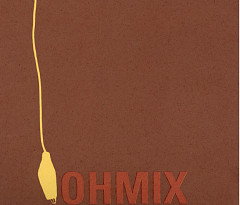
    One of the first groups from the DAME stables to have explored electroacoustic improvisation, the Klaxon Gueule trio revels in noisy textures and demanding pleasures. Their last two albums Muets and Grain met critical acclaim. And I also want to mention the Ohmix compilation album, a daring electronic project where select artists (including Martin Tétreault, David Kristian, John Oswald, Terre Thaemlitz, and Ralf Wehowsky) remix the albums of the label Avatar.

    Finally, instead of sending out the usual Christmas cards, consider the sound post cards produced by the label Ouïe-Dire. These are regular post cards accompanied by 3” CDs from French experimental artists. And happy Holidays!

    A_dontigny, Coin Gutter, Diane Labrosse, Christof Migone, Martin Tétreault, No Type in Grooves

    “Mutek 2003 review”, Schepper, Grooves, no. 11, August 1, 2003
    Friday, August 1, 2003 Press

    As in previous years, the range of artists and genres represented at Mutek 2003 was considerable. With over 70 artists from around the world appearing, one had the opportunity to see ‘marquee’ acts like Pole, Coil, and Richie Hawtin, as well as uncompromising artists like Pita, Kevin Drumm, and T. Raumschmiere. Unlike past Muteks, DJ sets were almost entirely absent at this year’s festival (although, for the record, past DJ sets had often been used to bridge the gaps between non-DJ performances). And, in comparison to last year’s ambitious potpourri of concerts, panel discussions, films, and design displays, the 2003 incarnation limited itself to concerts and panel discussions, with seven of the latter. In short, this year felt like a satisfying consolidation of past festivals’ strengths instead of grandiose risk-taking.

    There were label showcases by Mego, No Type, and Minus/Plus 8, and sets of dubby microhouse from EGG (Julien Roy and Guillaume Coutu-Dumont), smooth minimal techhouse from Robin Judge and Jeff Milligan (aka Algorithm and Revolver label head), hard-hitting minimal techno by Ototo (Dimitri and Filip), Jeremy Caulfield, and Matthew Dear (aka False), the latter’s music evoking classic Chain Reaction stylings in its treble and bass detailing. Drone and ambient musics were presented, the most notable instance being the appearance by Thomas Köner and Asmus Tietchens (performing as Kontakt Der Jünglinge) who sculpted a slowly unfurling glacial soundscape. Other artists in this genre included Gary Joynes (aka Clinker), who built a singular drone-like piece of slowly metamorphosing waves, and [sic] (Jen Morris), who created ghostly dronescapes against a diptych backdrop of enigmatic photographs. Electroacoustic sets were offered by the nuanced Coin Gutter (Graeme Scott and Michael Hendrix) and sampling artist Diane Labrosse and Aimé Dontigny, whose collaboration resulted in a tactile, improvisatory dialogue. Set Fire to Flames’ member Christof Migone generated a 45-minute stream of body-generated scraping and whirring sounds accompanied by a video triptych that showed a gaping mouth at left, what appeared in the middle to be a tomato encased within a block of ice lodged within a salivating mouth, and, at right, the nighttime silhouette of a cityscape and bridge. There were infectious jazz-inflected funkhouse from Cobblestone Jazz and celebratory Latin techhouse by Mambotur. Chicago-based Telefon Tel Aviv (Joshua Eustis and Charles Cooper) presented a heavy microdub funk of chiming synths and massive bass drum and snare patterns. But, overall, the most memorable performances were turned in by veterans like Pole, Coil, Richie Hawtin, Monolake, and Señor Coconut.

    In a Saturday afternoon performance that paid tribute to turntable pioneer Raymond Gervais, four turntable titans — Philip Jeck, Marina Rosenfeld, Martin Tétreault, and Martin Ng — provided an hypnotic set that included extended group collaboration as well as individual spotlights. Ostensibly, the proceedings were directed by Tétreault but his was certainly a benign dictatorship; if anything, the pieces often evolved with the others responding to Jeck’s looping grounds. They began by constructing a beautifully measured collage of scraping and scratching sounds amidst ghostly strains of melody. Immediately following this auspicious beginning, they created an equally effective second piece of whistling tones and bell-like percussion effects. While the concert predominantly featured the four playing together, there were brief duos, trios, and solos. Naturally, as is to be expected in an improvisatory setting, some tentative moments emerged when it seemed as if each of the four was waiting for someone to take the lead, but these registered as not unwelcome moments of brief stillness. Each took solo turns: Jeck, using two turntables, one for 12 inch lps and the other for 45s, drowned the sitar from Stoked in showers of surface noise; Rosenfeld’s solo offered a turntable adagio of sorts filled with treble glissandoes, looped crackling patterns, and phantom melodies; Tétreault’s initial musical quotation was gradually buried under huge slabs of static and hiss, his turn ending with furious scratching and a physical attack on his lps; finally, Ng’s solo impressed less as an exercise in musicality and more as one of physical athleticism. To close, the four collaborated upon a carefully sculpted elegiac piece. In sum, this session was engrossing and nuanced—a demonstration of sensitive listening and collaboration by its participants.

    Electroacoustic sets were offered by the nuanced Coin Gutter and sampling artist Diane Labrosse and Aimé Dontigny, whose collaboration resulted in a tactile, improvisatory dialogue.
  • 1
  • 2
  • 3
  • 4
  • 5
  • 6