electrocd

Blog

2899 results
  • 9
  • 10
  • 11
  • 12
  • 13
  • 14
  • 15
  • 16
  • 17
  • Contemplations in Bad Alchemy

    “Kritik”, Rigobert Dittmann, Bad Alchemy, no. 123, April 1, 2024
    Friday, April 19, 2024 Press

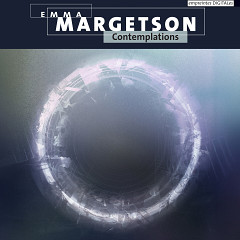
    ’Sonic Immersion: Reaching New Audiences through Sound’ war das Thema, mit dem Emma Margetson (*1993, Derby) an der University of Birmingham promoviert hat. Mit Contemplations (IMED 24189) reflektiert sie, die nun Sound Design an der University of Greenwich lehrt, die Evolution ihrer Klangkunst von 2015 bis ’22, mit dem Akzent auf dem Klang von Zeug in Raum und Zeit. Bei Tick zersplittert das Ticken eines Metronoms. Bei Abstracted Objects kramt sie mit Münzen, Zellophan, Blech. Bei Water Waves lauscht sie der Meeresbrandung. Bei Cimbaal wird in allen Nuancen Cymbalklang abgetastet. Gestört ist, wörtlich, was es ist. Bei Isochrone mischen sich Geräusche eines Fahrrads mit dem Verkehr im Hamburger Elbtunnel und Poesie des Instagram-Poeten Atticus: Life is a tunnel / not a cave / keep walking / and you will find again / the light / you left behind. Auf der Suche nach Einsicht ins innerste Selbst verwischen bei Distorted Illusions Wachen und Träumen, abstrakt und konkret. Ausgang für Sketching Froanna ist Wynd-ham Lewis’ Skizze seiner Frau mit Bleistift- und Kreidestrichen auf blauem Papier. Und Elapsing versucht sich mit ihrerseits schwindenden Erinnerungen gegen das Tempus fugit zu stemmen.

    With Contemplations, she, who now teaches sound design […], reflects on the evolution of her sound art […], with an emphasis on the sound of stuff in space and time.

    Contemplations in SilenceAndSound

    “Critique”, Roland Torres, SilenceAndSound, April 15, 2024
    Tuesday, April 16, 2024 Press

    Contemplations regroupe une série d’œuvres composée entre 2015 et 2022 par la compositrice acousmatique Emma Margetson.

    Travaillant à l’image d’un Bernard Parmegiani, à base d’objets du quotidien, l’artiste nous entraine dans un monde sonore flirtant avec une abstraction futuriste digne de Beatriz Ferreyra.

    Les atmosphères qu’elle développe, se déchirent et éclatent, pour renaitre dans des zones aux turbulences imprévisibles.

    Emma Margetson joue avec les frottements et les caresses, les frictions et les tapotements, jetés dans des tourbillons de saturations filtrées et de réalité augmentée, un peu comme si on se mettait à la hauteur des ustensiles qu’elle enregistre, filmée à la manière d’un Yasujirō Ozu.

    Contemplations révèle l’évolution de la palette sonore de l’anglaise, riche et variée, capable de dériver au milieu de field recordings voltigeurs pour atteindre des cimes d’ambient, aux relents chargées de musicalité subtile. Très fortement recommandé.

    Très fortement recommandé.

    Radiolaria in African Paper

    “Kritik”, African Paper, April 13, 2024
    Monday, April 15, 2024 Press

    Anfang Mai bringen die frankokanadischen empreintes DIGITALes das zweite Soloalbum der ebenfalls in Montréal beheimateten Komponistin und Musikerin Ana Dall’Ara-Majek heraus. Auf knapp über einer Stunde enthält Radiolaria acht als Zyklus konzipierte Stücke auf der Basis eines Buchla 200-Modulargeräts aus den 70ern, denen zwitschernde, blubbernde, brummende, zirpende Sounds keine Scheu haben, ihre Plastizität in besonderen Momenten in Richtung Lärm und kleine herausfordernde Hochtöner auszuweiten.

    Radiolaria contains eight pieces […] whose chirping, bubbling, humming, chirping sounds are not afraid to expand their plasticity in the direction of noise and small, challenging tweeters at special moments.

    Bruit noir in The Sound Projector

    “Review”, Ed Pinsent, The Sound Projector, April 2, 2024
    Wednesday, April 3, 2024 Press

    I’ll admit to a soft spot for the music of Swedish composer Åke Parmerud ever since hearing his 2015 Growl release for this label. Much of the selection on that set satisfied our unhealthy lusts for noise, metal, sampling and industrial music, even if he was doing it in a rather stilted manner. Subsequent item Nécropolis missed a few opportunities for making a truly dark occultist statement (though that was far from his intent), and then there was Grains, a nifty item which showcased earlier compositions predicated on voice experiments.

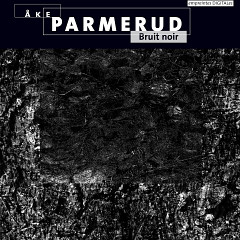
    Today’s record Bruit noir (empreintes DIGITALes IMED 22179) has such a great title it’s amazing it hasn’t been used before in noise / rock contexts — although I find there’s already a French rock duo by this name, and also a label Bruit Noir Records in Marseilles which put out a tiny number of extreme-Techno EPs. Here, Parmerud gathers together three compositions, leading off with the main event Louder Than Life from 2020-21. It’s in five “movements” much like a classical concerto, even using conventional terminology for tempos, like Largo and Presto. We’re not told much about it except that it’s dedicated to his friend Anders Blomqvist, who died in 2020. Blomqvist was a Swedish electronic composer often associated with Fylkingen, and while not exactly prolific he was held in high esteem by many; his Jaguar Revisited has proven an enduring hit since 1984 and is even shown on the telly. While Louder Than Life might not be as extreme as I was hoping for, I am getting the sense that Parmerud is expressing a deep connection with his friend, and attempting to evoke difficult emotions through this strange, layered music. He hopes we’ll listen to the entire 33 minutes in a single sitting, but also allows for each separate movement to work on its own terms and stand up to scrutiny. The Largo movement is particularly affecting, for reasons that aren’t at all clear; even more nightmarish is its neighbour Presto, which comes across as a confusing post-modern jumble of ideas, even allowing the ghosts of serialism and 12-tone composition to swim into the murky mix. It’s all very abstract, gloomy, and held together by an unfathomable structure; we might even call it “intellectual dark ambient”, though naturally Åke Parmerud has no connection to that genre and remains entirely unhampered by its clichés and stereotypical sounds.

    After that, we go back to 2013 with Raw, a piece written for a commission by the Geiger festival. Apparently the curators of this Swedish event favour “noise” music (probably because they’re based in Gothenburg), so he attempted with this composition to cater to their predilections. He decided to have a go with one of these new-fangled synth software apps, and settled on something called Skrewell from Native Instruments. The world of digital workstations is far from my personal comfort zone, but from notice boards and forums I get the impression that Skrewwell (part of the Reaktor suite of tools) is pretty chaotic — eight noise oscillators capable of modulating each other simultaneously and producing a much scarier version of the generative-synth environment which Brian Eno has made his own. Parmerud had much the same experience, and was evidently chagrined by the “uncontrollable” nature of this Skrewell. He decided to relinquish control and just go for the raw outputs of his experiments, hence the name — settling on a kind of composed-improvised work. He also has to admit he failed on the “noise” benchmark and missed the target by a mile. Raw isn’t especially raw or wild at all (Carlos Giffoni, for one, would use this kind of material as a soothing balm in his hot bath), but it’s still possessed of an eerie quality. One might almost say Parmerud were on the verge of possession by a mysterious ghost or phantom oozing out of his laptop screen.

    Also rather fascinating are the weird faceless tones we hear on Dark Matter, even though the method behind this one — searching for inaudible sounds produced by waves of energy from microwaves, computers, or lightbulbs — is old hat, having been investigated since 1996 by Disinformation, John Duncan, CM von Hausswolff, Joe Colley, Scanner, Hafler Trio, and just about anyone on the Fault in the Nothing compilation. Once again Åke Parmerud doesn’t favour a “sensationalist” approach to the subject, and there’s an open-ended quality to the quiet brooding sounds here that is quite attractive.

    … there’s an open-ended quality to the quiet brooding sounds here that is quite attractive.

    Remembering Japan in The Sound Projector

    “Review”, Ed Pinsent, The Sound Projector, April 1, 2024
    Tuesday, April 2, 2024 Press

    Hans Tutschku is the German composer whose Firmament (2015) release for this label we quite enjoyed, especially Issho Ni with its mosaic-like assemblage of voices from around the world making a very optimistic and utopian “global unity” statement in sound.

    Today’s record Remembering Japan (empreintes DIGITALes IMED 22180) is an hour-long suite presented in five separate parts. It might not be so directly idealistic as Issho Ni, but it does represent the composer’s attempt to engage with Asian culture and communicate with its society, while still pursuing his own compositional interests. He stayed there for three months in 2014, not only working and improvising with other musicians, but also capturing a goodly bundle of field recordings in his basket. It’s interesting that he didn’t draw any lines — nature, culture, religion, ceremony, and daily life in Japan were all of equal interest to him, and this is reflected in the broad sweep of the record. On each of the five parts, which all carry subtitles, he’s attempting a different electroacoustic experiment; Expansion for instance works with large open spaces and vast distances, while Abstraction is more focussed on making transformations to the sounds, sometimes leaning towards “extreme forms” as he calls it. At all times he’s trying to move us through time and space, bringing together these remote and separated parts of the continent and looking for overlapping conceptual areas that join things together. Some of the keywords of interest in his text include “calm”, “dreaming”, and “peaceful” — but, as the listener will find, the peaceful mood is very often disrupted and troubled.

    Abstraction is probably the most exciting piece for rock music and extreme noise fans — it sits in the very centre of the suite, uses a lot of rapid edits and fast-moving rhythms, and generally seeks to tap into the essence of what I can only assume is the pulsating energy of Japanese life. Yet it still feels oddly distant and detached, as if Tutschku wasn’t especially moved or affected by what he saw. There’s not much trace of humanity, or even animal life, in these fragmented glimpses. Quite different, and in some ways more successful, is the lengthy Suspension piece which follows, where without reflecting anything specific about the country, the composer proposes to record his impressions in what, for him, is intended as an oasis of calm. Interestingly in this case, “calm” doesn’t equate to a completely untroubled state of mind, and the contrasting tones do generate mild sensations of apprehension and uncertainty. Barely a single recognisable sound source to be found on this Suspension; his electroacoustic changes have been particularly profound, and the piece may be a very strong example of what he regards as key to his working method, using the notions of “memory” and “space” as the way he will structure the work.

    In short, it seems the word “Remembering” in the title is doing most of the heavy lifting; perhaps this record is more about Tutschku’s internal mental workings than about the country of Japan.

    … it does represent the composer’s attempt to engage with Asian culture and communicate with its society, while still pursuing his own compositional interests.

    Docu-fictions in The Sound Projector

    “Review”, Ed Pinsent, The Sound Projector, March 31, 2024
    Tuesday, April 2, 2024 Press

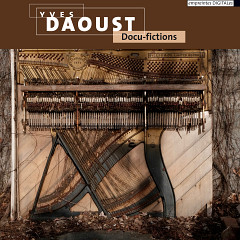
    From Québec, here’s Yves Daoust with Docu-fictions (IMED 22182) — an essential release which I recommend. This fellow worked in France for a time and studied composition with Gilbert Amy, who produced the memorable Une saison en enfer.

    I don’t pretend to understand that part of his method that allows him to keep “nature” and “culture” separate within the same piece, running parallel to each other in some way, but it sounds ingenious, and here are perhaps some examples of how he puts it into practice. He also steeps himself in the juices of life, and has a genuine interest in humanity; the first two pieces here are versions of his Lily piece (an acousmatic rendition, and a mixed version). Lily was a courtesan and a friend of his; she spilled out the details of her colourful life before his microphone with no shame or restraint, and he recorded the results, making them into this work; on top of the real-life Lily, he added the voice of an actress, who reacted to Lily and added her own feelings and comments. Wish I understood spoken French better than I do; it all sounds pretty steamy and fruity. But also more importantly very real and heartfelt. Daoust interjects a few treatments and editorial gestures, but he’s being true to the voice of his friend. The mixed version from a few years later adds an accordion (played by Joseph Petric, no less) and a violin, and this one’s even more orgasmic with its heavy breathing and there’s more than a whiff of Pigalle sleaze in the mix. Great!

    Another gem here is Impromptu 2 from 1995 — that’s right, keyboards and piano layered in with traffic sounds and sirens. The music they’re playing has all been derived from a certain Chopin composition, we are informed; Yves Daoust speaks of the “agitation… abundant energy… tension” which got his creative fluids bubbling. He’s not kidding. Players Poulin and Cronkite do a fantastic job with their crisp, urgent percussive pecks on their 88s, but adding the sounds of the street has been a master-stroke. If only more phonographer and field-recording types could make such bold use of their material.

    I’m also staggered by Calme chaos, a daring work from 2011-12, making a very profound comment about modern culture. Daoust perceives culture is in a state of crisis; there’s too much of it these days, we seem to have access to more of it than ever before, and yet “we seem to be outside the continuity, in total disarray”. Perhaps we can’t make sense of the past any more; perhaps we simply can’t tell good art from bad art. The composer doesn’t simply describe the situation, but re-enacts it through composition, using an entire orchestra to make his statement — alongside the pre-recorded tapes. The taped voices (automatic writing, samples, spoken gibberish, and a “flurry of traits”) represent the “chaos” side, while the orchestra do their best to hold on to the past, and try to bring meaning to the muddled information. 17:11 mins of sheer tension result, both exhilarating and fascinating; I’m not sure if it proposes a solution to the crisis, but it certainly presents it in a clear and elegant manner — we’ve rarely heard such controlled chaos. Other composers have battled with this popular theme — one recent instance was Pierre Alexandre Tremblay on this same label with his Newsfeed — but Yves Daoust is I think one of the first to have approached it from the starting point that we’re doing too much “archiving” these days, and he works hard to probe the gap between past and present, highlighting how our collective cultural amnesia is now spreading like a mental illness. Excellent work!

    Excellent work!
  • 9
  • 10
  • 11
  • 12
  • 13
  • 14
  • 15
  • 16
  • 17