electrocd

Blog

2899 results
  • 463
  • 464
  • 465
  • 466
  • 467
  • 468
  • 469
  • 470
  • 471
  • Jean-François Denis, empreintes DIGITALes in SOCAN — Canadian Composer

    “On the Edge”, Sylvain-Claude Filion, SOCAN — Canadian Composer, June 1, 1991
    Saturday, June 1, 1991 Press

    In January 1990, Montréal composer and ex-Concordia University professor Jean-François Denis fulfilled a long dormant dream of creating a label devoted exclusively to electroacoustic music. Now 18 months later, empreintes DIGITALes (for “digital imprints” or “impressions”) has released six compact discs.

    Denis and his partner Claude Schryer started North America’s first independent electroacoustic label to fill a perceived need: “We saw all these Canadian electroacoustic masterpieces that nobody could hear unless they were in the right town on the night of a concert,” Denis recalls. The company operates with substantial assistance from the Canada Council for the Arts: “Without them, we could hardly get involved in record production at all.”

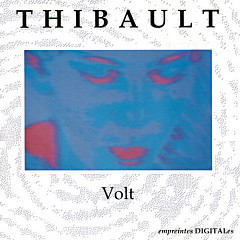
    The first six titles are Ligne de vie: récits électriques, devoted to works by Christian Calon; Lieux inouïs, featuring five works by Robert Normandeau; Volt, a group of eight works for MIDI piano, soprano, saxophone quartet and tape by Alain Thibault;

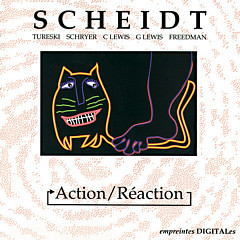
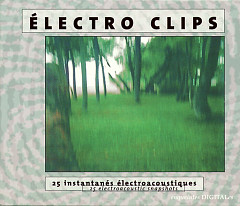
    Électro clips, a collection of 25 electroacoustic “snapshots” by composers from various countries; Action/Réaction, featuring five interactive works by Vancouver’s Daniel Scheidt; and the newly released Anecdotes, a group of compositions by Yves Daoust.

    empreintes DIGITALes releases are distributed by Scandinavian Record Import (SRI) of Peterborough, Ont., and through the Canadian Music Centre, as well as in France, the Benelux countries, Japan, the UK and the US. “Our manufacturer has just delivered the second pressing of our first discs; of which 1,000 copies had been made initially,” says Denis. “And Électro clips, released last November, sold out in six months.”

    How would Denis classify electroacoustic music? “It’s hard to place it in a specific category. It’s music that puts the emphasis on timbre before anything else. Yet it’s not laboratory music: the final product is sophisticated.”

    Denis is full of plans. He is currently working on a series of records of longer pieces to be sold as cheaply as possible. But he remains realistic: “Of course, the second pressing of our original recordings indicates a degree of profitability and could help me financially. But let’s face it, what we’re selling remains very much a fringe product.”

    … North America’s first independent electroacoustic label…

    Jean-François Denis, empreintes DIGITALes in SOCAN — Le Compositeur Canadien

    “empreintes DIGITALes”, Sylvain-Claude Filion, SOCAN — Le Compositeur Canadien, no. 2:3, June 1, 1991
    Saturday, June 1, 1991 Press

    Originaire de Montréal, d’esprit vif et dynamique, Jean-François Denis dorlote un bébé qui grandit très vite: l’étiquette empreintes DIGITALes, consacrée à la musique électroacoustique et lancée en janvier 1990.

    Pour cet ex-enseignant de l’Université Concordia qui a été parfaire ses connaissances au Mills College de Californie, la naissance d’empreintes DIGITALes n’est pas le fruit du hasard. «L’intention était vieille, explique Denis, c’est un projet que j’avais depuis quelques années. Il a commencé à se concrétiser en août 1989 lors de l’obtention de nos premières bourses.»

    Appuyé par le musicien Claude Schryer, Denis a créé l’étiquette pour combler un besoin. «II y avait des chefs-d’œuvre au Canada en musique électroacoustique et il n’y avait absolument aucun moyen de les entendre, sauf si le hasard nous plaçait dans la bonne ville un soir où se déroulait un concert.»

    En créant leur propre étiquette, Denis et Schryer mettaient sur pied la première compagnie de disques indépendante de musique électroacoustique en Amérique du Nord. «Naturellement, on vit de subventions, s’il n’y en avait pas, on pourrait difficilement se lancer dans la production de disques», de préciser Denis. C’est pourquoi les six premiers albums mis sur le marché, grâce au Conseil des Arts du Canada, ne regroupent pratiquement que des artistes canadiens. «II y avait du rattrapage à faire, bien sûr, mais nous voulions aussi monter un catalogue assez rapidement, afin de mieux convaincre les distributeurs et les détaillants.» Les six albums sont: Ligne de vie: récits électriques, consacré à l’œuvre de Christian Calon; Lieux inouïs, qui regroupe cinq œuvres de Robert Normandeau; Volt d’Alain Thibault, qui réunit huit pièces pour piano MIDI, soprano, quatuor de saxophones et bande; Électro clips, un disque collectif qui comprend 25 pièces de compositeurs de divers pays durant chacune trois minutes; Action/Réaction, qui regroupe des œuvres interactives de Daniel Scheidt, de Vancouver, et Anecdotes, qui illustre les œuvres du compositeur Yves Daoust s’étalant sur plus de dix ans.

    C’est la compagnie Scandinavian Record Import (SRI), basée à Peterborough (ON) et le Centre de musique canadienne qui distribuent les disques d’empreintes DIGITALes. Grâce à des contacts personnels, les disques sont aussi distribués en France, en Belgique, au Luxembourg, dans les Pays-Bas, au Japon, dans le Royaume-Uni et aux États-Unis. «Nous sentons un succès certain, affirme Denis, le fabriquant vient de nous livrer le second tirage de nos premiers disques, qui avaient été pressés à 1000 copies chacun. Électro clips, paru en novembre, était épuisé six mois à peine après sa sortie.»

    Difficile de confiner la musique électroacoustique dans une case précise. «Pour moi, d’expliquer Denis, l’électroacoustique est une musique qui s’intéresse au timbre sonore avant tout. Une musique qui va au-delà de la matière sonore, en scrutant l’intérieur pour articuler ces timbres sonores. Mais ce n’est pas de la musique de laboratoire, le produit est décanté.»

    Non seulement l’électroacoustique semble vouloir être de plus en plus accessible, mais elle décroche même des succès à la radio! Électro clips a été le #1 sur le «Top 40» de la station communautaire CITR de Vancouver. Radio-Canada fournit aussi un appui solide quant à la radiodiffusion.

    Pour Jean-François Denis, le futur est chargé de projets. On élabore déjà une série de huit ou neuf disques qui ne comprendront que quelques pièces et qui seront diffusés à très bas prix. «C’est vrai que la réimpression de nos disques laisse entrevoir une rentabilité, et pourra renforcer notre autonomie, mais il ne faut pas se leurrer: on reste un produit hautement marginal.»

    … la naissance d’empreintes DIGITALes n’est pas le fruit du hasard.

    Volt in Online Digital Music Review

    “Review”, Steven McDonald, Online Digital Music Review, June 1, 1991
    Saturday, June 1, 1991 Press

    One of a series of discs from Canada’s DIFFUSION i MéDIA, the organization behind the empreintes DIGITALes label. The basic thrust of the two recent series is the continued exploration of sound via electronics, and an effort to bring real electronic music into the present day. Which means, of course, that everything from MIDI to the kitchen sink gets involved, with sometimes astonishing results.

    Volt is cause for astonishment indeed, partly in its immediacy and listenability. The latter effect is close to baffling when you consider that the opening piece is the thirteen minute Concerto pour piano MIDI in which pianist Jacques Drouin is faced with the task of keeping pace with a wildly programmed array of synthesizers and samplers — it’s a piece that takes the tack Frank Zappa has taken with his Synclavier work on albums such as Jazz From Hell, but with a slight but important difference: here there’s a live performer working in response to the programming. As the liner notes mention, that introduces an element of danger and an element of tension. Fortunately, Drouin is up to the challenge involved.

    In Le soleil et l’acier soprano Pauline Vaillancourt is the human element balanced in a desolate vocal balance against the electronic instruments and racketing percussion. The piece suggests narrative, strangely enough, possessing the resonances of a good movie score for a thriller. Instruments float in and out of the mix, swirling about the pinned voice and dissipating again. It’s an oddly exciting piece, all tension and danger, remarkable, immediate and clever.

    OUT, on the other hand, an abbreviated version of a video opera exploring the idea of virtual reality as a way of life, is somewhat less successful. Much of the piece is dependent upon Fairlight sampling and trickery, so that the sections of the piece often sound like Art Of Noise run amok, particularly in the opening section, built around a quote from Ronald Reagan. There are some interesting sounds and ideas, but it doesn’t quite get all the way through, the piece falling prey to its own facility for flexing in any given direction.

    ELVIS (Électro-lux, vertige illimité synthétique)> on the other hand is structured for electronic instruments and saxophone quartet and has an air of deep dark mystery about it, rather in the way of jazz turned on its head and then warped out to some other place. Here Thibault takes to long tones, electronic vocals, staccato overlays from the saxes, galloping percussive sections that seems almost normal at moments, before whirling off to some other time, space and meter. As much of a pun as the title is, the music also manages a few puns here and there, ricocheting from musical ideas that are comfortably familiar. It’s a very dynamic piece.

    Volt manages tc conjure up the image of electricity, though in the context of a mad scientist’s lab (the synthesized harpsichord voice and the Simmons tom tom samples may be responsible for this image). It spends most of its ime leaping about between ideas and variations on those ideas; often with a sense of computers out of control as pieces of the music suddenly speed up, slow down, speed up, slam to a stop. At first it seems as though it is never going to connect the dots… and then, one by one, the dots start to blend out and together, making a coherent sense. It’s musical illumination by machine, of course, hung on a popping, growling bass and tinkly, flashing marimba sounds, sort of a dance mix from hell. There’s more than a little of that Zappa connection again — there are sections of this piece that have the same sort of clean-edger lunatic avant-jazz sense to them, especially with the marimba going full tilt.

    If exploring modern electronic music is something you want to do, I can recommend this album as an excellent starting place — it’s out far enough that it’s fascinating and fresh, but connected enough to the real world at odd points that it will not drive away the curious looking to see what all the noise is about.

    Volt is cause for astonishment indeed […] close to baffling…

    Action / Réaction in Vital

    “Review”, IS, Vital, no. 20, June 1, 1991
    Saturday, June 1, 1991 Press

    The Scheidt CD presents us works composed for instruments and interactive computer. The first composition is percussive. Here the computer produces sounds that are related to the ‘pads’ that the percussionist hits. The work is lively, and brilllantly played. The 2nd and the 5th work feature computer and bass-clarinet. The computer closely follows the pitch-directions that the clarinet points out. Third is a composition for soprano voice and computer. An unintelligible computer-developed language is spoken, the computer here reacts to the way the words are pronounced. There are five sectlons, each with a different sound that is produced by the computer. Number 4 features George Lewis on trombone, and computer. The computer, NORM, follows the fast melodic lines of the trombone, and Scheidt coordinates voice-changes.

    So far the very brief description of what happens on Action/Réaction. It made me thlnk more about interactlve systems. I know people who think that this is the future of computer music. I hear a lot of good things on this cd; the computer generated language of #3 really ‘works’ and the sounds that the computer produces in the first, percussive work are very interesting. But I have not heard many impressive, firm moves coming from the computer itself. For the most part it’s a follower, reacting according to no doubt very intrlcate schemes. Still, the human performer does so this much more subtle and intelligent than this software brain. I don’t hear an equal relationship, but man playing the major role and the computer as a dumb follower.

    Électro clips in Musicworks

    “Review”, Devin Hurd, Musicworks, no. 50, June 1, 1991
    Saturday, June 1, 1991 Press

    The new CD Électro clips from the young Montréal label empreintes DIGITALes is a potpourri of twenty-five electroacoustic compositions. This is not a sampler compilation — that is, it does not contain excerpts of works found on other releases. These twenty-five pieces were commissioned specifically for this CD to represent twenty-five different artists working in the electroacoustic medium.

    The careful consideration of the concept and packaging of this CD help it succeed. Each piece is exactly three minutes long and the compact disc comes with a set of numbered, loose pages for each selection: a black and white snapshot is on one side and information about the composer and his or her piece is on the other. The numbers on the pages refer only to the program number on the CD. One may shuffle the pages and the order of pieces on the CD player to eliminate any sense of hierarchical ordering. The equal length of each piece combined with clear documentation gives each artist equal representation.

    Some of the pieces that interest me most are Mambo à la Braque by Javier Álvarez, Somewhere between by Craig Harris and Marimba Dismembered by John Oliver. Javier Álvarez is a Mexican composer whose Mambo à la Braque offers a more whimsical atmosphere that contrasts with the prevailing sombreness of the rest of the CD. Álvarez creates a “sound mosaic” using segments of a recording of Caballo Negro, a well-known mambo by Damaso Perez Prado. Álvarez preserves the recognizable sounds of mambo music while giving the piece a definite electronic slant.

    Craig Harris’s Somewhere between uses piano sounds for its source material. Different timbral variations on piano sounds are used freely to create a remarkable piece. It opens with the scraping of various strings and lowpitched sounds. Later, more melodically oriented material appears that is soon integrated into the initial texture.

    John Oliver’s Marimba Dismembered is described as “a dirge for Guatemala’s national instrument: a cry for an end to the genocide of the Mayan people”. The music alone does not make the same impression as the liner notes. It is not especially dirge-like and the political references are abstract enough that they wouldn’t exist without the liner notes. The music itseif is a fascinating study of marimba timbres. The slowed-down backward marimba sounds are easiest to identify and they run through most of the piece. The other sounds are electronically manipulated to such extremes that one is freed from any sense of their initial source.

    Électro clips represents a wide variety of aesthetic approaches to electroacoustic music. There is a healthy eclecticism of sonic experimentation, political statement, audio cinema, sound journeys and studies of sound sources that are both obvious and abstracted.

    The most successful pieces on this CD are the ones that used the limited time frame to their advantage. Pieces like John Oswald’s Bell Speeds or Daniel Scheidt’s What If made effective use of the time constraint by setting up a process that was followed throughout the course of three minutes. Another way composers made effective use of the time frame was by structuring the dynamic shape so that the dramatic material unfolded in effective proportions. This was achieved in Gilles Gobeil’s Associations libres by building toward a climactic section near the end. Since these pieces were specifically commissioned to be exactly three minutes long there was seldom a sense that these were simply short excerpts of longer pieces.

    The empreintes DIGITALes label is clearly dedicated to the needs of its artists; each composer on the Électro clips CD receives a full representation. I am pleased to note that this label plans to release other works by some of the artists found on this collection, and that a second pressing of this release has been made; the initial pressing sold out in less than six months.

    The empreintes DIGITALes label is clearly dedicated to the needs of its artists…

    Électro clips in Audion

    “Review”, Alan Freeman, Audion, no. 18, June 1, 1991
    Saturday, June 1, 1991 Press

    This CD certainly collates some of the most revolutionary and inventive electronic music composers in Canada today along with a few such explorers of other nationalities.

    Of course, a collectfon of 25 pieces on any other medfum other than CD would be most troublesome, especially, as is often the nature with electroacoustic music, spaces within tracks may be part of the music, and wlthout much melodic structure one track can seem to flow into another, even when subsequent tracks may be very different. The track index on the CD player makes it plain who you are listening to all the time. Thus a-part from being an excellent compilatfon it ls also a good sampler/reference tool for checking out the various artists featured.

    To review the individual tracks would be of course pointless — if you’re at all interested, let the music and informative collection of inserts do their own talking by introducing a world of music that certainly deserves wider recognition.

  • 463
  • 464
  • 465
  • 466
  • 467
  • 468
  • 469
  • 470
  • 471