Sauter au contenu principal
electrocd

Louis Dufort

58 résultats
  • 2
  • 3
  • 4
  • 5
  • 6
  • 7
  • 8
  • 9
  • 10
  • Francis Dhomont, Louis Dufort, Robert Normandeau dans The Toronto Star

    «Soundscape For The Ears, Not The Eyes», Peter Goddard, The Toronto Star, 14 octobre 2001
    dimanche 14 octobre 2001 Presse

    Rien à voir (nothing to see) is not true. When Robert Normandeau sets up tomorrow night at the Robert Gill Theatre, the stage will in fact be filled with something — a load of sound-amplifying speakers. Anything else, like real people or just a simple music stand, might get in the way of the musical sounds. And that’s one thing that won’t happen at a Normandeau concert of electronic music. Here the sound is a spectacle even if it has nothing to show (perhaps a word should be coined for this sound-only show, something like an “auracle.” There have been those over the years who have urged the 46-year old composer to add a visual element. “But we resist,” he replies. “It’s called Rien à voir to make clear to everyone this is not a show.” This can be a problem for some people. So can the sounds Normandeau creates — abstract, tuneless rhythm-free whooshes and swooshes, and electronica that goes ping in the dark. Tomorrow night, he is joined by two other practitioners of this art in the dark: his mentor, Francis Dhomont and a younger colleague, Louis Dufort. “At this concert, there really is nothing to look at,” Normandeau says. “There is nothing of interest to sit in front of. The performance itself is minimal. It is often presented in the dark.” Does this sound like a lot of fun? Well, it can be, he goes on. “In this way, the audience becomes an audience,” he says. What happens is probably the most musical experience in anyone’s life. Electroacoustic music was Normandeau’s turf well before he got his degree in musical composition from Université Laval in Québec City in 1984. Back in the early ’80s, it looked like the place to be. It looked like it might be the future of serious music, taking it to the next level. It even had a base in popular culture. All those techno-Brit bands were making electro-sounds so fashionable in hip magazines like The Face. Even Paul McCartney talked about Stockhausen, electronic music’s Big Cheese. So much for yesterday. Instead of replacing symphonic classical music, electronic music became its frighteningly eccentric second cousin. Since then, we’ve had no choice but to love it on its own terms. “Electroacoustic music should not be compared to anything else,” says Normandeau. “The major innovation in it is that the composer does everything in the studio. He doesn’t have to care about the reality of the stage or the realism of his gestures. He doesn’t have to think about someone else reading his score.” “I think being this kind of composer is a lot closer to being a writer or sculptor. We work like sculptors; we sculpt sound and space. We have to adjust our performance to the acoustics of the hall. Basically the music is written in the studio, but we have to fine-tune it for the performance.” “But even with this kind of taped music, I don’t think a live performance can be replaced. The live performance is important for human beings. It is a ritual. Going to a place and spending time with other people is something we need in our lives. “In the past, when we thought about electronic music as being the extension of the instrumental musical world, it didn’t work out very well because the electronic instruments are pretty primitive compared to regular instruments. The quality of sound you have when you play a violin or piano comes from centuries of research. In fact, we haven’t invented a new instrument in over a century. The last one was a saxophone.” Yes, but there is the computer, he admits. This is good news for composers and bad news. The bad news is that, “when you are working with a computer, you lose contact with the music. You watch what you are doing. You lose contact with the sound. Yet because with computers so many people are working at home, music can become very personal and very intimate.”

    What happens is probably the most musical experience in anyone’s life.

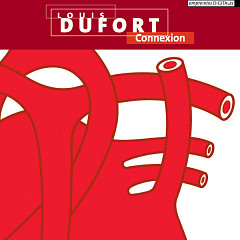
    Connexion, Louis Dufort dans Sonoloco Record Reviews

    «Review», Ingvar Loco Nordin, Sonoloco Record Reviews, 5 mai 2001
    samedi 5 mai 2001 Presse

    Louis Dufort was born in Montréal 1970, which makes him one of the younger diffusers of an acousmatic French-flavored tradition of quite an impressive age by now! He has an inclination towards other disciplines as well, like painting, cinema and contemporary dance. He is currently occupied with working for the Marie Chouinard Contemporary Dance Company, being the composer of the choreographic music for Le cri du monde (2000).

    It is very nice indeed to welcome younger composers into electroacoustics, ensuring that the idiom is furthered and developed, never to fall back entirely on past evolvements, but always to seek new ways of sonic expression to intrigue the mind and the imagination, not least the emotions.

    Transit (1998) commences with a brittle, vibrating commotion of glassy sounds, fondling your perception, soon to be joined by rougher murmurs and gliding forces, again abruptly stopping, only to let little specks of sounds tickle… The composer indicates that this piece makes use of “continuous discontinuity”, which pretty well describes the overall scheme of the events, with suddenly receding and gradually reappearing auditive events.

    A lot of motion is in motion, i.e. sections of motion move inside a larger movement, with inserted static fields, an example readily recognizable at 4:37, where Stockhausenesque Kurzwellen-static engulfs the listener and completely obliterates the line of events that preceded it. At 5:35 an even more static static emerges, sounding much like distortion from an overloaded speaker; a sort of standing-wave event. Just a little later sounds resembling voices or choirs emerge, inside the standing wave phenomena. It’s quite attractive, connecting back to sound pioneers like Rune Lindblad and his noise works from the early 1970s (unknown to most). All of a sudden all this gives way to pure musique concrète, or even soundscape music, with the sound of the wind on the microphone, steps through some kind of forest underbrush, with the added pleasures of brittle sounds of glass; maybe glass beads. The winds hiss; you feel the summery atmosphere – as if you’re sitting under the canopy of a weeping willow, hidden from the outside world, as the wind sweepsthrough the hanging leafy branches, and you hear someone walking by, down towards the lake, where a canoe is waiting. Impressionism!

    I doubt whether Dufort had any specific plan when he composed this work. I think he worked intuitively – and that’s just fine! I live my whole life intuitively, and I have survived so far… It’s a very imaginative piece, Transit – and the title does allow for a great freedom of expression, which is why the concluding vision of a helicopter taking of inside a swarm of circling angels isn’t out of place at all!

    Pointe-aux-Trembles (1996) starts with a heavy panning of screams and voices, very soon loosing out to a single line of meditative inclinations, soaring in a linearity towards the horizon, becoming the horizon; you in the middle of your world, looking around… Sweeping events, fluctuating between transparency and dense fog, appear; then disappear into a near-silence (even with earphones).Dufort’s poetic introduction goes: Prologue; Introspection; Elle (She); Lumière (Light); Prière (Prayer). Night beneath the glittering refineries, time stands still, I am but a lost child on the gravel of Pointe-aux-Trembles. “Machine Mother take me.” Guttural machine-like repetitions cut like factory fears through the piece a few minutes inside it, and I get associations to Jean Schwarz’s Makinak (1994). My own experiences from the Oxelösund Steelworks at the Baltic coast rise like smoke stacks through these passages too…

    Very silent pitches lead on to other ghastly machineries, where the smell of asphalt and crude oil mixes with the salty winds from the Atlantic – and you’re lost in your surviving technique, ground down to abarren industrial structure of steel and smoke and showers of glowing trajectories of welding sparks inechoing halls disappearing down hazy perspectives …

    Towards the end of the piece the mind retreats from the outer world of the crude ugliness of necessity, into the inner space of nose-tip hypnosis, in a preview of a here-after to come to all, before the re-entry into the material world…

    Zénith (1999) is the third piece on the CD, starting of like the collected choir of the angels, at a distance – but surely in a state of ultimate bliss… but soon the angels transform into somewhat lower beings; sparkling fairies, in and out of vision, encircling the breath of the viewer, the listener… in a fairy tale of your childhood, or in a childhood dreamscape that you were hurled into after you fell asleep when your mother read to you at the bedside… Long gone golden age… a secret landscape of the child, recurring herein this Dufort music, ever so lightly, ever so gentle, ever so… desperate (in the ears of a hopelessly grown-up adult…). A fairy comes up close, hovers at ear-level and breathes hard into your mind, an “aaaaah” of age-old proportions, smacking you at an incredulous speed through any number of dimensions, all purely spiritual – and the afterglow of bells applies a golden layer across the mindscape…until a Bardo Thödol scare-creature growls at you full-blast, but if you remain on your path you may be liberated, lifted out of this succession of deaths and births and deaths and births… fear not! The fairies gulp and hick-up as you safely pass the scary parts of your dreamscape into a more somber state, where a certain control is offered you, even in the frantic noise-layers in which the scare-creature growls at you again in an unexpected recurrence, which can’t hurt you, though, as you’ve learned. The voices of Marie Chouinard and Luc Lemay were used in the composition.

    The last piece is the longest; Décap (2000) with its 24 minutes. Dufort calls it “a study for wrists and ankles”! It has to do with elasticity and contraction, and the beginning is a fearless leap into – it seems – over-amplified samples of frictional events from – maybe – balloons, taking on the guise of some kind of heavily leaking air-vent, turning, after a little while, into percussive occurrences of a plastic pop-music flair. Whispering voices, on the verge of groaning, appear all around your ears, all around your hat. The Bardo Thödol scare-creature of last piece has made it over into this work, but he is joined by the chanting voice of some kind of priest, and the percussion of buckets. Part of the music of Décap is excerpted from the music for Le cri du monde, and the voices of Marie Chouinard, Émilie Laforest and Luc Lemay were used. It is amazing how the use of language, of sheer vocalisms and consonants, can raise the experience of a sounding work like this to magnificent levels of excellence! This is definitely my favorite among the piece on this CD, even though the others are great works too – but the repetitious (and other) utilization of human vocal sounds, distorted, cut-up and refined, places this piece in a class by itself. Admittedly, vocals were used in Zénith too, but they’re applied with more sophistication here. I have a special ear for sound poetry, and reflections of that art are apparent in Décap, in an atmosphere of oral cavities, smacking lips and sprays of saliva protruding like the volcano eruptions on Jupiter’s moon Io. A point of stark listening pleasure is reached when Louis Dufort applies chorus effects to already manipulated vocal noise sounds! Far out! At times I even feel like I’m at one of the gargantuan feasts ofthe crude medieval heroes of Rabelais, digging in to the food with saliva running out of the corners of my mouth! Rock n’ roll! Or is it a case of exorcism at a village football game in Stigtomta?

    A point of stark listening pleasure is reached…

    Louis Dufort dans Hour

    «Wrapping a stubborn ear around musique actuelle», Isaac Chosta, Hour, 9 mars 2000
    jeudi 9 mars 2000 Presse

    Also this week: Rien à voir is four days of electroacoustic music at the ExCentris complex with composers from Quebec, the rest of Canada, and Europe. Don’t miss the rencontres with the composers each day at 6 pm in the Agora (just outside the three cinemas).

    Louis Dufort dans La Presse

    «L’acousmatique à la portée de tous», Philippe Renaud, La Presse, 8 mars 2000
    mercredi 8 mars 2000 Presse

    «As-tu déjà vu quelqu’un mourir devant toi? Non? As-tu déjà vu les films Face à la mort? La scène de l’électrocution?» me demande Louis Dufort. Oui, oui, ça me revient… Le jeune compositeur de musique électroacoustique est obsédé par la mort ces temps-ci. Obsédé par les atrocités que peut subir le corps humain. Elles provoquent chez lui une émotion dense, brutale, déstabilisanle, qui est au centre des œuvres qu’il nous fera entendre ce soir, lors de la soirée d’ouverture de la série Rien à voir présentée pour la première fois dans les conditions idéales qu’offre le centre Ex-Centris.

    «Le malaise m’intéresse, m’explique-t-il depuis le pelit studio qu’il s’est construit au sous-sol de sa demeure. Je m’intéresse à la rupture des attentes de la perception pour créer chez l’auditeur un déséquilibre. C’est là où j’ai le contrôle sur lui!» jubile-t-il.

    Sa musigue est en effet inattendue. Sur Zénith l’une de ses plus récentes compositions, la tension est déjà palpable pendant ces premiers instants vaporeux, puis éclate brutalenent. L’impact est terrible et vise au plexus: «J’ai une approche autant musicale que physique.»

    Louis Dufort a 28 ans, est diplômé de l’Université de Montréal en composition de musique électroacoustique, ainsi que du conservatoire de musique de Montréal, et trippe sur le techno. Ses compositions lui ont valu de nombreux prix (ACREQ et SOCAN) et sont reconnues autant en France, dans les Pays-Bas qu’aux États-Unis. Mais Dufort est moin sérieux que son curriculum vitae le laisse paraître: «J’ai jamais été ben intellectuel. Je n’aime pas trop les concepts; ça va justement à l’encontre du trip de la perception qu’est l’acousmatique.»

    Essayons de clarifier ce jargon qui, de vous à moi, peut paraître assez aride. La musique acousmatique n’est pas un style; c’est une façon de rendre la musique telle qu’elle le sera pendant les quatre jours de la série Rien à voir. Une pièce électroacoustique mise en espace, diffusée dans un environnement contrôlé — truffé de 35 haut-parleurs —, permet de lui conférer de nouvelles intentions, un nouvel impact à l’oreille.C’est ça, l’acousmatique.

    «Ça vient de Pythagore. Quand il donnait ses enseignements, il se cachait derrière une toile pour que seules ses paroles soient retenues.»

    «Ainsi, renchérit Dufort, l’auditeur n’est pas distrait par le jeu de l’interprète. Tout ce déroule dans le noir total. C’est ce que j’aime là-dedans, c’est qu’on se retrouve avec la musique à l’état pur. Ça devient intéressant d’un point de vue narratif; je peux créer des images concrètes qui vont toucher l’auditeur.»

    Louis Dufort sent la nécessité de raconter quelque chose à travers ses pièces, comme si c’était du cinéma. La seule chose qui lui importe c’est d’installer un dialogue entre lui et le public. «Je veux que l’auditeur ressente quelque chose d’intense.» De cette façon il n’est pas nécessaire de posséder une maîtrise en musicologie pour apprécier ses œuvres.

    Cette satisfaction, il espère aussi la retrouver dans la musique techno. «Le techno est une forme populaire de l’acousmatique. On ne va pas entendre du techno pour être ébloui par la performance du musicien. On y va pour la vibe, pour la musique!» D’ici à ce qu’il lance ses premières compositions pour le plancher de danse (sur le label montréalais Ascend), un premier disque de musique électroacoustique devrait paraître sous peu. En plus de tout ça, Dufort compose pour les chorégraphies de Marie Chouinard, un travail qui le passionne. «J’adore danser, j’adore le travail du corps humain!» Et de me replonger dans ses images de corps mutilés, travaillés par la douleur…

  • 2
  • 3
  • 4
  • 5
  • 6
  • 7
  • 8
  • 9
  • 10