Sauter au contenu principal
electrocd

Blogue

87 résultats
  • 1
  • 2
  • 3
  • 4
  • 5
  • 6
  • 7
  • 8
  • 9
  • Musiques naïves, Lieux inouïs, Alibi dans Le Devoir

    «Un cinéma pour l’oreille», Clément Trudel, Le Devoir, 26 octobre 1998
    lundi 26 octobre 1998 Presse

    Dans ce qui pourra se révéler un «cinéma pour l’oreille», le théâtre La Chapelle propose, du 28 octobre au 1er novembre, une immersion dans la musique concrète ou «acousmatique». Cinq jours d’électro pour souligner les 50 ans d’une musique inventée par le Français Pierre Schaeffer.

    Parmi les compositeurs de musique concrète, l’un des plus prolifiques est François Bayle qui dirigea à Paris, durant 30 ans, l’Ina-GRM ou Groupe de recherches musicales de l’ORTF. Ces journées organisées par Réseaux font la part du lion à Bayle que certains qualifient de «légende vivante». Le samedi 31, les concerts de 19h et de 21h (Rétrospective no 1 et Rétrospective no 2) portent entièrement sur des œuvres de Bayle. Ces concerts sont repris le dimanche (1 novembre) aux mêmes heures. François Bayle s’entretient dimanche (14h) avec de jeunes compositeurs.

    Un catalogue abrégé de ses œuvres présenté par la revue d’esthétique musicale LIEN (printemps 1994) contient une cinquantaine de titres. Sous la direction de Michel Chion, LIEN a recueilli une vingtaine de témoignages de musiciens et de compositeurs sur Bayle, auteur de plusieurs ouvrages théoriques. Certains ont découvert l’électroascoustique au contact d’œuvres comme L’Oiseau chanteur ou Espaces inhabitables de Bayle, dont l’un des disques porte le titre Motion-Émotion.

    Cet événement Rien à voir (4) accueille trois autres compositeurs: le Montréalais Stéphane Roy (mercredi 28); le Suédois Erik Michael Karlsson qui offre (jeudi 29) ses propres compositions (19h) suivies à 21h, d’une Carte blanche. Venu d’Allemagne, le compositeur Ludger Brümmer, qui a remporté en 1993 le prix Ars Electronica d’Autriche, offrira deux concerts le 30 octobre.

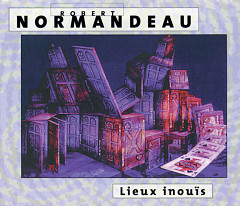
    L’étiquette empreintes DIGITALes lancera (28 octobre) trois disques: Musiques naïves (Yves Daoust), Alibi (Jacques Tremblay) et Lieux inouïs (Robert Normandeau).

    L’étiquette empreintes DIGITALes lance trois disques…

    Titakti dans Splendid E-Zine

    «Review», George Zahora, Splendid E-Zine, 19 octobre 1998
    lundi 19 octobre 1998 Presse

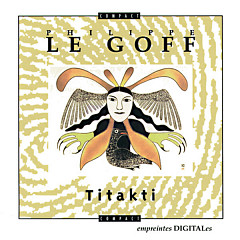
    Released as part of empreintes DIGITALes’ “bargain” range of electroacoustic CDs, Titakti provides a good opportunity to get your metaphorical feet wet in the less immediately musical aspects of electroacoustic composition. These four sonic studies address the experiences, moods and cultural differences of the artist during his time spent in the Canadian Arctic among the Inuit peoples. With the exception of occasional string instruments and various natural percussion, the disc is “built” primarily of Inuit conversations, mouth-sounds and environmental noises (including wind, animals, birds and the sounds made by humans going about their lives). The listener immediately discovers that Inuit language is very different, an extremely economical form of communication that is also far more varied in the range of sounds it employs. While Meta Incognita addresses the isolation and intimacy of the land, Nippingit—la parole deals with conversation and interviews. La guerre is an alarming, confrontational “battle” between voice and vocalization, with trance-like chants used as ranged weapons. Plan séquence is an immersive auditory tour of a small Inuit village; make sure you’ve got good speakers for this one. Like all good electroacoustic works, Titakti succeeds in entertaining despite its paradigm-shattering departure from (and total lack of resemblance to) mainstream music — perhaps this will be the one with which you begin your own exploration…

    … this will be the one with which you begin your own exploration.

    Lieux inouïs dans Outsight

    «Review», Tom Schulte, Outsight, 1 octobre 1998
    jeudi 1 octobre 1998 Presse

    Normandeau [(Lieux inouïs)] deftly translates the listener seamlessly from one tableau to another; a children’s playground in an echo chamber morphs into what could be the sounds accompanying a ‘close encounter of the third kind’ into then a call-and-answer of clanging pipes near and far. With headphones, these 1985-1989 recordings become a hermetically sealed world bizarre and unique, begging exploration and return visits. (Normandeau: 4/5)

    Contes de la mémoire, Jon Appleton dans Sonomu

    «Review», Gil Gershman, Sonomu, 28 septembre 1998
    lundi 28 septembre 1998 Presse

    Appleton, an American pioneer of electronic music, might be best known for co-designing the Synclavier and as a founding member of the CIME (International Confederation for Electroacoustic Music) and the SEAMUS (Society for ElectroAcoustic Music in the United States). His academic and theoretical associations aside, Appleton has a welcome sense of humor. Take Newark Airport Rock, a witty 1969 piece in which comments on “the new electronic music” were collected during a random survey of passengers and strung together with a jumbled quasi-Beat arrangement of Moog squiggles and sequenced electronics. Some of the opinions are extremely funny (a few favorites are the clueless “You’ll hear it when you want to hear it,” and “We get enough of that in the Army!,” “You mean that stuff we hear on the airplanes?”), others are surprisingly perceptive and revelatory — and the teens who declare that it’s “with-it!,” “really neat!,” “cool,” and “a beautiful thing… really nice” give the burgeoning artform a rather prescient stamp of generational approval. San Francisco Airport Rock, a 1996 sequel constructed with reactions gathered during another (more recent) impromptu survey, finds that not as much as changed as we’d like to think, despite the apparent assimilation of electronic music into the culture of popular music. Again the teens seem most receptive, whether commenting on e-music’s noted drug-friendly aspect or on the potential for self-expression in the Computer Age, and the adults tend to be more readily dismissive — “Like the music in the elevators?,” “Oh, it’s not real!,” and the popular “I prefer music played by musicians without computers” — with the notable exception of one woman who “met Moog when he first came out with the synthesizer” and a man enamored of e-music’s disreputable sibling, New Age. Name recognition is up — one surveyee impressively namechecks Koyaanisqatsi — and, rest assured, Gen X still deems it “great,” and — yes, “cool.” Even if one girl thinks it “sucks,” a trenchant insight which Appleton accents to especially humorous effect. Twenty years later, and it appears that the “new” electronic music still has a way to go in terms of mainstream acceptance. The other pieces on Contes de la mémoire span Appleton’s prolific career and include both his “signature” works — Chef d’œuvre, a bustling concrète abstraction composed in 1967 exclusively using the sounds of the Andrews Sisters singing in an ad for Chef Boy-Ar-Dee (you have to love this guy!) — and music of more recent vintage (Appleton’s comparatively solemn electronics-and-tape paen to a friend’s Russian heritage, 1993’s Dima Dobralsa Domoy). With Appleton’s music, whether dating from the earliest days of his experiments with electroacoustics in his Dartmouth University tape studio (Georganna’s Fancy [1966] and Spuyten Duyvil [1967]) or witnessing the refinement and maturity of his compositional techniques, there is always an extraordinary energy. Timbres swell and scatter; archival recordings and extremely active electronics react to convey a sense of excitement and urgency (CCCP (In Memoriam: Anatoly Kuznetsov) [1966], prefiguring Dima Dobralsa Domoy and paying homage to the Russian writer’s courageous defection). Among Appleton’s most advanced “tape-studio” pieces, Times Square Times Ten presents Manhattan, 1969, in exacting cross-section, a musical excavation of the City from its busy streets to the subterranean whispers of life in its subway belly. Cutting a vertical swath of city-life with observant precision, Times Square Times Ten is the City in miniature — a sonic core-sample so studiously idealized that it could only have been crafted artificially. Another of Appleton’s older tape constructions, 1970’s Homage To Orpheus revisits the acousmatic tinkles and chimes of Nordheim or Bayle, so convincingly in fact that the composer confesses to feeling distanced from it, and that it “almost sounds like music composed by someone else.” No such comment can be made about In Media Res, a pinnacle of Appleton’s digital abstractions. Over nine minutes of gorgeous rippling sonorities, bagpipe-like drones and agitated multitracked synthetics — brought to a sudden close after a section of itchy organ-toned polyphonies. A startling piece of digital composition and yet another example of Appleton’s warmth and irrepressible humanness, qualities so critical to the ageless appeal of his innovative œuvre.

    A startling piece of digital composition and yet another example of Appleton’s warmth and irrepressible humanness…

    Contes de la mémoire dans Computer Music Journal

    «Review», Alcides Lanza, Computer Music Journal, no 22:3, 1 septembre 1998
    mardi 1 septembre 1998 Presse

    Contes de la mémoire (Memory’s tales): a very appropriate title, considering the eclectic content of this compilation of tape works by Jon Appleton. San Francisco Airport Rock (1996) depicts spontaneous answers to the question posed by the composer: (Q) “What do you think about the new electronic music?” (A) “Yes, I met Robert Moog…” Oh, it is nice, I like this music…” “No, I don’t know…” “I listen to it on the radio….” The accompaniment consists of drones and gentle washes of light “techno” music with soft voices looping in the background. In a way, the piece criticizes itself. E-mu and Roland synthesizers and the Vision sequencer were used for this piece, partially realized at MlT, then mixed down at the Bregman Electronic Music Studio at Dartmouth College (of which Mr. Appleton is the director). The companion piece, Newark Airport Rock (1969), composed more than a quarter of a century earlier, is a more striking and sonically rich documentary. Newark Airport Rock, already a memory from the distant past, rings more true with answers to the same question recorded at the New Jersey airport. This piece has an atmospheric accompaniment, prepared using a Moog Mark lll synthesizer at the Bregman Studio.

    Dima Dobralsa Domoy sings a completely different tune: Realized in 1993, it includes recordings of speech sounds in a declamatory style with distinct Russian echoes. These very light rhythmical phrases transmute themselves into train noises, sharing the stage with some background ethnic dances and a concertina moment. The title means “Dmitri returns home after a long journey,” and refers to the composer’s friend, Russian singer and choral director Dmitri Pokrovsky, from whom Mr.Appleton absorbed knowledge of politics, music, and his own Russian heritage.

    In Media Res (1978), from the Latin “in the middle of things,” is set into a cryptic context in the liner notes: “known in Brazil as ‘Sudden Death’.” Analog multitrack tape recorders were used to store sequences performed on the Synclavier digital synthesizer. The sequences mostly sweep up and down the tessitura, or remain half frozen in static layers. There are citations of Irish folk music as well, used as a basis for the abundant . drones heard throughout this composition. The bagpipe insert contributes to a feeling of fragmentation (evident elsewhere on the disc). The technical display is not too impressive, as Mr. Appleton limits himself to shifting the speeded-up materials to the left or right channels, at times centering the acoustic image.

    Times Square Times Ten (1969), at 9:02 is one of only two pieces of significant length in this collection. Sounds extracted from Edison cylinders were recorded and mixed down at the Bregman Studio. According to the composer, “…the piece moves from the street level to the levels below 42nd Street and Broadway, in the subway tunnels.” This is a good “paleo-sonic” trip through time, reflecting the soundscape of Manhattan from the 1890s to almost a century later and back. You can even read the title as x1 x 10 (times square times ten). Entertaining and impressive, with some spelunking audio intriguingly shifting the animal-like voice quality to an almost human one, then to a mechanical, nocturnal ambiance. I truly enjoyed this one.

    From the same year comes CCCP (In Memoriam: Anatoly Kuznetsov), another very interesting radiophonic docurnentary, utilizing the voices of Tolstoy, Stalin, and Kuznetsov recorded from Radio Moscow and the BBC, as well as synthetic sounds from a Moog synthesizer. The defection to the west of writer Anatoly Kuzuetsov brings this piece into the realm of political storytelling. Using techniques like electronic switching, filtering, and speed variation, Mr. Appleton is at his best here.

    Spuyten Duyvil (1967) is the first of three short analog pieces Mr. Appleton produced in the mid-1960 using the tape studio procedures then in vogue. In the accompanying booklet, the composer states, “I can no longer recapture the musical vision I had then.” For this listener, Spuyten Duyvil is engaging in its discovery of timbral nuances, the use of slowly evolving envelopes, and the intense sense of remoteness invoked by the music.

    Georganna’s Fancy, (1966) is more ioyful, agile, and incisive, with sudden contrasting turns sounding very much like tape reversal. The disc closes with Chef d’œuvre (1967), pop-ish, almost Warholian. It is based on the sounds of a commercial for Chef-Boy-Ar-Dee (pizzas) as sung by the Andrews Sisters. The quote goes through a number of intriguing and imaginative transformatlons, spanning canonlc imitations and cartoon-like speededup moments.

    In short, Contes de la mémoire is indeed a trip down memory lane — sonic snapshots from throughout the career of a well-known American composer. The style evolves from early tape music a la musique concrète to voltage-controlled synthesizers. It also exemplifies Mr. Appleton’s brilliant contribution to the development of one of the earliest computer-based digital synthesizers, the Synclavier, which he performed real-time during concerts as well.

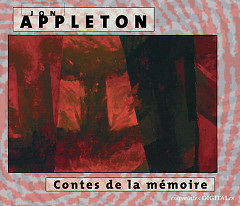
    This disc has all the traits of high quality production present in the empreintes DIGITALes releases from DIFFUSION i MéDIA. The sound is marvelous, the liner notes good, the layout excellent. The cover photo is of the painting Heliotrope (1993), by American artist Esmé Thompson.

    This disc has all the traits of high quality production present in the empreintes DIGITALes releases.

    L’ivresse de la vitesse, L’ivresse de la vitesse 1, L’ivresse de la vitesse 2, Paul Dolden dans The Wire

    «100 Records That Set the World On Fire, While No One Was Listening», Betty Davis, The Wire, no 175, 1 septembre 1998
    mardi 1 septembre 1998 Presse

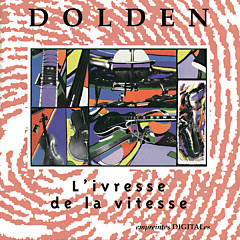
    Canadian electroacoustic composer Dolden champions a ‘theory of excess,’ a belief that the intoxication and seduction of information overload is a desirable condition, one that frees us to perceive the world afresh. L’ivresse de la vitesse compiles nine devastating sonic manifestos to make his point. Several hundred painstakingly scored and multitracked solo acoustic instruments collide to produce a super-dense musical black hole that even Iannis Xenakis would have shied away from. Trying to actually follow the impossible complexity drags you across the event horizon into a world where consciousness survives but meaning has been obliterated. Futile relief comes on a few tracks where virtuoso soloists battle in vain against the taped chaos Nirvana or nihilism? No matter, you can listen to it a thousand times without wanting it to make sense.

    [One of the] 100 Records that set the world on fire
  • 1
  • 2
  • 3
  • 4
  • 5
  • 6
  • 7
  • 8
  • 9