Sauter au contenu principal
electrocd

Blogue

100 résultats
  • 1
  • 2
  • 3
  • 4
  • 5
  • 6
  • 7
  • 8
  • 9
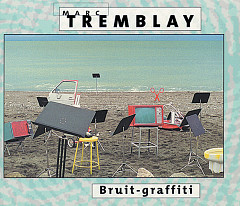
  • Bruit-graffiti dans Gonzo Circus

    «Kritiek», PiT, Gonzo Circus, no 47 B, 1 décembre 2000
    vendredi 1 décembre 2000 Presse

    Bij deze releases zouden we een boompje kunnen opzetten over de zin en onzin van elektroakoestische muziek. Het Canadese empreintes DIGITALes is gespecialiseerd in dergelijke releases en stuurt ze met karrenvrachten op ons af. Met wisselend succes.Bruit-graffitivan de Canadese componist Marc Tremblay, die onder meer samenwerkte met Martin Tétreault, spitst zich toe op geluiden uit onze onmidUellijke omgeving. Vroum is een auditieve denhoefening over de wijze waarop het gemotoriseerde verkeer onze manier van luisteren in de voorbije decennia beinvloedée.L’argent… toujours l’argent!, «… Ceci est un message enregistré…» en Cowboy Fictionzijn humoristisch bedoelde collages (over geld, telefoons en westerns) met een boodschap. Boobschap ook in Résidus (clip dadaïste), dat bij ons een glimlach kon tevoorschijn toveren omdat Temblay hier uitsluitend toiletgeluiden reproduceert. Ooit al eens erover nagedacht met welke knal een drol het water raakt? Conte sous la lune kon ons echter wel bekoren. Tremblay roept hier met eenvoudige, auditieve middelen de kindertijd terug op als een verloren eden.

    Connexion dans Revue & Corrigée

    «Critique», Pierre Durr, Revue & Corrigée, no 46, 1 décembre 2000
    vendredi 1 décembre 2000 Presse

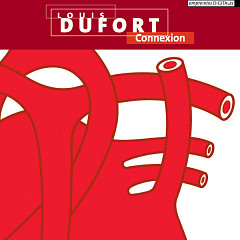
    Jeune compositeur électroacousticien de Montréal, Louis Dufort, nous offre ici un échantillon de son travail de ces dernières années. Les quatre pièces de ce recueil, qu’elles soient à finalité purement musicale, ou, tel Décap, le support d’une chorégraphie, ont entre elles une certaine affinité. Celle-ci réside d’abord par les sonorités, proches du bruit blanc, mais loin de toute uniformité, car elles sont plus ou moins étirées ou compressées, affectées quelques fois de rythmes trépidants ou se noyant dans des espaces de silence inattendus pour resurgir avec un dynamisme renouvelé quelques secondes plus tard. L’auditeur semble ainsi passer constamment d’une forme d’expressionnisme un peu bruitiste vers une abstraction plus impressionniste. Cela est particulièrement le cas de Pointe-aux-Trembles, illustration sonore d’un complexe pétrochimique.

    L’autre aspect notable, c’est la force et la conviction avec laquelle Louis Dufort assène son propos. Sa musique enlace l’auditeur, le transperce, saisit ses sens, bref, le captive par le jeu constamment mêlé entre la linéarité de la trame sonore et les divers effets en surimpression, tantôt purement électroacoustiques, tantôt fait de voix retravaillées. Une connexion impressionnante…

    Sa musique enlace l’auditeur, le transperce, saisit ses sens…

    Connexion dans Incursion Music Review

    «Review», Richard di Santo, Incursion Music Review, no 016, 19 novembre 2000
    dimanche 19 novembre 2000 Presse

    This new disc from empreintes DIGITALes compiles four pieces by Louis Dufort, a Montréal-based electroacoustic wizard, composed between 1996 and 2000. Dufort manifests his passion for electronic music, cinema, painting and contemporary dance in his electroacoustic works. His own description of his music emphasises the narrative qualities in his work: “Object, body, colour and sound anecdote give rise to plays of perception that envelope the listener. Sound material is used in this way to draw forth musical outlines in which poetry and the narrative representation of sound serve as markers in the development of the work.” It is therefore only fitting that his work carries a particularly “theatrical” component, suggesting all the movement of a story, but enacted solely through the use of abstract sound. Each of these compositions presents an intense sound environment, buzzing with activity and motion. The themes are of paradoxes (“continuous discontinuity” in track 1), opposites (“elasticity/contraction” in track 4), and self reflexive exercises (“the formal expression of form” in track 3). All manner of sounds are used in arrangements that forever keep you on the edge of your seat. You never have time to relax your perception, as each of these compositions demands your undivided attention. Although there is an immense host of extremely fascinating sound constructions (Dufort’s concrete sounds all share a certain clarity that fits perfectly in my ears), I occasionally found the arrangements to be a little too busy and chaotic for my liking. Still, these recordings have piqued my interest to see what Dufort’s theatre pieces are like; since he often composes for the Marie Chouinard contemporary dance company, it would be interesting to see how his music, itself so very theatrical and expressive, can work together with a more physical stage presence.

    … these recordings have piqued my interest…

    Rendu visible dans Array Online

    «Review», Ian Whalley, Array Online, 9 novembre 2000
    jeudi 9 novembre 2000 Presse

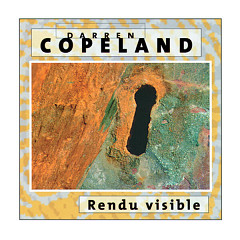
    Darren Copeland’s compositional output for tape medium draws entirely on environmental sounds. His teachers have included Barry Truax (Simon Fraser University) and Jonty Harrison (University of Birmingham). Theatre soundtrack composition is a continuing influence on his thinking about music, and his most recent work crosses the boundaries between acousmatic art, radio art and theatre.

    CD notes by the composer outline his perspective on the relationship between associative sound and visual imagery, a theme reflected in the titles that appear on this CD. His theoretical approach is explored in a recent article for The Journal of Electroacoustic Music (SANS) entitled ‘Indifference or Ambiguity’. Here, the composer argues for the need to centralize the associative properties of environmental sounds in acousmatic music practice.

    There are three tracks on the CD: Rendered Visible; Reaching for Tomorrow; and Night Camera, made up of Maritime Vision, Prairie Dream and Vanishing at Sea. A wide palette of sonic material is drawn on throughout, and the overall production is outstanding.

    The danger of the theoretical stance taken here is that in practice it runs the risk of degenerating into new age, ambient and environmental pap. On this CD, the skill and talent in layering and manipulating the material selected results in subtle and complex textures that are anything but trite. It is a fine balancing act superbly controlled for the most part, the results being often internally ambiguous and certainly poetic.

    Rendered Visible quotes various natural sources that are combined with unfamiliar sounds. A refreshing aspect is the way the flux of the work is referenced to seemingly contradictory natural events. A sense of the dramatic carries this finely paced work forward.

    The second track, Reaching for Tomorrow, again uses the technique of controlling tension and relaxation through the layering material. The sonic references are wider here, and include surrogate instrumental gestures. This creates a slowly evolving texture, brooding, sparse and foreboding.

    The longest piece is Night Camera. The composer notes that ‘night camera’ is ‘an imaginary listening aid that like an infrared scanner allowing one to probe regions lying beyond the common, everyday frame of experience’. The analogy sets the frame of reference well, allowing one to enter a cinematic paradigm.

    The three tracks that make up Night Camera each deal with a different type of environment within the general theme. Source material includes environmental and city sound references. Each work is powerfully evocative and the dynamic shape is carefully controlled throughout to keep the listener engaged.

    The strength of this CD is its rich referencing to known/associative sound balanced and juxtaposed with unfamiliar material, and the manipulation of gestures and textures that are both familiar and exotic. A greater variety of generative methods may help to broaden the approach taken, adding to its versatility.

    Combining notions of the theatrical and film scoring with acousmatic music overcomes many of the semiotic limitations of a purely acousmatic approach. It also has the potential to attract more than an academic audience for acousmatic art. The works presented here explore one way the two approaches may be synthesized.

    Musiques naïves dans Array Online

    «Review», Ian Whalley, Array Online, 9 novembre 2000
    jeudi 9 novembre 2000 Presse

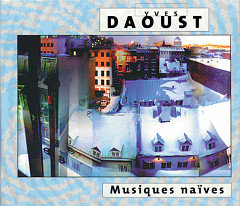
    The opening CD notes give Yves Daoust’s biography that includes a background in piano performance and an early interest in cinema and theatre. The composer’s track notes, particularly those on the third track, provide the best insight into what is being attempted here, and François Guérin’s analysis of works in the CD notes give an overview of the composer’s main stylistic traits.

    The opening track Impromptu is based on the composers MIDI recording of Chopin’s Fantasie-impromptu in C sharp minor (Op. 66). Key motives are then extracted to form the basis of ‘Chopin sound objects’ that are manipulated well beyond the physical limits of the piano. Ideas freely collide in a mixture of the melodic and textural, yet the piece is carefully controlled structurally. The sense of momentum, particularly through the control of density and panning, is outstanding.

    Il était une fois… (conte sans paroles) is a sound collage inspired by stories the composer used to make up to put his daughter to sleep. Like a bedtime story, the work inhabits a twilight world between reality and dreams, and the structure is accessible. The result is surreal, evocative and haunting, with the specific and vague trading places for attention in the texture.

    Small ‘fetish’ sounds are the basis of the short work Mi bémol. The composer indicates that the piece is a concentrate of his style and mains means of articulation. This includes confrontation of heterogeneous materials, overlapping textures, anecdotal material, and vacillation between musical and documentary approaches. This condensed work is tightly controlled and the material is finely balanced.

    Résonances was composed from bell sound samples. Attacks and resonance are treated separately then blended into an atmospheric piece that has many subtle layers of engagement. The effect is swirling and full of unexpected turns. The careful juxtaposition and balance of the known with the surreal here continually captures ones interest.

    Water Music; I initially played with some trepidation because the subject matter has been so overworked in electroacoustic music it seem difficult to find an original angle. The results here are anything but disappointing. Again, the balance of material, careful control of texture and shape, and sense of development are a tribute to the composer’s mastery of the idiom. The use of speech in this context, particularly childrens voices, is an inspired touch.

    The CD concludes with Fantaisie, a work commissioned by Société Radio-Canada and based on samples from the radio sound archives. The composer aimed to create a collage of memories from radio and express the power of the sound beyond the referential significance of the material selected. Alluded to throughout is Schubert’s Fantasie in F minor (Op. 103). The work unfolds slowly as the listener is drawn in. The journey is rambling and drifts from the actual to the imaginary as material is transformed.

    This CD illustrates an astonishing array of generation techniques, and is particularly imaginative in balancing the musical and documentary approach. Underpinning this is a solid yet subtle sense of structural control, and a clear sense of artistic purpose. Deceptively conservative, one is left with the sense of a series of parables allowing the material to be read on a number of levels.

    Aérosol dans Array Online

    «Review», Ian Whalley, Array Online, 9 novembre 2000
    jeudi 9 novembre 2000 Presse

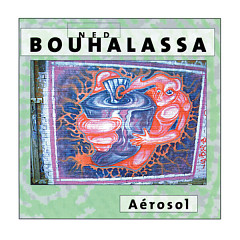
    Montréal based composer Ned Bouhalassa specializes in acousmatic works and his teachers included Kevin Austin and Francis Dhomont. Various sources influence his work including cinema, contemporary visual art and science fiction. Bruce Gottlieb’s notes also indicate diverse influences of: volatile popular music like Nirvana, Sonic Youth and Public Enemy; academic and underground venues; and the sophistication of the commercial music production. The composer has worked in a variety of media, including cinema, television, the internet, and techno-derived styles.

    CD notes indicate that his acousmatic work attempts to balance structural with emotional and poetic concerns. Jets is the opening offering, a dynamic and energetic work using jet-shaped materials that moves freely in the piece with at times wild abandon. The result is eerie and angular, and the sonic metaphors are strangely mixed in parts. A sense of spontaneity is balanced with interesting textures, and pace balanced with unity. The sense of timing is outstanding.

    Constamment (autoportrait) is autobiographical in five sections, skimming a variety of musical influences. Sonically it lacks cohesion despite the interesting byways that vary in quality from the sublime to the mundane. The techno sections in particular are less convincing.

    The CD notes describe Attraction as the composer’s ‘nihilistic apogee including magnetic impulses that collide violently or hurtle away’. Composer notes indicate that the piece ‘consists of various representation of the energy that is build up and released in many types of attractions’: the result being a series on non-recurring and complex gestures. The work mixes musique concrète techniques and analog synthesis with digital transformation. In context, it sounds dated, yet the work has enough internal interest to keep the listener dramatically involved.

    Move 1 is a poetic study of abstract representations of human and animal movement. The composer constructed a MIDI data generator that alters a variety of controllers each time a sample is played. A flowing, complex and yet homogeneous texture results, with a great sense of discipline.

    Bouffée délirante is Bouhalassa’s first attempt to realise ‘cinema for the ear’. It also represents the composer’s initial exploration of montage and the ‘sudden jump-cut gesture’. The subject matter is one of personal introspection leading to madness. In context, the control of discontinuity is superb, drawing the listener into an increasing sense of fragmentation.

    The CD in total achieves the composer’s aim of balancing the spontaneous and poetic with the control of form and content. The variety of techniques and control of diverse genres is impressive, as is the control of sonic metaphors. Perhaps more interesting is the balance of the best new and old techniques, and the familiar with the unfamiliar. This allows the composer to create within tested methods, yet also to reinvent and create within them. The edgy style constantly keeps one interested, and the sheer variety of material leaves one with the sense that this disk will be often revisited.

  • 1
  • 2
  • 3
  • 4
  • 5
  • 6
  • 7
  • 8
  • 9