Sauter au contenu principal
electrocd

Blogue

100 résultats
  • 2
  • 3
  • 4
  • 5
  • 6
  • 7
  • 8
  • 9
  • 10
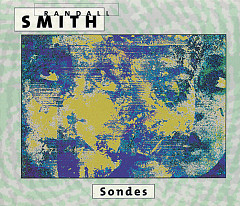
  • Sondes dans Blow Up

    «Altrisuoni in breve», Etero Genio, Blow Up, no 30, 1 novembre 2000
    mercredi 1 novembre 2000 Presse

    Canedese, dell’Ontario come’l Lupi’, Randall Smith ha iniziato componendo colonne sonore per registi sperimentali, Passato poi alla composizione tout court lavora con computer e nastri manipolando suoni naturali e suoni ottenuti con strumenti questi ultimi vengono sovente riprocessati in tempo reale: Sondes contiene brani composti nel quinquennio ’95-’99 che rispetano i canoni descritti, con l’autore coadiuvato a tratti da otimi strumentisti come il violoncellista Paul Widner e il contrabbassista J Tracy Mortimore. Piace soprattuto Convergence dove Smith misura i suoi nastri con gli echi popolari della fisarmonica di Joseph Petric, Un buon disco anche se, e non vorremmo con ciò sembrare antipatici, puzza un po’troppo d’accademia. (8/10)

    Un buon disco…
    8/10

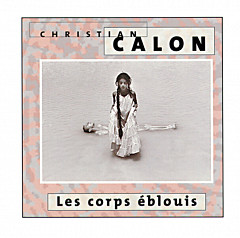
    Les corps éblouis dans Sztuka Fabryka

    «Review», Geert De Decker, Sztuka Fabryka, 1 novembre 2000
    mercredi 1 novembre 2000 Presse

    On this CD just one composition that takes 22:45 minutes, the name of the track is obviously Les corps éblouis and is created in 1994. It is an interesting composition that starts with soft non-rhythmical ambient tunes that can be described as having the sound of crystal instruments and strings. Halfway the colour of the composition transforms from musical waves into music that starts to get more hypnotic, very slowly it transforms. From crystal sounds it goes to a random assembly of tunes and strings. All happens so delicate that the transformation in tunes has almost an hypnotised effect. Almost to difficult to describe you have got to hear it, to understand it.

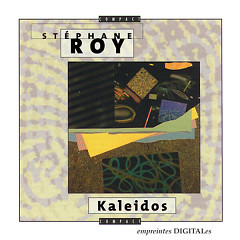
    Kaleidos dans Sztuka Fabryka

    «Review», Geert De Decker, Sztuka Fabryka, 1 novembre 2000
    mercredi 1 novembre 2000 Presse

    On this CD there are 4 compositions, each is performed almost in the same style of music. Stéphane plays with sounds that he is able to create in an acoustic way and also in an electronic way. Sometimes the acoustic sounds are reworked electronically. Sometimes the composition is a chaotic mix of tunes, while in some songs it is a peaceful mix of easy tunes. It is not ambient music it is electronic music that can become real hypnotic.

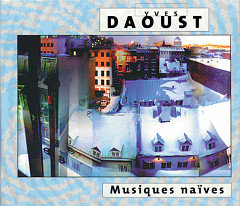
    Musiques naïves dans Sztuka Fabryka

    «Review», Geert De Decker, Sztuka Fabryka, 1 novembre 2000
    mercredi 1 novembre 2000 Presse

    Yves Daoust instrument is the piano, since as a child, therefore you find on this CD piano music. Not just classical piano music, no experimental music with the piano. He does not avoid using the classical piano sounds in combination with the new electronics. Impromptu (1994) the first composition is a combination of both, a classical play of Chopin is recorded with a sequencer and reworked. The result is a composition that starts with the classical timbre of the piano surrounded with an ambient atmosphere that slowly transforms into a very hypnotic atmosphere of piano tunes that comes and goes very quick. In the second track he goes completely an other way, there he plays with sounds and tunes. This way he creates stories with several atmospheres, sometimes you find yourself listening to a heavenly atmosphere of an other dimension while a bit later the nerve breaking sounds of a fair comes over you. Playing with sounds and tunes is what you also can found in the 4 other tracks on the CD. Especially his search for what is able to do creatively in music with what is there on the world. He works with sounds that he can creates and find around him, with the bell sounds of the Notre-Dame in Montréal, Water Music is a composition made with several sounds of water, and last but not least makes a composition with archive material from French Radio-Canada. Yves Daoust is a master of the composition, because he proves here that there is able to make music with the collage of sounds, thanks to the several atmospheres that he is able to put into his compositions.

    Yves Daoust is a master of the composition…

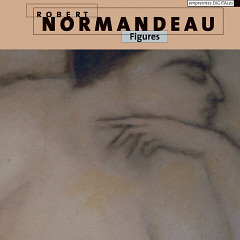
    Figures dans Array Online

    «Review», Katharine Norman, Array Online, 30 octobre 2000
    lundi 30 octobre 2000 Presse

    Normandeau is a master of sonic allusion and metaphor, and these acousmatic works offer a powerful listen. Le renard et la rose will be known to many in the ICMA world, since it was commissioned for ICMC 1995 in Banff, and has received many performances since. It’s a piece of extraordinary depth, in which human speech sounds are woven into a multi-layered tapestry of meaning and movement. Opening with irresistible sounds of laughter and exuberance, it expands outwards to occupy and play in space. Like Spleen, a related work, it harnesses the force of onomatopoeia and rejoices in the primitive vigour of a rhythmic beat. Listening to this work in concert was fascinating, but over headphones there’s perhaps an even greater sense of being immersed in the spattering, ‘animal’ activity of a community of sounds, that are at once both clean and dark, joyful and ominous.

    Figures de rhétorique is an enigmatic re-interpretation of the piano and tape genre — or rather, in this case, tape and piano — in which the pianist ‘makes’ his performance in relation to the tape part, itself derived from piano timbres. The work is constructed by employing sonic metaphors related to precise figures of meaning in rhetoric. Though it is impossible (for this listener at least) to embark on aural butterfly-catching, to pin these metaphors down, one doesn’t need to in order to appreciate the dramatic variety of the gestures, most notably in the tape part. Whilst the pitch content tends to anchor itself to a single centre, the variety of gestural motion and interaction provides a means of going on.

    Venture is a large-scale work inspired by Normandeau’s formative experience of listening to progressive rock, and uses samples of the same as its material. Like much of his work the piece is in interlinked movements that each refer to what Normandeau calls different ‘states of existence’. It’s a work of symphonic ambition — an ambition it shares, of course, with much progressive rock of the 70s — and has a clear ‘emotional’ trajectory that carries the listener from one sound-world to another. Fragments of Pictures from an Exhibition are interwoven within it, and the tantalising glimpses become more explicit as the work progresses. And, of course, it ends with a nice big string-synth chord. Music about music is difficult to bring off, but this piece works, I think, at a deeper level — as a quite personal journey into the roots of one person’s musical ‘psyche’.

    Ellipse, the final piece on the CD, is a wonderfully tactile and effervescent exploration of guitar timbres. The tightening of strings, the sound of the tuning peg straining against the neck — and then when we think we know where we are the sounds explode into pointillistic cloud of splinters, plucked strings, knocks and whirrs. This is a piece in which the material is the materiality of an object — wood, gut, fingers against strings. For this listener it was a sonic equivalent of watching as a miniature camera shoots around inside the guitar, revealing the previously known as an unknown new world with surprising dimensions, and then flying out into space — viewing the same object from a global perspective.

    As Normandeau points out in his notes, all the pieces on the CD have dedications to specific people (in the case of Figures, the pianist Jacques Drouin, who features as performer on the CD). Figures are bodies, and Normandeau interprets this notion in various ways. To my ears, a touch of humanity figures highly.
    … revealing the previously known as an unknown new world with surprising dimensions, and then flying out into space…

    Figures dans Adverse Effect Fanzine

    «Review», Adverse Effect Fanzine, no 2:4, 24 octobre 2000
    mardi 24 octobre 2000 Presse

    Award winner of 1996’s Golden Nica of the Ars Electronica, Normandeau has for a number of years both studied electroacoustic music and translated them into his own acousmatic compositions; gaining a few degrees’ worth of intemational recognition in the process. Figures clearly demonstrates why this French-Canadian has generated several ripples, too. The third work in a cycle that commenced in 1991 with the release of Tangram (also on empreintes DIGITALes), it’s based on voice ‘sounds’ (as opposed to speech) & magnetic tape construrtions and knitted piano or guitar compositions thematically related to the voice. And, as with the other releases so far encountered on this Canadian label, a high calibre soundbed of intricately woven shimmers, shards & tinkling is spun to an absorbing scale at once dramatic & disciplined. Without coming from such an academic background in music, I have to ‘fess that it’s kinda hard to place such works outside the same instinctive reactions one might also apply to a Ceramic Hobs disc or whatever but, on the other hand, what’s so wrong with that, anyway? Especially when such instincts inform you that you’re actually listening to some pretty good stuff. Which, ladies & gentlemen, is precisely the case here. I welcome some Normandeau additions to the collection. And so should you…

    … a high calibre soundbed of intricately woven shimmers, shards & tinkling is spun to an absorbing scale at once dramatic & disciplined.
  • 2
  • 3
  • 4
  • 5
  • 6
  • 7
  • 8
  • 9
  • 10