Sauter au contenu principal
electrocd

Blogue

201 résultats
  • 17
  • 18
  • 19
  • 20
  • 21
  • 22
  • 23
  • 24
  • 25
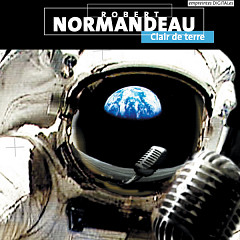
  • Clair de terre dans The Irish Times

    «Review: Sonorities Festival of Contemporary Music», Martin Adams, The Irish Times, 8 mai 2001
    mardi 8 mai 2001 Presse

    The four days of the Sonorities Festival of Contemporary Music offered a hectic round of musical and other events. There were nine concerts between Thursday night’s (which was reviewed in this newspaper on Saturday) and the final concert on Sunday afternoon, plus a steady round of research presentations, discussion groups and lectures. The last included an appetising overview by Síle O’Modhrain of the Massachusetts Institute of Technology’s plans for its Dublin-based offshoot, MediaLab Europe.

    One major loss was the cancellation of Sunday night’s concert by the Lotus String Quartet (and their subsequent one in Dún Laoghaire) because of the illness of a player. They were to give the première of Kevin O’Connell’s String Quartet, plus important 20th-century works.

    So the weekend was dominated by electroacoustic music, largely because the festival was hosting the annual conference of Sonic Arts Network, a British-based concert, education and information resource with a worldwide membership, plus affiliated institutions. SAN’s mission to develop the relationship between technology and music was reflected in an impressive array of electronic gadgetry and inventiveness at each of its concerts.

    Technology’s temptations are not easily resisted; nor is its diversity easily controlled. Sound creation and reproduction have developed enormously. Axioms of what art should be have lost their power. This is a world of true and idealistic anarchy, where each work seeks to define its own terms.

    The most emphatic affirmations of that kind tended to have a message. For example, Richard Whitelaw’s Urban Odysseys 2 uses the voices of homeless young people in collage with natural and artificial sound; Nikos Stavropoulos’s New Order applies similar techniques to speak of globalisation and Americanisation. Their emphasis excludes interpretation. Other collages of everyday sound, such as Robert Mackay’s Postcards of the Summer and John Levack Drever’s Phonographies of Glasgow, leave things more open.

    Some of the electroacoustic works were more obviously musical, albeit with metaphorical undertones. Iain McCurdy’s Collapse “focuses upon the gestural characteristics of various materials under stress and strain”, and Peter Manning’s In Memoriam CPR evokes the Canadian Pacific Railway, yet neatly side-steps depiction. They typified Alistair MacDonald’s observation in the programme note for his own The Tincture of Physical Things, that “much electroacoustic music tries to perform a sort of alchemy… to change the nature of “ordinary” materials.’

    Apart from a concert of jazz improvisations, only six of the 33 works played from Friday to Sunday used “ordinary” instruments. Examples were Michael Clarke’s Prism, which filters trumpet notes through a battery of spatially separated microphones and loudspeakers, and Rodrigo Sigal’s Tolerance II for tape and cello, an absorbing exploration of contrasting yet coexisting sonorities. But the highlight among these pieces was Phases by the Argentine Horacio Vaggione (b. 1943). Its language was a blast from 30 years past; but its tension between pre-recorded sound and the natural sonorities of piano and clarinet — wellplayed by Philip Mead and Linda Merrick — had a concerto-like focus which rendered irrelevant any concerns on that account.

    For electroacoustic music, the search for order within an infinite range of possibilities seems inescapable. Some composers succumbed to technology’s temptations, and the gestural language was sometimes too reminiscent of composers as far back as Varèse. But it seems significant that most pieces lasted between nine and 15 minutes, and that so many differing works should have large-scale patterns in common: closure initiated by a late recall of the opening, ABA structures with variation or compression in the last section, recurrence of distinctive events, etc.

    Nothing suggested a resolution of these issues more than the music of the conference’s guest composer, Robert Normandeau. Born in Québec City in 1955, Normandeau seeks to define syntax and meaning, often by borrowing concepts from cinema — colour, framing, closeup, and so on. He commands the medium through total craftsmanship, an acute and critical ear, material precisely fitted to its purpose and a control of time and unfolding ideas which is almost symphonic. Erinyes, commissioned by the Sonorities Festival, left the impression of complete integrity and of things to be discovered on repeated hearing. Clair de terre was more demanding. One of the most telling points about its enormous variety was that the 35 minutes it lasted felt more like 20.

    … total craftsmanship, an acute and critical ear, material precisely fitted to its purpose and a control of time and unfolding ideas which is almost symphonic.

    Traces dans Le Devoir

    «Critique», François Tousignant, Le Devoir, 5 mai 2001
    samedi 5 mai 2001 Presse

    Je vous ai parlé, en d’autres circonstances (celles de la critique de concert), de l’art de compositeur et de diffuseur d’Adrian Moore. Voici l’occasion d’en retrouver des parcelles. Attention: les œuvres sont entières sur ce disque, toujours aussi magnifiques, où l’électroacoustique se déploie dans l’espace — ce qui vous demande d’user d’une bonne chaîne stéréo et d’avoir des voisins qui toléreront le fait que vous vous éclatiez à un assez bon volume. Je le souligne car en ce cas c’est important: nous ne sommes pas en face d’un art de décoration à la CJPX ou de sourdine.

    Du vrai! Le titre du disque l’énonce clairement: Traces, et, auditeur, on se doit de suivre le compositeur dans la polysémie de l’itinéraire proposé. Vous croyez être rébarbatif à cette «musique du bruit»? Imposez-vous cette écoute. Ô, tout n’y est pas génial, le pire reste de l’ordre de l’excellent. Vous vous demandez ce qu’est le talent? Écoutez. La musique parle. Mieux, et peu importe ici les convictions esthétiques ou théoriques, elle est. Quand le disque nous offre la chance de prendre contact (ou de reprendre contact) avec un compositeur de premier plan, on se précipite.

    Il faut convenir que ces œuvres-là ne décoreront pas vos soupers ni ne seront le prélude à des ébats sentimentaux, comme elles n’accompagneront pas vos temps morts. Ici, que des temps pleins, pleins de la force si unique de la conviction qu’on s’arrête, qu’on arrête tout, pour écouter.

    En plus, la reproduction sur les deux canaux stéréophoniques est fascinante. Le son bouge, ça c’est relativement facile à faire avec la maîtrise de la monophonie dirigée, et fait prendre conscience de cette dimension si spéciale à Adrian Moore: l’espace. Donc, hors de l’anecdote du mouvement, il respire. Et nous avec lui!

    Osez passer outre à vos appréhensions: chaque pièce ne dure même pas un quart d’heure. Dérangement, fascination, questionnement, ravissement, voilà le programme. Je vous évite la glose intellectuelle: quand la musique est belle à ce point, il ne faut faire qu’une seule chose: l’écouter avec attention. Cela vous réconciliera avec bien des recoins de votre psyché.

    Ô, tout n’y est pas génial, le pire reste de l’ordre de l’excellent. Vous vous demandez ce qu’est le talent? Écoutez.

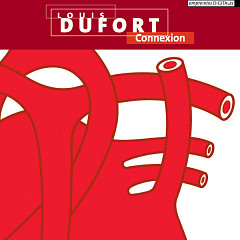
    Connexion, Louis Dufort dans Sonoloco Record Reviews

    «Review», Ingvar Loco Nordin, Sonoloco Record Reviews, 5 mai 2001
    samedi 5 mai 2001 Presse

    Louis Dufort was born in Montréal 1970, which makes him one of the younger diffusers of an acousmatic French-flavored tradition of quite an impressive age by now! He has an inclination towards other disciplines as well, like painting, cinema and contemporary dance. He is currently occupied with working for the Marie Chouinard Contemporary Dance Company, being the composer of the choreographic music for Le cri du monde (2000).

    It is very nice indeed to welcome younger composers into electroacoustics, ensuring that the idiom is furthered and developed, never to fall back entirely on past evolvements, but always to seek new ways of sonic expression to intrigue the mind and the imagination, not least the emotions.

    Transit (1998) commences with a brittle, vibrating commotion of glassy sounds, fondling your perception, soon to be joined by rougher murmurs and gliding forces, again abruptly stopping, only to let little specks of sounds tickle… The composer indicates that this piece makes use of “continuous discontinuity”, which pretty well describes the overall scheme of the events, with suddenly receding and gradually reappearing auditive events.

    A lot of motion is in motion, i.e. sections of motion move inside a larger movement, with inserted static fields, an example readily recognizable at 4:37, where Stockhausenesque Kurzwellen-static engulfs the listener and completely obliterates the line of events that preceded it. At 5:35 an even more static static emerges, sounding much like distortion from an overloaded speaker; a sort of standing-wave event. Just a little later sounds resembling voices or choirs emerge, inside the standing wave phenomena. It’s quite attractive, connecting back to sound pioneers like Rune Lindblad and his noise works from the early 1970s (unknown to most). All of a sudden all this gives way to pure musique concrète, or even soundscape music, with the sound of the wind on the microphone, steps through some kind of forest underbrush, with the added pleasures of brittle sounds of glass; maybe glass beads. The winds hiss; you feel the summery atmosphere – as if you’re sitting under the canopy of a weeping willow, hidden from the outside world, as the wind sweepsthrough the hanging leafy branches, and you hear someone walking by, down towards the lake, where a canoe is waiting. Impressionism!

    I doubt whether Dufort had any specific plan when he composed this work. I think he worked intuitively – and that’s just fine! I live my whole life intuitively, and I have survived so far… It’s a very imaginative piece, Transit – and the title does allow for a great freedom of expression, which is why the concluding vision of a helicopter taking of inside a swarm of circling angels isn’t out of place at all!

    Pointe-aux-Trembles (1996) starts with a heavy panning of screams and voices, very soon loosing out to a single line of meditative inclinations, soaring in a linearity towards the horizon, becoming the horizon; you in the middle of your world, looking around… Sweeping events, fluctuating between transparency and dense fog, appear; then disappear into a near-silence (even with earphones).Dufort’s poetic introduction goes: Prologue; Introspection; Elle (She); Lumière (Light); Prière (Prayer). Night beneath the glittering refineries, time stands still, I am but a lost child on the gravel of Pointe-aux-Trembles. “Machine Mother take me.” Guttural machine-like repetitions cut like factory fears through the piece a few minutes inside it, and I get associations to Jean Schwarz’s Makinak (1994). My own experiences from the Oxelösund Steelworks at the Baltic coast rise like smoke stacks through these passages too…

    Very silent pitches lead on to other ghastly machineries, where the smell of asphalt and crude oil mixes with the salty winds from the Atlantic – and you’re lost in your surviving technique, ground down to abarren industrial structure of steel and smoke and showers of glowing trajectories of welding sparks inechoing halls disappearing down hazy perspectives …

    Towards the end of the piece the mind retreats from the outer world of the crude ugliness of necessity, into the inner space of nose-tip hypnosis, in a preview of a here-after to come to all, before the re-entry into the material world…

    Zénith (1999) is the third piece on the CD, starting of like the collected choir of the angels, at a distance – but surely in a state of ultimate bliss… but soon the angels transform into somewhat lower beings; sparkling fairies, in and out of vision, encircling the breath of the viewer, the listener… in a fairy tale of your childhood, or in a childhood dreamscape that you were hurled into after you fell asleep when your mother read to you at the bedside… Long gone golden age… a secret landscape of the child, recurring herein this Dufort music, ever so lightly, ever so gentle, ever so… desperate (in the ears of a hopelessly grown-up adult…). A fairy comes up close, hovers at ear-level and breathes hard into your mind, an “aaaaah” of age-old proportions, smacking you at an incredulous speed through any number of dimensions, all purely spiritual – and the afterglow of bells applies a golden layer across the mindscape…until a Bardo Thödol scare-creature growls at you full-blast, but if you remain on your path you may be liberated, lifted out of this succession of deaths and births and deaths and births… fear not! The fairies gulp and hick-up as you safely pass the scary parts of your dreamscape into a more somber state, where a certain control is offered you, even in the frantic noise-layers in which the scare-creature growls at you again in an unexpected recurrence, which can’t hurt you, though, as you’ve learned. The voices of Marie Chouinard and Luc Lemay were used in the composition.

    The last piece is the longest; Décap (2000) with its 24 minutes. Dufort calls it “a study for wrists and ankles”! It has to do with elasticity and contraction, and the beginning is a fearless leap into – it seems – over-amplified samples of frictional events from – maybe – balloons, taking on the guise of some kind of heavily leaking air-vent, turning, after a little while, into percussive occurrences of a plastic pop-music flair. Whispering voices, on the verge of groaning, appear all around your ears, all around your hat. The Bardo Thödol scare-creature of last piece has made it over into this work, but he is joined by the chanting voice of some kind of priest, and the percussion of buckets. Part of the music of Décap is excerpted from the music for Le cri du monde, and the voices of Marie Chouinard, Émilie Laforest and Luc Lemay were used. It is amazing how the use of language, of sheer vocalisms and consonants, can raise the experience of a sounding work like this to magnificent levels of excellence! This is definitely my favorite among the piece on this CD, even though the others are great works too – but the repetitious (and other) utilization of human vocal sounds, distorted, cut-up and refined, places this piece in a class by itself. Admittedly, vocals were used in Zénith too, but they’re applied with more sophistication here. I have a special ear for sound poetry, and reflections of that art are apparent in Décap, in an atmosphere of oral cavities, smacking lips and sprays of saliva protruding like the volcano eruptions on Jupiter’s moon Io. A point of stark listening pleasure is reached when Louis Dufort applies chorus effects to already manipulated vocal noise sounds! Far out! At times I even feel like I’m at one of the gargantuan feasts ofthe crude medieval heroes of Rabelais, digging in to the food with saliva running out of the corners of my mouth! Rock n’ roll! Or is it a case of exorcism at a village football game in Stigtomta?

    A point of stark listening pleasure is reached…

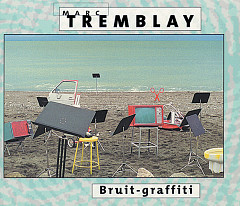
    Bruit-graffiti, Marc Tremblay dans Sonoloco Record Reviews

    «Review», Ingvar Loco Nordin, Sonoloco Record Reviews, 5 mai 2001
    samedi 5 mai 2001 Presse

    Marc Tremblay (b. 1960) has studied percussion and electroacoustics. Among his teachers of electroacoustics we find the well-known Yves Daoust. However, Tremblay is also involved in video and film.

    Vroum (1997) is an onomatopoetic word, of course speaking the sound of cars, of automobiles, of things that are automatically mobile, that move automatically. (It is interesting to see how different languages have developed their names for this object, one of the most revolutionary inventions of the 20th century. The English language thinks about carriages, just using the first three letters of that word for the invention, whereas German just shortens the word “automobile” to “Auto”, and Swedish cuts off most of the word, just using the last part of it, calling the invention “bil”.) They all sound Vroum, though, when geared up to go out there and destroy our auditive environment, as well as poisoning our air and our food… Hmmm… Some invention! At the same time, as Tremblay describes in the CD booklet, the car has forever altered our sense of time and space. In this piece Tremblay suggests a new way of hearing the car.

    The piece kicks off with The Beatles, and if you’ve been around long enough you’ll instantly know what piece is sampled; Drive My Car from the album Rubber Soul (1965). After a short while this cutting up of sonic artifacts of our close past, when the pieces rain down on the kitchen table where our children will glue them into a colorful collage, Tremblay gets more inventive, arranging the banging shut of car doors into a percussive event, as the motor gears up and Beatles extracts continue their noble backlashes… and this is when the whole concrete mess is transformed into a dreamy electroacoustic soundscape of temporal manipulations of engines and inserted, sped-up Beatles clichés. Now it really starts getting fun! The stereo-image is just as definitive as it was on the first stereo recordings of The Beatles, which is especially striking if you listen through earphones! An engine in the left ear, a continuous beeping in the right, and some kind of mechanical, shining machinery glaring in the middle of your head! The echoing clangs and furies of a machine shop sends flurries of oily smells up your nostrils, as the essence of motorism smokes out your ears and fills your listening space with poisonous fumes… A car horn ensemble rehearses between your temples, and suddenly these blending horns take on the guise of a giant church organ, filling the lofty expanses under the dome with vibrating spillovers from a blessed heavenly state… until you could swear that you’re hearing Terry Riley practicing on the lowest keys of a harmonium at the time of recording Untitled Organ in New York 1966 or planning for Shri Camel 1970 in India with master carnatic singer Pandit Pran Nath – or is this a resemblance of Toot n’ Blink Chicago by Charlie Morrow, designed for boats gathered out on Lake Michigan? Whatever the case, these are splendid soundings! Even the angelic sounds of David Dunn’s Tabula Angelorum Bonorum 49 (What Next Recordings WN009) come to mind! Surely this idea of Tremblay’s would be a fitting scene for a whole CD, since the variations seem to be endless, really, and would benefit from more time, longer durations. You won’t believe it, but at times these car-related sounds take on the appearance of a harpsichord or a Swiss watchmaker’s shop at twelve noon! In this context you should not allow yourself to miss out on a sound poet’s and an automotive historian’s rendering of Tremblay’s idea; Åke Hodell’s Spirit of Ecstasy – A Racing Car Opera (1977) on Fylkingen Records FYCD 1018-1-2-3; a triple CD released 2000, containing most of late Åke Hodell’s legendary sound poetry and textsound compositions, with the unforgivable exception of “Hey, Lenin!”, which was left out by pure ignorance and lack of knowledge, but which is one of Hodell’s most outrageous and brilliant textsound compositions, with an anarchist fire that sets the pants of people in power ablaze!

    Towards the end this music of Tremblay’s turns inward, in a gentle introspection fitting any cross-legged bodhisattva in the history of enlightenment. Finally the brutal sheet metal cars of stark “reality” pass you by on a wet street on a rainy weekday A.M., and you’re back in the business of daily chores…

    Conte sous la lune (“Story Told Under the Moon”) (1991) was composed as a kind of reverence to Childhood, and to naivety, which is what Marc Tremblay says he has retained from his childhood. As if out of a sonic vision distant voices of small children rise, transforming into the high pitches of an organ, dancing around in a carefree series of swirling movements. The feeling of distance – in space, in time – is retained for a while. Tiny percussive sounds of brittle beauty, as of little bells or from the manipulated sound of rain falling on a barrel out in the garden, fondle your perception. Church bells join in, but the feeling is still that of a distant state of affairs. The percussive sounds of slowed-down, helicopterized insect wings (yep, that’s the way it sounds!) precede a short outburst of childly laughter, welling up like water out of a fresh water well in the forest. The laughter of children and other child vocals follow, as, I guess, the composer’s memories of his own distant childhood give way to the very concrete childhood at hand of his own children. Man, these are kindergarten electroacoustics for a while, getting franticly fun! Grown-ups are let in, but in comparison sounding like giants or trolls; nasty losers, over-weight and bald and reasonable. Ugh! A bubbly and unforeseeable event follows, maybe portraying the bubbly stomachs of babies about to throw up over your shoulder, while delivering the post-meal burp, huh? With just a few minutes to go a ritardando of a glockenspiel spreads glistening sounds, and evocative wind chimes, making me think of Denis Smalley and the windy, open slopes between the mountains of New Zealand, beautify the soundscape even more. The last minute displays a shiny, brittle, golden gamelan environment, but at the very end a music box in a nursery ends Conte sous la lune in a relaxing falling-a-sleep atmosphere.

    Résidus (clip dadaïste) (“Waste [A Dadaist Clip]) (1995) is built around – and from — the sounds that we normally do not notice in a washroom, ruled out by our perceptive discrimination. The piece is also, says Tremblay, an ironic evocation of Marcel Duchamp’s Fontaine. It starts brutally (in comparison to the serene music box that ended the last piece) with a flushing toilet and the sounds of repeated droppings of faeces (excrements; shit!) into the toilet! This is nature realism in sound art! The hissing of water pipes transporting water to replace the flushed amounts of the fluid builds up to storm. The beautified sounds of singular farts resound in a counter-pointed manner on the backdrop of a more distant murmur of water pipes, as the faescal droppings that keep falling are joined by the repulsive sounds of violent vomits. The farts seem to get wetter and more diarrhea-like as they splutter out of the rectum. The combination of repulsive and nauseating sounds build up to a kind of washroom motet, until a giant, gargantuan, Armageddon flush flushes everything that is abhorrent and smelly to Kingdom come! Tremblay does not give any credit to whomever supplied the excrements, the vomits or the farts…

    Cowboy Fiction (1998) utilizes the sounds from two Westerns (movies), applied in electroacoustically altered guises. The sound material thus originates in Howard HawksEl Dorado (1966) (French version) and John Ford’s The Searchers (1956), as well as in singer Jo New York’s version of Hank Williams’s Rambling Man with the added pleasures of a few locomotives and guns… This is a pretty comprehensive audit of all the collected ingredients of “The West” and the cruel theft of the land from the inhabitants of the continent and the consecutive ethnic cleansing. Electroacoustics are oftentimes very visionary, in the sense that they induce inner pictures, but most of the time in an abstract way. This, though, is a kind of programmatic music, really giving you concrete visions of The West, as it rests in your own experience from the movies or history books, and in your political views of the repulsive way in which the indians were dealt with by the European monsters that swarmed across the land like grasshoppers, bringing in black slaves from another continent to do their hard work for them… Isn’t it a wonder, a wondrous irony, that these cruel circumstances should form the basis of so much romanticism, so much music, so many movies and fictional stories… Who are we, to be manipulated like that? Tremblay’s piece is a magnificent sonic review of those evil days, delivered with the skill and authority of a true electroacoustic visionary and storyteller. The way he handles the clips from the movie soundtracks reminds me of the brilliant workings of legendary sound artist and painter, poet etcetera, Öyvind Fahlström, who used to record sections of TV-programs while living in New York in the 1960s, shaping intriguing sound works from that secular material.

    «… Ceci est un message enregistré…» (“This Is a Recording”) (1994) moves in the environment of telephones, answering machines and related forms of communicative sound worlds. The beginning of a poem by Swedish poet Sune Karlsson (b. 1946):

    “In the periphery of perception
    a throng of possibilities is acommodated:
    The solar wind flutters Aurora Borealis
    for frozen Eskimos and Lapps
    while simultaneously illuminating the flora
    in ultra violet arabesques
    for hungry bees
    The electrons rotate the nucleic acid
    of the rabies virus together
    while simultaneously dashing forth through telephone wires
    carrying a loved voice to a thirsty ear”

    The material indicated in the subject matter allows for a multitude of solutions, sound wise, and Tremblay utilizes the possibilities brilliantly, surprising at times with his imaginative handling. The concrete material gets its exposition, no doubt, but before long Tremblay’s handicraft at the machinery of sound manipulations move the original sonics into a beautiful and ear-catching enchantedness of tele-communicative imagery. Tremblay doesn’t miss out on a thing: he even engages in telephone sex, different jerk offs in both ears simultaneously… and a lot of the imagery here deals with isolation, anonymity and loneliness of the noli-me-tangere situation in which many singles of the inner cities find themselves these urban days.

    “L’argent… Toujours l’argent!” (“Money… Always Money!”) (1990) is a study of money as a sound source, as well as an object of desire. Tremblay uses sounds from The Montréal Stock Exchange, TV game shows etcetera. Do you remember that Pink Floyd song on the album “Dark Side of the Moon” from the 1970s, with phrases like “Money, it’s a gas…” and so on, with the imaginative usage of the sounds of a cashier’s register? Marc Tremblay provides eleven minutes of monetary acoustics, don’t you know! Some of the sounds could as well originate in some whale fisheries, though, or on the windswept tundra of Northern Siberia, so Tremblay allows himself a lot of sonic freedom. Inserted are the upset, agitated yells of guys in ties at the Exchange, and Tremblay makes brilliant use of tumbling, rolling, rotating coins on a gambler’s table, or maybe on the kitchen table of a single father who tries hard to provide for his kids on his state employment from a position as a clerk at the local police authority…

    This is one brilliant CD of electroacoustics, blending seriousness with a sometimes ill-witted humor and surprising twists and turns of the flow, bringing you from reality’s backyard into the enchanted forest in a jiffy, seamlessly, until you don’t know what’s up and down, before he dumps you in the middle of the roaring crowds of suits at The Montréal Stock Exchange. Tremblay has earned his position at the table of the Parnassus of Electroacoustics!

    Tremblay has earned his position at the table of the Parnassus of Electroacoustics!
    Bruit-graffiti dans De:Bug

    «Kritik», PP, De:Bug, 1 mai 2001
    mardi 1 mai 2001 Presse

    Sechs lange Achterbahnfahrten auf verschiedenen Terrains, die jeweils in Form von geräuschhaften Themenparks durch ein fein gesponnenes Soundnetz erschlossen werden. Ganz gleich ob es sich dabei um Fragmente aus der Klangwelt des Automobils oder solchen aus Western handelt, um Telekommunikationsschnipsel oder die unappetitlichen Geräusche, wie sie an öffentlichen WC’s anzutreffen sind, man merkt jedem Augenblick die Freude des Entdeckens mit anschließendem Arrangierens an, welches vermutlich zu einem nicht unerheblichen Teil auf später optimierten Zufällen basiert. Jeder Track umfasst mehrere Stationen, an denen die Parameter Effekteinsatz, Ereignisdichte und Tempo in verschiedenen Gewichtungen zu Buche schlagen. Sehr auf den Punkt gebrachte Arbeiten, die weit über eine bloße Zustandsbeschreibung hinausgehend Perspektiven eröffnen und denen nichts hinzuzufügen bleibt. Natürlich verlangt das alles nach einer hohen Aufmerksamkeit seitens des Hörers, je größer die kontemplative Grundstimmung jedoch ist, desto mehr Vergnügen sollte drin sein. 4/5

    4/5

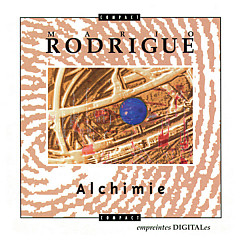
    Alchimie, Mario Rodrigue dans SAN Diffusion

    «Review», Alistair MacDonald, SAN Diffusion, 1 mai 2001
    mardi 1 mai 2001 Presse

    Another from the Québécois label empreintes DIGITALes, this CD was released in 1994. It’s one of their Compact Compact series — an excellent idea — about 40 minutes of music at half the price of a regular CD. This disk, however, is great value for money with five pieces by Mario Rodrigue composed between 1985 and 1993.

    First impressions? I must confess never to have heard this composer’s work before. I put the CD on without looking at the cover and found myself feeling pleasantly refreshed to be in a sound world which seemed a little old fashioned. So I reached for the cover — Tilt, the first track was made in 1986, and apparently, along with Qu’est–ce concert? (1987) and Fiano Porte (1985) was made with good old fashioned reel–to–reel tape recorders, varispeed, editing and filters. Aah yes, I remember it well! Rodrigue works in Montréal and the early pieces were made in the studios at the Université de Montréal where he studied with [Francis] Dhomont and [Marcelle] Deschênes. What I enjoyed most about all of the pieces on the disc was the layering of sounds, a sense of space and movement, and an effortless movement between real and surreal imagery. But the pre–digital pieces seemed somehow richer (no, I’m not going to write about analogue warmth). Perhaps the advantage of reels of tape over synths and samplers (certainly the samplers from the early 90s) was that you could use so much more sound — long sweeping gestures, no faking of sustained sounds with tiny loops because of the lack of memory, no MIDI limitation of dynamics, no equal tempered keyboard trying to tell you how to tune your sounds, better sounding distant transpositions with varispeed… OK, I’m biased, but I really don’t think that the beginning of Tilt would have been the same had Rodrigue been using the S1000 and Atari ST he used in the later pieces. Nevertheless, all five pieces inhabit rich, vivid sound worlds, and I was no less impressed with the later works.

    Tilt is an imaginary pinball machine. Rodrigue didn’t start with recordings of real pinball machines, but takes the idea and plays with it, travelling a long way from the simple initial idea and turning it into a dynamic piece of music. I was impressed by its shape and energy and loved the sounds.

    The track which follows, Cristaux liquides (Liquid Crystals, 1990), gained a well deserved Mention in the Bourges International Electroacoustic Music Competition in 1991. Stylistically it is a mixture of the abstract electroacoustic soundworld of Tilt, and a more pitchnrhythm based language. Rodrigue pulls it off, though, making a virtue out of some of the limitations of his sampler — the piece has layers made up of rhythmic loops and clearly pitched sounds (drones, chords) as well as longer sweeps of recorded sounds (particularly water). The piece is obviously his with the clarity of mixing which characterises all of the pieces on the disk.

    Qu’est–ce concert? plays with the idea of ‘concert’: it tips its hat to musique concrète in its opening spinning sound (the electroacoustic concert) and real soundscapes with references to concerts make appearances, including birdsong, a city, the sound of an orchestra tuning–up, applause and a string quartet. No simple catalogue of images though — the piece really flows and theres a constant stream of surprises, soundscapes appearing unexpectedly from within each other.

    I have to admit that it took a few listenings before I started to enjoy Le voyageur. Im too easily put off by notes by composers which try to explain music in terms of narrative. It seems to belittle the power of sound to suggest much more, to ignite the imagination and to suggest ideas which can’t easily be described, if a piece can be explained away so easily as a story. A personal hang–up, perhaps. Although all of the pieces on Alchimie have a narrative idea or image lurking in the background, there is always something else there, something more to listen to. But the note on Le voyageur is a short, simple narrative, and the piece seemed to realise the ‘story’ in a very literal way. However, the piece is no less skilfully composed, and once I had managed to forget the description in the CD booklet the piece started to make more sense.

    The final piece on the CD is also the oldest. Fiano Porte was made in 1985. Although the technique is not so developed it is fascinating to hear strands which are carried into later pieces. The looped fragments of voices are not so distant from the world of Cristaux liquides and the sense of space is all there along with a very natural feel for mixing.

    This is a CD well worth recommending, and I came away wanting to hear what Mario Rodrigue is doing now.

    … a sense of space and movement, and an effortless movement between real and surreal imagery.
  • 17
  • 18
  • 19
  • 20
  • 21
  • 22
  • 23
  • 24
  • 25