Sauter au contenu principal
electrocd

Blogue

267 résultats
  • 34
  • 35
  • 36
  • 37
  • 38
  • 39
  • 40
  • 41
  • 42
  • The Freest of Radicals, No Type dans Ampersand Etcetera

    «Review», Jeremy Keens, Ampersand Etcetera, no 2002_3, 28 février 2002
    jeudi 28 février 2002 Presse

    DIFFUSION i MéDIA, the Canadian electroacoustic hub (there are a few reviews lurking in back issues around here), had an earlier intersection with a different cultural axis with the final Asphodel sombient set A Storm of Drones which included a disk of empreintes DIGITALes excerpts. Now they have entered into an agreement with No Type to release disks – this compilation begins an arrangement that will see CDs and 12” singles from No Type. And No Type should need no introduction – it is (to my mind) the best web music label and a credit to the vision of David Turgeon. He has released, on a regular basis, MP3 singles (which are really multitrack eps and minialbums, 65+ to date, following earlier excursions into longer albums) that offer an eclectic range of surprising and satisfying musics. The diversity is astonishing from glitch through ambient into beaty techno and various other forms of techno – you may not like it all, but it is a wonderful musical resource and education. And I am expecting the same from this 36 track double album (which when I read that it was coming guessed it would be a ‘best of’ [not in itself a bad thing], but it is all new). The structure of the set reflects the two broad contexts of No Type: of the two disks, Bait contains the glitchy ambient, while Switch has more rhythmic melodic techno. But neither exclusively. Now, a 36 track compilation is a terror to review – too much to try and describe each track, and unfair to pick favourites, I’ll go for the impressionistic response as we move through them.

    Running through Bait: droning fuzzy electro with deep slow, moody; more droning, faster and active, building, buzzy, deep noises, talking; light bubbly driving electro, good mood change; minimal tones, crackles that build and fade, sudden eruptions; complex but musical collage – layering crackling with chimes, clockwork sounds, metal tones build, fade; minimal modulated loop – old synth?, jumpy echoed; music trying to get through a crackling bed, very separated cacklefuts swaps with big tones; spacious collage of chimes (some looped to make a rhythm), thumb piano, gong, clattering metal (Harpo Marx!) and scooped pebbles, opens the cd out again; tones and unstable drum machines, builds, a break of crackles and peeps, returns; loungey pulses of electricity rhythms with faint keyboard wisps, gentle; electroacoustic machines click buzz dits, bursty; demented jazz, live drums whistles and swirls, jumpy; a slow trip through blips, scratches and thuds; building slow ambient pulsing like a breathing beast, simple piano later; noisy crackling, harsh, balanced by a smooth beat; the numbers recordings trying to emerge (eventually succeeding) from under static and through a groovy, edged techno; off-key guitar with drums, slow and surprising, piano and strings; guitar processed and looped a la Zammuto; chattering noises alternate with massed whooshes with inner subtleties.

    Now into Switch disc (or is it the other way around?): rising tones weave into madness providing a disorienting opening; complex groovy techno; shifting between slow sampley, computer game rhythms, slow rolling tones – nice variation; electroacoustic playing with kitchen and other loops; processed voices, moving between lighter and darker moods, varies a lot; looped dirty D’n’B, horns later; rhythm and movement through crackles distortion noise, hidden voices; another electroacoustic playful piece – walking, accordion, pulses, bells, piano; nice breezy rapid clicks twops perky melody; choppy D’n’B; segues into clicky surface with lovely stuff going on behind; into smooth loungey, slow scrapey squiggles; mysterious and complex forward and backward tones, crackles, grows; rapid clicky cd jumps, slow piano over; tonal and complex rhythms combined; dirty noises and driving techno; edgy crackling with a distant melody to take us out.

    A well constructed and nicely balanced set – there are many ‘names’ from the No Type roster, but also other voices adding breadth and interest for those familiar with the label. Generosity in positions means most tracks are short – few get beyond 6 minutes – but with enough time to display their sounds. Generous for the buyer too, as it is single-CD priced: go out and buy it.

    … No Type should need no introduction — it is (to my mind) the best web music label…

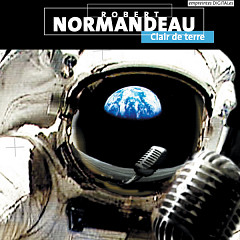
    Clair de terre dans wReck thiS MeSS

    «Review», Bart Plantenga, wReck thiS MeSS, 25 février 2002
    lundi 25 février 2002 Presse

    Clair de terre on empreintes DIGITALes is a fairly new CD from one of the champions of breath-taking chance-taking electroacoustic music. And WHY is it that Canada is such a breeding place for incredible e-a music? Is it the wide-open spaces, the cold air, its strange relationship to the US? empreintes DIGITALes records all seem to have an incredible sense of acoustical gymnastics; the sound is very dynamic and creates a very physical atmosphere for the compositions.

    … one of the champions of breath-taking chance-taking electroacoustic music.

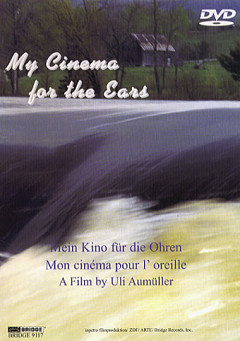
    15 mars 2002: Dhomont parle acousmatique dans Mon cinéma pour l’oreille (DVD-Vidéo maintenant disponible)

    vendredi 22 février 2002 En concert

    Le film My Cinema for the Ears («Mon cinéma pour l’oreille») du réalisateur allemand Uli Aumüller sur la musique concrète / électroacoustique de Francis Dhomont et de Paul Lansky a été projeté en première à la Haus der Kulturen der Welt à Berlin (Allemagne) le 7 février 2002. Un regard impressioniste et ironique sur la nature et le processus créatif, «Mon cinéma pour l’oreille» guide le spectateur à travers l’art et l’environnement de deux compositeurs. Le film a aussi été présenté en compétition au 20e FIFA (Festival international du film sur l’art) le 15 mars 2002, au Goethe-Institut, à Montréal. On peut entendre, dans le film, la composition Un autre Printemps qui avait été créée en concert en décembre 2001 lors du festival Rien à voir (10) produit par Réseaux. Cette même composition s’est méritée le 2e prix au concours “Ear ’01” de la radio hongroise. My Cinema for the Ears est un DVD-Vidéo ambiophonique avec sous-titres français, anglais et allemand coproduit par inpettofilm (Allemagne) et Bridge Records (ÉU).

    4 avril 2002: Denis Smalley invité au SEAMUS 2002

    vendredi 22 février 2002 En concert

    Le congrès annuel de la SEAMUS (Society for Electro-Acoustic Music in the United States) aura lieu du 4 au 6 avril 2002, à Iowa City (ÉU). Denis Smalley est le compositeur invité et présentera sa pièce Base Metals, tirée de son album Sources / scènes, en plus de participer à plusieurs rencontres. Une des recherches présentées porte sur une composition de Gilles Gobeil. Il s’agit de la communication de Joseph Harchanko, «Using Spectro-morpholgy to Explain Structuring Process in Gilles Gobeil’s ‘Le vertige inconnu’». Cette composition se retrouve sur son premier disque La mécanique des ruptures.

    Clair de terre dans Incursion Music Review

    «Review», Tobias c van Veen, Incursion Music Review, no 046, 18 février 2002
    lundi 18 février 2002 Presse

    This review was not meant to become so thoroughly academic: but the music in question is thoroughly academic, from start to finish, from its origin to its reflection in our ears. Electroacoustic music is a startling mixture of playing with theoretical models in a geography of organic instrumentation and digital manipulation — to explore their soundness, their structure, their resonance and dissonance — and a love of sonic experimentalism, of the perverse pleasures of the ear, that has propelled musicians since the birth of Art on January 17th, about 2 million years ago (according to Fluxus).

    Robert Normandeau works in a genre of electroacoustic called acousmatic sound. Acousmatic sound, according to Michel Chion, is a sound “one hears without seeing [its] originating cause — an invisible sound source.” Born in Québec in 1955, and currently a Professor of Composition at the Université de Montréal, Normandeau explores the outer ranges of the acousmatic in Clair de terre through three separate works: Malina, Erinyes, and the title track, Clair de terre. Or at least the liner notes claim that he is exploring the acousmatic, that which seems devoid of origin; for paradoxically, the first two movements are purely concentrated upon issues of origin and centricity. “At the origin of the work is a play,” begin the liner notes to Malina, which is the score to a theatrical adaptation of Ingeborg Bachmann’s 1971 novel of the same name. Likewise, Erinyes begins with: “At the centre of this work is the voice.” The attempt, according to Normandeau, is to “bring out the primitive nature of the voice.” The paradox inherent in the definition of the theoretical project — acousmatics — and the stated intent of the individual works is fully realized in the last piece, Clair de terre, which focuses upon humankind’s newfound ability to see Earth from space. Clair de terre is a French play on words: “claire de lune” is a Québécois expression — of the moon at night, its clarity and cold purity — which grounds many Québécois folksongs. The reversal of this — to see the Earth in a pure state, from the moon — illustrates the paradox: for we cannot actually see the Earth, we only see it in a reflection, in pictures or representations of the Earth, taken from the Moon. What has traditionally grounded French folksongs such as “Au clair de la lune” is now displaced: the origin itself is decentred through its reflection. According to Normandeau, the result is a realization that “Earth is not at the center of the universe,” leading to a “state of unbalance that is reflected in the way we see the world.” This very reflection — a mirror image of balance interpreted as imbalance, an interpretation that can never be sure of a true balance beneath its simulacra of instability — is the stuff of Normandeau’s “acousmatic” explorations, for even his definition of acousmatic differs from that of Chion’s. For Normandeau, “‘meaning’ contributes to the development of the work as much as does ‘sound,’” whereas Chion understands the term as devoid of referential meaning. The paradox lies within our consideration of the works in question: is it necessary to critique the stated origins to grasp the paradoxes inherent in Normandeau’s acoustic logocentrism? Or can it be heard within the “sound” of the work itself—devoid of meaning, at a loss for representation?

    Malina strikes directly into my memory, deep at a Western Orientalism: I “hear” the sounds of the East… and for good reason, as the principle source of sound is the ghostly playing of the Japanese flute called the shakuhachi, processed with spatialization and delay to add a spectral quality. And perhaps it is a sense of the unheimlich (uncanny) that directly confronts us in the rawness, the startling orgasmic quality, of the human voice. Drawn from onomatopoeia, sampled from a production of Sophocles’ Elektra, and at times processed to trill like flocks of birds, the treatment of the voice is akin to sonically imagining the deconstructive critique of the voice Derrida offers Rousseau in Of Grammatology. Voice — is it the raw primitivism, similar to the birdsong, poetic at its core, as Rousseau claims? Or is voice mixed with writing — that corrupt, perverse, guilty pleasure — from its incestous origins? Writing: the Meaning that centres voice. And it is the third piece, Clair de terre, that explicitly reveals the violence of this conflict, of the paradox. A countdown at the beginning of the piece leads to industrial sounds — hammering, doors, squeaking, distorted fuzz — clashing with fat sighs from the human voice. The palette shifts and we are led once again into a sonic memory that can only be described as uncanny: off-key pitches, high drones, rubbings and metal taps, metallic squeaks and echoes. We are in the wasted trainyard of the mind at the very indeterminate juncture where we cannot determine conscious/unconscious, mind/body, voice/writing, meaning/sound. It is perhaps fitting, then, that after a burst of bagpipes, the last sounds heard are the squeaky hinges of a closing door — or perhaps, a crypt.

    The Freest of Radicals dans Vital

    «Review», Roel Meelkop, Vital, 15 février 2002
    vendredi 15 février 2002 Presse

    No Type are obviously best known for their MP3 label, but after more than three years of online publishing they have decided to release the first hard copy. And more are to follow. This sampler features no less than 36 tracks, thus giving a broad overview of the material released on the website. With some exceptions, most of the tracks can be seen as clicks ’n cuts ine the widest sense: from more mainstream techno to austere glitches. The odd ones out can be placed in noise, post-rock and even pop. As with many compilations (especially double ones), there are good tracks, bad tracks and those somewhere inbetween. In general the quality is pretty good and the compilation is put together well. There is enough differentiation between tracks, which keeps attention at a good level and more importantly, some very strange and intriguing tracks are included. For all of us with a prehisorical internet connection, this is an excellent chance to get to know No Type and the artists they represent.

    … some very strange and intriguing tracks are included.
  • 34
  • 35
  • 36
  • 37
  • 38
  • 39
  • 40
  • 41
  • 42