Sauter au contenu principal
electrocd

Blogue

366 résultats
  • 37
  • 38
  • 39
  • 40
  • 41
  • 42
  • 43
  • 44
  • 45
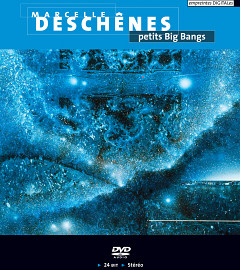
  • petits Big Bangs, Marcelle Deschênes dans Musicworks

    «Creating and Contributing: The Expansive Spirit of Marcelle Deschênes», Rosemary Mountain, Musicworks, no 86, 1 juin 2003
    dimanche 1 juin 2003 Presse

    […] (Deschênes) can shape any and all sounds exactly to match whatever form or phrase she envisions. Her compositions are truly expressive of human emotions rather than being explorations of sound, and she avoids the common pitfall of creating dizzying configurations in surround sound, despite the context of the early of-art images used in works like Écran Humain (with Paul Saint-Jean) and Lux (with Renée Bourassa). […]

    Her compositions are truly expressive of human emotions…

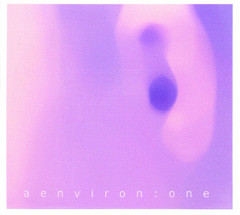
    Aenviron: one, Isostasie, flume ridge.halifax.lisbon, Relisten, Birds and Reeds, Train de nuit (Noord 3-683), The Animals in These Cages Are Injured in Some Way and Would Probably Die If Released, Into India, Natasha Barrett, John Hudak, V. V., Hildegard Westerkamp dans electrocd.com

    «Espaces de sons: les sons environnementaux dans l’électroacoustique», David Turgeon, electrocd.com, 1 juin 2003
    dimanche 1 juin 2003 Presse

    Les sons environnementaux (field recordings) ont toujours fasciné les compositeurs électroacoustiques, ceci depuis les Cinq études de bruits (1948) de Pierre Schaeffer et ses enregistrements de trains modifiés. Avec le Vancouver Soundscape 1973 (1972-73) de R Murray Schafer, ces sons du quotidien s’articulent autour d’un discours qu’on nommera «écologie sonore», où les sons gardent leur signification originale, et ne servent plus comme contenu anecdotique à la merci du compositeur. Le lecteur curieux notera que Jonty Harrison fait une intéressante synthèse de ces deux approches dans son texte {cnotice:imed_0052-0001/À propos d’Évidence matérielle/cnotice}.

    En fait, chaque compositeur semble privilégier une approche différente par rapport aux sons environnementaux. Alors que l’écologie sonore voit fleurir des artistes du microphone tels que Claude Schryer et bien sûr Hildegard Westerkamp et sa fameuse Kits Beach Soundwalk (1989), des préoccupations autrement plus documentaires alimentent un disque tel que Corazón Road (1993), carnet de voyage sonore du duo français Kristoff K Roll. Entretemps, le compositeur new-yorkais Jon Hudak part d’une palette extrêmement minimaliste afin de trouver l’«essence» des sons utilisés, ce qui donne à l’auditeur de doux «soundscapes» planants. Élève du ci-haut mentionné Harrison, Natasha Barrett se rapproche davantage de la tradition acousmatique tout en concevant des paysages sonores de toute beauté à partir de sons environnementaux très discrets.

    De jeunes compositeurs s’ajoutent constamment au paysage (sonore…) et il serait malvenu de les confiner au silence tant leur travail nous semble digne d’intérêt. Mentionnons d’abord le californien V. V. (de son vrai nom Ven Voisey), qui intègre ses sons trouvés dans une architecture rappelant la musique concrète «vieille école» — ce faisant, il montre combien Schaeffer n’est peut-être pas si éloigné esthétiquement de Merzbow… Avec Relisten, l’autrichien Bernhard Gal nous fait découvrir ses épisodes, soigneusement choisis, de «musique trouvée» (c’est-à-dire de structures musicales existant déjà dans le matériel environnemmental.) Enfin, de par son foissonnement d’idées et son rythme toujours soutenu, le surprenant flume ridge.halifax.lisbon (2001) du montréalais Cal Crawford réjouira sans doute les auditeurs à l’affût de nouvelle acousmatique.

    Deux petites friandises pour terminer. D’abord, le joli mini-CDR Aenviron: one présente cinq instantanés sonores (et ce, sans aucun traitement!). Après tout, s’il existe du cinéma pour l’oreille, alors pourquoi pas un album photo pour l’oreille! Question de boucler la boucle, nous proposons également de s’arrêter au récent mini-CD de Lionel Marchetti au titre évocateur de Train de nuit (Noord 3-683) (1998-99). Cette œuvre pour un seul haut-parleur, dédiée (on s’en douterait!) à Pierre Schaeffer, nous rappelle, une fois de plus, l’importance toujours renouvelée des sources environnementales dans l’océan électroacoustique.

    Isostasie dans Audion

    «Review», Alan Freeman, Audion, no 48, 1 juin 2003
    dimanche 1 juin 2003 Presse

    This one sounds like a mixture of digital “granular” synthesis and all sorts of concrete manipulation. It’s a mass of sonic swarms and textures that scatter and dive around, sometimes in big churning fabrics (kinda Stockhausen like) and sometimes in sensory collages (Redolfi and Zanési realms). The resultant album is one that tends to zoom through its 77 minutes without getting too engrossing, thus I’m unable to say much more!

    … a mass of sonic swarms and textures that scatter and dive around…

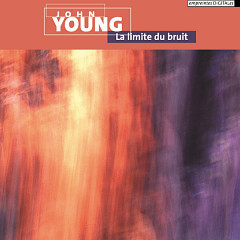
    La limite du bruit dans Audion

    «Review», Alan Freeman, Audion, no 48, 1 juin 2003
    dimanche 1 juin 2003 Presse

    A New Zealand electroacoustic artist, who currently resides here in Leicester, he surprised me when he came into the UT shop, as I had no idea that Leicester’s De Montfort University had an electronic music studio. Of course, I asked him if he knew Denis Smalley (another New Zealander resident in the UK) which — of course — he did. Naturally we also discussed how bizarre it is that the only label around willing to issue his CD hails from Canada!

    Anyway, on to the review: “The Edge of Noise” is an apt title for something that starts off sounding like the sounds of someone decorating or building, as we have clanks and scrapes, things being scoured and ripped, and all manner of what the French call “bruitism” the art of “sound as art”. How it goes on, becoming ever more extreme when more processing is added. Compression, distortion, granular chopping up and reconstruction, all make for an uncompromising and highly creative mixture. However, the absence of musical references make it a diffcult listen, it tends to all get a bit overwhelming.

    … an uncompromising and highly creative mixture.

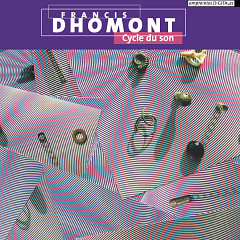
    Cycle du son dans Audion

    «Review», Alan Freeman, Audion, no 48, 1 juin 2003
    dimanche 1 juin 2003 Presse

    Dhomont’s Cycle du son in four parts is a fascinating study in the art of painting with sound, with clusters and fragments of sonic sources usually manipulated way beyond their original context. In this way the techniques used in these works are quite rightly compared to the pioneering Études of Pierre Schaeffer, however the results are quite different, and very much late 20th Century. I would personally compare these digital manipulations to the similarly spacious, semi-musical constructions of Denis Smalley. The same air of invention, use of form and dynamics make a vivid and engrossing concoction that is simply “indescribable”.

    … a vivid and engrossing concoction…
  • 37
  • 38
  • 39
  • 40
  • 41
  • 42
  • 43
  • 44
  • 45