Sauter au contenu principal
electrocd

Blogue

122 résultats
  • 1
  • 2
  • 3
  • 4
  • 5
  • 6
  • 7
  • 8
  • 9
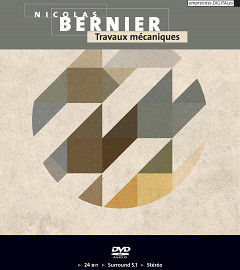
  • Travaux mécaniques dans Ondarock

    «Recensione», Roberto Mandolini, Ondarock, 24 décembre 2012
    lundi 24 décembre 2012 Presse

    Dopo il meraviglioso strings.lines, il canadese Nicolas Bernier ha pubblicato un altrettanto suggestivo album per la tedesca Hronir (usure.paysage) e un doppio cd per l’etichetta specializzata in ambient music, Home Normal (Music for a Piano; Music for a Book). Sempre del 2012 è Travaux mécaniques, presentato dalla Empreintes Digitales nella solita elegante veste di DVD-Audio custodito in un bel box di cartone. Al suo interno cinque nuove tracce di Bernier presentate in surround 3.1/5.1, stereo, mp3 e aac (320kbps).

    Dans le ventre de la machine è la personale “battaglia” del compositore canadese contro la “macchina”. Nel senso letterario del termine: Nicolas entra nel corpo di un dispositivo meccanico costruito da un amico carpentiere e ne descrive la natura con l’aiuto di un sensore piezoelettrico e un microfono a contatto. Sul finale si sentono le parole del celebre discorso di Mario Savio tenuto nel 1964 davanti agli attivisti di Berkeley.

    Cresciuto in pieno evo digitale, Bernier sente nostalgia per quei dispositivi che gli ricordano l’infanzia: cineprese, videoregistratori o semplicemente vecchi giocattoli. Liaisons mécaniques è una descrizione acustica di tali oggetti, un racconto per suoni di superfici ricche di particolari.

    Le suggestioni spaziali di Les chambres de l’atelier sono più evidenti ascoltate nella versione surround 5.1, ma anche nel più canonico formato stereo rendono bene la capacità di Bernier di descrivere spazi utilizzando solo gli “effetti”, creando forti dinamiche e giocando sulle profondità. Nelle sue mani il suono acquista qualità microscopiche, calibrando le orecchie su dettagli apparentemente impercettibili.

    Nelle sue mani il suono acquista qualità microscopiche, calibrando le orecchie su dettagli apparentemente impercettibili.
    6,5

    27 février 2013: Acousmatique international à Bruxelles

    mercredi 12 décembre 2012 En concert

    Le Concert international produit par Musiques & Recherches le 27 février 2013 à l’Espace Senghor à Bruxelles (Belgique) présente des œuvres de Elizabeth Anderson, Adrian Moore, Robert Normandeau, Zuriñe F Gerenabarrena et Irene Pacini. Il y aura aussi une rencontre pré-concert avec Elizabeth Anderson à propos de sa récente pièce 8 pistes Solar Winds qui a été créée en octobre dernier au Mexique.

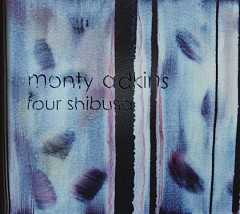
    Four Shibusa, Travaux mécaniques dans CFLX 95.5 FM

    «Top 30 des musiques exigeantes 2012 de Délire actuel», François Couture, CFLX 95.5 FM, 11 décembre 2012
    mardi 11 décembre 2012 Presse

    L’émission radiophonique Délire actuel consacrée aux musiques exigeantes (CFLX-FM 95,5 à Sherbrooke, Québec) annonce aujourd’hui son palmarès des 30 disques à ne pas manquer en musique expérimentale pour 2012. Cette liste regroupe 30 titres représentant la crème des musiques exigeantes, soit la frange avant-gardiste ou expérimentale de tous les genres musicaux (musique contemporaine, jazz actuel, improvisation libre, avant-rock, électronique, etc.). […]

    … la crème des musiques exigeantes…

    Scènes dans The Sound Projector

    «Monopoles and Nightingales Walk these Hills», Ed Pinsent, The Sound Projector, 8 décembre 2012
    samedi 8 décembre 2012 Presse

    Subtlety is also a keyword to bring into the classroom as we approach Scènes (empreintes DIGITALes, IMED 11111) by Pete Stollery, an electroacoustic composer who studied under the great Jonty Harrison and is now a Professor at the University of Aberdeen, where he is a strong advocate for new music in Scotland via the agency of InvisiblEARts. Since Radiophonic Music is never out of fashion, readers may initially be drawn to the six minute track Serendipities and Synchronicities, which was composed for a stage play about Delia Derbyshire. In it, Stollery attempts to express his personal affinities with Delia’s work, by refracting it through his own very similar compositional methods. There are also two pieces excerpted from his ongoing Gordon Soundscape project, which is a plan to compile an aural map of Aberdeenshire, through collaging field recordings and processing of same; his chief aim as gazetteer in this instance is to identify and record endangered sounds, such as certain activities found within the dying distillery industry. He also aims to map Paris in like manner, on scènes, rendez-vous which has its origins in his childhood memory of a 1967 Claude Lelouch documentary, and uses information from the film as rules to govern his sound-gathering and compositional actions. Fields of Silence is also based on field recordings, themed around the intriguing idea that a field of grain falls silent “after it has been harvested”. This very much reminds me of a Ray Bradbury story 3. Or that Roald Dahl story where an inventor is able to hear the cries of plants being cut by secaturs 4. Stollery somehow manages to discover sound events and textures within the mown stubble itself, as well as collaging in “before and after” sound events from combine harvesters. In all ind value="Pete Stollery">Stollery seems to be a thoughtful and gentle composer, one who wouldn’t want to impose anything on the landscape, but rather cares to ask interesting questions about our relationship to our sonic environment. In some cases I find his explanatory notes more interesting than the sounds he produces. This is particularly so with Back to Square One, where he writes with something approaching passion about the excitement he feels when listening to the “musicality” of sports commentators on the radio and telly, yet very little of that passion or excitement has found its way into the muffled, pedestrian music.

    … a thoughtful and gentle composer…
  • 1
  • 2
  • 3
  • 4
  • 5
  • 6
  • 7
  • 8
  • 9