Sauter au contenu principal
electrocd
  • This website is also available in English.

Blogue

107 résultats
  • 5
  • 6
  • 7
  • 8
  • 9
  • 10
  • 11
  • 12
  • 13
  • Topographies dans Ondarock

    «Recensione», Roberto Mandolini, Ondarock, 29 juin 2013
    samedi 29 juin 2013 Presse

    Martin Bédard è un compositore elettroacustico con una brillante carriera accademica alle spalle. Oggi insegna sia al Conservatorio che all’Università di Montréal. Topographies è il suo esordio discografico e raccoglie cinque opere composte tra il 2004 e il 2012.

    La prima composizione in scaletta, Grand dehors, mette subito in mostra la spaventosa energia e le considerevoli dinamiche della musica del canadese: particolari microscopici lasciati apparentemente in sottofondo vengono portati all’improvviso in primo piano con accelerazioni fantascientifiche. Dopo la boa dei tre minuti un crescendo devastante riempie lo spettro prima di esplodere in un poderoso ostinato che sembra la simulazione di una battaglia per il controllo del sistema solare.

    L’universo di Bédard è uno spazio multidimensionale dove l’attenzione è perennemente sollecitata da una valanga di eventi. Push & Pull si ispira al movimento ipnotico e metallico dei treni sulle rotaie e in qualche modo cita un vecchio amore adolescenziale di Martin, i Rush. Métal fatigue rappresenta bene la carica cinematica della musica del compositore di Québec City con i suoi abbondanti dodici minuti di montagne russe emozionali.

    L’universo di Bédard è uno spazio multidimensionale dove l’attenzione è perennemente sollecitata da una valanga di eventi.
    7

    Topographies dans Chain DLK

    «Review», Vito Camarretta, Chain DLK, 25 juin 2013
    mardi 25 juin 2013 Presse

    When you peruse resumes like the one of this Montréal-based phenomenal wizard, who just attained a place in the catalogue of empreintes DIGITALes — maybe the most remarkable label in the field of electroacoustics and acousmatics at the moment —, you immediately foresee the consistency of a release with his signature: alumnus of Yves Daoust, André Fecteau and Robert Normandeau. Monsieur Bédard is teaching auditory perception, composition and analysis of electroacoustic music at the Conservatoire de musique de Montréal as well as electroacoustic compostion at Université de Montréal . On this collection of sonic marquetries he assembled in different moments, his hyperreality seems to be nourished by a selection of concrete noises whose attrition is a sort of runaround for Martin’s processing, but beside the impressively heady and somehow cinematic pelting and rendering of blasts, liquefactions, combustions and coalescences, which could vividly render fearsome train trips (Push & Pull), scorching meteoric darts (Grand dehors), frightening metallic landslips (Topographie de la noirceur), precipitous tumbles down to the hellish bowels of the ore bodies of the earth the main aspect of the creative / destructive elaboration (Métal fatigue) and dense swarms of drilling noises from excavation sites (Champs de fouilles), the properly dramatic element of each representation seems to be the inoculation of temporary breaks of piercing sounds, which almost mirrors the psychological whirls and craters, which follow such a pelting by emphasizing the inner sense and consciousness of Bédard’s topography.

    … Montréal-based phenomenal wizard…

    À l’ombre des ondes dans Monsieur Délire

    «Journal d’écoute», François Couture, Monsieur Délire, 20 juin 2013
    jeudi 20 juin 2013 Presse

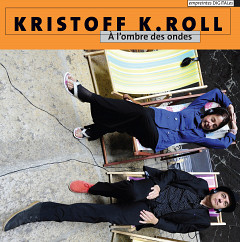
    Le duo Kristoff K.Roll (Carole Rieussec et Jean-Christophe Camps) a toujours eu un talent incroyable pour raconter des histoires électroacoustiques. Ce sont des conteurs de sons. Et À l’ombre des ondes est un (autre) grand crû. Ce CD consiste en trois pièces (28, 7 et 27 minutes) conçues comme des «siestes audio-parlantes» à écouter individuellement, au repos, sous casque. C’est ce que j’ai fait. Illusions sonores jouant sur les bruits environnants (un avion qui passe, des conversations de passants, une mouche), traitements acousmatiques, unvers sonores tissés avec finesse pour intriguer le conscient et le subconscient, et, à travers tout ça, des récits de rêves. Du grand art électroacoustique, et la preuve que cet art, parfois si abstrait et cartésien, peut être aussi profondément humain… et rêveur.

    Du grand art électroacoustique, et la preuve que cet art, parfois si abstrait et cartésien, peut être aussi profondément humain… et rêveur.

    Intérieurs harmoniques dans Monsieur Délire

    «Journal d’écoute», François Couture, Monsieur Délire, 19 juin 2013
    mercredi 19 juin 2013 Presse

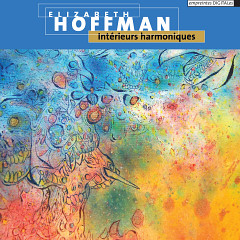
    Premier album d’Elizabeth Hoffman chez empreintes DIGITALes, format CD (l’étiquette semble avoir abandonné le format DVD-A — les quatre plus récentes parutions sont en CD). Six œuvres acousmatiques composées entre 2000 et 2011. Thèmes et matières sonores simples (résonances, eau, chants d’oiseaux) et moins simples (densités, mouvement). Compositions élégantes, riches, mais où il manque un certain sens de la narration ou du drame.

    Compositions élégantes, riches

    Topographies dans A Closer Listen

    «Review», Richard Allen, A Closer Listen, 14 juin 2013
    vendredi 14 juin 2013 Presse

    “Not one second of downtime will be met,” declares the press release, and in this case, the statement is true. Martin Bédard’s Topographies fills every sonic nook with crashes, glissandos and draws. This is a work of immediacy, beginning with a crash and continuing with a clash. At certain times, it sounds like the work of an orchestra attempting to tune during a train collision. Even in its subtler moments, it conjures images of a factory collapsing while the machinery is still running. Noiser than Zbeen, but conveying a similar respect for abrasion bordering on noise, Bédard’s work is thick and immersive, a piece of corrugated iron filled with loose nuts and bolts.

    While the five pieces were composed over the course of a decade, they were mastered as one and serve as a fine primer to the Canadian composer’s work. Bédard is not only a class teacher of “auditory perception, composition, and analysis of electroacoustic music” in Montréal, he’s also a doctor. Yes, there is a place where one can get a PhD in electroacoustic composition, and the degree reflects a dedication to the cause. Thankfully, this is a release of which he can be proud; any students who read this review should know that their teacher is at the top of his game. In other words, he’s worth the tuition fee.

    The earliest work included here, Topographie de la noirceur (“Topography of Darkness”) is also the only track short enough to be a single. In an alternate world, it might have a chance of success, as it contains four minutes of the most interesting music many will hear all year. Imagine starting one’s car and tuning in to a show like this: drums and bells and sharp glass edges. This might cause one to reevaluate one’s relationship to music. Does it have a beat? Can you dance to it? Are there lyrics? No – but a clear tempo emerges from time to time, and the sounds of coins and cannons rise to fill the sonic space.

    Fast-forward a few years, and the artist has incorporated pieces of an elegant choir, along with parts of what seems like a solemn organ recital. Whooshes and percussive vibrations dominate Champs de fouilles, which brings to mind the passage of a subway car or clacking train. In the third minute, an approaching horn is followed by the screech of brakes, but instead of disembarking passengers, it dissolves into a murder of crows. Late in the piece, the artist also demonstrates a new restraint, allowing chords to descend into drone instead of preserving their previously agitated levels.

    Similar sounds occupy Push & Pull, making one think that Topographies might have been better titled “Transportation.” This time, the brakes are applied early and often, honoring the title: push and pull, stop and go. A sample at 2:50 sounds just like the slamming of a car door, another at 4:24 like a seatbelt warning ping, and another at 6:10 (starting earlier but heard clearly here) like a crossing gate being lowered. By Grand dehors (2011), the glissandos are in full effect, and by Métal fatigue (2012) the artist’s more accessible aspects have fled, leaving in their wake a cool abstraction.

    Judging by the inspirations behind these pieces, which range from to a Aleksandr Zinovyev novel to a rehabilitated Québec prison to the 400th anniversary of the province, it’s clear that Bédard has more on his mind than just making music; he uses sound to honor his inspirations. As the artist continues to operate in the field of commissioned work, we look forward to many more creative compositions; this first collection is simply a harbinger.

    … the most interesting music many will hear all year. […] … this first collection is simply a harbinger.
    9 – 21 août 2013: Prenez note…

    samedi 8 juin 2013 Général

    Veuillez prendre note que notre service de vente sera fermé du 9 au 21 août 2013. Toutes les commandes en ligne seront traitées jeudi le 22 août. Bonnes vacances!

  • 5
  • 6
  • 7
  • 8
  • 9
  • 10
  • 11
  • 12
  • 13