Sauter au contenu principal
electrocd

Blogue

110 résultats
  • 11
  • 12
  • 13
  • 14
  • 15
  • 16
  • 17
  • 18
  • 19
  • Allusions sonores dans Chain DLK

    «Review», Vito Camarretta, Chain DLK, 17 janvier 2014
    vendredi 17 janvier 2014 Presse

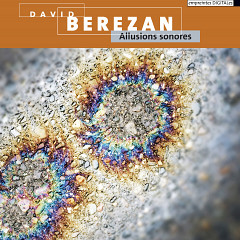
    Another aural delight for the lovers of unconventional electroacoustic sonorities and field recordings from the well-known Canadian label empreintes DIGITALes bear the signature — the second for the imprint — of Uk-based fellow countryman David Berezan, who recently mastered the five acousmatic works he made from 2008 and 2011. The oldest one, Badlands, is related to his native region, Alberta, as he grabbed some field recordings in the so-called badlands or calanques in Southern Alberta in the summer of 2007 so that the densely constructed soundscapes he built by means of intriguing amalgamation of buzzing insects, chirping cicadas and crickets, flurries, eroding rocks and even skits of traditional American Indian ritual sonoritis vaguely exudes a sense of nostalgia while rendering dinosaur fossils, indigenous people history, lovely parks and the characteristic climate of that part of the planet. If we go in a chronological order, the following track Nijō teleports listeners inside Japanese castles; the title refers to Nijō Castle in Kyoto, where David supposedly recorded the sounds he assembled for this track, which focuses on the squeaking sound when a visitor of the castle walks upon its wooden floors, which are commonly known as “uguisubari” (meaning “nightingale floors” due to the fact they sound like chirping!) and functions as a security system which detects intruders, which cannot but inspire a sound artist like David, who tried to go beyond those floors by nailing occasional Japanese voices, high-speed trains and other noises from contemporary Japan which bumped into his microphones. Another region of the planet Mr Berezan visited many times and grabbed many sounds from is Bali, Indonesia, which fed Galungan, where he carefully nestled sounds from the Galungan religious festival, the rice paddies, the rich nocturnal natural life and the gamelan in order to render both the extraordinary natural environment and the impressively rich Balinese traditional culture, and Thumbs, where David just recorded a single plucked sound froma Balinese thumb piano before processing it while inspired by anything related to the word “thumb” that came to his mind during the compostion (all-thumbs, thumbs-up / down, under thumb, thumbing through and so on). The most recent track is maybe the most unconventional one as David entirely assembled Buoy from sounds of different kinds of sea buoys, whose bells, whistles and gongs as well as detecting systems (whereas buoys normally aid sea navigation or circumscribe safe area for swimmers or divers, some buoys aid scientific research of ecology, oceanography or maritime weather) could be considered as a sort of decoding of an imaginary language of the sea.

    … densely constructed soundscapes he built by means of intriguing amalgamation…

    Allusions sonores dans Sound of Music

    «Recensioner», Kristoffer Westin, Sound of Music, 14 janvier 2014
    mardi 14 janvier 2014 Presse

    I flera fall förefaller kanadensaren David Berezans kompositioner något tämjda av den institutionella apparat som omgärdar den akusmatiska musiken, medan ett verk som “Galungan” — tillika min personliga favorit — snarare bryter mot alla tendenser till ett reserverat tillstånd. Albumets första stycke, “Buoy”, är också en höjdpunkt, varför placeringen likaså känns angelägen. Att fånga lyssnarens uppmärksamhet omedelbart har förstås sina fördelar, men ökar också förväntningarna på kommande stycken, vilka när de inte infrias, förtar lite av upplevelsen.

    “Buoy” upptas av en slags navigering mellan tematiska stoff utifrån ljudet av klockor och visslor som sjöbojar är utrustade med. Med detta material som bas har Berezan vidare arbetat fram abstrakta klanglandskap tillsammans med en god andel, synnerligen konkreta, vågskvalp; vi gungas in, kastas ut och tumlar runt i ett marint ekosystem där sjöbojarnas instrument utstakar vägen. Det abstrakta klangmaterialet till trots, präglas “Buoy” av en följsamhet genom de guidande vissel- och klockljuden. Vackert, övertygande och saltstänkt! Lite kuriosa är att stycket tillkom under residenser vid Visby International Center for Composers och Elektronmusikstudion och fick dessutom sin urpremiär i Gävle.

    “Thumbs” utgår från ett anslag på ett balinesiskt tumpiano, som sedan har utsatts för allehanda manipulationer och slutligen sammanställts till ett närmare tolv minuter långt verk. Den reducerande arbetsmetoden har en lång historia i elektroakustiska sammanhang och får mig att tänka på en klassiker som Pierre Henrys “Variationer över en dörr och ett andetag” (1963). Berezans verk har naturligtvis en kristallklar ljudbild, utan några trubbiga kanter som annars präglar Henrys stycke. Glansen och den tekniska fulländningen i “Thumbs” är dock tyngre än det konstnärliga resultatet, som tyvärr imponerar föga. Jag kan inte hjälpa att istället slås av hur tidlöst och konstnärligt fulländat Henrys 51 år gamla stycke faktiskt är.

    Efterföljande “Badlands” är mig också likgiltig och väcker snarare en tanke om den akusmatiska musikens villkor. Ur det perspektivet förefaller verket präglas av ett outtalat regelverk, en formel för hur musiken ska klinga, framför några nya infallsvinklar som bryter och väcker förundran. Det är tjusigt sammansatt till ett vulgärgestiskt och glaciärgrynigt uttryck, med en livfull dynamik som luktar tävlingsmaterial. Dock inte mer än så.

    I ljuset av smärre besvikelser beträffande “Thumbs” och “Badlands”, framstår albumets fjärde spår, “Galungan”, som ett smärre mästerverk. Det standardiserade uttrycket hamnar i skuggan och istället framträder en mer koncentrerad klangbild. Ljuden har hämtats från Ubud på Bali och kombinerar obehandlade fältupptagningar med utsökta bearbetningar till en fantasieggande glans. Man anar den folkliga gamelanmusiken och en kortare sekvens av ”monkey chant”, men i sammanhanget skapas en ny musikkultur, som både är jordigt basal och en själslig fullträff.

    Förväntningarna ökar sålunda när vi landar på sista spåret, “Nijō”, som hämtar intryck liksom ljud från så kallade näktergalgolv, vilka återfinns i tempel och på andra platser i Japan. Tydligen knarrar dessa i syfte att skrämma bort potentiella tjuvar och andra oönskade personer från inbrott. Anledningen till att en näktergal har smugit sig in i namnet är det knarrandet ljudet, som även påminner om fågelkvitter. Berezan redogör vidare för att “Nijō” ”delves deeper into, and within the floorboards, revealing not only birds but many voices and soundworlds of traditional and contemporary Japan”. Här förlorar Berezan åtminstone mig. Plötsligt känns allt väldigt krystat och den ljudande gestaltningen förefaller platt; ljudmaterialet finns där, men det är bara ett konstaterande.

    “Buoy” och “Galangan” gör ändå Allusions sonores väl värd att utforska. Berezan uppvisar även en skicklighet i övriga kompositioner, men i mina öron inskränker det sig mycket till en fullfjättrad teknisk uppvisning utan överraskningar.

    Topographies dans blackaudio

    «Review», Tony Young, blackaudio, 14 janvier 2014
    mardi 14 janvier 2014 Presse

    When the press release stated that this was five acoustic works, I expected something quite different from the rather noisy affair that erupted the moment it started playing. Grand dehors comes across as a psychopathic mash-up of folding ambience that steers just shy of falling apart at the seams, where an undercurrent of drama holds a cinematic space that is peculiar and strangely alluring.

    Track two Topographie de la noirceur however, is something of a let down, concentrating on Tibetan chimes and clatters that I haven’t heard since the soul numbing ridiculous compositions of Z’ev; luckily the true horror that is Push & Pull, makes up for this by reverting to the form of the opening number.

    The remainder of Topographies follows suit and concentrates of varying degrees of Dark Ambient, infused with noise; and whilst nothing quite matches Grand dehors for outright depth and furious rage, it does hold steady to the end; completing a solid release with a few minor hiccups along the way.

    7/10

    … and whilst nothing quite matches Grand dehors for outright depth and furious rage, it does hold steady to the end.

    3 – 5 janvier 2014: 3 jours d’acousmatique au San Francisco Tape Music Festival

    jeudi 2 janvier 2014 En concert

    Le prochain San Francisco Tape Music Festival se tiendra du 3 au 5 janvier 2014 au Z Below à San Francisco (ÉU). Trois jours de classiques, d’œuvres des premiers pionniers et de créations. Parmi les 26 œuvres présentées, on retrouve celles de Hans Tutschku, Maggi Payne, Denis Smalley, Peter Batchelor, Thom Blum, Matt Ingalls, François Bayle, Jonty Harrison, Hildegard Westerkamp, Elainie Lillios, Stijn Govaere et Elsa Justel.

    La marée dans psychemusic.org

    «Review», Gerald Van Waes, psychemusic.org, 1 janvier 2014
    mercredi 1 janvier 2014 Presse

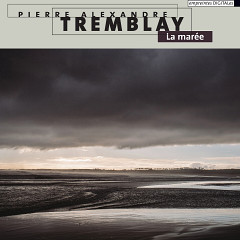
    Sometimes it takes a while to grasp a composer’s own specific angle how he/she perceives the sonic reality and composes with it. Usually and compared to the older generations, a modern composer became much more like sound painter. For this, they also use a couple of tools of preferences of their own. Pierre Alexandre Tremblay is both active into contemporary jazz as well as into electroacoustic music. Having played bass guitar for most of his live, he also uses a laptop to enhance the sonic world. Improvisation remains important for the development of his pallet. He also is a member of two ensembles which further enhance improvisation, which is Ars Circa Musicæ (with a range from noise to free jazz, punk rock and contemporary music), and De type inconnu (a two-guitar and two-laptop duet based in Montreal), besides being part of Splice (LOOP Collective, London), and the L.F.O. Orchestra. He currently teaches composition and improvisation at the University of Huddersfield in England.

    The improvisational pallet used in the first composition, La rupture inéluctable, is a combination of some slower notes of the basic instrument, the bass clarinet, played by Heather Roche, with a more emphasised louder and calmer playing. The bass clarinet is an instrument, which can also show such strongly emphasized bursts of air, which here and there are clear and power up the resonances. Especially the long notes become part of an extra resonance in the background, which is distorted with electric noise and electric vibration, a few times it is simply peeping or calming down in parts with a more natural or quiet echo.

    The second piece, Le tombeau des fondeurs, is a favourite track of mine, because it combines certain enhanced sound pallets that work very well together. Used here are deep droning electric amplifications of drones mixed with percussive rods that sound a bit like a carillon with more emphasis on the side effects of the instrument. This enhanced instrument is the Bashot-Malbos piano, played by Sarah Nicolls. It is interrupted in sound, gets different, additional resonances. Further on it is mixed with church bells-alike sounds and with real piano. Here is audible an interesting interaction between sound enhancement and direct improvisation. Some ideas still come over with a certain random amount of effects at first listen, but makes sense.

    The third piece, Mono No Aware, is played on the Babel table, which is another interesting experimental music instrument. It has horn-like electric-acoustic vibrational qualities. Clicking background effects are part of its sounds as well. These combinations of tones are growing slowly together. Also, more breathy and more fast-percussive vibrations are used in the evolution of its sonic and droning activity.

    The fourth recording (on CD2), Still, again, is a combination of voice activity (breathing and operatic singing), directly recorded and re-processed with some interactive percussive echoes and marble-like rhythms and bass-like enhancements for the voice performance with a surrounding field of improvisations and a bass rhythm. It is like being surrounded by a basic living area of an echoing resonance field. Small piano drones and electronic tones, oscillating bass drones, like rhythms are giving the background a living entity that all feel like a comfortable enriched area for the solo voice.

    The last piece, Un clou, son marteau, et le béton is basically piano with an additional world of electroacoustic enhancements. There’s the wilder and calmer contemporary piano playing and the droning electric vibrations of interference. I am still not sure what is directly coming from the piano resonance, as a sound reaction from it or not.

    The liner notes mention that a part of the enhanced extras to the acoustic instruments come forth from the exploration of the relationship between the loudspeaker and the instrument. Let’s say that besides actual playing and resonance this could also includes the effects used in the recording, during the amplification, in the feedback, but even via the interruption and change of certain qualities.

    Sometimes it takes a while to grasp a composer’s own specific angle how he/she perceives the sonic reality and composes with it. Usually and compared to the older generations, a modern composer became much more like sound painter.
  • 11
  • 12
  • 13
  • 14
  • 15
  • 16
  • 17
  • 18
  • 19