Sauter au contenu principal
electrocd

Blogue

85 résultats
  • 7
  • 8
  • 9
  • 10
  • 11
  • 12
  • 13
  • 14
  • 15
  • Nécropolis dans Aural Aggravation

    «Review», Christopher Nosnibor, Aural Aggravation, 3 mai 2016
    mardi 3 mai 2016 Presse

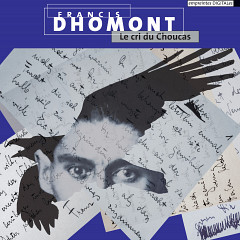
    It looks like a box set. But it is, in fact, simply a CD in a box. A very elaborate box at that. It works a little like a matchbox, the interior of which folds out to reveal extensive liner notes in French and English, written by Parmerud himself, and which provide interesting and instructive insight into the four compositions. Created between 2005 and 2011, the extended pieces are united not so much thematically as compositionally, the sounds collected and collaged rather than being shaped into conventional musical frameworks.

    Dreaming in Darkness is forged primarily from small sounds, spaced apart from one another. A chime, a chink or a clunk, and then silence before a scrape or a click or a bump. It’s fragmentary, the origins of the sounds unclear. Taking the question of what a person who cannot see dreams about, Parmerud explains that the piece is an attempt to create surrealistic fragments of a blind person’s dreams. As the piece progresses, the sounds become increasingly densely packed, and with longer durations and overlaid, building sinister abstract scenes: in fact, not so much scenes as shifting shadows and variations in light.

    The bubble of conversation marks the opening moments of Crystal Counterpoint: a recording which sounds like a restaurant or party, the chinking of classes and general hubbub of people grows and stops abruptly with the chime of a glass. Inspired by the sounds of the parties Åke’s parents used to host, and which he would hear from upstairs, the piece uses the very same glasses to create a wealth of sounds, from long, low drones to higher hums, elongated undulations and quick, bright glissandos. Grand swells of sound rise and cease suddenly, replaced by strange, quiet drifts of sound: it’s very easy to forget exactly what you’re listening to. But if anything, awareness of the origin of the sounds only heightens the experience, as you’re likely to marvel and wonder just how glasses could sound like an oboe or high winds across mountain tops. In his notes, Parmerud notes that there already exist a large number of recordings which explore glass sounds, and it is, indeed, an interesting piece to place alongside Miguel Frasconi’s Standing Breakage (for Stan Brakhage) (clang records, 2016).

    ReVoiced moves away from musical abstraction and instead uses the voice as its instrument. A single voice is layered up on top of itself exponentially until a whole crowd of one voice is speaking. It’s actually quite a disconcerting experience. Voices are subject to all kinds of manipulation: sped up, slowed down, pitch adjusted, stretched, overlaid, echoed and delayed, in myriad permutations. Chants and dialogue and ululations, crowds and multiple languages meld together, and gradually, extraneous sounds — hard, heavy slabs of sound — crash in, while sharp-edged sounds slash for create a dull, percussive element to the slow-building torture of the familiar becoming twisted, distorted, abstracted and unfamiliar.

    The final track, Necropolis — City of the Dead, is a musical tour through the catacombs of an imaginary city which contain the remains of some of the greatest music of all time. ‘But the condition of the musical bodies that rest in the crypts is unfortunately in various states of decomposition’. As such, in combining a well-worn joke (which is usually about Mozart when I’ve heard it) with a project to assimilate and deconstruct fragments of existing works, Necropolis is a sort of a collage. Classical, jazz, film soundtracks, many renowned and bordering on recognisable, at least in essence, all fade in and out and collide against one another.

    While the title track may pick over the bones of musical history, it equally breathes new life, and the same is very much true of the work as a whole: the parts are disparate, fragmentary, scattered in origin from around the globe and individually amount to not very much at all. But the sum is spectacular, an experience which is thought-provoking and which has the capacity to be quite unexpectedly affecting.

    … the sum is spectacular, an experience which is thought-provoking and which has the capacity to be quite unexpectedly affecting.
    Lépidoptères dans The Wire

    «Review», Tristan Bath, The Wire, no 387, 1 mai 2016
    dimanche 1 mai 2016 Presse

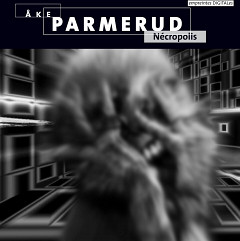
    Composers Monty Adkins and Terri Hron collaborate on a spacious composition in five movements themed around butterflies and moths. The music centres on Hron’s recorder playing, with Adkins refracting and reshaping the fine and feathery tones of the instruments via electronically assisted metamorphosis. At times the recorder finds itself in a hall of misshapen mirrors, and at others its sound flows into a delta of wobbly tributaries, again towards an incalculable sonic ocean of slow release.

    … a hall of misshapen mirrors […] a delta of wobbly tributaries […] an incalculable sonic ocean…

    Martin Bédard, Louis Dufort dans Voir

    «Concert électrochocs: poésie musclée», Pierre-Luc Senécal, Voir, 15 avril 2016
    vendredi 15 avril 2016 Presse

    Jeudi soir, une cinquantaine de personnes s’étaient réunis dans la Salle multimédia du Conservatoire de musique de Montréal pour apprécier la musique de deux de ses professeurs. Enseignant tous deux la musique électroacoustique au Conservatoire, Louis Dufort et Martin Bédard offraient une programmation de quatre pièces, rassemblant deux styles très différents d’une musique acousmatique de qualité.

    Champs de fouilles occupe une place particulière dans le catalogue de Martin Bédard. Cette commande pour le 400e anniversaire de la Ville de Québec, la plus saluée de toutes ses compositions, était l’occasion pour le compositeur d’avoir une approche moins abstraite que ce qu’il fait à l’habitude. Inspiré par les fouilles archéologiques menées à Québec durant sa visite, Bédard a intégré dans sa pièce des sons enregistrés dans la ville (marteaux-piqueurs, train de passage, vol des oies blanches) mais aussi des échantillons d’une pièce de Monteverdi datant de 1608, année de la fondation de Québec. Une fois ces sons transformés par des outils numériques et assemblés dans un logiciel, ce n’était pas une carte postale sonore qui était offerte, mais plutôt une métaphore musical, sorte de Québec rêvé. Très gestuelle, cette musique est marquée par des «croustillements» de métal, des blocs de sons virevoltant sur les haut-parleurs, des trames pesantes qui se subliment en vapeur d’harmonie, comme si l’on découvrait des trésors sonores enfouis sous la terre.

    Avant de présenter Kissland, Bédard mentionnait, lors d’une conférence d’avant-concert, sa pièce Métal fatigue, composée en 2012. Il partageât avec nous les apprentissages découlant de cette pièce qui, malheureusement, pêchait par son excès de sons. Dans Kissland toutefois, en création ce soir-là, les gestes musicaux sont plus épurés et clairs. La musique respire et la ré-écoute confirmerait sans doute que l’œuvre a réussi là où Métal fatigue a manqué. Plus d’un aura remarqué le niveau de diffusion assez conservateur de la part de Bédard, de même que des graves plutôt envahissantes.

    À l’inverse, Louis Dufort a opté pour un niveau sonore assourdissant mais des basses ciblées avec précision. Dans Into the forest my wounded arms wide open, Dufort met la table en nous malmenant avec un rythme de basse fantastique. Cet héritier de la musique électronique nous fait taper du pied énergiquement avec ses beats couillus, jusqu’à ce qu’un geste énorme et déchirant, comme un tutti d’orchestre, nous plonge dans un torrent d’instruments à cordes, de cui-cui d’oiseaux et de chuintements bruités. Ça éclate. Ça arrache. Ça sature, mais ce fou du son s’en fout. Ce soir, avec Dufort, on ne fait pas dans la dentelle!

    2e preuve à l’appui: Tombeau de Claudio Monteverdi, sa seconde pièce de la soirée. Inspiré par les œuvres de Monteverdi, compositeur du XVIe-XVIIe siècle, Dufort présentait une pièce électronique rappelant la proposition de Necropolis — City of the Dead, composée par le suédois Åke Parmerud. Dans les deux cas, les compositeurs se sont plus à passer dans le hachoir des extraits de pièces classiques afin de les ré-arranger et se les ré-approprier. Ainsi, avec des mélodies de synthétiseur bien cheesy à la Tron et des coups de kick viandeux, Dufort nous concocte un cheeseburger techno facilement digérable et surtout très satisfaisant. La fin, plus douce, repose sur des rythmes de voix fragmentées. Apprêté à la sauce électronique moderne, ce segment respire, se superposant avec d’autres trames éthérées qui rappellent justement l’écriture contrapuntique propre à la musique de la Renaissance et du baroque.

    … deux styles très différents d’une musique acousmatique de qualité.

    Lépidoptères dans University of Huddersfield News

    «Lépidoptères takes flight with recorders and electronics», University of Huddersfield News, 7 avril 2016
    jeudi 7 avril 2016 Presse

    Professor Monty Adkins teams up with Montréal’s Dr Terri Hron for a cycle of five pieces reflecting families of butterflies and moths

    One of the world’s most ancient musical instruments is combined with advanced electronics in a new recording from the University of Huddersfield’s Monty Adkins. It is the product of a key transatlantic collaboration.

    Professor Monty Adkins The disc, named Lépidoptères, has been released by the renowned Canadian label empreintes DIGITALes. It consists of a cycle of five works for recorder and electronics co-composed by Dr Monty Adkins, who is a performer and Professor of Experimental Electronic Music at the University of Huddersfield.

    He teamed up with Montréal-based Dr Terri Hron, a composer and a performer who specialises in the recorder, a centuries-old instrument that also takes its place in highly contemporary music.

    The University of Huddersfield has a global reputation in the field of new and experimental music and it has formed a partnership with two counterparts in Canada – the Université de Montréal and McGill University. Lépidoptères is a product of this collaboration and the project was conceived during Terri Hron’s residency at the studios of the Centre for Research in New Music (CeReNeM) at the University of Huddersfield.

    The composition of [Lepidoptera] took place at the Université de Montréal, whose Vice-Dean Robert Normandeau (pictured right) – an established figure in the world of electronic music – has a long-standing relationship with the University of Huddersfield.

    Professor Adkins and Dr Hron then recorded their work at McGill University, which uses a 22.2 surround sound system developed by research at Japan’s national public broadcaster. It is the only facility of its kind outside Japan and provides the ideal environment for creating a totally immersive musical experience.

    ‌The album has now been launched at a concert in Belgium, followed by tour dates in the UK, Belgium, Amsterdam and Prague. Terri Hron also gave a preview of the album at a concert in Banff, Canada.

    [Lepidoptera] is a work for recorders and electronics made of five movements, each referring to families of butterflies and moths.

    “The nature and character of the recorder is similar, with its varying tonal colours, and its transformations from caterpillar to chrysalis to butterfly,” said Professor Adkins. “This inspired similar connections and interactions between the recorders and the electronics.”

    The [Lepidoptera] project led to the development of an algorithm to control the sound in relation to the recorder.

    “Rather than creating a fixed piece of music that the recorder plays from start to finish, this research has created a system where it is possible to control the way in which the sounds and the various processes work all the way through the movement,” explained Professor Adkins.

    “As a result each performance is never the same, providing a unique experience for the audience and the performer.”

    After the success of [Lepidoptera], future projects with other countries are in the pipeline as the University of Huddersfield and its Canadian partners plan an international network of musical collaborations.

    … a totally immersive musical experience.
  • 7
  • 8
  • 9
  • 10
  • 11
  • 12
  • 13
  • 14
  • 15