Sauter au contenu principal
electrocd

Blogue

82 résultats
  • 2
  • 3
  • 4
  • 5
  • 6
  • 7
  • 8
  • 9
  • 10
  • Troubles dans Vital

    «Review», Frans de Waard, Vital, no 1153, 15 octobre 2018
    lundi 15 octobre 2018 Presse

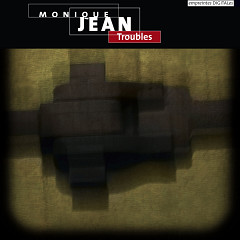
    Since more than twenty-five years Empreintes Digitales is probably the leading label when it comes to computer based electroacoustic music, mostly composed and performed by conservatorium skilled composers. Oddly enough I don’t see a reference to those in the short biography that is printed on the cover of the album by Monique Jean. She was selected by several competitions (which I think is THE thing in this musical area) and played international concerts and festivals. She has here two pieces of which the first, T.A.G., which stands for ‘trottoir, asphalte, goudron’ (sidewalk, asphalt and tar) is inspired by “crowds of demonstration” and she says that sounds are “mainly synthesized”, which I found hard to believe. I was more thinking about heavily processed field recordings, certainly in the opening section of the piece that sounded like car tyres screeching. I might be wrong of course. As the piece evolved it became more obvious that there are indeed synthesized sounds used and even some more orchestral ones towards the end. It’s a massive piece, crowded with many sounds, as crowded as the pavement of the inner city perhaps. This is quite a powerful piece of music. The other piece here is Out Of Joint, and it is a “sound hybridization on Shakespeare’s Macbeth and the various silver screen adaptations, stagings and rewrites it inspired through time” — whatever that means but “what I am trying to do instead is to develop a form that operates through grafts of time, interpretations, meanings and references”. Which I guess wasn’t helpful either. Here the piece is also computer based I would think as well as dense, slightly distorted from time to time, a massive narrative perhaps; again I could have been fooled it included field recordings as I distinctly heard some birds. Both pieces are quite good and seemed removed from the more usual glissandi approach that was common with releases on this label some years ago. Either the composers have moved on, or the label did. […]

    This is quite a powerful piece of music.

    Mistpouffers dans Toneshift

    «Review», TJ Norris, Toneshift, 6 octobre 2018
    samedi 6 octobre 2018 Presse

    Mistpouffers is a selection of three compositions completed between 2014-16, composed by French artist and improviser eRikm. Each piece runs approximately 17-18 minutes in length with two based on 8-channel fixed medium and one in stereo. Opening with Draugalimur where, poof like smoke, the setting is a quiet distant storm, some electronic squiggles and free-floating static. This is eRikm working in an atmosphere where a pin could be heard dropping, that is until a narrator like a public radio host, in French, reads from a text. The wind howls and electro-waves are emitted. While listening I gaze upon the cover image of a cliffside that starts to resemble a human skull. No you are not seeing things, like a mirage — it’s an in-situ illusion, only emphasized by a military jet flying past, from ear to ear as someone gasps for air. This dichotomy between air space and breathlessness is likely key to the narrative. The eerie unexpectedness here is quite palpable.

    Sonic boom? By occupying the space with layered field recordings, simple thing like chewing, and rummaging — with a silky drone and changing percussive parameters eRikm has developed a psycho-social space that is as inventive as it is cinematic. The whispers, the hive drone, the bouncing punctuation, all make his acoustic theatrics rife for live presentation, and perfect for visual listeners. Moving on to Poudre, which opens in darkness to creaking of chairs, or perhaps thunderclap or is it fireworks, or gunfire? The question mark here is the tension. With even the slight laughter heard int he mostly engaged crowd scene it would be menacing one way, and exhilarating another. But it seems to walk that fine line. The title translates to powder (and in gun powder) and this work does seem to float on air with the spirit of a nighttime curfew. It’s singular shots are disarming so to speak — “the bombs bursting in air” and so on. In wartime these echoes have a cerebral resonance that is unmistakable.

    Just after midpoint this layered field recording sounds like either a grande finale or a full-on battle. It’s actually quite disturbing, it’s chaotic imprint, relentless. At one point it’s literally just a wash of savage white noise. But the reverie switches up its candor on L’aire de la Moure 2. There are shadows of a dark kingdom interrupted by a happily chirping winged beast. The intermittent grey drone casts and draws as these treated bird samples are deployed like abstract illusions. eRikm has concocted a blend of granular electronics, a female narrator and low flying planes that zoom from air shot. The tingling microsound invades as though it’s evaporating over the spoken word.

    It’s an atonal radio play that seems to be collecting data in a laboratory. Small actions like pulling a topper from a cask, as well as elongated high tones create a focused format for deep listening — all ears on the speaker, and though I do not speak much français my ears can translate this as a scanner of the mind. Static like fire, and a series of slingshot thwapping are a peculiar combination alongside a deep bird caw. With so many constant variables you’d think this recording would be a schizo delusion but it’s not at all, it keeps your minds ear constantly pricked within this composer’s cosmic adventure.

    The tingling microsound invades as though it’s evaporating over the spoken word.

    Grains dans Badd Press

    «Review», Kevin Press, Badd Press, 5 octobre 2018
    vendredi 5 octobre 2018 Presse

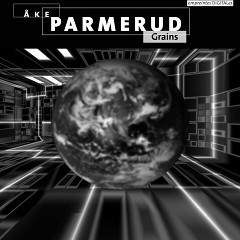
    Sweden’s Åke Parmerud has assembled four acousmatic works dating between 1990 and 1995 on a must-have collection of out-of-print recordings. (Acousmatic is an electroacoustic subgenre composed for presentation with speakers rather than live instruments.)

    These powerful, sometimes disturbing recordings all date back to the mid-1990s. Thematically and artistically, each has maintained extraordinary relevance.

    Grains of Voices came out of an invitation to produce a piece of music drama for Swedish Radio. “I decided to make a composition concerning the human voice, its symbolic implications and its musical applications,” writes Parmerud in the album’s notes. “The sound of the voice is a striking symbol of the unity of mankind.”

    He recorded the voices in-person, inviting speakers and singers to share anything they wished. “This way I did not (with a few exceptions) control what went into the composition, only what came out.” Parmerud describes the 31-minute work as “a multilayered, cross-cultural hybrid piece of sonic art.”

    Jeux imaginaires (or Imaginary Games) was inspired by the 1992 World Chess Championship match between Anatoli Karpov and Garry Kasparov. Aside from a middle section that sounds like a frenetic game of park chess, the work is a study of the parallels between the game and composing music.

    “Every night after ending my composing session in the studio I played the game (or maybe only a few moves) on my portable chessboard. Apart from it being a nice way to turn my attention away from pure musical problems for a while, I found that playing the game made me more and more aware of the likeness between chess playing and composing. … [P]laying the game as a small ritual every night released new musical ideas and composing energy without necessarily creating detectable parallels between the music and the game itself.”

    Les objets obscurs (Hidden Objects) is a musique concrète piece in four parts. Or more precisely, a meta-musique concrète piece.

    We’re presented with riddles (in French) having to do with the source of the sounds used. The answers are offered musically. “In the end of the last movement the ‘solution’ of all the riddles is presented. These answers, however, set up a new ‘inner’ riddle, to which no answer is given.”

    Finally, Alias explores “the duality of outer and inner existence, here interpreted through the life, music and destiny of the Renaissance composer Carlo Gesualdo da Venosa (1560-1613).”

    Gesualdo is a controversial 16th/17th century figure. As a composer, he’s considered to have been hundreds of years ahead of his time. As a human being on the other hand, he’s remembered for the gruesome double murder of his wife and her lover.

    Alias is not, however, an attempt to illustrate the shifting identities of Gesualdo,” writes Parmerud, “but is rather, in a wider sense, inspired by thoughts on the relationship between the artist and the work of art.”

    That being said, it’s difficult not to let the mind wander over the course of these two dramatic movements. Like the others on this important new compilation, it is a powerful work.

    … it is a powerful work.
  • 2
  • 3
  • 4
  • 5
  • 6
  • 7
  • 8
  • 9
  • 10