Sauter au contenu principal
electrocd
  • This website is also available in English.

Blogue

2899 résultats
  • 149
  • 150
  • 151
  • 152
  • 153
  • 154
  • 155
  • 156
  • 157
  • Gratte-cité dans Sonoloco Record Reviews

    «Review», Ingvar Loco Nordin, Sonoloco Record Reviews, 1 octobre 2009
    jeudi 1 octobre 2009 Presse

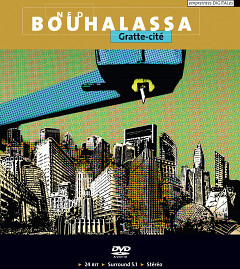
    Ned Bouhalassa, for some reason, is such a familiar name to me that I instantly was sure that I had reviewed his work before within the framework of empreintes DIGITALes, but I hadn’t! After some bewildered thinking I found that he’d been a frequent participant at the CEC mailinglist, and that was the solution to my sudden problem. Bouhalassa introduces his DVD-Audio in such a graphic and catchy way that I might as well quote him here:

    “The title of this disc translates to ‘cityscraper’ In preparing the sonic materials for these pieces, I selected, like a DJ, what I liked out of my large collection of recordings, though in my case, these are recordings of city soundscapes. I then imagined a fantasy, where a gigantic vinyl record’s grooves are replaced by the jagged outline of skyscrapers, and I, a giant, drop an impossibly-large needle and begin to ‘play’ the city.”

    Track 1. The Lighthouse (2005) [6:41]

    This work isn’t solely a sound work in its own right, but was composed for a video by Khrystell E Burlin; The Lighthouse; the third part of the triptych Theseus. Bouhalassa opens up his cloud of ingredients; motioning towards “loops of filtered noise, synthesizer textures, urban samples, horse hoof rhythms, creaking doors, a bell, drum and bass sounds, break beats, crackling smack downs, radio whispers from an old war” and more.

    The music commences on that double vision view; a jangling of hinges (perhaps a merchant opening up onto the street in Lahore) and a symphonic low-key string section from Tchaikovsky’s late 1800s, right before a contaminated glass of water in St Petersburg.

    After a little while the two worlds are indistinguishable, as the soughing of the distant engines of the city take on their own collective symphonic traits; the factory siren appearing in the brass section. Gray voices without words leaking out of the central station move like bubbles on water deep inside the city’s consciousness, moving the matter-of-factly weights of internal meaning. The clicketycklicking horseshoes across cobbled streets remind me — because of the electroacoustic environment — of Alain Savouret’s Don Quixotte Corporation (1980 — 81).

    Insectlike beats wheeze out of the background sonic pollution like cockroaches out of cracks in Dallas kitchens, soon becoming so obtrusively mechanic that the insects, if indeed they retain their guises, must be a case of robot entomology.

    A grinding machine may as well be an old style fuzz box guitar in Bristol, UK, and the munching beats the repercussions of a boat engine hid deep beneath the hull on a vessel out on the Avon.

    At times the soundscape solidifies into crystalline worlds of sharp angles, and yet other times reality gets a grip as familiar street scenes condensate on the window of the mind, only to dissipate in the passing of time units.

    Mostly, though, it’s a maze of dreams you journey through Ned Bouhalassa’s opening work on this phonogram. I can even hear and feel the swinging on a swing; that fluctuation in gravity and that smooth air rushing back round your face…

    Tracks 2 — 6. Urban Cuts (2005) [34:06]: Montréal 1 / Montréal 2 / Las Vegas / Berlin 1 / Berlin 2

    Fortner Anderson [texts] Delphine Measroch [cello] Christian Olsen [drums]

    Life seems so incredibly natural and self-evident in these cuts, although it is so brittle and elusive in its many temporal identities, as we shall se as we change bodies at the end of the turnstile. Nutritional processes well forth in Bouhalassa’s Urban Cuts, unstoppable even by death, which really isn’t any clear line at all, since processes keep working matter long after that over-dramatized change. Life is a carnival and death too; a meaty, smacking, bulging meat feast, fucking and farting, Rabelaisian, as is this music, which works right inside these natural processes, these exchanges of nutrients and wastes; wastes that become nutrients, noises that become sounds that become music that become mathematic and philosophy and high ends in themselves!

    Ingredients from human and other terrestrial life fly up and flutter around like flakes of soot in Ned Bouhalassa’s Urban Cuts, too many examples to really mention, except that the stitching together of these expressions of energy excites you as a listener. It is easy to do these kinds of mosaics these days, when you don’t have to cut and splice like Stockhausen in Kontakte — so the creative process is, in a funny way, wrung over to the listener and his perceptive intelligence. Out of Urban Cuts the experienced listener may construct many a situation, different on each run-through.

    The composer explains that he’s mixed sounds from three great cities; Montréal, Las Vegas and Berlin, and also that he cooperated with live musicians herein; Delphine Measroch on cello and Christian Olsen on drums.

    At times the haphazard feeling of randomness gives way to seemingly more constructed stretches of audio, and even long, bending drones, in which the spoken parts emerge, either as a murmur bubbling in the distance, like a mirage along a desert highway, or right up your face, close; the rancid breath of the words gushing up your nostrils, bouncing off the corrugated iron of Rio de Janeiro hillside slums, here and there in fascist drum beats setting the pace of an obsessive march through your mysteriously migrating mind.

    I like it when the talk touches on Harry Partch and Barstow! I like it when Bouhalassa sounds like Mike Daily in Alarm!

    Tracks 7 — 10. mOrpheus (2003) [15:42]: Orpheus’ First Dream / Orpheus Wakes Up / The Train Station / Alexanderplatz

    Ned Bouhalassa explains that this piece is “a loose interpretation” of the myth of Orpheus & Eurydice, involving a motion from rural Quebec to Berlin, swirling through the cityscape of the German city.

    The music commences on such a gradual level that you begin to check if the amplifier really is on, but slowly an ambience grows on you, like a slow Saturday morning awakening after a hard workweek. The environment you find yourself in is a mixture of the natural and the synthetic, like it often is in Bouhalassa’s sound world. The composer lets on that he’s used sonic ingredients from the farm of his friend Michael Smith. Out of this soaring, glaring coat of mind rise more definite, contoured sonic objects, sounding like piano tones flying through an atmosphere that makes them sway and wobble. Percussive events mix in, although painted in a heavy coat of ambience, and after a while a rock n’ roll tour de force moves like a fist inside a leather glove, in semi-darkness.

    The atmosphere thins out, placing you at four o clock in the morning on a lawn in a Berlin park, your pants wet from the dew. History is sleeping, and your heart picks up a heavy rhythm — or is it the trembling vitality of your mind shaking you up, when nothing else is very obvious around you?

    A grated scent of a pop melody struts softly through your memory, but always at arm length’s distance, never getting any closer, and then… “Einstegien bitte! — a crude female voice talking at you from out of the German orderliness, and a train picks up speed, while the female rigor is sucked up in the composer’s sound-poetic permutation, reaching it’s individual Einheit, which dances up through the escape shaft of your mind. Language and dreams, Eisenbahn und Träume!

    Through an atmosphere of echoing tunnel steps of a city and a gray mist of anonymities a Kraftwerk rhythm taps its fingers absentmindedly against the table top of the present, while your legs stretch far out of reach, entangled in a future that isn’t yet determined.

    Track 11. Impulse (1999) [13:59]

    Ned Bouhalassa defines this work as rather indefinable; as “spaces that are not clearly comfortable or unpleasant” — a Bardo journey, then, it seems, in which reflections of one’s own mind builds the scenery. “The doors and resonating hallways push us to the edges of our imagination”. Bouhalassa explains that he’s made field recordings in the basement of the National Film Board in Montréal, using them as “a kind of narrative”.

    Indeed, the piece starts up like a car engine, with a car engine! It doesn’t take long, though, before a sense of unreality, or dreamscape, takes over — and as in many other works of the composer, the mix of reality and synthesizing of that reality swirls the listener with almost brute force and suddenness. Behind a bland pop beat an echo of the mysteriously unknown keeps your ears towards the unexpected open, and before you know it — like driving a car into a bank of fog — everything has changed, and you start to wonder who you are…

    Track 12. Songe errant (2005) [5:50]

    This is presented as a bagatelle, a minuscule, passing daydream: “A postcard to trigger some memories” A door on screechy hinges opens the piece with historical homages. Water flushes down a kitchen sink, and a hardly visible (audible) distant character inside the ambience grows on you like a fever, slowly encompassing the whole sounding space like a hovering swarm of bees. Distant reflections of sound from a reality that once was yours leaks into the bee swarm in a muffled amnesia. The situation is unclear, as if you’re coming to in a hospital bed after anesthesia, or like gaining new consciousness again and again, as you are reborn, over and over. Glary reflections of repetitious Renaissance atmospheres shift centuries into the circling present, which takes you in its determined hands and holds you up to yourself to watch, closely — as all symbols of force and might fall away from you, outwards, in a gesture of God’s open hand — which is summer —, while a female voice out of the mist of the mind sounds like an Irish folk song whisper, though it really is a recording of instructions blaring out of an airport speaker, talking about unaccompanied baggage. Brian Eno-type musical figures carry you in a meditative mood down the duration of whatever situation you’re in, as the truth of impermanence becomes ever more evident. All times are now, all places here — and Ned Bouhalassa’s Songe errant makes you feel like life is just a memory; that you remember your life, minute by minute — and that this remembrance IS life…

    Mostly, though, it’s a maze of dreams you journey through Ned Bouhalassa’s opening work on this phonogram. I can even hear and feel the swinging on a swing; that fluctuation in gravity and that smooth air rushing back round your face…

    Gratte-cité dans Liability Webzine

    «Critique», Fabien, Liability Webzine, 26 septembre 2009
    samedi 26 septembre 2009 Presse

    Depuis plus de vingt ans le montréalais Ned Bouhalassa occupe le terrain du monde de la musique électroacoustique. Cela ne l’empêche pas d’être également connu dans le cinéma et la télévision pour qui il écrit beaucoup. Cependant, son parcours discographique est assez mince. De lui on connait l’album Aérosol sorti en 1998 sur empreintes DIGITALes et quelques apparitions sur diverses compilations. Autant dire qu’un disque de Bouhalassa est une chose rare et qu’il est plus que souhaitable de ne pas passer à côté si on s’intéresse un tant soit peu aux musiques électroacoustiques. Comme beaucoup de ses camarades, Bouhalassa a une attirance certaine pour les ensembles urbains qui, pour lui, est une émanation vivante qui trouve sa signification dans l’évocation des reliefs des gratte-ciels nord-américains ou européens. Pour ce faire, et il le dit lui-même, il agit comme un DJ, puisant dans un vivier sonore qui va de l’enregistrement environnemental à une orchestration qui fait justement référence à l’urbain. Ainsi Ned Bouhalassa s’installe au cœur de la cité mais, en même temps, il la surplombe, l’observe et la fantasme comme une histoire moderne faite de rebondissements et labyrinthique.

    Gratte-cité est un disque qui attise la curiosité car à la différence de beaucoup d’albums de musique électroacoustique, celui-ci sort des sentiers battus. En effet, il adopte sciemment des formes plus mélodiques et nettement moins abstraites. Gratte-cité est comme une déambulation. On traverse les grandes avenues mais on n’hésite pas non plus à pénétrer les recoins les plus sombres. De Montréal à Berlin, Ned Bouhalassa s’écarte des images d’Epinal et donne sa version de la vie urbaine. Une version qui est à mi-chemin entre l’utilisation de l’environnement et les musiques issues de la rue. Le Canadien touche souvent juste en créant une musique qui ne suit que ses propres règles. Gratte-cité est donc bien le relais d’une musique de son temps, un instantané qui ouvre un long champ de vision sur les villes occidentales. Une façon comme une autre de les vivre, de les appréhender, de s’en imprégner.

    Gratte-cité est un disque qui attise la curiosité car à la différence de beaucoup d’albums de musique électroacoustique, celui-ci sort des sentiers battus.

    Black Bile Extempore dans Dagens Nyheter

    «Stefan Östersjö och Nastasha Barrett: Black Bile Extempore», Martin Nystrom, Dagens Nyheter, 2 septembre 2009
    mercredi 2 septembre 2009 Presse

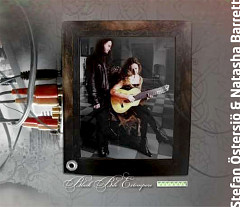
    John Dowlands sång “Can she excuse my wrongs” från 1597 är föremål för den mest otyglade dekonstruktion på detta album signerat den norska elektronmusiktonsättaren Natasha Barrett och den svenske gitarristen Stefan Östersjö. Här blir allt som inte tillhör själva strukturen utan som utgör musikens själva “air” – drillarna, arpeggiona och de rytmiskla accenterna – ny musik i de mest hisnande förvandlingar. Nattligt koltrastkvitter, sprakande eldar och flyende skuggor.

    En dialog med Dowlands över 400-åriga musik som frigör och sätter i rörelse. Kanske räcker inte idéerna för ett helt album, men höjdpunkterna är flera och hettan omisskänlig. Hör den spöklika känslan av hemsökelse i “Where shadows do for bodies stand”, den sönderscratchade “My woe wants comfort”, tumultet i “Unquiet thoughts” eller det skimrande postklassiska soundet i “Earth with her flowers”.

    Sur fond blanc dans Goûte mes disques

    «Chronique», Simon, Goûte mes disques, 2 septembre 2009
    mercredi 2 septembre 2009 Presse

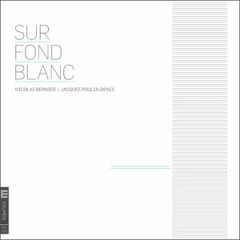
    Une fois de plus en mode coopératif, Nicolas Bernier fait équipe cette fois avec Jacques Poulin-Denis afin d’offrir un album au concept premièrement étrange, et instantanément génial. Au dos de la jaquette, un premier panneau directionnel: «Sur fond blanc explore les thèmes de l’espace intérieur, du vide et de l’absence. Sur ce canevas neutre de textures électroniques et de paysages sonores apparaissent des bribes insaisissables de vie, d’allégories et de souvenirs.» Tout est là.

    Si la «théorie des fonds» (qui soutient que chaque chanson est écrite sur un fond coloré, détaché pour la plupart du temps de la volonté de son auteur) s’est souvent retrouvée à instituer la musique sur un papier peint couleur arc-en-ciel, rares sont les essais musicaux à se pencher du côté neutre de la palette. Par peur peut-être. Car comment articuler le blanc, la moelle de toute chose, distant car central et pourtant révélateur instantané de toute forme de vie artistique en mouvement? La moindre éclaboussure musicale transforme le blanc en un autre blanc, moins neutre. Mais que dirait l’auditeur en se voyant plongé dans un monde où le blanc se superposerait au blanc? Aurait-il l’impression que la feuille plane une fois mise en boule aurait quelques propriétés de plus que cette même feuille blanche et plane?

    On pourrait pourtant le croire à l’écoute de cette œuvre abyssale. Sur fond blanc est de ces grandes explorations où les pièces se succèdent avec cohérence et mystère. Découverte après découverte, l’auditeur sent ses pas frôler le sol dans des galeries impériales aux murs immaculés, aux sols semblables aux plafonds. On rencontre ici et là des incursions de field recording en forme de souvenirs passés, de conversations anxiogènes de par leur angoissant naturel (Olo); des monuments d’electronica qui s’envolent au simple bruit de votre respiration (l’énorme Emm, Mur) et des embarcadères ambient qui vous feraient presque oublier la promiscuité des lieux. Sur fond blanc est un espace pour les rêveurs aux consciences faussement cartésiennes, pour ceux qui ne pensaient jamais rêver sur toile couleur neige.

    Évocatrice jusqu’au bout des ongles, la musique de notre duo pose là les bases d’un essai sur la finitude humaine et musicale, les deux étant à ce point collés qu’il est difficile d’en détacher le romantique de l’intellectuel. Sur fond blanc ou l’histoire de deux synesthètes (personnes aux sens combinés, percevant la musique sous forme de couleurs par exemple) surdoués, racontant le purgatoire que sont nos vies sous des formes artistiquement décuplées, faisant mentir la neutralité sous un habit de contes pour mauvais enfants. D’ores et déjà un classique.

    D’ores et déjà un classique.

    Les arbres dans Goûte mes disques

    «Chronique», Simon, Goûte mes disques, 2 septembre 2009
    mercredi 2 septembre 2009 Presse

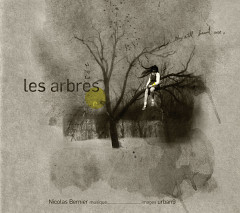
    Décrire un disque comme Les arbres a tout d’un exercice fastidieux. On commencera par dire qu’il s’agit là d’une collaboration entre le producteur originaire de Montréal Nicolas Bernier et son compère Urban9, ce dernier œuvrant comme artiste visuel. Mais au-delà des mots, Nicolas Bernier tend à créer une véritable machine de sentiments, rendant la tentative de justification de mon engouement vaine et presque inutile. Coincé entre une musique acousmatique abyssale et une dérive des matériaux électroniques les plus divers, Les arbres se dégage rapidement des schémas souvent froids et monochromes imposés par la musique concrète.

    C’est que l’ensemble est sûrement trop bien pensé et orchestré pour y avoir quoi que ce soit à redire. Basé sur de longues envolées solitaires d’un piano qui s’abandonne à des improvisations presque aléatoires, les titres composés par Nicolas Bernier dessinent avec lenteur des paysages désertés, rongés par la vermine. De plan séquence en plan séquence, on découvre un savoir-composer hors norme, bien souvent mis en pratique par des glissements abrupts, des ruptures qui nous ouvrent subitement les portes d’un autre théâtre, ou se joue une autre fin du monde. Ces pianos mélancoliques ne seraient bien évidemment rien sans l’orchestration minimaliste qui les entoure: grésillements électriques, vibraphones, guitares et cuivres en tous genres font dévier ces lignes mélancoliques de leur tentation sentimentaliste pour mieux orienter l’auditeur vers une introspection inévitable et douloureuse.

    À ce titre, la prose de Nicolas Bernier n’a rien de féérique, il travaille sur le plan de la finalité bien humaine qui le compose en s’assurant de vider sa musique des vieilles composantes ésotériques qui mineraient le sérieux du propos. Les six pistes de ce projet colossal abordent des ambiances violentes par leurs pouvoirs d’évocation, par l’interaction sensée de leurs composantes. Et dès que tout aura fondu à vos côtés, vous pourrez apprivoiser la bête et jouer avec elle à découvrir les plaines et montagnes d’un monde où se côtoient fourmis mécaniques, ombres fantomatiques, geysers émotionnels et autres escaliers de cordes déchirantes. Pas étonnant alors qu’on parle de photographie sonore, de captation, de fixation, de réformation sonore, de bricolage ou encore d’archivage au sein de cette superproduction.

    C’est que finalement Nicolas Bernier est un maître en la matière, un élève appliqué qui, plein de références dans les poches, retranscrit avec passion l’enseignement du savoir que renferme la musique électroacoustique qui lui a été inculqué à l’Université de Montréal. Mais au-delà des schémas carrés et coincés que peuvent renfermer un cursus universitaire, Nicolas Bernier explose littéralement en proposant une perle electronica/concrète/classique/ambient/noisy dont le retentissement a une portée universelle. Un disque qui laissera très certainement des traces à tout ceux qui auront le bonheur d’y laisser traîner une oreille. Passionné et passionnant.

    Un disque qui laissera très certainement des traces à tout ceux qui auront le bonheur d’y laisser traîner une oreille. Passionné et passionnant.
  • 149
  • 150
  • 151
  • 152
  • 153
  • 154
  • 155
  • 156
  • 157