electrocd

Blog

143 results
  • 16
  • 17
  • 18
  • 19
  • 20
  • 21
  • 22
  • 23
  • 24
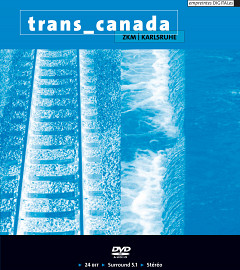
  • trans_canada in Vital

    “Review”, Frans de Waard, Vital, no. 717, February 8, 2010
    Monday, February 8, 2010 Press

    Reviewing compilations is just something I don’t like very much. Not in the limited space each release gets within Vital Weekly. Perhaps one could write lengthy essays about various compilations, and this would perhaps be one. ZKM stands for Zentrum fur Kunst & Technology in Karlsruhe, a prestigious art and music centre. They invited a bunch of Canadian composers “to feature the outstanding creativity of Canadian electroacoustic music and to investigate the trends of its acoustmatics and soundscape composition.” We come across here some old masters like Francis Dhomont (who has a very nice piece based on spoken text of Franz Kafka), Robert Normandeau and Hildegard Westerkamp, along with pieces by Nicolas Bernier (the young man in this lot I believe), Darren Copeland, Louis Dufort, Gilles Gobeil and Barry Truax. The shortest piece(s) are around fifteen minutes, the longest almost thirty-five. Various deal with voices in German or in general. All presented on a DVD. So far the basics. The music is probably just about anything you would expect from an empreintes DIGITALes release. Heavily computer processed electroacoustics sounds. Time stretching, granular synthesis and such like. Sounds tumbling over each other, rolling in and out, nearby and far away. The best pieces are those which add something extra, like spoken word. The spoken words of Burroughs in Bernier’s piece, the Dufort piece or the aforementioned Dhomont piece. The Copeland piece is a a bit too long for me. It’s a long compilation, which has some great music, but also no real stand out pieces, I think. Surely nice enough.
    It’s a long compilation, which has some great music…

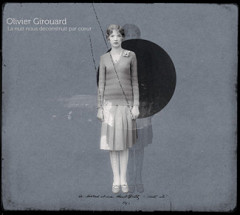
    Cache 2007, Cache 2008 in Monsieur Délire

    “Listening Diary”, François Couture, Monsieur Délire, February 3, 2010
    Wednesday, February 3, 2010 Press

    Every year, the Canadian Electroacoustic Community (CEC) holds a competition for emerging sound artists called Jeu de temps / Time’s Play. Works selected are culled on a CD (among other benefits). I recently received the 2007 and 2008 editions of Cache, said series of CDs. I like these compilations, there’s always gems to be found among those little-known names (out of 2007 crop, I recognize only Olivier Girouard and James Duhamel; from Cache 2008, only Thierry Gauthier, and that’s because he’s been featured on previous installments). It’s not all great or particularly original music (in many cases, we’re knee deep into academic electroacoustics), but gems there are. Like Duhamel’s MIMIK and Dominic Thibault’s Nuit noire, nuit grise, or even Jean-François Blouin’s Catacombes (despite the obvious influence of Gilles Gobeil). These CDs sell for cheap, and you can listen to all tracks on the CEC website.

    I like these compilations, there’s always gems to be found…

    La notte fa in Bad Alchemy

    “Kritik”, Rigobert Dittmann, Bad Alchemy, no. 65, February 1, 2010
    Monday, February 1, 2010 Press

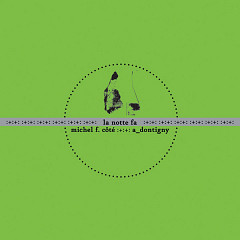
    Max & Moritz enden erst zum Schluss in der Schrotmühle und im Gänsemagen, a_dontigny & Michel F Côté stürzen sich gleich mit den ersten Klängen von La notte fa (&05) selbst in einen Häcksler aus Tapes, Electronics, digitalem Signalprozessing, vor allem aber a_dontignys Cut-ups. Die spucken nicht nur Côtés Drumming und die von a_dontigny eingesetzten Drum-Machine-Beats verhackstückt wieder aus, sie spucken auch mit — unkenntlichen — Fetzen und Brocken von Don Cherry, dem Mahavishnu Orchestra, Ol’ Dirty Bastard, Maurice Ravel, Les Poules oder dem Soundtrack von Cronenbergs Videodrome um sich. In unterschiedlichen Kreisbahnen und Tempi wirbeln Klangfetzen als ein Mahlstrom, der einen selbst wie Treibgut zu erfassen droht, weil einem zunehmend schwindlig wird und man von giftigen, spitzen Rotationen gepiesackt das Gleichgewicht verliert. Die Welt ist ein hektischer, lärmiger Schlund, in dem rhythmische Kleinstteile umeinander loopen, ein gurgelnder, zwitschernder Abfluss, der alles in Reichweite schluckt. Frickeliger Drum’n’Bass ist im Vergleich dazu gemütlich ambient. Hier geht es noisiger zu, molekularer, mulmiger. Côtés Trio Klaxon Gueule geht schon in diese technoide, posthumane Stilrichtung, die Ego und Handschrift verwischt wie ein Gesicht im Sand. Identität bekommt etwas Geisterhaftes und Nostalgisches, wie Cherrys Trompete bei visiones nocturnae. Was da wie eine Parade von Nähmaschinen im Regen klingt, verbindet nichts mehr, nicht einmal surreale Zufallsbekanntschaften. Es wirkt wie pure Aktivität wild gewordener Automaten. Mehrfach besetzt Côté mit furiosem oder sturem Drumming das Zentrum, aber ohne Bindekraft, eher scheint er so die Fliehkräfte noch zu steigern. Ich sage das nicht kritisch. Das ist realistische und zeitgemäße Musik mit zeitgemäßen Titeln wie The Book Burner. Nur ich, ich war noch nie Realist, und zeitgemäß will auch ich immer weniger sein.

  • 16
  • 17
  • 18
  • 19
  • 20
  • 21
  • 22
  • 23
  • 24