electrocd
  • Un article a été ajouté à votre panier.

Blog

110 results
  • 1
  • 2
  • 3
  • 4
  • 5
  • 6
  • 7
  • 8
  • 9
  • Dômes in La Presse

    “Le temps des listes: Top électro 2014”, Alain Brunet, La Presse, December 26, 2014
    Friday, December 26, 2014 Press

    […] Au cours des dernières années, l’électro s’est taillé une place importante sur ce blogue, et pour cause: voilà un pôle important de créativité et d’innovation à l’ère numérique. Voici donc le résultat de nos écoutes cette année.

    […]

    Robert Normandeau, Dômes

    […]

    … un pôle important de créativité et d’innovation à l’ère numérique.

    Au-delà in The Sound Projector

    “Review: The Devil’s Lexicon”, Stuart Marshall, The Sound Projector, December 18, 2014
    Thursday, December 18, 2014 Press

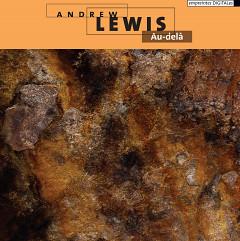
    Another explorer of the voice’s possibilities, Andrew Lewis has the narrators of his opening piece Lexicon remind us repeatedly of what ‘words are like […]’, among these, ‘leaves’, ‘lives’ and ‘lights’, meanwhile likening the page to a ‘map’. Drawn from a the poem of a 12-year old, Lexicon’s words are dissected, scattered between a fragmentation of speakers, distorted and seasoned with electronic effects; the resulting, disjointed linguistics becoming a meditation on dyslexia, whose cohesion lies just beyond ordinary reach, subordinated to a grander sense of order. It’s an agreeably disorienting portal into a collection of pieces that put an unsettling slant on familiar terrain.

    This collection – like much of the empreintes DIGITALes label’s output – comprises a composer’s showcase, the pieces originating from 1990 to 2012, and serving as a scrapbook of Lewis’ extracurricular interests, from linguistics to landscapes, of which he very capably demonstrates the musical qualities. That said, while thematically varied, the collection is defined by a more evident ‘signature’ than other releases: a predilection for sounds processed within the range of recognition, and a measured dynamic range. However, if the cost is our potential for surprise, our capacity for wonder remains intact: Lewis imbues these pieces with great depth, detail and a sustained accumulation of power over their extended running times.

    Dark Glass transposes the ‘unsuspected harmonies of broken glass’ into a sound sculpture of a far-reaching radiance: not an unusual device in this particular genre admittedly, and one that acts as a cohesive device for the full course of the album. Interspersed within its expansive harmonics and pitch-shifted tinkling are plunging moments of pure drama. Similar effects arise from Ascent as it factors in the tumbling rocks of mountainous Bangor – the region in which Lewis lives and works – transposed at times into pinball effects, punctuated by the climber’s odd pause for breath. The glassy radiance continues to serve as a cohesive device, bonding the natural elements of Time and Fire, the sea of time-drowned voices in Cân and the creepy panoply of distorted children’s voices in the closer Scherzo.

    Each of these pieces possesses the ability to transport the listener to somewhere beyond the concrete and the everyday while apparently originating from within it.

    Each of these pieces possesses the ability to transport the listener to somewhere beyond the concrete…

    A Gift of Etc

    Wednesday, December 17, 2014 General

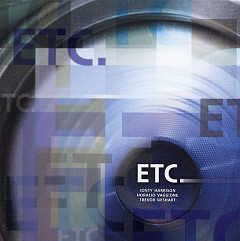
    empreintes DIGITALes will be turning 25 this January and we are starting the celebrations now! With orders of any 3 empreintes DIGITALes discs — already 130-title strong — electrocd.com will include (for a very limited time) a complimentary copy of the Etc CD with works by Harrison, Vaggione, and Wishart. The item is automatically added to your shopping cart. [Offer closed on January 14, 2015.]

    Etc

    La marée in The Sound Projector

    “Review: Negotiation and Irresolution”, Stuart Marshall, The Sound Projector, December 13, 2014
    Saturday, December 13, 2014 Press

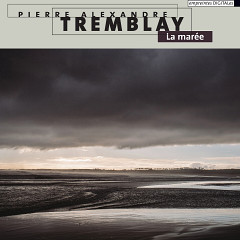
    For his fourth release on the ever-exemplary empreintes DIGITALes label, Pierre Alexandre Tremblay offers worthy company to label-mates and audio-vivisectionists such as Monique Jean and Manuella Blackburn, even if he is generally less incendiary across these five spacious pieces; forsaking cut ’n’ paste conscientiousousness for the full preservation and processing of performances in real time, draping over these aching canyons only the most necessary effects, to ensure the listener very gradual and genuine gratification. The momentous opener La rupture inéluctable consists of a resonant bass clarinet solo from Heather Roche, whose aerodynamic curves and low-end descents — initially foregrounded by golden slivers adrift in a vacuum — gradually succumb to a spell of more pugilistic tendencies: fits of pummelling framed by showers of feedback and distortion: mood-swings between grace and gratuitous, which, while making a fine first impression, establish a precedent of radical dynamic exchange between performer and loudspeaker that verges on war-craft.

    I’d not heard of the Baschet-Malbos Piano prior to hearing Le tombeau de fondeurs (‘The Tomb of the Casters’), and it sounds nothing like what I’ve expected: a flower-headed, metal bouquet stemming from its seemingly unrelated namesake, producing sharp, undulating lines that devolve over time into pounding, dissonant clusters, which are buried alive by tolling bells and hammered metal, finally petering out in a slow, defeated descent. Mono no aware conveys greater restraint, visiting the ears in insect waves from the Babel Table (another new name to me) with the menace of approaching warplanes. Still, Again is a war of wills between fricative near-vituperation for Peyee Chen’s soprano vocals and the lurk of distortive electronics. However, the most cacophonous moments are reserved for the bipolar eruptions of piano in closer, Un clou, son marteau, et le béton (‘A Nail, Its Hammer and Concrete’), which draws more tightly the wire between the extremes of implied threat and weary indifference, heightening tension for the duration with brooding three-key ruminations alternating with petulant outbursts, a dichotomy ever averse to resolution.

    Compiled very patiently across two discs, these five pieces demonstrate a different level of psychological control to the exhibitions of electroacoustic control that empreintes DIGITALes has presented thus far: the magic residing more in the frictional spontaneity of a theatre of operations than in the scientific perfection of detail, while providing some fascinating terrain for our continued exploration.

    … the magic residing more in the frictional spontaneity of a theatre of operations […] providing some fascinating terrain for our continued exploration.

    Dômes in Monsieur Délire

    “Listening Diary”, François Couture, Monsieur Délire, December 10, 2014
    Wednesday, December 10, 2014 Press

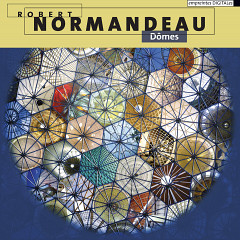
    A fine opus, rich and varied, from Robert Normandeau. Five pieces on this CD. La part des anges is a rather pure acousmatic work, finely distillated. Kuppel, based on concrete sounds, is more exciting at first, but it overstays its welcome. Pluies noires and Hamlet-Machine without Actors are derived from stage music, Normandeau’s forte (and this Hamlet is excellent). Finally, the surprising Baobabs for 4 voices, 6 percussion (Sixtrum) and tape, a powerful, almost animal piece at times, with a dash of Harry Partch.

    A fine opus, rich and varied, from Robert Normandeau.
  • 1
  • 2
  • 3
  • 4
  • 5
  • 6
  • 7
  • 8
  • 9