electrocd

Blog

85 results
  • 1
  • 2
  • 3
  • 4
  • 5
  • 6
  • 7
  • 8
  • 9
  • Le cri du Choucas in 5:4

    “Best Albums of 2016 (Part 2)”, Simon Cummings, 5:4, December 31, 2016
    Saturday, December 31, 2016 Press

    8. Francis DhomontLe cri du Choucas

    “When it comes to acousmatic music as its finest, though, Francis Dhomont remains one of the best of the best. […] Dhomont regularly fashions material that’s beautiful but barbed, sometimes arranged in multiple layers of dense activity, sometimes shot through with thin splinters of razor-sharp pitch over roiling depths. […] Coherent and organic throughout, the drama […] is just as much to do with the way musical materials are judged and handled than with the work’s more immediately tangible text component. […] Le cri du Choucas contains music more dark and uncomfortable than one expects from Dhomont, even in the work’s closing moments; far from offering a reassuring conclusion, it passes instead through angular, awkward, even ugly passages, surrounded on all sides by ominous glowering layers of sound seemingly coloured different shades of black. At its end, Le cri du Choucas sounds stunned, which is precisely how i felt too. It’s another spectacular creation from an undisputed master of the art.” (Reviewed in May 2016.)

    Voyages in 5:4

    “Best Albums of 2016 (Part 2)”, Simon Cummings, 5:4, December 31, 2016
    Saturday, December 31, 2016 Press

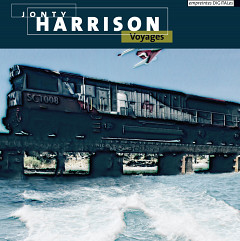
    10. Jonty HarrisonVoyages

    “[…] large-scale tapestries that exist at the delicate liminal point between authenticity (raw and untouched) and artifice (clearly juxta-/superimposed). The latter is emphasised throughout the fourteen minutes of Espaces cachés, something of an essay in qualitative shifts and jump cuts between assembled groups of sound sources. […] As its modest but ambitious title suggests, Going / Places doesn’t simply expand this idea, it explodes it […] Harrison’s moulding of the recordings into complex fabrics turns Going / Places into a stunningly vivid piece of uncanny metarealism that encapsulates both the physicality and the psychology of the present experience together with aspects of memory and anticipation.” (Reviewed in December 2016.)

    Espaces tautologiques in 5:4

    “Best Albums of 2016 (Part 1)”, Simon Cummings, 5:4, December 30, 2016
    Friday, December 30, 2016 Press

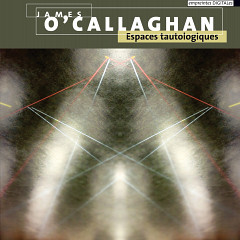
    30. James O’CallaghanEspaces tautologiques

    The four works on this fascinating collection from Empreintes DIGITALes vividly demonstrate O’Callaghan’s very physical relationship with found sounds. Isomorphic is a piece concerned with granular materials, whereas in the trilogy comprising Objects-Interiors, Bodies-Soundings and Empties-Impetus, instruments are not simply explored but thoroughly scrutinised, their sonic potential writ large in huge textures seemingly filled with a myriad whirring, clanking and gurgling machines and gizmos. This creates the startling impression that the instruments are organic life forms and we are hearing their internal organs and mechanisms, particularly in Empties-Impetus, where a potent drama emanates from continual alternations between mild and torrential episodes — the former of which become like pausing for breath between punches to the chest.

    … a potent drama emanates from continual alternations between mild and torrential episodes…

    Le cri du Choucas in The Sound Projector

    “Counting Crows”, Ed Pinsent, The Sound Projector, December 18, 2016
    Sunday, December 18, 2016 Press

    Veteran composer Francis Dhomont is one of the big noises in Canadian electroacoustic and musique concrète composition, so it’s no surprise to see him represented on the showcase label empreintes DIGITALes with his recent composition, Le cri du Choucas. Astute readers (and viewers) will instantly recognise the piercing eyes of Franz Kafka collaged on the cover art there. Le cri du Choucas takes the ideas of Kafka as its theme, a pursuit which Dhomont has been following since 1997. There’s a previous chapter, Études pour Kafka, released by this same label in 2009; I don’t recall hearing that one, but the body of it has been reworked here. The composer also positions this release as the third and final part of a grand triologie, begun in 1981 as Sous le regard d’un soleil noir (released by Ina-GRM in France) and continued in the mid-1990s as Forêt profonde. He aims at extremes of drama, enriched with ideas about psychology; he wishes to plumb the depths of a man’s mind, through sound.

    You could pick no better creator who personifies “unknowable depth” than your man Kafka; I’ve been reading his short stories since about 1979, and one day I hope to understand them. I can’t claim to have studied a great deal of critical analysis of Kafka, and I’m not sure that I care to; there’s a pleasure to be had for the reader in the constant mystification he sets up with his warped visions of European vistas, his mental labyrinths and strange symbols. I’ve no doubt there are numerous interpretations and explanations of The Trial and The Penal Colony, both works which feature in this music, but Francis Dhomont emphasises one particular aspect: the Law. Dhomont takes “the law” in Kafka to be “a metaphoric representation of the impenetrable realms the human mind hits”, and explores this theme with some determination. He probably reads Kafka’s work as describing a maze which always leads back to the same inescapable place, and ascribes the tone of despair and futility to the gloomy inevitability of mankind’s fate.

    Dhomont also gives us his sonic take on other significant Kafka themes, including guilt, solitude, dreams, death, the family, and “impossible messages” — the last one being an apt description of Kafka’s own short stories, for this reader. On Le cri du Choucas — a title which incidentally translates as “The jackdaw’s call” and makes a punning reference to the Czech word Kavka — he does it through rich and maximal fugues of abstract sound. Everything has been heavily treated and processed through a vast amount of expensive-sounding digital crunch and filter effects, yet you feel you could somehow reverse-engineer these noises into their sources if you only listened for long enough. Alien though they be, some sounds closely resemble swarms of chattering voices in a huge mass, which is how I remember parts of Frankenstein Symphony by this composer (from 1997). Often these sounds coalesce and rush forward in a massed advance which seems unstoppable; it creates a suitably nightmarish and unreal mood for the listener.

    The work is further illustrated and signposted by a good deal of spoken-word narration (in French), fragments of texts and documentary recordings which I assume highlight significant milestones in the design. But these interpolations also interrupt the flow of the music, and keep reminding us of the grand abstractions that Dhomont wishes to convey, barely allowing us any space to conceive our own thoughts. This is one of the stumbling blocks for me on this otherwise exciting release, as it lends an air of didacticism to the work; it’s like being lectured by stern academics in a stuffy University where the Kafka syllabus hasn’t been updated in over 35 years. One senses that the masters at this academy would have no truck with Orson Welles’ free-spirited cinematic interpretation of The Trial. It’s also something of an old-school musique concrète technique, one which has tended to mar my enjoyment of Pierre Henry’s Apocalypse de Jean, that famed Oratorio électronique from 1969. This aside, you can comfortably play this meticulous work at peak volumes for immersive and transporting effects, to induce profound states of mind… from 25 May 2016.

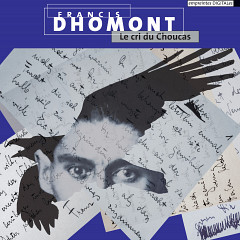
    … you can comfortably play this meticulous work at peak volumes for immersive and transporting effects, to induce profound states of mind…

    Espaces tautologiques in Cultuurpers

    “(On)gehoord in December: Zo dichtbij dat de hamers tegen je voorhoofd slaan”, Sven Schlijper, Cultuurpers, December 17, 2016
    Saturday, December 17, 2016 Press

    […]

    Hamers tegen je voorhoofd

    Geluidkunstenaar en componist James O’Callaghan presenteert vanuit Montréal een viertal akoesmatische werken die het midden houden tussen hedendaags-gecomponeerde muziek, concrète experimentalisme en sound art-installatie. O’Callaghan heeft een zeer verfijnd oor voor kleuring van klanken die hij aantreft in omgevingsgeluid, found sounds, ruimtelijke akoestiek, maar ook in minutieus onderzochte typische eigenschappen van timbres van akoestische instrumenten.

    O’Callaghan is uiterst nauwgezet en kundig in het tonen van niet alleen deze brede variëteit aan materialen, maar evenzeer de muzikale vorm. Die vorm lijkt in eerste instantie nauwelijks tot geen coherentie te hebben en bol te staan van toevalligheden. Bij nadere beluistering echter blijkt O’Callaghan’s werk een meeslepende viering van niet alleen het veelkleurige palet, maar ook van resonanties die hem zelf verbazen. Dat laatste vindt hij alleen al door de herhaling van procedures: imitatie, versterking, verdichting, stapeling, herneming.

    De componist zet de toehoorder midden in de piano, waarbij snaren die tot het uiterste gespannen worden voor ze knappen. Ze galmen tussen een subtiel gekletter van waterdruppels, terwijl de klankkast als woodblock gebruikt wordt en de hoogste noten door pure sinusgolven tot voorbij de gehoorgrens worden doorgetrokken. Alle geluiden staan tot elkaar in een organische relatie die de avontuurlijke luistergang van de componist presenteert. De cd is daar een momentopname van.

    O’Callaghan vertelt een verhaal in geluid dat hij samenstelt uit een veelheid aan originele klanken. Die tocht zélf heeft minimaal even veel mogelijke ‘resultaten’. Dat geldt in live-uitvoering, maar ook voor playback in de concertzaal tot aan de stereo thuis of per hoofdtelefoon onderweg. De nodeloze herhaling is bij O’Callaghan dan ook vooral niet versteend, maar een open uitnodiging ruimten te blijven verkennen, verklanken en beluisteren. Als het moet met je oor in een vleugel, zo dichtbij de hamers dat ze tegen je voorhoofd slaan.

    O’Callaghan heeft een zeer verfijnd oor voor kleuring van klanken die hij aantreft in omgevingsgeluid, found sounds, ruimtelijke akoestiek…
  • 1
  • 2
  • 3
  • 4
  • 5
  • 6
  • 7
  • 8
  • 9