electrocd

More from the blog

27 results
  • 1
  • 2
  • 3
  • 4
  • 5
  • Aenviron: one, Isostasie, flume ridge.halifax.lisbon, Relisten, Birds and Reeds, Train de nuit (Noord 3-683), The Animals in These Cages Are Injured in Some Way and Would Probably Die If Released, Into India, Natasha Barrett, John Hudak, V. V., Hildegard Westerkamp in electrocd.com

    “Sounds Around: Field Recordings in Electroacoustics”, David Turgeon, electrocd.com, June 1, 2003
    Sunday, June 1, 2003 Press

    Field recordings have always fascinated electroacoustic composers, ever since Pierre Schaeffer’s Cinq études de bruits (1948), featuring processed train sounds. With R Murray Schafer’s Vancouver Soundscape 1973 (1972-73), these everyday sounds are articulated around a discourse which will be termed “sound ecology,” whereby sounds keep their original meaning, and no longer serve as anecdotic content to be used and abused at the composer’s whim. Jonty Harrison synthesises these two approaches in his short text {cnotice:imed_0052-0001/About Évidence matérielle/cnotice}.

    Actually, every composer seems to have their own unique approach towards field recordings. If sound ecology has seen the burgeoning of microphone artists such as Claude Schryer and of course Hildegard Westerkamp and her famous {cpiste:imed_9631-1.3/Kits Beach Soundwalk/cpiste} (1989), sound travels such as French duo Kristoff K Roll’s CD Corazón Road (1993) are, in this respect, closer to the art of documentary film. Meanwhile, Brooklyn-based composer Jon Hudak starts off with an extremely minimalist palette so as to seek out the “essence” of sounds, which, to the listener, translate into soft, dreamy soundscapes. A student of the aforementioned Jonty Harrison, Natasha Barrett conceives beautiful landscapes of sounds with very discreet field recordings, that retain an aesthetic likeness to the acousmatic tradition.

    Many young composers settle into this landscape (of sound…) and their work is of such interest to us, it would be a shame not to let them be heard. We shall first mention the California-based V. V. (real name Ven Voisey), who organises his found sounds into an architecture reminescent of “old school” musique concrète—doing so, he uncovers a previously unheard aesthetic affinity between Schaeffer and Merzbow… With Relisten, Austrian composer Bernhard Gal guides us through his carefully selected episodes of “found musics” (that is, musical structures that preexist within the environment.) Finally, because of its numerous ideas and its incredible pacing, the surprising flume ridge.halifax.lisbon (2001) from Montréal composer Cal Crawford will undoubtedly seduce listeners looking for unheard acousmatic grounds.

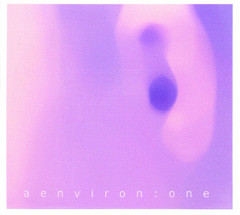
    Two small treats to end with. First, the pretty Aenviron: one mini-CDR is a simple thread of five pure field recordings (with no processing!). After all, if there is such a thing as cinema for the ear, why shouldn’t there be a photo album for the ear! And to close the loop, may we also suggest to make a stop at Lionel Marchetti’s recent mini-CD with the evocative title, Train de nuit (Noord 3-683) (1998-99). This work for one loudspeaker, dedicated (couldn’t you guess?) to Pierre Schaeffer, remind us again of the ever renewed importance of environmental sources in feeding the electroacoustic ocean.

    Isostasie in Audion

    “Review”, Alan Freeman, Audion, no. 48, June 1, 2003
    Sunday, June 1, 2003 Press

    This one sounds like a mixture of digital “granular” synthesis and all sorts of concrete manipulation. It’s a mass of sonic swarms and textures that scatter and dive around, sometimes in big churning fabrics (kinda Stockhausen like) and sometimes in sensory collages (Redolfi and Zanési realms). The resultant album is one that tends to zoom through its 77 minutes without getting too engrossing, thus I’m unable to say much more!

    … a mass of sonic swarms and textures that scatter and dive around…

    Isostasie in e/i magazine

    “Off the Spine”, Dwight Loop, e/i magazine, no. 1, March 31, 2003
    Monday, March 31, 2003 Press

    Learning from a master, Jonty Harrison (University of Birmingham, UK), Barrett’s developed a distinctive voice on Isostasie. While at Birmingham, she was greatly influenced worked under the auspices of BEAST (Birmingham ElectroAcoustic Sound Theatre). Collaborating with those visual/theatrical artists further led to a doctoral degree in composition; now residing in Oslo and active in NICEM (Norwegian International Confederation for Electroacoustic Music), Barrett’s music on her hrst release for empreintes DIGITALes is a deep reflection of her intense interest in tape-splicing experiments. An integral element of tape composition, pre- and post-computer era, has been the use of mathematical equations in determining sound characteristics and, on Three Fictions (Northern Mix), Barrett utilizes loose algorithmic structures refracting sight, sound, and sensation. Section one is based on a statistical simulation of rain falling onto a two-dimensional surface; in the third section, locations of events are calculated by using a numerical system, in this instance, sound materials placed by hand, which have a lighter and more deliberate character. The result of this statistical realization? Randomness, in some ‘harmonious’ fashion, alluding to the idea the sounds were intentionally composed. Such a Cage-ean approach serves her well; however, an even better result is achieved when Barrett lets her senses take over, as in the remarkable Red Snow, composed after her relocation to Norway and a definitive representation of an awareness of the surrounding environment: swirling snowflakes at the mercy of wind, labyrinthine ice crystal patterns, stark moonlit landscapes. Imaginative, evocative music abounds as well on Viva la Selva!, inspired by the antithesis to Norway’s icy landscape: the forests and jungles of the world. Here, location recordings are transformed into abstract (mis)representations of the insect, bird, and animal kingdoms, electronic manipulations evoking the beauty of the natural world around us.

    Imaginative, evocative music…

    Isostasie, Parr(A)cousmatique in Revue & Corrigée

    “Critique”, Pierre Durr, Revue & Corrigée, no. 55, March 1, 2003
    Saturday, March 1, 2003 Press

    Natasha Barrett est une jeune acousmaticienne britannique installée à Oslo, Arturo Parra est, lui, un Colombien résidant au Québec. Les associer dans cette chronique relève ici d’une forte subjectivité, leurs univers sonores respectifs étant totalement différents, au-delà bien sûr de certaines techniques communes à toutes les musiques électroacoustiques.

    La première pratique une forme de juxtaposition de couches sonores en interaction mutuelle, les unes provenant de l’environnement direct (donc naturelles et parfois reconnaissables), les autres étant transformées. Arturo Parra superpose le travail d’un instrument acoustique, la guitare (un jeu profondément volubile et chaleureux qui caractérise le style latino-américain) et les bandes magnétiques. Tour à tour Gilles Gobeil, Robert Normandeau, Stéphane Roy, Francis Dhomont, piliers d’empreintes DIGITALes, l’assistent.

    L’association des deux créateurs peut se justifier par une partie de la thématique de certaines œuvres. Natasha Barrett s’attache à décrire des paysages naturels, avec sa sensibilité. Red Snow évoque les tourbillons de neige de sa patrie d’adoption. D’autres pièces font référence à cet environnement (Outside Snow Falls, Midnight Sun: Midday Moon… ); elle pratique en somme une météorologie sonore (Replaced). Son intérêt pour les paysages naturalistes se retrouve aussi dans Viva la Silva, évocation de la forêt vierge de Costa Rica a travers les grouillements, piaillements, de la faune (les oiseaux surtout) mais aussi les transformations de la voix humaine.

    Avec Arturo Parra, on retrouve un peu de cette thématique paysagère. Mais la sienne est plus axée sur des paysages dans lesquels il ressent une présence — voire une absence — humaine. La forêt vierge semble encore garder les traces des peuples anciens (La basilique fantôme), abriter un voyageur/aventurier (D’or et de lumière) ou être tout simplement la cadre d’une impression de solitude humaine (Soledad). Le résultat sonore chez lui est très emphatique, volontaire, dynamique, tandis que sa consœur réalise un travail d’une approche plus introspective.

    Le résultat sonore chez lui est très emphatique, volontaire, dynamique, tandis que sa consœur réalise un travail d’une approche plus introspective.
  • 1
  • 2
  • 3
  • 4
  • 5