electrocd
  • This website is also available in English.

More from the blog

17 results
  • 1
  • 2
  • 3
  • Seuil de silences in Avant Music News

    “AMN Review”, Michael Eisenberg, Avant Music News, January 17, 2021
    Monday, January 18, 2021 Press

    Since there has been a considerable stylistic and compositional shift in Paul Dolden’s music between this, his first album for empreintes DIGITALes and the last one I reviewed, (Histoires d’histoire), I would like to explore this release and possibly / hopefully give some insight as to how his sound evolved. Seuil de silences has a bit of a tangled history. The genesis of this release was in 1990 with The Threshold of Deafening Silence on the now defunct Tronia label. I wasn’t aware of it at the time but listening to it now, three decades on I can say that what he was doing was fairly groundbreaking, if not, downright extreme for it’s time. I would even go as far as to say, our world hasn’t caught up to these four pieces yet.

    Using 1990 tape technology, Dolden was able to achieve a sound that was sonically massive AND compositionally advanced for what was generally considered “ambient” music back then. In fact, if you (mistakenly) dropped him into that category you would have been discounting his musical and technical skills. I’m not on a mission to belittle in any way the fine talents of musicians like Steve Roach or Robert Rich but clearly, this release finds Dolden walking a very different sonic pathway. There were some similarities, possibly his use of untuned and tuned percussion presented at times a sort of ritualistic/tribal feel to the music that was popping up at the time. His technique of recording hundreds of tracks of acoustic instruments and then layering them on top of each other enabling him to explore different (micro) tonalities and timbres within the “note” did not share any similarities though, and this is what I think separated him from the Ambient crowd and placed him squarely within the Acousmatic zone.

    In 2003, empreintes DIGITALes released Seuil de silences (Threshold of Silences). This release shared 3 of the tape compositions from Threshold of Deafening Silence plus two more compositions featuring live soloists and tape. The shared tracks were remastered by Dolden using up to date, state of the art studio gear. There are some major aural differences in this release compared to the 1990 predecessor. Seuil de silences has a much larger bass presence. Thankfully, this does not muddy up the sound and, in fact, adds even more drama and power to the compositions, something that I didn’t think was possible. It also seems to be generally louder and more “in your face” than the 1990 version. Again, given the fact that these pieces display an absurd amount of power and intensity to begin with, adding more loudness may sound like overkill to some, although I’m not one who thinks this is so. Finally, there were some musical content changes made that resulted in changing the times of the pieces by a small amount. Since I haven’t A-B’ed these versions on a granular level, I can’t really speak to these changes but, I believe they are minor… realizing the composer may think differently.

    About the album, right out of the gate we have Below the Walls of Jericho. This is part one of a “Jericho” triptych that continues with his next 2 albums, Intoxicated by Speed 1 and 2. I can’t stress enough how searingly intense this piece gets in places. Realizing that Acousmatic music is meant for the listener to interpret in their own personal way without concerning (and distracting) themselves with such trivial things as sound sources or the “how” of creating the music… one can’t help but wonder “how” exactly did Dolden come up with this malevolent entity of sound? Instead of wasting space talking about process, if interested you can read liner notes and other commentary by the composer here.

    There are aspects that stand out for me though. His controlled use of dynamics is unparalleled. There are parts throughout that can easily lull you into a serene state of catatonia only to be bludgeoned back into the real suddenly and without warning. Contrastingly, there are moments where you can see it coming. You can hear and feel the build and you know you are about to experience a wheezing, screaming, utterly menacing harpy encounter and there is absolutely nothing you can do about it.

    Then there is his penchant for ending a phrase in a very dry manner. Let me try and explain this… you are reaching the tail end of a passage that is constructed with up to 400 tracks of wind, reed, string, choir, and metal percussive instruments. The passage ends suddenly and without warning. The ending is not a hard cut as if you are turning off a light switch but it’s an ending where the instruments themselves just simply stop playing. It all sounds very natural and you can even hear residual noises of the musicians lifting their fingers from their instruments or the fading ring of struck metal decaying into the ether. The effect is riveting, and it’s something that really needs to be heard rather than described with puny words.

    Everything about this recording seems up close and personal as if you were living inside the sound. Remember the movie Fantastic Voyage from the 60’s? It’s like that… you know!

    My personal experience with this music is, first and foremost trying to wrap my head around the sheer immensity of the sound stage. Sometimes I’ll spend the length of an entire album of Dolden music just marveling at its vastness. If I do happen to get past this stage, the body aspect kicks in. I begin to feel it, in all its bone-shaking splendor. Everything I’ve mentioned is part of the physical world but if you are able to peel back the onion layer and start to experience it on a cerebral level, well that’s when the game really begins.

    Paul Dolden is one of the most innovative artists out there right now. He has actually done a second remaster which he is posting to his Bandcamp page. Among other released and unreleased pieces, he has made available the piece Below the Walls of Jericho with this new remaster. He considers these the definitive versions of his works. The fact that he’s under the radar is criminal. Have a listen, see for yourselves.

    A final word, as in all Acousmatic music, a good sound system will enhance your experience by orders of magnitude. My preferred way of listening is through decent earbuds augmented with a DAC/headphone amp. A YouTube video through computer speakers is not optimal so, if you can, try and listen on a good system of your choice.

    Paul Dolden is one of the most innovative artists out there right now.

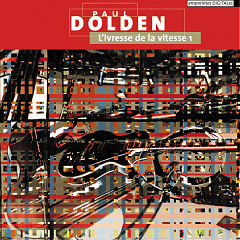
    L’ivresse de la vitesse 1, L’ivresse de la vitesse 2, Seuil de silences, Aparanthesi, Libellune, empreintes DIGITALes in e/i magazine

    “Territorial Imperatives: Canada’s boldest and brightest labels…”, Tobias C van Veen, e/i magazine, no. 4, June 1, 2005
    Wednesday, June 1, 2005 Press

    […] The minimum one can say of empreintes DIGITALes is that it is a prolific label for electroacoustic music as well as provocative experiments in conceptual sound. A few recent releases graft the varied interests of academic and acousmatic music together via the intriguing work of, say, John Oswald. His Aparanthesi is the work of a single note that is gradually inflected along its pitch and combined with various tuned field recordings. [aparanthesi A] is an A note tuned to 440 Hz, which is the broadcast signal stations play when off-air. [aparanthesi B] is a compressed stereo image of the 8 channel performance created for 2000’s Rien à voir electroacoustic festival in Montréal. It is tuned to 480 Hz, the North American electrical standard, so it is in-tune with the hum of lighting and electrical grids. It is also a sonic impression of a complex and involved performance that uprooted the audience from the seats to the atrium and back again. We might call the album a conceptual play between electroacoustc and microsound, audience and chair, sitting and standing, tuning and silence, and for these reasons, the listening experience is very unlike the genre’s contemporaries. Roxanne Turcotte, for example, produces a melange of disjunctive sound, voice and phone recordings, environmental atmospheres and world beat rhythms on Libellune, which features work dating back to 1985. Its complexity at times is interesting, for as a survey of her œuvre it mirrors the development of Montréal electroacoustic in its infatuation with voice and, like R Murray Schafer, the natural world. That said, it remains well within the by now well-established parameters of academic composition. Paul Dolden’s work trammels from New Music composition to electroacoustic, employing repetiton and choral arrangements in a fashion not unlike that of Philip Glass, albeit with a drive toward melodrama and punch over satyagraha, throwing in all elements including the kitchen throughout L’ivresse de la vitesse 1 and 2. Like Turcotte, this work too spans from the ‘80s to the ‘90s, and so much of its feel is like listening to a beloved but aging record from that era, its metallic drums and neon wildness only appearing just a tad navel-gazing with age. Dolden is somewhat overwhelming; [L’ivresse de la vitesse] is a nightmare collage at its start that quickly gets into squeaky territory. For this, the remedy of Seuil de silences is welcome. Although from the same era, its breathing space offers more time for reflection, arrangement and thought, even if the disharmonius creeps back into the picture and becomes an ultimate ode to piano-bashing. […]

    … a prolific label for electroacoustic music as well as provocative experiments in conceptual sound.

    Délires de plaisirs, Seuil de silences, Paul Dolden in SOCAN — Paroles & Musique

    Paul Dolden: le plaisir du son”, Guy Marceau, SOCAN — Paroles & Musique, no. 12:2, June 1, 2005
    Wednesday, June 1, 2005 Press

    Une équation se dessine d’emblée lorsqu’on écoute L’ivresse de la vitesse (1992), une des œuvres de Paul Dolden qui a fait l’unanimité des milieux musicaux contemporains ici et en Europe, et qu’on écoute le volubile compositeur parler de son art. À bientôt 50 ans, avec une propension à l’excès, l’accélération et l’accumulation des plans sonores, Paul Dolden parle aussi vite que la musique qu’il compose, mais ralentit un peu lorsqu’il clame ne pas être un vrai électroacousticien. Comment le situer?

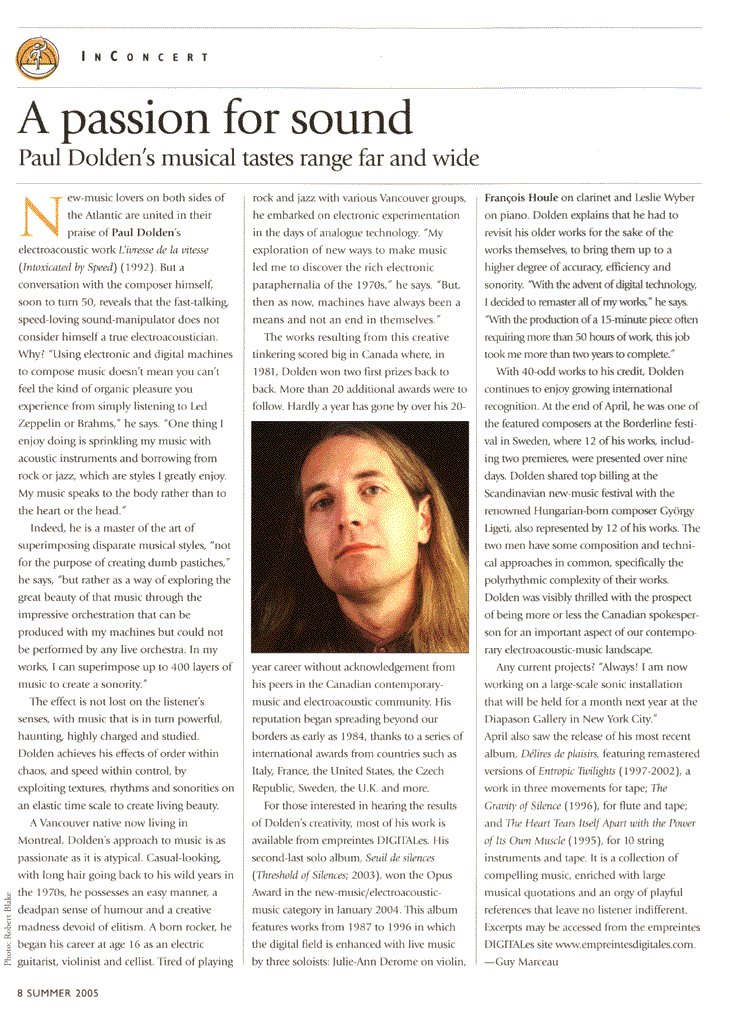
    Paul Dolden, né à Vancouver mais vivant à Montréal, a tout du compositeur atypique mais passionné de musique. Très easy going, cheveux longs, relent du freak qu’il était dans les années 70, attitude un peu désinvolte et joyeusement pince-sans-rire, il est surtout très allumé et non élitiste. «Même si on compose la musique à l’aide de machines électroniques et numériques, il faut toujours rester dans le plaisir organique, de la même manière qu’on écoute simplement Led Zeppelin ou Brahms par exemple, explique Paul Dolden. Je ne suis pas un électroacousticien au sens de Robert Normandeau, par exemple, notre travail est très différent. J’aime notamment intégrer à ma musique des instruments acoustiques et des emprunts au rock ou au jazz, des styles que j’ai toujours eu beaucoup de plaisir à écouter. Ma musique parle plus au corps et au cœur qu’à la tête.»

    Dolden fait mentir l’adage Less is more. Il excelle dans la surimpression de styles musicaux disparates, «pas pour en faire de bêtes pastiches, précise-t-il, mais bien pour exploiter les grandes beautés de ces musiques dans une orchestration imposante que la machine me permet de réaliser et qu’aucun orchestre ne pourrait jouer. Dans mes œuvres, je peux superposer jusqu’à 400 couches musicales pour créer mes sonorités…» À l’écoute, en effet, sa musique parle à tous nos sens: puissante, obsédante et parfois décadente, toujours hautement chargée et recherchée. Il combine ce souci de l’ordre dans le désordre, l’idée de vitesse dans le contrôle, en exploitant les textures, ryrthmes et sonorités sur l’échelle élastique du temps au profit d’une plasticité des plus incarnées. On pense parfois à Varèse ou Zappa, mais toujours dans un «traitement électronique sensible».

    Autodidacte

    Rockeur dans l’âme, Paul Dolden apprend à 16 ans la guitare électrique, puis le violon et la basse en solo. Il s’est même récemment mis au violoncelle! Las de faire de la scène (rock, jazz) dans des spectacles et avec des groupes à géométrie variable de Vancouver, il se lance dans l’expérimentation électronique au joyeux temps de la technologie analogique. «La nécessité est la mère de toutes les inventions. En cherchant de nouvelles façons de faire ma musique, j’ai découvert toute la quincaillerie électronique des années 70. C’est fou ce qu’on peut faire avec ça! Mais, tout comme maintenant, la machine était un moyen, pas une fin en soi.» Ses bidouillages créatifs font mouche au Canada: dès 1981, Paul Dolden remporte des premiers prix coup sur coup. «Avec ces prix, on me disait entre les lignes que la musique que je composais était ce qui se faisait de mieux au Canada! Alors j’ai continué, pensez-donc!»

    Et des prix, il y en aura plus d’une vingtaine d’autres. Presque chaque année, une de ses œuvres reçoit une récompense par ses pairs de l’industrie musicale contemporaine et électroacoustique canadienne. La bonne nouvelle se répand ensuite hors de nos frontières et dès 1984, ses œuvres sont primées en Italie, France, États-Unis, République Tchèque, Suède, Angleterre… Un pied de nez à certains autres compositeurs canadiens, puisqu’il n’a pas le profil académique universitaire requis, mais bien seulement un baccalauréat en histoire générale…

    Revisiter ses œuvres

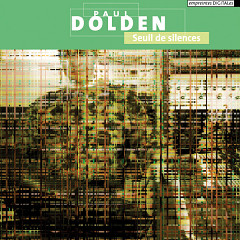
    Pour qui voudrait entendre le fruit de sa créativité, l’essentiel de ses enregistrernents figure chez empreintes DIGITALes. Son avant-dernier, Seuil de silences (2003), remportait en janvier dernier le Prix Opus du disque de l’année dans la catégorie Musique actuelle, électroacoustique. L’album réunit des œuvres de 1987 à 1996 où, à la trame numérique, s’ajoute le jeu de trois solistes, Julie-Anne Derome (violon), François Houle (clarinette) et Leslie Wyber (piano). «Il faut savoir qu’avec la venue du numérique, j’ai décidé de remixer toutes mes œuvres… Compte tenu que pour réussir à produire une pièce de 15 minutes, il me faut souvent plus de 50 heures de travail, j’en ai eu au total pour un pou plus de deux ans!» Paul Dolden dit avoir fait ce travail pour rendre justice aux œuvres elles-mêmes, qui devenaient ainsi plus précises, plus efficaces et plus sonores.

    Rétrospective en Suède

    Après plus de 20 ans de carrière, et quelque 40 œuvres plus tard, la reconnaissance ne s’est pas démentie. À la fin avril, Paul Dolden était l’artiste invité au Borderlines Festival en Suède où l’on présentait une rétrospective de ses œuvres (12 pièces, dont deux créations, en neuf jours). Et l’affiche était prestigieuse: aux côtés de ses œuvres, 12 signées Gyorgy Ligeti, un des importants compositeurs du 20e siècle, Ligeti et Dolden partagent certaines approches et techniques d’écriture, notamment dans la complexité polyrythmique. Dolden était en quelque sorte le porte-parole canadien d’une facette de notre paysage musical contemporain électroacoustique, ce qui visiblement l’enchante. Un projet en chantier? «Toujours! Je travaille présentement sur une installation sonore à grande échelle qui se tiendra l’an prochain pendant un mois à la Galerie Diapason de Manhattan (New York).»

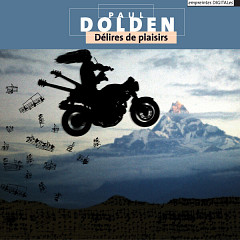
    Avril a vu la parution de son dernier disque, Délires de plaisirs, regroupant des œuvres remixées dont Entropic Twilights (1997-2002) pour bande en trois mouvements, The Gravity of Silence. Resonance #5 (1996) pour flûte et bande, et The Heart Tears itself Apart with the Power of its own Muscle. Resonance #3 (1995) pour 10 cordes et bande. Aux atmosphères très prenantes s’ajoutent de larges citations musicales, dans une orgie de références très ludiques. La musique force l’écoute et ne laisse pas indifférent. On peut en écouter des extraits sur le site d’empreintes DIGITALes au www.empreintesdigitales.com.

    Aux atmosphères très prenantes s’ajoutent de larges citations musicales, dans une orgie de références très ludiques.

    Seuil de silences, L’analyse des musiques électroacoustiques, Luigi Ceccarelli, Paul Dolden, Robert Normandeau in La Scena Musicale

    “Gala des prix Opus 2004”, Réjean Beaucage, La Scena Musicale, no. 10:6, March 1, 2005
    Tuesday, March 1, 2005 Press

    […] La musique électroacoustique est également sortie du gala la tête haute, mais ne s’est pas pour autant privée de montrer les dents! En effet, le compositeur Robert Normandeau a utilisé une bonne partie du mot de remerciement qu’il prononçait pour Luigi Ceccarelli, récipiendaire du prix du «concert de l’année — musiques actuelle, électroacoustique», donné dans le cadre de la série Rien à voir (14), organisée par Réseaux, pour apostropher le Conseil des arts et des lettres du Québec et le nouvel Espace musique de Radio-Canada. Les deux organismes seraient en effet coupables de laisser à eux-mêmes les artistes ayant choisi de s’exprimer par l’électroacoustique, un art dont le Québec est certes l’un des meilleurs représentants à l’échelle mondiale, Normandeau faisant lui-même figure de chef de file dans le domaine. Le «disque de l’année — musiques actuelle, électroacoustique» est allé à Seuil de silences, de Paul Dolden, publié chez empreintes DIGITALes, et le «livre de l’année» est celui de Stéphane Roy, L’analyse des musiques électroacoustiques; Modèles et propositions, publié dans la collection Univers musical chez Harmattan.

    La musique électroacoustique est également sortie du gala la tête haute…

    L’ivresse de la vitesse 1, L’ivresse de la vitesse 2, Seuil de silences in La Folia

    “Review”, Grant Chu Covell, La Folia, March 1, 2005
    Tuesday, March 1, 2005 Press

    Lucky Dolden, for having time and opportunity to remaster old ea compositions with digital technology. While these pieces aren’t exactly prehistoric, 1990’s analogue assembly and track-bouncing fogged the clarity of Dolden’s style: He notates a passage for 100 or more acoustic instruments, records each part individually, then mixes them in the studio. Today’s tools make his restless works shine and vibrate. His rapid pace would stun a defibrillator.

    The most representative piece here, Caught in an Octagon of Unaccustomed Light, aligns nonstandard tuning with the burr and hum of struck metal, possibly prepared piano and cymbals. Is the heaving material in a kaleidoscope or meat grinder? I imagine the different threads marshalling themselves like eager, acquiescent robots, only to scatter suddenly into dust: The Sorcerer’s Apprentice meets Metropolis. Disjointed episodes serendipitously linked, Below the Walls of Jericho isn’t a Biblical illustration. Dolden fancies the idea that sound could bring down a wall and his piece could do just that. In the Natural Doorway I Crouch pulses with plucked strings and wind instruments.

    Dolden happily joins his tapes with live instruments. Gravity’s Stillness. Resonance #6 features solo violin (Julie-Anne Derome) and The Vertigo of Ritualized Frenzy. Resonance #4 has parts for clarinet (François Houle) and piano (Leslie Wyber). The live musicians occasionally succumb to the blitz or else are instantly echoed and multiplied. In The Vertigo of Ritualized Frenzy. Resonance #4, the duo labors mostly in unison on a increasingly numbing modal phrase while the entire world swirls ’round. Gravity’s Stillness. Resonance #6 starts with uncharacteristically delicate washes under the violin, but soon erupts into business as usual.

    Seuil de silences’ companions are L’ivresse de la vitesse 1 and L’ivresse de la vitesse 2, two wonderfully titled discs with remastered pieces — actually Dolden’s third time through them. Several interconnected series straddle the three discs, some for tape alone, others requiring instruments to duel alongside. Try any.

    Today’s tools make his restless works shine and vibrate. His rapid pace would stun a defibrillator.
  • 1
  • 2
  • 3