electrocd

More from the blog

4 results

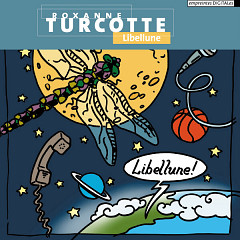
Libellune in Weirdosphere

“Untethered Sounds — Roxanne Turcotte, Libellune”, Michael Eisenberg, Weirdosphere, April 28, 2026
Tuesday, April 28, 2026 Press

Similar to Monique Jean’s recording, this album explores a deeper nightside — one buried beneath the rubble of memory and habit. A small chaos brews, a quiet apocalypse, buried underground, spins and whirls, sending out circular ripples from below. Within this eternally dark space are memories wrought in movement. Most remain hidden — fleeting traces of activity that linger at the periphery. Some show themselves through motion, through dance. Turcotte taps into this nocturnal world, tracing systems of thought that may, or may not, surface. Much is held back, but what is shown, what surfaces, holds value beyond measure. Listen, you may be surprised. […]

Listen, you may be surprised.

L’ivresse de la vitesse 1, L’ivresse de la vitesse 2, Seuil de silences, Aparanthesi, Libellune, empreintes DIGITALes in e/i magazine

“Territorial Imperatives: Canada’s boldest and brightest labels…”, Tobias C van Veen, e/i magazine, no. 4, June 1, 2005
Wednesday, June 1, 2005 Press

[…] The minimum one can say of empreintes DIGITALes is that it is a prolific label for electroacoustic music as well as provocative experiments in conceptual sound. A few recent releases graft the varied interests of academic and acousmatic music together via the intriguing work of, say, John Oswald. His Aparanthesi is the work of a single note that is gradually inflected along its pitch and combined with various tuned field recordings. [aparanthesi A] is an A note tuned to 440 Hz, which is the broadcast signal stations play when off-air. [aparanthesi B] is a compressed stereo image of the 8 channel performance created for 2000’s Rien à voir electroacoustic festival in Montréal. It is tuned to 480 Hz, the North American electrical standard, so it is in-tune with the hum of lighting and electrical grids. It is also a sonic impression of a complex and involved performance that uprooted the audience from the seats to the atrium and back again. We might call the album a conceptual play between electroacoustc and microsound, audience and chair, sitting and standing, tuning and silence, and for these reasons, the listening experience is very unlike the genre’s contemporaries. Roxanne Turcotte, for example, produces a melange of disjunctive sound, voice and phone recordings, environmental atmospheres and world beat rhythms on Libellune, which features work dating back to 1985. Its complexity at times is interesting, for as a survey of her œuvre it mirrors the development of Montréal electroacoustic in its infatuation with voice and, like R Murray Schafer, the natural world. That said, it remains well within the by now well-established parameters of academic composition. Paul Dolden’s work trammels from New Music composition to electroacoustic, employing repetiton and choral arrangements in a fashion not unlike that of Philip Glass, albeit with a drive toward melodrama and punch over satyagraha, throwing in all elements including the kitchen throughout L’ivresse de la vitesse 1 and 2. Like Turcotte, this work too spans from the ‘80s to the ‘90s, and so much of its feel is like listening to a beloved but aging record from that era, its metallic drums and neon wildness only appearing just a tad navel-gazing with age. Dolden is somewhat overwhelming; [L’ivresse de la vitesse] is a nightmare collage at its start that quickly gets into squeaky territory. For this, the remedy of Seuil de silences is welcome. Although from the same era, its breathing space offers more time for reflection, arrangement and thought, even if the disharmonius creeps back into the picture and becomes an ultimate ode to piano-bashing. […]

… a prolific label for electroacoustic music as well as provocative experiments in conceptual sound.

Seuil de silences, Libellune in The WholeNote

“Review”, Tiina Kiik, The WholeNote, no. 8:10, November 1, 2003
Saturday, November 1, 2003 Press

Electroacoustic music fans will be thrilled to know that these two new releases featuring the work of Paul Dolden and Roxanne Turcotte are extremely high quality in praduction values, generous in duration, wide-ranging in styles, thought provoking in musicality, and well, just plain great!

As Dolden and Turcotte’s compositional styles are as different, to my ears anyway, as apples and oranges, comparisons cannot really be justified. As the liner notes describe, Dolden’s music is “the missing link between jazz and rock and the high-brow concert tradition” while Turcotte’s musical approach rests on a film-like art of integration.

Paul Dolden’s release contains three works from the composer’s output from the mid to late 1980s and two works from 1996. Most impressive is how Dolden can manipulate a wall of sound to create musical juxtapositions, especially in the opening track, Below the Walls of Jericho (1988-89). My pick, however, has to be The Vertigo of Ritualised Frenzy, Resonance #4 (1996). For tape, with Francois Houle on clarinet and Leslie Wyber on piano, this is a rocking, thumping, virtuosic display of streetsmarts, intellect and psyche. Timeless.

Most of the works featured on Roxanne Turcotte’s CD are more recent. A more introspective nature and thus compositional style is evident here. She also displays a quiet wit in Y---OW (1985, 2002). The telephone and its users play a starring role in this version of a work which the liner notes explain was put together from 22 tapes of the multimedia work of the same name. Turcotte is described also as a sound designer and nowhere is this more evident than in the title track Libellune (1999-2002). A glorious and reflective work for ethnic wind instruments (as performed by Michel Dubeau) and tape, aural imageries are created effortlessly by Turcotte’s exact sense of movement and timing.

But once again, the music is great. Both first-time and seasoned electroacoustic listeners are well advised to check out both discs.

Both first-time and seasoned electroacoustic listeners are well advised to check out both discs.

Cycle du son, Forêt profonde, La mécanique des ruptures, Corazón Road, Figures, Parr(A)cousmatique, Libellune, Yves Beaupré, Yves Daoust, Francis Dhomont, Gilles Gobeil, Robert Normandeau, Arturo Parra, Roxanne Turcotte, empreintes DIGITALes in electrocd.com

“Introduction(s) to the Delights of Electroacoustic Music”, François Couture, electrocd.com, October 15, 2003
Wednesday, October 15, 2003 Press

Electroacoustic music is an acquired taste. Like it or not, radio and television have conditioned us from an early age into accepting some musical (tonal and rhythmical) molds as being “normal.” Therefore, electroacoustics, along with other sound-based (in opposition to note-based) forms of musical expression like free improvisation, is perceived as being “abnormal.” That’s why a first exposure to this kind of music often turns into a memorable experience — for better or worse. Many factors come into play, but choosing an album that offers an adequate (i.e. friendly and gentle) introduction to the genre will greatly help in letting the initial esthetic shock turn into an experience of Beauty and mark the beginning of a new adventure in sound.

My goal with this sound path is simply to point out a few titles that I think have the potential to encourage instead of discourage, titles opening a door to a new musical dimension. Of course, this selection can only be subjective. But it might be helpful to new enthusiasts and to aficionados looking for gift ideas that would spread good music around. After all, Christmas is only a few weeks away!

Bridges

We usually develop new interests from existing interests. What I mean is: we explore music genres that are new to us because a related interest brought us there. That’s why when it comes to electroacoustic music, mixed works (for tape and instrument) or works related to specific topics are often the best place to find a bridge that will gently lead the listener into the new territory. For example, people who enjoy reading travel literature will find in Kristoff K.Roll’s Corazón Road the sublimated narrative of a journey through Central America. Those still young enough to enjoy fairy tales (I’m one of them) will find in Francis Dhomont’s Forêt profonde an in-depth reflection on this literary genre as inspired by the works of psychoanalyst Bruno Bettelheim, in the form of a captivating work with multiple narratives (in many languages) and electroacoustic music of a great evocative strength. Lighter and more fanciful, Libellune by Roxanne Turcotte finds its source in childlike imagination and is in part aimed at children without over-simplifying its artistic process.

Guitar fans can turn to Parr(A)cousmatique, a wonderful project for which classical guitarist Arturo Parra co-wrote pieces with some of Quebec’s best electroacoustic composers: Stéphane Roy, Francis Dhomont (Quebecer at heart, at the very least), Robert Normandeau, and Gilles Gobeil. The latter has just released an album-long piece, Le contrat, written with and featuring avant-garde guitarist René Lussier. Lussier’s followers and people interested in Goethe’s play Faust (and its rich heritage) will find here an essential point of convergence, another bridge.

Essential listens

Those who want to explore further will probably want to venture into more abstract electroacoustic art. I recommend starting with the Quebec composers. Chauvinism? No way. It’s just that the music of composers like Dhomont, Normandeau, Gobeil, Yves Daoust, or Yves Beaupré seems to me to be more accessible than the music of British or French composers. It is more immediate, has a stronger impact (Gobeil, usually hitting hard), a more pleasant form of lyricism (Daoust, Beaupré), more welcoming architectures and themes (Dhomont, Normandeau). If you need places to start, try Normandeau’s Figures, Gobeil’s La mécanique des ruptures, Dhomont’s Cycle du son, and Beaupré’s Humeur de facteur.

That being said, there are hours upon hours of beauty and fascination to be found in the works of Michel Chion (his powerful Requiem), Bernard Parmegiani (La création du monde), Jonty Harrsison (Articles indéfinis), Denis Smalley (Sources/Scènes), and Natasha Barrett (Isostasie), but they may seem more difficult or thankless on first listen. And for those interested in where these music come from, the EMF label offers L’œuvre musicale, the complete works of Pierre Schaeffer, the father of musique concrète and grandfather of electroacoustics.

Tiny ideas

A compilation album has the advantage of offering a large selection of artists and esthetics in a small, affordable format. Available at a budget price, eXcitations proposes a strong sampler of the productions on the label empreintes DIGITALes. The albums Electro clips and Miniatures concrètes, along with the brand new volume of the DISContact! series, cull short pieces (often under three minutes) to trigger interrogations and discoveries in those with a short attention span.

And finally, for those of you who want to take their time and explore in short steps, the Cinéma pour l’oreille collection produced by the French label Métamkine contains many wonderful 3” CDs, 20 minutes in duration each, for a reduced price. The catalog includes titles by renown composers such as Michel Chion, Lionel Marchetti, Michèle Bokanowski, Bernhard Günter, and Éliane Radigue. These tiny albums are perfect for gift exchanges.

Of course, all of the above are only recommendations. The best sound path to discovery is the one you follow by yourself, little by little.

Best listens!