electrocd

Yves Daoust

45 results
  • 1
  • 2
  • 3
  • 4
  • 5
  • 6
  • 7
  • 8
  • February 9, 2002: Yves Daoust Goes South, February 2002

    Wednesday, January 30, 2002 In concert

    Yves Daoust is one of the guest composers at the Ninth Annual Ussachevsky Festival at Pomona College (Claremont, CA). Late afternoon, the composer will give a conference about his work. In the evening, his composition “Impromptu” (mixed version, taken from the album Bruits) will be interpreted by pianists Genevieve Feiwen Lee and Gideon Rubin. Saturday February 9, 2002 at the Lyman Hall (Thatcher Music Building, Pomona College).

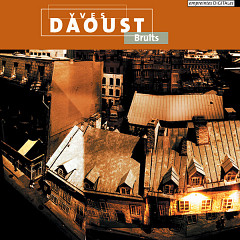
    eD: Bruits, 3rd release by Yves Daoust

    Wednesday, January 16, 2002 New releases

    “… the musicality of this electroacoustic piece lands me in pure auditory pleasure!” (Sonoloco Record Reviews, Sweden) Third Yves Daoust album on the empreintes DIGITALes label, Bruits (Noises) plunges in the reappropriation of everyday sounds dear to the composer since Anecdotes (1991), his first CD. Human voices, musical instruments and the unnumerable sonic fragments of our daily lives are the metal Daoust uses to forge caskets for his little gems. Inspiration for the title track, the city of Montréal is the arena from which the source material emerge, meet and clash. Automobile rumblings, jubilant crowds and children playgrounds burst out from the digital treatments in a touching and evocative aural portrait.

    January 11 – 12, 2002: Transparent Tape Music Festival, Berkeley

    Friday, January 11, 2002 In concert

    The Transparent Tape Music Festival will be held in Berkeley (USA) on January 11 and 12, 2002. In conjunction with the Transparent Theater and the ACME Observatory, The New San Francisco Tape Music Center will present a total of 17 works, diffused on a 16-loudspeaker system designed for this event. Compositions by Javier Álvarez, Yves Daoust, John Oswald, Hildegard Westerkamp, and Denis Smalley — released by empreintes DIGITALes — are amongst the programmed works.

    Yves Daoust, Louis Dufort in La Presse

    “Après Mutek, le Média Lounge et le Montréal électronique groove [MEG], revoici Elektra… 2001”, Alain Brunet, La Presse, November 8, 2001
    Thursday, November 8, 2001 Press

    À compter d’aujourd’hui et ce jusqu’au 17 novembre 2001, deux week-ends consécutifs de musiques électroniques, présentations multimédia et performances robotiques sont prévus à l’Usine C. Les œuvres de Markus Popp (Oval), Monty Cantsin, Yves Daoust, Jean Piché, Louis-Philippe Demers, Louis Dufort et Nerve Theory y sont attendues.

    «Nous avons loué la Cadillac des systèmes multimédia», annonce fièrement Alain Thibault, compositeur réputé et directeur artistique de l’Association pour la création et la recherche électroacoustiques du Québec (ACREQ).

    Pour la troisième année consécutive, donc, Elektra se propose «d’établir le lien entre les différentes cultures contemporaines issues de l’utilisation créatrice des nouvelles technologies.» Rappelons que, dans le cadre d’Elektra, l’ACREQ a déjà produit des œuvres importantes du répertoire international multimédia et électroacoustique; y ont été présentés des créateurs tels que Granular Synthesis, Ryoji Ikeda, Pierre Henry et Karlheinz Stockhausen.

    Alain Thibault n’a, d’ailleurs, aucun mal à situer Elektra 2001 parmi les autres manifestations électroniques du genre qui se tiennent à Montréal.

    «Ce que nous présentons dans bien des cas, soulève-t-il, ce sont des œuvres à grand déploiement comme les performances robotiques. Parce que nous disposons d’un lieu pour le faire, parce que nous savons quoi louer, parce que nous avons plus de connaissances au plan de l’équipement multimédia. Le système européen que nous comptons utiliser pour Elektra 2001 n’a rien à voir avec ce qu’on peut entendre dans d’autres festivals de même nature. Au dernier Media Lounge, par exemple, on n’a pu compter sur des installations aussi sophistiquées. Au niveau technique, personne ne nous bat, j’en suis certain.»

    La première série de concerts, donc, s’ouvre ce soir avec: SPIN de Jean Piché et FausTechnology de Purform. Ces pièces multimédias (musique électronique, animations et traitements d’images numériques) ont été conçues spécifiquement pour une projection sur trois écrans. On assistera, soutient-on du côté de l’ACREQ, à un tour de force technique qui consiste à créer une seule image panoramique avec les trois surfaces de projection (10,5’ x 42’).

    Demain, c’est le retour d’un animal de la performance, connu au cours des années 80 sous la bannière néoïste, animal réputé pour ses prises de sang en direct… On rappellera que Istvan Kantor, alias Monty Cantsin, avait repris contact avec le public montréalais en 1999 avec la performance Executive Machinery. Toujours obsédé par les objets de la bureautique, il revient cette année avec une nouvelle installation robotique, un groupe de performers torontois et son plus récent corpus vidéographique. Repossessing the Body-Machine, la nouvelle performance de l’artiste multidisciplinaire Istvan Kantor, sera ainsi présentée en première montréalaise.

    Samedi, le musicien allemand Markus Popp alias Oval présentera une performance «Powerbook live». Au sujet de Markus Popp, les producteurs d’Elektra affirment qu’il est probablement l’artiste européen le plus en vue de la scène electronica. La veille (demain, 18 h), Popp expliquera sa démarche artistique et son projet OvalProcess lors d’une présentation multimédia au Café de l’Usine C.

    Également au programme de samedi, Nerve Theory nous proposera une performance vidéo/sonore intégrant les images et la voix du new-yorkais Tom Sherman ainsi que la musique du viennois Bernhard Loibner. Toujours au même menu, les trois tableaux de Bruits du compositeur électroacoustique montréalais Yves Daoust. Cette musique, conçue spécifiquement pour huit canaux, sera diffusée pour la première fois avec un support vidéographique réalisé par Jean-Sébastien Durocher. Enfin, on aura droit à la première diffusion en salle de Décap de Louis Dufort, une pièce pour bande de 25 minutes qui a valu à son auteur l’obtention d’une mention, catégorie «Digital Musics», lors du dernier Prix Ars Electronica qui se tient à chaque année en Autriche.

    Présentée trois soirs consécutifs les 15, 16 et 17 novembre, la pièce de résistance de Elektra 2001 est la performance robotique de Louis-Philippe Demers. Grand déploiement, vous dites? Pas moins de 48 membres robotiques identiques seront accrochés à une impressionnante charpente métallique évoquant la forme d’une arène. Robots, musique électronique et projections vidéo, expérience visuelle et auditive en perspective.

    On notera en outre que la politique de prix peu élevés d’Elektra 2001 (15$ pour tous, 10$ pour les étudiants) favorise l’accessibilité du public aux arts électroniques. Notez que l’entrée est libre (gratis!) pour la soirée d’ouverture (aujourd’hui) et pour la conférence de Markus Popp-OVAL (demain).

    Bruits, Connexion, Yves Daoust in Voir

    “Nouvelle vague”, Réjean Beaucage, Voir, November 8, 2001
    Thursday, November 8, 2001 Press

    Yves Daoust contribuait en 1978 à la fondation de l’Association pour la création et la recherche électroacoustiques du Québec (ACREQ). Il dirigera par la suite durant une dizaine d’années les destinées du premier organisme canadien voué exclusivement à ce genre. Aujourd’hui, il y revient à l’invitation du directeur artistique actuel, Alain Thibault, pour participer ce samedi 10 novembre à la troisième édition de l’événement Elektra. Daoust y présentera en création sa pièce Bruits, triptyque environnemental qui donne également son titre au troisième disque que le compositeur fait paraître chez empreintes DIGITALes et qui sera lancé juste avant le concert. La pièce, commande du Sonic Arts Network (Royaume-Uni), est une sorte de carte postale sonore des rues et ruelles de Montréal: cris d’enfants, bruits de la circulation et rumeurs citadines y sont littéralement passés au hachoir pour produire ce que le compositeur appelle un «smog sonore». C’est sans aucun doute l’œuvre la plus ‘bruitiste’ de Daoust jusqu’à maintenant. L’œuvre sera présentée à l’ACREQ dans une version pour huit canaux avec un support vidéographique de Jean-Sébastien Durocher.

    Le disque que Daoust s’apprête à lancer mérite certainement d’être chaudement recommandé à toute personne qui serait curieuse et chercherait à se renseigner sur la musique électroacoustique. Que le titre Bruits ne vous effraie pas. Les quatre pièces présentées ici représentent autant de sous-genres et Yves Daoust y démontre magistralement son grand talent de manipulateur sonore. On y retrouve une magnifique version de la pièce Impromptu, déjà entendue en format «pour bande seule» sur son précédent disque Musiques naïves, mais retravaillée ici en version «musique mixte» avec des interprètes de choix: Jacques Drouin au piano et Lorraine Vaillancourt… au synthétiseur! La pièce La Gamme est une musique électronique réalisée en 1981 sur les «machines à triturer les électrons» du Groupe de musique expérimentale de Bourges. Enfin, Ouverture, commande du GMEB pour le Bicentenaire de la Révolution française, mêle narration et illustration sonore, et rappelle par son thème Le Trésor de la langue de René Lussier. empreintes DIGITALes fera également paraître simultanément des disques de Robert Normandeau et Gilles Gobeil, deux autres piliers de la musique électroacoustique d’ici, disques sur lesquels nous reviendrons. Yves Daoust enseigne depuis 1981 au Conservatoire de musique et d’art dramatique du Québec, où il a développé un programme de composition électroacoustique.

    Preuve qu’il exerce dans ce domaine-là aussi un grand talent, c’est l’un de ses étudiants qui clôturera la soirée avec une pièce qu’il ramène d’Autriche où elle a obtenu une mention lors de la dernière édition des prestigieux Prix Ars Electronica. Louis Dufort nous présentera en effet Décap, une «réflexion sur la décadence de l’homme» en partie tirée de la musique composée pour la chorégraphie Le Cri du monde, de Marie Chouinard, et dont nous avons pu entendre une première version lors de la série de concerts Rien à voir (7) en mars 2000. Également au programme: Tom Sherman et Bernhard Loibner avec leur projet vidéo/musique Nerve Theory et le très attendu Markus Popp, alias Oval, détenteur d’une seconde place aux Prix Ars Electronica 2001.

    … chaudement recommandé…

    Bruits, Yves Daoust in Sonoloco Record Reviews

    “Review”, Ingvar Loco Nordin, Sonoloco Record Reviews, October 29, 2001
    Monday, October 29, 2001 Press

    Yves Daoust has been dealing in sounds since very young years. He began taking piano lessons at the age of seven, and prepared the family piano at age sixteen, in 1962. He composed his first electronic work at 19, in 1965, for a gestural theatre work of an hour’s duration. He indicates that he found his electroacoustic style at IMEB, Bourges during an apprenticeship.

    He officially entered the life of a composer in 1978, and has since produced about one work a year, in different disciplines. He names his major influences as Cage, Xenakis, Stockhausen, Kagel, Ferrari and Savouret, as well as some of the classical composers.

    The first part of the triptych Bruits; Children’s Corner (1997) is a series of pictures centered, as Daoust says “around a relatively homogenous, diurnal sonic world”, like for instance street festivals, markets, machines and so on. He points out that the fragmentation procedure he utilizes creates a kind of “sonic smog”, which sometimes clears to reveal the clarity of certain sounds. After initial nursery rhymes of school children a total carnage of sounds, rolling at you in dense clusters, a prolonged high pitch ripple takes you into events suddenly lighting up like matches in the dark, showing, for a second, the faces of the people around you and the white walls of the houses, until the surroundings instantly fall back in silence/darkness again, just leaving memory marks in your brain tissue. It is impossible to make any sense at all of this, except that the whole piece could constitute a crude sample of Earth life picked up by some unknown recipient in a distant galaxy, pointing his devices of perception in our direction, receiving the influx from Earth civilization in chopped up and stellarly disturbed portions. At some very beautiful passages a distant jumble of bells constitute the backdrop for short, sharp, flaky short wave disturbances, mixing the tonal with the truly bruit. A continuous murmur bubbling below carries all kinds of minuscule sounds on its rough terrain. On high an airliner struggles across the canopy of the day, and here below chirping birds and playing children color time in happy garlands until it all is reduced to its constituents again, in a mincer of the light of day.

    Nuit (1998) is the second part of Bruits. Daoust has a very clear view of what he is doing and achieving with his sounds. He says: “It is as though all the noises accumulated during the day continued, flattened, in the mind of the sleeper, reduced to a tinnitus that becomes confused with the sonic activity of nocturnal insects and with the very real, though distant, hum of the sleeping city.” Those phrases convince me that Yves Daoust thinks about electroacoustics in much the same way I experience this music; i.e. in a very poetical kind of way – and I suppose almost every composer of electroacoustics has to be a poet too, the way he bends shapes and sounds and auditory morphemes in and out of wack! Indeed the nocturnal layer constitutes a dreamy, very poetical sensation. The chirping of locusts and the squeaking high-pitch timbres of electronic devices join forces to produce this nocturnal machine-nature hybrid, taking you into secret, enchanted dominions of hearing, stemming from encounters with gleaming eyes and rustling unknowns in dark areas of the forest of night. The sounds roll and curl, spiral and ooze, meander and rush, in a spellbinding display of artistic bliss. Nothing is still; everything is on the move in this crazy world of dreams, where passing features remind you of people you’ve known or places you’ve been, and not least feeling you’ve felt – while other parts are nothing but alien and disturbing to your sense of security.

    The final section of Bruits is Fête (“Party”) (2001). Daoust’s introductions are on the money as usual: Fête is a sort of allegro barbaro, a frenetic dance where music of the streets, clamoring voices, cries and whistles combine”. Yes, by now it would be obvious that Daoust likes to indulge in shattering, overpowering carnages of sound, which you just have to listen to again and again to be able to catch all the glimpse there are to catch of the sonic and associative developments. Jubilant crowds are taken on a tour-de-force into a layer just behind or below or maybe above the real world of events, like seeing the world through crystal and having your head stuck down into a bucket of water while being injected with some hallucinatory drug. Soon you’re astray, though “glimpses” really are what you catch of the real world, in such a chopped up and deviated way that you almost puke – so this is really good! You name it; we like it! Tickling grains of bell-like audio fall like dense precipitation all around, as heavily altered accordion tunes spin a thread of insanity around your last resources of clear thought… No way out of this – except maybe a brutal awakening from a runaway dream… (“Woke up, fell out of bed, dragged a comb across my head…”) Rhythmic cardiovascular beats bump and vibrate, and it all vanishes out on a thin, dissipating line of high pitch treble.

    Impromptu (1995) is the only piece with an explicit instrumental idea, engaging Jacques Drouin [piano] and Lorraine Vaillancourt [keyboard]. The whole title is “Impromptu for piano, synthesizer, sampler and tape”. It cannot be helped; I have to quote this immensely eloquent Mr. Daoust on this piece too: “I completed this piece thanks to the help of Chopin, who for the occasion loaned me his Fantaisie-Impromptu in C-sharp minor for piano (op. 66). I have taken all material for this work from it, but also the agitation of the writing, the overly abundant energy, the tension.” It is a very seasick piano that opens the work. With gusting winds all around it, as the tones sort of reach us through watery waves of salty expanses. Unaltered speed freak pianism mingles with bent-out-of-shape tones, and a drone is heard – but sometimes not directly – as dump trucks of the soul are gearing up and gearing down somewhere in the vicinity. The blending of clean, clear and sparklingly present piano tones and all kinds of disturbed and wrenched, wretched sounds out of the poor instrument is splendidly arrived at, and here I can feel the influence of the Maestro, Mr. Stockhausen, in actual sound as well as in spirit and idea. Being a suspicious critic of the mixed-form bag, I nonetheless approve very much of Daoust’s adventure here, since, it seems, he uses the actual, acoustic instruments like would he any source of sound, thereby simply having them take on the apparition of “concrete sounds”; not primarily instrumental sounds. There is less of the frantic amassment of dense sounds here, and more of the poetic touch, careful in the detail, deeply in love with the over-arching gesture – and the musicality of this electroacoustic piece lands me in pure auditory pleasure! Prime time contemporary music! Hats off to Yves Daoust!

    La Gamme (“The Scale”) (1981, revised 2000) is a kind of exercise on the part of Daoust, as he, as a dilettante to the electronic sound media stumbled through the venues of electronic possibility in 1981. Daoust calls this “techno music before its time”. The beginning is glassy, like long walls of shelves filled with bottles and wine glasses, screeching to each other about the blessings of fluid. A rubbery wind-down of events follows, like ropes of events closely knit together in a spiral grip of time… reminiscent of some Jean Schwarz adventures from the same time – but a lot of music sounded like this back then… and it still sounds fresh, electronically fresh. There’s nothing concrete about this beginning; it’s pure electronic music, electronically generated – but further into the work children’s voices in a school yard or a playground provide enough concretisms to secure even this piece in the secure grip of a musique concrète definition – and somebody practicing scales on the piano, overheard through a window facing the school yard, renders the piece a calm Paris suburb afternoon feeling, with no ill intents anywhere. Highly rhythmical progressions out of the 1981 electronic machinery talk directly to my memories of For Jon III by Lars-Gunnar Bodin of Norrtuna, Gnesta, Sweden; a veteran och veterans of electronic music. Sparkling clusters of edgy sounds spin down your auditory meatus like tumble weeds of Texas and Oklahoma down a gravel farm road during the Dust Bowl climate disaster…

    The last entry is Ouverture (1989), which turns out to be a recount of the history of Canada in the making; a story that keeps its topicality through the struggle for independence in Quebec. The intrigue passes from 1760 and the end of New France, which falls into the hands of the British. It continues past 1793 with the decapitation of Louis XVI in France, and so it continues, in a narrated and sound-theatrical tour up the annals of history, though heavily blended with the sounds of modern Canada and an array of electroacoustic sound-bendings and sonic processes in the digital domain. Most of all this goes on in French, though English language is introduced inside the piece. This is just as much a radio play as a piece of electroacoustics. It’s very interesting and ear-catching, and like everything on this CD very well done, by an Yves Daoust who is a poet as well as a musician, and who manages to fascinate even an old hard case like myself…

    … the poetic touch, careful in the detail, deeply in love with the over-arching gesture — and the musicality of this electroacoustic piece lands me in pure auditory pleasure!
  • 1
  • 2
  • 3
  • 4
  • 5
  • 6
  • 7
  • 8