electrocd
  • This website is also available in English.

Blog

100 results
  • 9
  • 10
  • 11
  • 12
  • 13
  • 14
  • 15
  • 16
  • 17
  • Figures in Enoff

    “Discos”, Marco Aurelio Bevià, Enoff, February 1, 2000
    Tuesday, February 1, 2000 Press

    Este compositor y música canadiense, fundador de la Communauté électroacoustique canadienne (CÉC) y miembro de Association pour la création et recherche électroacoustiques du Québec (ACREQ), es uno de los más prolíficos de empreintes DIGITALes en cuanto a trabajos editados en dicho sello discográfico. Cada uno de sus compactos recoge varias obras electroacústicas que en su primera escucha pueden parecerle al neófito como muy distintas entre sí; eclecticismo aparente que se presta a lo erróneo.

    Si en Figures, uno de us últimos discos, era capaz de jugar con los sampleos de rock progresivo (Venture) y forzar collages onomatopéyicos (Le renard et la rose) — una constante en la obra de Normandeau —, en la pieza de Jeu (Lieux inouïs [IMED 9802]) vuelve a hacer hincapié en lo vocal, creando coro mediante loops de un solo tono para conseguir unas polifonías tan monolíticas como las que musicaron el viaje iniciatico de Bowman (Lux Æterna’s Ligeti); si bien mucho más fragmentadas y cortas, menos épicas, pero igualmente místicas. De hecho, la inspiración religiosa es otro de los puntos en común con Pierre Henry, cuya obra es para Robert Normandeau un punto de partida para su rutina de trabajo. En Rumeurs (Place de Ransbeck) (Lieux inouïs) o en Tangram, queda patente su deuda con el compositor francés hasta el extremo de hermanarlas con una pieza clásica de la electroacúsitca como Noire à soixante. Pero si Henry es el punto de partida y un aislacionismo electroacústico en clave ambient, repleto de efectos y por lo tanto mucho más asequible al gran público, el final; los ritmos programados son el camino, como así se evidencia en Éclats de voix (Tangram [IMED 9920]), donde la música industrial y la contemporánea comparten una misma partitura.

    … uno de us últimos discos…

    Moment in AllMusic

    “Review”, François Couture, AllMusic, January 1, 2000
    Saturday, January 1, 2000 Press

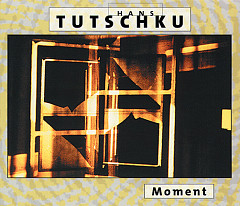
    Hans Tutschku is approaching electroacoustic composition in a way quite reminiscent of Francis Dhomont’s masterwork Sous le regard d’un soleil noir, a parallel that is not limited to both men’s use of human speech. Tutschku stirs his sonic matter and suddenly takes an armful and throws it at the speakers. The music is destabilizing, even creepy at times, thanks to a wonderful integration of voices in multiple languages (German, French, Spanish). Tutschku’s “cinema for the ear” often provides a setting for a poem embodied in the work. Antonio Bueno Tubia, Karl Lubomirski and Georg Trakl have poems treated this way. Les invisibles and Sieben Stufen both have complex structures derived from numbers 5 and 7, but instead of making them more opaque, it gives them particular relief. For a first collection (these works have been written from 1991 to 1998), Moment makes a very strong debut.

    … a very strong debut.

    Alchimie in Hurly Burly

    “Review”, Esteban Lago, Hurly Burly, no. 12, January 1, 2000
    Saturday, January 1, 2000 Press

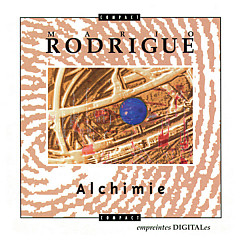
    The sounds that this electroacoustic music composer who studied in Montréal under the supervision of Marcelle Deschênes and Francis Dhomont, uses are highly identifiable or rather method sounds. Chance seems to be a distinct feature of his intention and some episodic memory can be made out in the soundscapes appearing at certain points of the piece.

    L’oreille voit in Hurly Burly

    “Review”, Esteban Lago, Hurly Burly, no. 12, January 1, 2000
    Saturday, January 1, 2000 Press

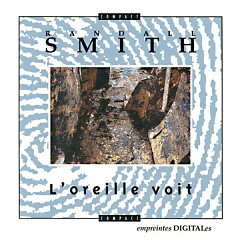
    Noises arising from the elements situated as supporting canes in imprecise and disquieting situations. Other less identflable sound clusters survive the mechanical explosions which crumble and are recycled into a new timbric feature or a simple self-echoing.

    Titakti in Hurly Burly

    “Review”, Esteban Lago, Hurly Burly, no. 12, January 1, 2000
    Saturday, January 1, 2000 Press

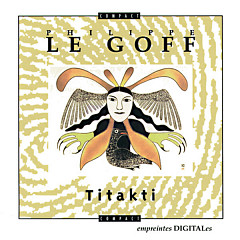
    Music conceived with very ambivalent aspects in which both the voice and the electronic fragments chosen for interacting with it are in constant motion. Maintained over certain vocal gestures, percussion collapses to include new liquid spaces within the planes, their distribution turned into surprise and contrast. A recording clearly intended to aural stimulation by means of spatialization.

    Miniatures concrètes in Hurly Burly

    “Review”, Jesús Gutierrez, Hurly Burly, no. 12, January 1, 2000
    Saturday, January 1, 2000 Press

    All the pieces seem to have a very similar making: something that explains why these composers gathered to jointly present a product. Since it seems carried out by a group of composers sharing the same essence or perhaps developed by just one of them, as long as we carefully observe what does their homogeneity of intention consist in through the individual character that emerges as compositional style in ecch of the pieces.

  • 9
  • 10
  • 11
  • 12
  • 13
  • 14
  • 15
  • 16
  • 17