electrocd

Blog

100 results
  • 1
  • 2
  • 3
  • 4
  • 5
  • 6
  • 7
  • 8
  • 9
  • empreintes DIGITALes in SOCAN — Paroles & Musique

    “L’année en édition musicale”, Dominique Nadeau, SOCAN — Paroles & Musique, no. 7:6, November 1, 2000
    Wednesday, November 1, 2000 Press

    Les mélomanes férus de musique électroacoustique sont bien servis cette année grâce aux maisons d’éditions YMX MéDIA et YUL MéDIA, lesquelles ont édité plusieurs œuvres des compositeurs canadiens Robert Normandeau, Daniel Leduc, Randall Smith, Marc Tremblay et Louis Dufort. Les créateurs étrangers ne sont pas en reste, les œuvres du Français Kristoff K.Roll et de l’Allemand Hans Tutschku venant compléter cette liste déja fort bien remplie. À noter que l’ensemble des ces créations ont été gravées grâce à l’expertise de la maison de disques empreintes DIGITALes, de Montréal.

    Les mélomanes férus de musique électroacoustique sont bien servis cette année…

    Impalpables, Annette Vande Gorne in Sztuka Fabryka

    “Review”, Geert De Decker, Sztuka Fabryka, November 1, 2000
    Wednesday, November 1, 2000 Press

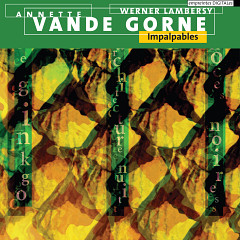
    Now some music from a citizen of our country, Annette Vande Gorne she lives in the French part of Belgium while we live in the Flemish speaking part. empreintes DIGITALes is from Québec a part of Canada where they speak almost French. Therefore you hear a lot of French on their releases, are the booklets in French and English and have they contacts with French speaking artists from other countries. Annette Vande Gorne has put her music on poems from Werner Lambersy, a poet who lives also in the French part of Belgium. The poems are therefore in French, but the enclosed booklet, 45 pages, gives us a complete translation of all texts that are read in the compositions. In the first composition Annette creates with waves an atmosphere that goes close to the poem, it is of a man that makes a journey, to himself. She is able to create with ambient tunes the feelings that the man encounters through his journey. The following composition is more chaos, this time no ambient tunes but random sounds and various of tunes is the music. This time it is also not the music that follow the words, but the words of the poem receives also a random attitude. Words are read loud, quick, slow, calm and not only one by one but several sentences are read at the same time. In this composition no waves as in the first composition. Waves return in the third composition but on a more dramatic way, it follows the way the poem is performed, slowly and dramatic. Reading the explanation in the booklet you know why. It is a poem (black wedding) about a person who meets the feeling of death that is approaching . Soft and dramatic sounds and tunes comes over you, it is a composition that takes more then 34 minutes. This album is far out the most best record available where music and spoken word is mixed. You do not to know French to like this CD, because the large booklet gives you full translation and information about each composition, while French itself has a poetic beauty.

    … the most best record available where music and spoken word is mixed.

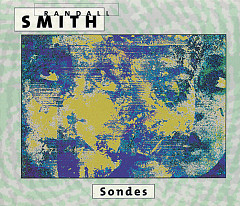
    Sondes in The Sound Projector

    “Review”, Ed Pinsent, The Sound Projector, no. 8, November 1, 2000
    Wednesday, November 1, 2000 Press

    To be perfectly honest I normally avoid these empreintes DIGITALes releases like the Hounds of Hell — they seem a tad too tasteful and nowhere near radical enough for me, but this one by Toronto composer Randall Smith is commendable. On this showcase of his works realised between 1995 and 1999, he works extensively with acoustic instruments. Liquid Fragments 1 is one interesting hybrid… half of it was composed for double-bass and flute, and the other hatf of it is tapework — studio manipulations of his own recordings. The sensual way he mixed the two together, ‘pouring’ the sounds into different channels of the studio mixer, makes the prospect for the listener as delicious as the preparation of a chocolate cake. Smith enjoys his work as much as a chef enjoys doling out the cake barter into his awaiting baking trays. The later work ‘InsideOut’ also uses famiiiar instruments from the orchestra, but he’s reprocessed them to such an intensive degree that very little trace of their original acoustic qualities remain. Yet the music he makes out of it is still somehow very ‘tuneful’, and certainly won’t set your alarm bells ringing if you mistrust modern composition because you think it’s a discordant, shapeless din. By the time we get to Continental Rift, he’s concentrating on a single instrument — Paul Widner’s cello. This virtuoso cellist is required to play short pastiches of classical music signatures, borrowings from Bach and Beethoven, in snippets composed by Randall Smith — only to have his work melted in the crucible of the electroacoustic studio. Smith deploys one of his trademark sounds here, the exhilarating rush like a helicopter ascending which he probably achieves by turning his ring-modulator dial up to 11. This work is norhing less than a philosophicai meditation on the evolution of the earth’s geographical outlines; but despite its metaphysical ambitions it’s still rather lightweight and somehow falls short of the profundity of La création du monde, Parmegiani’s take on the same subject.

    … as delicious as the preparation of a chocolate cake.

    Connexion in Sztuka Fabryka

    “Review”, Geert De Decker, Sztuka Fabryka, November 1, 2000
    Wednesday, November 1, 2000 Press

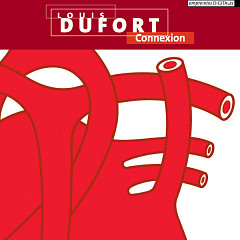
    This release [Louis Dufort’s Connexion] contains 4 tracks of strange and difficult music. You have got to take time and attention while listening to this music. Let us call the tracks again compositions.

    The compositions are made of a secure mix of sounds who all create a various atmospheres. The atmosphere can go from ambient towards electronic worlds. The use of silence is also explicit in the compositions, the sounds are mostly not mixed. A certain sound comes up and slowly creates an atmosphere and then the mood of the music transforms from one second to another. Electronic worlds are created with noisy and high tune sounds that are tickering around, music transforms quickly and a flood of sounds comes to you. Moments of silence build up the atmosphere and creates a very strong tension in the compositions. Strong electronic music full of tension.

    Strong electronic music full of tension.

    Moment in Sztuka Fabryka

    “Review”, Geert De Decker, Sztuka Fabryka, November 1, 2000
    Wednesday, November 1, 2000 Press

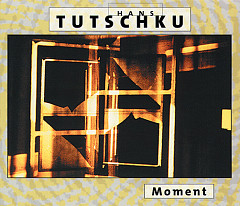
    All 5 tracks on this CD are electroacoustic compositions wherein he work with several recorded sounds. [Hans Tutschku] experiments with these sounds, just plays them and makes compositions or re-aranges the sounds in several ways so that completely new sounds are created. On each track he handles the sounds completely differently and focuses himself on a specific source of sounds.

    In the first track for example he uses sounds he recorded in Asia. This track last about 16 minutes and is a composition that has the almost mystical touch of Asia, soft strange sounds. In a second track he uses voices and transformations of voices, somewhere else there are again vocal and instrumental sounds. The use of vocals or the voice as instrument is present in the majority of the compositions. Also instrumental sounds such as bells, strings, sounds that sounds as creeping doors, and certain daily background sounds are present in his works, or sounds that sounds as such sounds. So difficult it is to describe his work. The compositions can be compered as opera because there is a certain theatrical atmosphere in the music. It not tells a story, the sounds just brings a theatrical atmosphere.

    … the sounds brings a theatrical atmosphere.

    Alibi in SAN Diffusion

    “Review”, Anna Rubin, SAN Diffusion, November 1, 2000
    Wednesday, November 1, 2000 Press

    [This text was also printed in Computer Music Journal #25:1 (ÉU), 1 mars 2001]

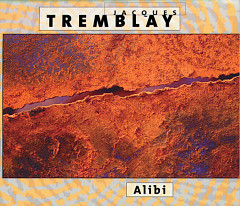
    The new Jacques Tremblay CD, Alibi, includes six pieces dating from 1990–95. Tremblay is a young composer who explains in the program notes that he began as a guitarist and encountered electroacoustic music as a revelation. Further, he grounds his work in the use concrete sound, both vocal and ambient and favors a rich and dark sound palette. The typical sonic makeup of the first three pieces, in particular, are so varied and rich, yet oddly similar to each other, that listeners may prefer to listen to the works in the following order: 1, 4, 2, 6, 3, 5.

    The first work, Hérésie ou les bas–reliefs du dogme (1990), is a relatively long piece of twenty–one minutes which includes extended recordings of an American fundamentalist Christian preacher along with snippets of Frank Sinatra, and Muslim and Gregorian chant. The extended rant of the American is juxtaposed with French dialogue which I could not follow but which another reviewer characterized as papal posturing. Most of the quoted speech is enmeshed in a rich stew of repetitive, mechanical sounds, and long stretches of bell–like overtones emphasizing upper partials over repetitions of tonic and dominant. Occasional stretches of Tibetan horns and Gregorian chant (sung by a woman, yet another heresy!) gradually distort and slither away. The religious spirit is viewed here through the lens of perhaps those dark Spanish baroque paintings, all blood, fire and damnation, although religion itself is viewed as the evil. The piece inscribes a long arc of 18 minutes, pauses, and then has a 3 minutes coda of similar material. I am not altogether convinced of the larger form but certainly Tremblay has a feel for climactic intensity and gnarly sounds which get under your ears.

    Oaristys (1991) is described as following the stages of a hypothetical night of love, (p 14, notes) and is divided into six movements entitled Call of Desire, Approach, Embraces and Sensuous Delight, Animal Urges, Scattering, and Inflection. It is highly sensual but ominous as well. But then great passion is often companion to the sense of danger, of vulnerability before the beloved other even as union occurs. Tremblay draws from both these sides of the erotic experience.

    Waves, bird–like calls, cello quotes from a Bach Saraband, and the stylized vocalizations of a Japanese Noh actor all enmesh the listener is a sinuously rich texture. The second section grabs along with the erotic and informal laughter of a woman, albeit looped and cycled with percussive patterns reminiscent of bird calls. He characterizes this section as a remake of the Erotica movement of Pierre Schaeffer and Pierre Henry’s Symphonie pour un homme seul. Sounds progressively expand, speed up, reappear, distort and disappear in a mercurial trajectory and the resulting four movements follow each other until ending in a slow, brooding finale.

    The third work, L’intrus au chapeau de spleen (The Intruder with a Spleen Hat) is a mysterious stew which incorporates favorite Tremblay strategies multi–layer repetitive mechanical sounds, sinuously morphing gestures, but allows a bit more silence in the mix to frame individual gestures. A mysterious, watery and nocturnal world is evoked, the sense of what boils and roils beneath otherwise ordinary surfaces.

    Rictus nocturne (1992), again in six movements, evokes the jam session of jazz. I quote the composer: Each movement follows its own story and develops a compositional problem: montage; play–sequence, of density; of silence; and of sketched, improvised and edited sequences from object instruments. (p 16, notes) But jazz idiom is absent in the composers own music though intermittently quoted. Interestingly, this piece includes the most introspective and quiet music heard on the CD up to this point. What Tremblay seems to love most of jazz is its quiet balladic side as well as the needle noise of old records which he riffs upon.

    Jeu d’ondes quotes Ravel’s Jeu d’eau and includes quotes from historic recordings of reflections on the problems of creating an FM network for radio. Delightful confections of boat noises, much of it frothy and effervescent make this a tasty morsel.

    The work, La robe nue, (The Naked Dress) uses string sounds for a good deal of its material as well as bells, train and horse; he evokes Proust’s Cambray, the first book of Remembrance of Things Past. Tremblay returns to a reflective mood, giving individual sounds room to gently resonate. This piece is extremely effective in maintaining a languorous, yet musically compelling texture throughout.

    … Tremblay has a feel for climactic intensity and gnarly sounds which get under your ears.
  • 1
  • 2
  • 3
  • 4
  • 5
  • 6
  • 7
  • 8
  • 9