electrocd

Blog

100 results
  • 5
  • 6
  • 7
  • 8
  • 9
  • 10
  • 11
  • 12
  • 13
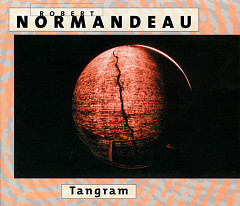
  • Tangram, Robert Normandeau in SAN Diffusion

    “Review”, Gred Horton, SAN Diffusion, October 1, 2000
    Sunday, October 1, 2000 Press

    Normandeau freely admits to having been influenced by various other music forms including rock; these influences are obviously audible in most of his works. For example his piece Venture, which was created in 1996, uses as its sole source material the music of Jimi Hendrix, Led Zeppelin, Pink Floyd and other rock artists. Certain pieces on Tangram share some of the common elements which can be derived from rock music, i.e. long determined passages and repetitive rhythms.

    Tangram’s first track Bédé (1990) uses onomatopoeia through the voice of eleven–year–old Marie–Helene Blain. The effect is of children giggling, whispering and conspiring together in an ethereal world, tentatively touching the real world like Alice Through the Looking–Glass. Was Charles Lutwidge Dodgson listening to this when he wrote about Alice? Éclats de voix (1991), also uses onomatopoeia through its spoken passage: various sections lead us through processed effects; ghostly mutterings and industrial sound textures which lend a sadness and emptiness to a spectral score, introducing the listener to an elaborate sound world. Spleen (1993), for which the composer was awarded the Main Prize at the Musica Nova 95 International Competition held in Prague, is full of tension built up through a percussive heartbeat, but there is an underlying irritability in the piece like the weariness a traveller may feel at journeys end. An undoubtedly complex work. Track 4 Tropes (1991) contains excerpts from Mozart’s chamber works. Beyond the treated piano and orchestral soundscapes lies a delicate inner core. Normandeau appears to dissect and then reassemble Mozarts music whilst still maintaining the original composers subtle creation of character. The title track Tangram (1992) is at 27:05 minutes — the longest piece on the disc. This powerful piece strains to give birth to the perfect Chinese Tangram, a seven piece geometrical form, finally emerging into fluidity and composure.

    Robert Normandeau’s Cinema for the Ear aesthetic lends to his work a depth where meaning, sound and music become one. Either composition on this disc could be placed into a film script, these are soundtracks for the mind, very filmic in structure, and will therefore affect each listener differently creating a personal imaginary element.

    I first bought the CD and listened to these compositional works in 1994, found it excellent then and I still find it drives my imagination in the year 2000.

    … soundtracks for the mind…

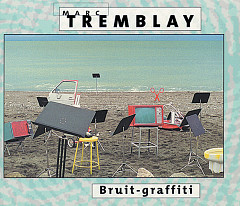
    Bruit-graffiti in Music Club

    “Kaos”, Roberto Michieletto, Music Club, no. 100, October 1, 2000
    Sunday, October 1, 2000 Press

    “Noise is the child of chaos. It confronts us daily and can come to symbolize all that is accidental in life.” È questa la frase che più mi ha colpito nel libretto che accompagna Bruit-graffiti del compositore elettroacustico Marc Tremblay. Se invece vogliamo presentare quello che è l’aspetto più “sentimentale” dell’intera faccenda, sempre secondo il musicista canadese, è interessante porre in risalto un’altra citazione: “I love to discover the poetry in the noise that surrounds us.” L’atmosfera che permea le composizioni (registrate in un arco temporale che va dal 1990 al 1997) è impregnata di umori rumoristi, ma nonostante il “bruit” che campeggia nel titolo non dovete aspettarvi un fragoroso assalto alla Sutcliffe Jugend, quanto piuttosto una minuziosa ricerca su oggetti della quotidianità che producono, consapevolmente o meno, rumore e che sono stati utilizzati da Tremblay per mettere insieme una disparata varietà di suoni concreti a tema; infatti ciascuno dei sei pezzi ruota attorno a un argomento specifico (l’automobile, il telefono, le monete, ecc.). Annotazioni finali: 1) il disco è stato registrato con il supporto del Canada Council for the Arts 2) Résidus (clip dadaïste) è puro trash da gabinetto (ascoltate e capirete!!!).

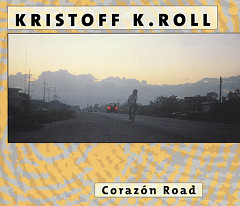
    Corazón Road, Moment in Outsight

    “Review”, Tom Schulte, Outsight, October 1, 2000
    Sunday, October 1, 2000 Press

    Probably the most fertile grounds for contemporary electroaoustic (experimental sound collage) composition is in eastern Ontario. From there you will find a wholly new aural universe in [empreintes DIGITALes]. Recent releases on the label include Moment by Hans Tutschku and Corazón Road by Kristoff K.Roll. One of Tutschku’s pieces is a travelogue of Southeast Asia through sonic collage of field recordings. Another piece is the transformed words of a poem. In a setting of haunting, industrial sounds like distant machines the effect is quite mysterious. Corazón Road is another peculiar travelogue. This is a road diary of Kristoff K.Roll’s journeys through Central America. Snatches of conversation and the mystique of lonely roads marks this album.

    … you will find a wholly new aural universe…

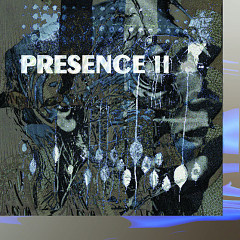
    Présence II in Splendid E-Zine

    “Review”, Irving Bellemead, Splendid E-Zine, September 25, 2000
    Monday, September 25, 2000 Press

    Pretty much anyone with a functioning cochlea will find something to like on this massive collection of recent electroacoustic works from the Canadian Electroacoustic Community (Communauté électroacoustique canadienne). 34 pieces from 32 composers in 11 countries can seem a bit daunting at first, but a taste for surprising sounds and liberal use of your CD player’s fast-forward and skip-track buttons will get you through. And you’ll be the better for the journey!

    The packaging for this two CD set is a bit odd — the discs don’t really fit in the sleeve, and the large booklet is at odds with its container. The cover image is nice, though. The booklet, written in English and French, is thorough and useful, with a brief introduction to the CDs and composer-written notes for each of the pieces.

    It would be difficult to put together 34 different pieces of music and not be struck by how different they are (although Short Music for Short People managed pretty well!). Still, it’s worth mentioning that regardless of your preconceptions of the CEC/acousmatic scene (you do have preconceptions, don’t you? Heathen.), these discs represent an impressive range of styles, sounds and techniques, all within the rough boundaries of the acousmatic genre. That means there’s no punk rock or dance music here, although several of the pieces do get pretty grungy and/or rhythmic.

    A few semi-randomly picked highlights:

    Adrian Moore’s Soundbodies: Bodypart (1998) is full of suggestive, out-of-body voices, zipping around like jacked up goblins. Antti Saario’s B-Side (1998) manages to be both funky and mysterious. Au-delà du miroir (1998) by Daniel Zimbaldo is a long, lovely arch. Steve Bradley’s “volalle melodie vi to trot” / “fowl melody to trot” (1999) is a strange, crackling collage of voices and fuzz. DUO (1997-98) by jef chippewa is a balloonaphobe’s nightmare. Gordon Fitzell’s Zipper Music II (1998) is just as much fun as its name implies.

    Although a few of the pieces here are a bit too acousmatic for my taste (a ball rolls, a door slams, a baby cries, a train toots), this really is an impressive, listenable collection of electronic music. If you’ve been wondering what this “electroacoustic” thing that you keep hearing about is, or if you’re just looking to add a chunk of contemporary electronic music to your collection, then Presence II would be a fine place to start.

    … this really is an impressive, listenable collection of electronic music.

    Aérosol in Incursion Music Review

    “Review”, Richard di Santo, Incursion Music Review, no. 012, September 24, 2000
    Sunday, September 24, 2000 Press

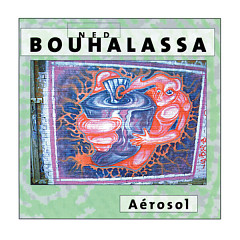
    Acousmatic composer Ned Bouhalassa, born in France but now making his home in Montréal, has been active in the promotion and production of electroacoustic music for a number of years. Aérosol presents various works composed and recorded from 1990 through 1998, and comes packaged with liner notes on each piece by Bouhalassa himself. Sponge-like, Bouhalassa absorbs elements from a diverse array of influences (cinema, visual art, techno, environmental recordings…). His music is full of difference and variety. Each sound playfully moves through the stereo spectrum (an aeroplane in the sky, the buzzing of insects, the crackles of a digital landscape), and it’s unlikely you’ll ever hear the same sound twice. Each of these compositions take on their own themes and compositional techniques. The first, Jets, explores the idea of an automated sound projection, where sound is perceived as moving “in an almost intuitive manner.” Constamment (autoportrait) is a selfportrait expressing the artist’s anomalous memory and his state of mind on turning 37. Clearly evident in this piece is Bouhalassa’s love of techno music, for occasionally a thumping bass or a rhythmic interlude will force itself into the otherwise abstract sound environment. The next piece, Attraction, attempts to express any number of attractions in life and in art. Recordings of acoustic sources were put through the hoops of digital processing and traditional musique concrète techniques. The final piece is my favourite here. Bouffée délirante (Maddening Exhalation) is described as “an attempt to realize what has been coined ‘cinema for the ear’”. There is, as is characteristic of all these compositions, a complex array of sound sources and moods. But what I like most about this piece is the way it jumps suddenly from one “scene” to another; a smooth intonation (from a cello? a violin?) will suddenly be cut and move into a whole new sound structure, only to return back again, clumsily, at a later moment. Bouhalassa calls this a “jump-cut gesture”; these interruptions are like film montage for the ears, breaking up the narrative or moving it along. There are no words, but the sounds tell a story all on their own. This is music to provoke your imagination and make your ears tingle with excitement.

    This is music to provoke your imagination and make your ears tingle with excitement.

    Connexion in Ici Montréal

    “Review”, Catherine Perrey, Ici Montréal, no. 4:1, September 21, 2000
    Thursday, September 21, 2000 Press

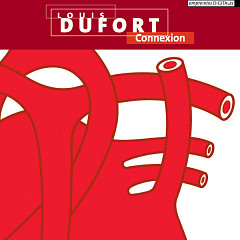
    Louis Dufort is a very talented dabbler. Passionate about electronic music, he is also interested in cinema, painting and contemporary dance. As a matter of fact, the last piece of this disc [Connexion (Connection)], Décap, is based on music composed for [a choreography by] Compagnie Marie Chouinard. This disc presents no long drones but tight and rhythmical montages and relevant use of voice samplers (including Ms Chouinard’s). Full of movement and moving forward. In brief: vivid and welcoming electroacoustics. 8,5/10

    Du mouvement, de l’allant. Bref de l’électroacoustique habitée et invitante.
    8,5
  • 5
  • 6
  • 7
  • 8
  • 9
  • 10
  • 11
  • 12
  • 13