electrocd

Blog

267 results
  • 20
  • 21
  • 22
  • 23
  • 24
  • 25
  • 26
  • 27
  • 28
  • Chemin de fer in Nightlife

    “Critique”, GP, Nightlife, no. 35, June 1, 2002
    Saturday, June 1, 2002 Press

    Le label No Type est d’abord une enclave dans l’internet pour une circulation libre de la musique, une musique faite sans concession doit-on spécifier. Le saut sur support physique est accompli avec le premier album de Magali Babin (et aussi une double compilation). Babin bricole et rafistole des instruments métalliques et des objets inusités pour ensuite extraire des sons par divers moyens. Adepte de l’improvisation, elle génère des bruits amplifiés qui forment une musique non-conventionnelle. Exploration plutôt réussie, mais longue et hermétique aussi.

    Exploration plutôt réussie…

    Chemin de fer, Magali Babin in Sonoloco Record Reviews

    “Review”, Ingvar Loco Nordin, Sonoloco Record Reviews, June 1, 2002
    Saturday, June 1, 2002 Press

    Magali Babin is active on the Montréal sound art scene. Mr Dontigny of the No Type label lets on that it was almost by chance that this CD became the third (or second; the previous one was a double) issue with the No Type logo. Mr Dontigny happened to hear – just days prior to the label’s birth – that Magali Babin’s audio project at the CBC had been cancelled, and that she was looking for other venues of diffusion. As Mr Dontigny says; “the timing could not have been better,” and No Type signed Babin on.

    The booklet – displaying the regular high-quality fold-out magnificence that is has in common with empreintes DIGITALes proper – explains that most of the sounds we hear on this set are derived from metallic instruments and objects (instruments being objects made with the specific purpose of being… instruments, while objects were made for other reasons, but demonstrating instrumental qualities as a by-product of their humble object existences… and the third alternative is the case of found objects which could be just natural findings like rocks and ice, which weren’t designed – I suppose… to act as sounding objects, much less instruments… but sound persistently anyhow and anyway!)

    Most of the events herein are improvised by Magali Babin, with the exception of track 7, which was “crafted in joyous collaboration with Alain Chénier and Mario Gauthier”, and track 9, which has been mixed with the piece Rain from Ian Nagoski’s CD Warm Coursing Blood.

    That said, on to listening!

    The beginning is a start, but there is no actual beginning or end to this piece; Triturations… The sliding of rocks over rocks, granite across gneiss, or boulders over rock bottom expanses keeps on keeping on, and to me this sound world is the murmur of Time itself passing through these lonely worlds. The sounds are subdued but grave, humble but terrible – and these minutes of Babin time rubs off on your own calendar, making it obsolete in this vast void of minerals and millennia…

    Track 2 – Petit jardin – is more French, more detailed, more microscopic, tingling, trickling and seeping… as little elves and fairies hover in the shadows over at the garden pond – and it makes me recall some worlds by Finnish guru electroacoustician Kaija Saariaho. There is a fair amount of deep wood enchantment in Finnish culture, you bet, and this property shines and shivers inside Petit jardin. Masterly, how Babin builds this dense atmosphere with sparse means in but a few minutes!

    La corde is chordal in its attributes, you would have guessed! This comes close to some latter day guitar improvisations by the likes of Ernesto Diaz-Infante and Chris Forsyth, even though I’m certain Babin did not use any guitar. The chordal elasticity and picking pluck feel is ever present, anyhow, and close mikings enhance the experience. It is indeed very nice, almost pick-pocketing, fingers moving about around those mashed up remains of chewing gum wrappings…

    Number 4 – Monsieur et madame Watt – sports a thin, droning current of electricity, making me think of Joni Mitchell’s Electricity from For the Roses: “input, output, electricity…,” maybe for the lines that go: “she don’t know the system, plus she don’t understand, she’s got all the wrong fuses and splices, she’s not gonna fix it up to easy, the masking tape tangles, it’s sticky and black…” and so forth, and simply because of this humming current that could easily start emitting sparks and charges all over the room, and Babin’s very peculiar and amiable picking keeps up, like some old maid of the 19th century nervously picking and picking her apron while she waits for a secret lover or hell from her master. Babin’s piece once again gives rise to many fantasies and visions, which in my world is one of the best things I can say about music! Towards the end the electricity gets dangerous! Suddenly I wake up inside a power plant, the electromagnetic force field overwhelming…

    5 – E – talks at me through the jerky and stiff jaws of tinplates or slabs of sheet metal, revealing some of the inner psychology of such materials. The metals are like drugged and just recently awakening ants on the inside of the hard matter. It has got to be the atomic jitter I’m sensing in this piece. On the other hand, sometimes this could appear to me like the slow motion rendition of tin can talk; all those truckloads of tin cans traveling all over the Americas, all over Europe, to reach those super market shelves… Is this their small talk in the road?

    Havoc is administered on track 6 – L’entonnoir – in the manner of barrels rolling down endless slopes in some painting that Chagall never got around to do… but his age is the time of these events. It might even be winter, and black craws are flying up and fluttering around as the battalion of barrels roll and tumble on down like friendly but helplessly dangerous metallic speed freaks, in vain hoping – yes, thirsting! – for a valley which never comes, since this is the world of never-ending slopes… and the religion of tumbling barrels aims at the valley at the end of barrel existence…

    Track 7 –Jogging dans la maison hantée — opens in a tweeting, tweaking manner, elastically, rubbery, forcefully seeping through cracks, emitting molten or mashed matter like hot rubber through the cracks of wooden horizons… The shrill sounds, which are rare here, sort of escape the tough goings-on behind and beyond those coniferous horizons, and the events that are hinted at and revealed in traces and remnants can’t be anything else but creation per se, or maybe a human mind finally at work with changing his views, trying to understand something else, and if so, it’s that something else that keeps tweeting and seeping through those wooden cracks, and I can already smell something; don’t know exactly what. Babin’s imaginative sound worlds are excellent mind tumblers!

    Piece number 8 – Ma tribu – indeed conjures up pictures and archetypical memories of village get-togethers down the millennia of the African continent, rising in volume and presence to an almost painful drum dance across the dry, beaten piece of ground in the center of village and ceremony. A wheezing character of the drumming lets on its shamanistic, dream-like state, far on the inside of any real-time here-and-now occurrence, summing up the force and strength om the good medicine of thousands and thousands of years in one, wild, intense drum-beat, lashing out at you from the true state of Time…

    The last entry on Magali Babin’s CD is Pluie de homards. First it appears like some early electroacoustic – or rather electronic – piece of ingenuity, but soon it travels into the realm of timelessness that seems to be the breathing air of the composer. The watery property is clear, but it’s massive, as if a closely miked gush of water at high pressure down a tin bucket! The force is magnificent and the speed immense! Overtones and obscure timbres swirl around the running water like a thick layer of gleaming, gleaning grains of sound and light. You name it, we like it!

    This No Type release of the sound artist Magali Babin has is a true sonic adventure, revealing true ingenuity and artistic splendor!


    … a true sonic adventure, revealing true ingenuity and artistic splendor!

    Podweek, Oeuf Korreckt in Jade

    “Critique”, Julien Jaffré, Jade, no. 8, June 1, 2002
    Saturday, June 1, 2002 Press

    La rhétorique de l’Oeuf et de la poule est désuète et sans intérêt. La seule question qu’il convient de poser à présent serait… Où était la musique électronique canadienne avant Oeuf Korreckt… Y en avait-il d’ailleurs?

    À la fois insoumise et corvéable, amplie de clichés et judicieuse, désinvolte et réfléchie, la musique sur Podweek détaille le panorama global de ses propres inspirations autant que le paysage plus large de la musique électronique, avec tous les angles concaves et contreforts qu’elle connaît.

    La structure de l’album, sa coquille charnelle, s’est chargée au contact des meilleurs calcaires, du résistant tri repetae d’Autechre, au lumineux traits du Aphex twin de Ventoline ep, Disjecta, Plaid ou The Black Dog (qui ont utilisé le même logiciel il fut un temps…).

    La floraison de rythmes, leurs échos dansants et rebonds joyeux dans l’atmosphère étroite du disque dur de Frédérick Blouin évoquent tant l’aspect anecdotique qu’historique du processus et de l’outil de création, un logiciel inusité: le trackers.

    Inusité parce qu’en conflit avec l’interface Windows qui l’a banni de son plan de développement (que l’on connaît). La résurgence de ce petit logiciel, couplé à l’intelligente vision musicale d’Oeuf Korrekt donne un album sans faille, séquencé, cadencé, en un mot rutilant de santé avec même des cimes de Gabber basique qui passe bien à l’oreille, une fois n’est pas coutume.

    Si le label expérimental No Type souligne avec humour l’outrage personnel d’avoir osé diffuser un disque “mélodique”, le réel outrage, s’il y en a, aurait été de passer sous silence cette onzième table de loi. À découvrir d’urgence.

    … un album sans faille, séquencé, cadencé, en un mot rutilant de santé… À découvrir d’urgence.

    The Freest of Radicals, No Type in Sonoloco Record Reviews

    “Review”, Ingvar Loco Nordin, Sonoloco Record Reviews, June 1, 2002
    Saturday, June 1, 2002 Press

    Well, well, well… This is a grand start of something… the something being the commercial CD releases on the No Type label, formerly a strictly on-line, downloadable venture. The grand opening with a packed and crammed double CD compilation of serious sound hang-ups is interesting enough, featuring a good scope of “free radicals”…

    The basis for this joyous event might be found in the introductory text that No Type offers the hungry reviewers: The Freest of Radicals, through its varied and challenging musical landscape, shatters the hidden face of the recording industry, which too often ignores unconventional artistic developments and hinders so called ‘difficult’ music.” Indeed the free-flowing under-current of the present has to find its river channel, and the force is so immense just below the surface of contemporeana that it always does, and in this case the river channel is the label No Type and its benevolent benefactor Jean-François Denis, who already set the ultimate lofty standard of electroacoustic creativity and diffusion through the legendary label empreintes DIGITALes and the distributor DIFFUSION i MéDIA.

    I’ll give a few impressions of some of the many entries provided. They’re picked out randomly, and not pertaining to any artistic or other preferences, which means that those not mentioned may be as relevant and urgently in need of ears as the ones actually touched upon.

    Le chien borgne is a pseudonym for Guillaume Théroux-Rancourt, who originates in Québec City. His piece, mysteriously titled rho < 1 (rho a > rho), has been honored as an opener of the whole set. He is said to work with analog ambient loops, and there is nothing here that contradicts that. A deep, repetitious – calm! – rumble shakes your loudspeakers, sort of in a breathing manner, on top of which more lightly pitched layers are applied as with a stroke of a sable’s hair brush, all in all transposing the here and now into a dreamy, soaring, thoughtful state of arms stretched out in a hovering gesture towards an elusive horizon. I like this a lot; it has a peculiar magic to it – and I like to float in this liquid atmosphere a long time.

    James Schidlowsky’s Radio Collision sweeps in helicopterish and duck-worthy, dominating the scenery completely, having you flung yourself in the mountain-birch bushes, torn madly by the magnum-force winds from the hovering machine, spinning slowly around, keeping any intent secret, and all you can do is wait… The massive layer – or rather wall – of gray sound is compiled of many timbres, some in the sub-spaces, some on high, and eerie fragments of torn messages might be sensed inside this wild but harnessed energy. Dense!

    Tomas Jirku’s I Think I’m In Love addresses totally different aspects of the audios, one might say. This is a funkster prankster hopscotch rendition of rhythm and glassy timbral percussion; very beautiful, and somehow… alien; alien like little spheres of undetermined properties bopping and popping in thin-shrilled erotic dances across yellow plains of distant worlds in forlorn galaxies beyond our present scientific perception. Jirku’s hectic, yet precise, humdrum plum-picking audio has a shine to it that pleases! It is for long, hypnotic stays, though, and this short sample just gives you an idea of the trances you might encounter on prolonged visits in these worlds.

    Cal Crawford doesn’t waste any time surprising the listener with what at first appears to be static and interference; something is wrong with your equipment… but as it keeps up you realize that this is it; Crawford’s artistic idea! Of course this isn’t new. It has been done numerous times since the late 1940s, in various fashions, but since the preceding works on this CD have been – one way or another – modal, this sharp, diamond-like, pointillist approach cuts it’s way through your listening like a surgeon’s scalpel, and it hurts nicely! His piece is called An Objection That is Immaterial After the Fact. It’s like dashing through the celestial night at warp speed, encountering scattered star matter across the void, or like managing a subterranean water tank perforated by neutrino; in any case, it’s fast, sparse, sharp, scattered – and perhaps not so healthy… Towards the latter part of the piece things dense up, as a rippling prayer bead of free flowing thoughts and impressions rush on down, with a murmuring backdrop of serious gestures. Even later on events get loud, like a closely miked forest fire caught at the precise location of a fiery tree stump furnace… Very ingenious electroacoustics!

    Julie Rousse lends her electroacoustic voice to the little ones hiding in the semi-conductors and the closed circuits, where they huddle up around their innermost thoughts and dreams, little Terry Rileys of streaming electron organs dappling with the clouds of 1950’s Dylan Thomases on the horizons of electric wiring in Rousse’s piece Une à six idées improvisées. So short is Julie Rousse’s bell-tingling elves-gleaning that I instantly long for more… So many secrets of the little ones of electricity in this piece; a work worthy of the secretive Hattifatteners of the Moomin Valley!

    Magali Babin has recently issued her solo debut on No Type, and this bit – Petit jardin – can be found on that CD as well. It’s French, detailed, microscopic, tingling, trickling and seeping… as little elves and fairies hover in the shadows over at the garden pond – and it makes me recall some worlds by Finnish guru electroacoustician Kaija Saariaho. There is a fair amount of deep wood enchantment in Finnish culture, you bet, and this property shines and shivers inside Petit jardin. Masterly, how Babin builds this dense atmosphere with sparse means in but a few minutes!

    Claudia Bonarelli lives in Sweden, but her name is Italian. They Use Us Back is a strangely recognizable artifact, i.e., it seems to be… There are a number of musical clichés in here, used on the razor’s edge between the morbid and the pretentious, but it’s done with a swagger and a jerkily moving hip across the silver screen. You get a beat, you get two… and some sarcastically (?) applied modal strokes of the hand and taps of the fingertips. It’s so soft it could well be used for toothpaste commercials…

    Jon Vaughn’s Bouncing Ball (1 of 2) + Gravel Road is a frantic experience to which I’ve taken a definite liking. I’ll put it on a loud repeat while fixing coffee! It has beat and insanity and beautifully scraping, vibrating sounds on top of a dump truck of humor, which is exactly what creativity needs to be bearable… Keep on keeping on, Mr. Vaughn, we’re sitting tight over in Swedenland at Sonoloco, keeping you on loud repeats! This music twists and turns to get out of that straitjacket of existence, crawling along under barbed wire on muddy elbows, heading for a smashing oblivion! Wow!

    I’ll halt here, even though I haven’t even gotten around to the second CD yet, but I’m sure these samples will serve the purpose of conveying my deep and sincere lust for this music, as well as my admiration at all this ingenuity and sonic liveliness! The concept is wonderful, the result shining, and we’ll just have to keep the good spirits up so that these kinds of ventures can bloom and flower up ahead!

    The concept is wonderful, the result shining…

    The Freest of Radicals, No Type in AllMusic

    “Review”, François Couture, AllMusic, June 1, 2002
    Saturday, June 1, 2002 Press

    After three years of internet-only activity as a mp3 label, the Montréal-based No Type decided to take the plunge into the physical world of CD edition. Released in April 2002, The Freest of Radicals launched the catalog. This 2-CD compilation album offers quite a few mouthfuls: 36 tracks from 34 artists, for a total of 155 minutes — too much for most listeners to absorb in one session. Most of these artists are known only to the people that frequented the label’s website, but fame has nothing to do with quality and the label proves it once again. From sound art and experimental electronica up to IDM, minimal techno, techno-lounge and more melodic material, the album takes us on quite a wild ride (including an unexpected stop into post-rock with Kanovanik). Highlights are just too numerous to mention, especially since every listener will have his or her favorites. Let’s just drop a few names: Tomas Jirku, Magali Babin, Ja_dijiste, Books on Tape, Infoslut, and so many others. The quality of the selections compensate for the somewhat dizzying scope of styles covered. The weirdest tracks often end up to be the best and discoveries await by the dozen. The fact that No Type adopted the highly original package design of the electroacoustic label empreintes DIGITALes is icing on the cake. Its pretentious title notwithstanding, The Freest of Radicals offers a panoramic view of things to come in electronica.

    The weirdest tracks often end up to be the best and discoveries await by the dozen.

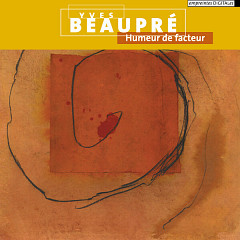
    Humeur de facteur in Musicworks

    “Review”, Matthew McFarlane, Musicworks, no. 83, June 1, 2002
    Saturday, June 1, 2002 Press

    He has been featured in numerous press reports, he’s had sales all over the worid, and his craft has been featured on countless recordings. So you might be wondering why you’ve never heard of Yves Beaupré on the electroacoustic circuit. Well, Beaupré is known more for great harpsichords than for great compositions. He has, however, had a lifelong fascination with computers and electroacoustic music, and four years ago, from his workshop in the Plateau of Montréal, Beaupré listened to the sounds around him and decided that he wanted to try his hand at composition. Humeur de facteur, released by the prominent Montréal electroacoustic label empreintes DIGITALes, is the result of a nine-month sabbatical from the worid of drills, sanders, wood, and metal.

    Beaupré is obviously influenced by the Montréal school of composers, such as Normandeau, Gobeil, and Dhomont. However, there is less cinematic vision in his work and more emphasis on musical and extra-musical sound. Beaupré gathered source material in his workshop and then manipulated it in his home studio. At times, reference to the harpsichord is very clear, particularly in La Beauséjour, a tribute to the famous Montréal harpsichordist. This piece strikes me as the strongest on the album. Full-textured and rich in sonic material, it is also, at times, extremely rhythmic. Beaupré, a true lover of music, admits to the influence of Montréal-school techno in parts of the disc. But he draws us back to his own craft by using recognizable harpsichord material. This grounds the listener, both musically and sonically.

    A striking feature of the music is the thought that clearly went into the structural aspects of the work. In La Laurendeau, simple repeated patterns shift in and out of a richly textured background. Furthermore, Beaupré’s sense of layering is impressive. There is a sense that he is guiding us through a sonic geography. His ability to move from one sound environment to another without a sense of progression is magnificent. The fourth track, La Pelots Point, named for a location on Lake Champlain, is inspired by Beaupré’s love of sailing. The sharp opening rhythmic texture of the composition is broken midway through the movement by a Iyrical and harmonic passage that fades into the background. There is a meditative feeling to this section, almost as if Beaupré were alluding to the Renaissance with a type of electric chanting.

    A highlight of this disc for me is its intense focus on musical elements, not just on sound. Both the quiet Iyricism and the moments of driving rhythmic intensity make this disc unforgettable. It’s not just sound that Beaupré layers, but musical textures and sonorities. Furthermore, his occupation and his connections to older musical forms allow for a creative expression drawn to the past but intensely interested in the future. Humeur de facteur is an auspicious start to Beaupré’s compositional career.

    … his connections to older musical forms allow for a creative expression drawn to the past but intensely interested in the future.
  • 20
  • 21
  • 22
  • 23
  • 24
  • 25
  • 26
  • 27
  • 28