electrocd

Blog

267 results
  • 26
  • 27
  • 28
  • 29
  • 30
  • 31
  • 32
  • 33
  • 34
  • La limite du bruit in AllMusic

    “Review”, François Couture, AllMusic, May 1, 2002
    Wednesday, May 1, 2002 Press

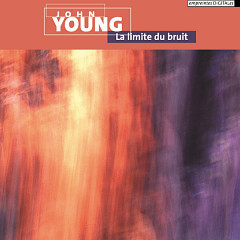
    John Young proceeds from the familiar to the alien, from the instantly recognizable and close sound source to more extensively treated and masked results. It may be the oldest trick in the musique concrète book, but it remains the best way to capture the listener’s attention from the beginning. Obviously, Young understands this principle and applies it well — better than that, actually. Each of the five pieces on La limite du bruit (“The edge of noise”) develops a network of visual and sonic images from a simple starting point. Each one is exemplary in construction, focus and sonic transformations. Pythagora’s Curtain picks up on the origin of the word “acousmatics” (sound heard while its source is veiled, like Pythogora teaching from behind a curtain). The sound of chalk on a chalkboard opens the piece and gradually spirals out of reach as other “thoughts” enter the picture. Inner, Virtual and Time, Motion and Memory function as a cycle of sorts. They start with the sounds of human breathing, wind and a rusty swing respectively. The latter is particularly evocative, its structure allowing the listener to insert his or her own memories in the piece. Liquid Sky focuses on rain; the softness of its tender finale (a return to the pure recording of a rain in a puddle) couldn’t have provided better closure for this remarkable CD. All these sonic materials have been widely used by electroacoustic composers since Pierre Schaeffer and one must admit that Young’s works lack some originality. Nevertheless, his music is constantly lively, engaging and even entertaining. He comes from the same British school that gave us Jonty Harrison and Denis Smalley, but he manages to avoid the dryness usually associated with their work. Recommended.

    … his music is constantly lively, engaging and even entertaining.

    Cycle du son in AllMusic

    “Review”, François Couture, AllMusic, May 1, 2002
    Wednesday, May 1, 2002 Press

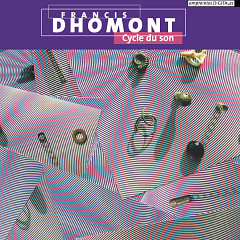
    Francis Dhomont’s first album since the critically acclaimed Forêt profonde in 1996, Cycle du son was released in late 2001 and consists of a cycle of four works premiered in 1998. At the time the composer was 72 years old. Taking a cue from the celebrations surrounding the 50th anniversary of the “advent” of musique concrète, he created a rich work that takes a look at the distance electroacoustic music has crossed during that time. But Cycle du son is not a historical overview. Instead it integrates concepts, forms and pet sounds from the main figures of the genre, all done with much subtlety. The roots of the work are found in part three, Novars. Created in 1989, it used sound sources from Guillaume de Machaut’s Messe de Nostre Dame and Pierre Schaeffer’s Étude aux objets. The cycle stemmed from this piece and all movements are interlocked with quotes and the use of similar sound sources and references. Objets retrouvés is a short re-reading of Schaeffer’s Étude aux objets, the first musique concrète “classic.” Its elegance tells much about Dhomont’s respect for the man. AvatArsSon is the strongest work here and ranks among the man’s best. Revisiting other composers, Dhomont actually offers a synthesis of his own music, from the formalism of his Cycle de l’errance to the dreamy confusion of Forêt profonde (it even includes speaking voices, a trademark of his own work). Phonurgie concludes the set with a look forward, avoiding nostalgic sentimentality. This album may not be as strong as some of his previous efforts, but it will still please fans of Dhomont and aficionados of electroacoustic music. His touch, so easily recognizable (in the movements, the colors, the narrative), remains strong.

    His touch, so easily recognizable (in the movements, the colors, the narrative), remains strong.
    June 15, 2002: Francis Dhomont: Lectures, Jurys and Festivals, Summer 2002

    Monday, April 29, 2002 In concert

    Composer Francis Dhomont is scheduled for a concert and a workshop at Mexico City’s “IV International Sound Art Festival: Hábitat Sónico,” held June 15 to July 7, 2002. He will be one of the jury members at the 8th edition of Fribourg’s Sacred Music Festival (Switzerland), this year is dedicated to electroacoustic works, July 7-14. July 10, he will also be jury member for the electroacoustic compositions classes of the Conservatoire royal de Mons(Belgium) and about the same time, jury member for the acousmatic music competition “Métamorphoses” in Ohain (Belgium).

    New Chemin de fer by Magali Babin

    Monday, April 29, 2002 General

    Babin combines linear yet sculptural metal-based sound pieces with a true flair for dynamism, abstraction and otherworldliness.” (Incursion Music Reviews, The ) Second release from young new label No Type, this first CD by sound artist Magali Babin is a jewel of small metallic sounds. On Chemin de fer (Iron Road), the flawlessness of every sounds is overwhelming. Wonderful and delicate compositions, perfect to get acquainted with the fascinating soundscapes of this Montréal artist.

    Chemin de fer in Incursion Music Review

    “Review”, Richard di Santo, Incursion Music Review, April 29, 2002
    Monday, April 29, 2002 Press

    For the recordings of Chemin de fer, Montréal based sound explorer Magali Babin found inspiration in metallic objects of all shapes and sizes. Through improvisation, she brings out their sonorous qualities and created a series of dynamic sound sculptures; “sculpture” is a good term for this music (or, at least it’s a convenient term) because of its concrete qualities and strong textures. From deep gongs to light rustling, strange scrapings and various clamourous sounds, Babin keeps things dynamic and interesting, pursuing new ideas and sounds from different objects in each track. Very little, if any, digital processing was used in the making of these recordings. An intriguing buzzing drone pulses through the piece Monsieur et madame Watt. A beautifully rich scraping texture can be found on L’entonnoir, a relatively short piece with such an intense character. This is followed by short “chirps” dominating the following track. The diversity of sounds and intriguing arrangements notwithstanding, the listener is able to understand from the first couple of tracks the general tone and approach to the work as a whole. This is not to say that the music is predictable; but one picks up its “language” quickly. As a result, I found myself more interested in the first twenty or so minutes of listening, finding my curiosity and attention gradually waning after a while. Still, it’s an intriguing release, full of unusual tones, resonances and strikes; in short, a compelling introduction to Babin’s unique world of sound.

    From deep gongs to light rustling, strange scrapings and various clamourous sounds, Babin keeps things dynamic and interesting…

    Chemin de fer in Ici Montréal

    “Critique”, Catherine Perrey, Ici Montréal, April 25, 2002
    Thursday, April 25, 2002 Press

    La Montréalaise Magali Babin a presque le don d’ubiquité et est une véritable artiste bruitiste. Chemin de fer est sa première galette. On imagine bien sa collection de cossins sonores: batteur à mains, écumoire, immenses chaudrons, gros ressorts. On entre dans ce disque par une plongée en abysse, mêlant adroitement les sons de basse continue et les petits cliquetis. Le léger et le lourd sont opposés. La pièce suivante nous propose un travail autour de l’archet, frotté et manipulé dans tous les sens. Changement d’instrument, ensuite, pour nous amener sur un parcours aiguille de table-tournante. Variété de propos, intentions claires, loin du fouillis sonore ou de la surdose, les sons proposés par Magali Babin ont tous une définition de texture précise, claire, nette et sans bavure.

    Variété de propos, intentions claires, loin du fouillis sonore ou de la surdose…
  • 26
  • 27
  • 28
  • 29
  • 30
  • 31
  • 32
  • 33
  • 34