electrocd

Blog

366 results
  • 53
  • 54
  • 55
  • 56
  • 57
  • 58
  • 59
  • 60
  • 61
  • Cache 2002 in Splendid E-Zine

    “Review”, Justin Kownacki, Splendid E-Zine, January 20, 2003
    Monday, January 20, 2003 Press

    As I see it, electroacoustic music is similar to an experimental techno-orchestra. If Howard Shore had been asked to score films using nothing but electronic means and manipulated “found noises,” this is what the soundtrack to The Lord of the Rings movies might have sounded like. Eerie, primal, instantly recognizable despite their metamorphosis into something digital, each track here is less a song than a work of art. Of course, that leaves each track open to individual interpretation, gripping us all someplace down deep in our ids and straddling us until we’re forced to form an opinion.

    Figuring out when each work begins and ends is impossible without constantly checking the “time remaining” feature on your CD player, as almost every composer uses silence as a transition between moods within the same track. Carey Dodge’s “Sound for ‘Emporter du Naufrage’” overlays the noise of a public space with electronic clicks and scratches, and soon the alternating noises become equally annoying until, oddly, neither of them is annoying. This is the motif of the entire album: listened to in the right mood (i.e., when you’re driving along the highway with nothing else to do for two hours) and without expectations, these compositions have the ability to take you out of your conscious mind and revoke the stringencies of time and strangulated thought. Brian Garbet’s “Ritual” opens with a high-pitched techno-shriek, but the effect is less irritating than it is honing, sharpening, head-clearing. Andrew Wedman’s “Breath” creates an aura of ancient reverie through a distorted dirge-like pipe organ, then punctuates the mood with what sounds like tranquilizer darts being shot into a chain-link fence, helicopter blades whipping themselves into an alarm clock frenzy and the strangely compelling rustling of chains. Instead of being bored by what I expected to be a narcissistic indulgence of anti-DJs, I found myself largely displaced and felt oddly freed by the experience. The eleven compositions on Cache 2002 were selected from a bevy of submissions to the Canadian Electroacoustic Community and voted on by a 30-plus member international jury, who auditioned the pieces online and then decided upon the included artists via a series of emails, thus defining the CEC and its work as a true product of the internet age. Interesting, then, that such purely digital “music” could elicit such strong emotional responses from a listener. Perhaps there’s more to this whole world of sound than we jaded rock critics thought after all.

    A Superb Book on Dhomont

    Monday, January 20, 2003 General

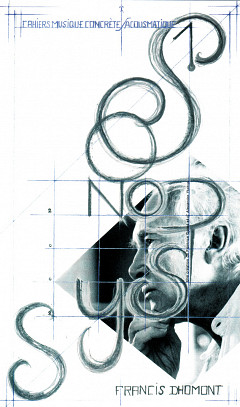
    The publisher Licences (Paris, France) has just released the first issue of Sonopsys, Cahiers musique concrète / acousmatique, which focuses on the work and life of Francis Dhomont. The superb — and bilingual (French, English) — large format art book created by lorence Gonot et Alexandre Yterce is available in three versions with 1, 2 or 3 CDs of unreleased works.

    Podweek in Kathodik

    “Recensione”, Vittorio Marozzi, Kathodik, January 17, 2003
    Friday, January 17, 2003 Press

    Ben ottanta minuti occorrono per fare una panoramica sulla musica del venticinquenne canadese Frédérick Blouin che con questo disco raccolta ripropone episodi salienti del suo percorso artistico dal 1995 al 2001 e un vastissimo campionario di suoni e attitudini. Non ci sono canoni definiti nelle composizioni di Blouin, solo una gran quantità di informazioni, codici, punteggiature, frammenti elettronici e innesti melodici messi insieme con spiccato senso del ludico in un andamento metroritmico martellante e alquanto irregolare. Le fughe visionarie della musica del progetto Mµ-Ziq di Mike Paradinas e la cerebralità della scuola elettronica di Colonia spiccano come influenze primarie, anche se gli episodi più squisitamente ‘intelligent dance’ sono di chiaro stampo Warp, la miscela che ne deriva è una elettrostimolazione neuronale che cattura fin dal primo ascolto. Da prendere anche come breviario su ciò che di importante è andato avanti nell’elettronica degli ultimi 10 anni, senza però perdere di vista l’estro e la personalità del canadese nell’assemblare umori. Un disco a dir poco intrigante e la No Type, ex net label da poco uscita allo scoperto, ci fa un figurone.

    Parr(A)cousmatique in Bad Alchemy

    “Kritik”, Rigobert Dittmann, Bad Alchemy, January 17, 2003
    Friday, January 17, 2003 Press

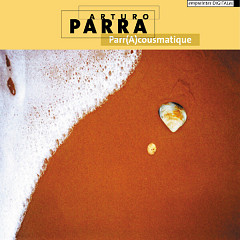
    Seit 1989 lebt der 1958 in Bogotá geborene Gitarrist und Komponist Arturo Parra in Kanada. Parr(A)cousmatique (IMED 0264) ist ein Kollaborationsprojekt speziell für Arbeiten mit Gitarre und Tonband. Die Tapezuspielungen stammen von Stéphane Roy (La basilique fantôme), Mauricio Bejarano (D’or et de lumière), Francis Dhomont (Sol y sombra… L’espace des spectres) und Robert Normandeau (L’envers du temps). Parra übermalt die bruitistisch-programmatischen Folien mit starkem spanischen Akzent zu Stimmungsbildern, in denen sich Archaik und Hypermoderne durchdringen. Parras selbstbewusste, virtuos-avancierte Handschrift versteht es, sich auch in konfliktreicher und geräuschvoller Umklammerung zu behaupten, als subversives, flinkes Graffiti, als phantasievolles Ornament, als stoische Patina, als überlegener Lichtschimmer. Der Gipfel an Intensität wird erreicht zusammen mit Gilles Gobeil bei der schroffen Klangwüste Soledad. Aber gerade wenn man sich mit der Gitarre im Tal des Todes verscharren lassen will, öffnet Normandeau die Schleusen der Zeit und die Sekunden peitschen die Haut wie gemahlenes Glas, während Parra die Saiten rührt wie Urvater Chronos persönlich.

    Rhizomes in Bad Alchemy

    “Kritik”, Rigobert Dittmann, Bad Alchemy, January 17, 2003
    Friday, January 17, 2003 Press

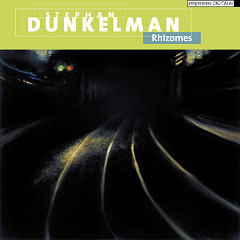
    Der 1956 geborene Belgier Stephan Dunkelman hat bei Annette Vande Gorne studiert. Obwohl er seine Arbeiten gern auch kontextualisiert mit Kunstausstellungen, Modeschauen oder Tanztheater, geht von den auf Rhizomes (IMED 0263) versammelten Werken Signallures (1991), Rituellipses (1993-96), Aquaéra 1 (1996), Hanna’ Duet (1998), Metharcana (1998), Thru, Above and Between (1998) und Dreamlike Shudder in an Airstream Part 1: for a crumpled woman (2000) eher etwas Intimes, Hermetisches und Verträumt-Vergeistigtes aus. Subtile Klänge schweben und tanzen zwischen Bewegung und Stille, Raum und Zeit, Essenz und Existenz, Realität und Irrealität. “Listening is vertical” ist nur vordergründig ein klares Statement in Dunkelmans fremdwortreicher Selbstvermarktung, die aber ganz dem rabulistischen Tenor der Kunstkopffraktion unter den Bruitisten entspricht. Das stereophone Rollin’ & Tumblin’ seiner morpho-dynamischen Wischer, Zuckungen und rumpelnden Vibrationen folgt bestechend präzisen Choreographien, die ihnen konfrontale Antagonismen oder zentrifugales Gehusche als ‘Schritt’-Wirbel diktieren.

  • 53
  • 54
  • 55
  • 56
  • 57
  • 58
  • 59
  • 60
  • 61