electrocd

Blog

272 results
  • 20
  • 21
  • 22
  • 23
  • 24
  • 25
  • 26
  • 27
  • 28
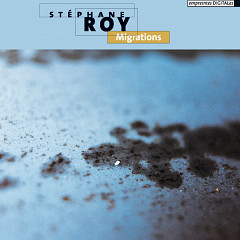
  • Migrations in The WholeNote

    “Review”, Darren Copeland, The WholeNote, no. 9:7, April 1, 2004
    Thursday, April 1, 2004 Press

    There is always a tricky balance between being open to external influence and maintaining an independent voice. Stéphane Roy shows that he does not have to sacrifice his originality in order to draw from new influences. The range of mustical sources emerging through his richly sifted electroacoustic textures vary, from bagpipes to Chinese music to Latin electronic grooves to circus music. This opens up the language of his work from what he has composed in the past. Rhythms and harmonies that were not there in his previous works have now come into the fold. Yet there are still those defining qualities — the wistful tones, the kaleidoscope of unfolding colours, the jagged changes, the overarching story and poetic sensibility — that have distinguished his music over the years.

    Stéphane Roy is like a documentary maker who is not measured by the volume of his/her coverage over a specific subject (in the way that Roy portrays the multi-cultural mosaic of Montréal in Appartenances), but rather by the ability to chisel out the essence of something by zeroing in on the essential few bits. As Roy visits the diverse cultural musics on the streets of Montréal he does not include everything, but he does meld the essence of his subject with his lyrical sensibility, to create a very personalized portrait of life in a community that he is discovering anew. In the years to come, this CD will be vintage Roy.

    In the years to come, this CD will be vintage Roy.

    Lumière dans la nuit in The WholeNote

    “Review”, Alison Melville, The WholeNote, no. 9:7, April 1, 2004
    Thursday, April 1, 2004 Press

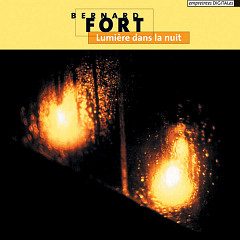
    Another in empreintes DIGITALes’s series of excellent electroacoustic CDs, this disc features three “essential” works by France’s Bernard Fort. The composer’s self-described modus operandi is “to fix time on media, then to penetrate it through slow motion, to experiment with duration, [and] to explore the depth of acoustic images.” The results of his work recorded here, written between 1992 and 2002, are striking and provocative.

    The program opens with L’impatience des limites, an electroacoustic reflection on the nature of time. It’s rather like a sonic answer to some Zen koan which asks, “what is the sound of life passing by?” — in fact all three pieces are Fort’s responses to this question — and its breadth and spaciousness is mesmerizing. La paix de l’entendre, for which the composer manipulated a recording made in a small boat as it sat for hours in the middle of an enormous lake, provides a different sort of aural meditation. Given the many ornithological contributions throughout the piece, it is perhaps worth mentioning that its premiere, most appropriately, took place in the Salle Olivier Messiaen in Paris. For the third work, Silence radieux, Fort’s original material was recorded on a winter’s walk and on the same route taken- in summer. Perhaps the most ethereal work on the disc, it explores an abstract sound world just underneath the surface of a “real” one; and again the results are philosophically provocative.

    While some readers might not consider this to be “music” as it is more strictly defined, Fort’s works are his own unique explorations of the “music of life”, and provide many terraced moments of wonderment.

    … the results are philosophically provocative.
  • 20
  • 21
  • 22
  • 23
  • 24
  • 25
  • 26
  • 27
  • 28