electrocd

Blog

272 results
  • 25
  • 26
  • 27
  • 28
  • 29
  • 30
  • 31
  • 32
  • 33
  • Rumors of War in Autres directions

    “Critique”, Stéphane, Autres directions, March 15, 2004
    Monday, March 15, 2004 Press

    Metaxu est un duo italien formé de Filippo Paolini (aka økapi) et de Maurizio Martusciello (aka martux_m) dont le deuxième album, Rumors of War, a été conçu autour du thème de la guerre, associant à chaque morceau un lieu et une date. Sur cette idée, le duo a mis en scène des témoignages électroacoustiques faisant intervenir différents éléments informatifs et identifiables (sirènes, mitraillettes, trains, hélicoptères etc.) qui peuplent leurs compositions comme des fantômes égarés, y insufflant la vie de leur existence funeste. Travaillant autour de samples, de bandes, ou encore de cds, Metaxu crée des sortes de ralentis cinématographiques extrêmement poignants qui intriguent dès 28061914 Sarajevo, événement-clef s’il en est. Sur une boucle (d’orgue) et des nappes électroniques, des voix sont triturées, déchirées. Les cors et les batteries éparses, militaires, de 01041939 Alicant foudroient. 06091945 Hiroshima est un morceau bizarrement discret, mais 07121941 Pearl Harbour est une composition qui, s’ouvrant sur des bruits de vent, use d’envolées de cordes inquiétantes, avant que le vent ne ressurgisse, portant dans sa complainte des amas de voix, cris et bruits industriels… 08031917 St. Petersburg fait intervenir des chants d’églises russes, ceux que Matthew Elliott apprécie tant, ceux qui déchirent le cœur: des choeurs de voix qui se soulèvent, dignes et solennels, s’alignant sur des hululements électroniques. On ressort de ce disque un peu traumatisé, un peu sceptique… On regarde cette liste de dates et on pense à tout le sang qui a coulé en occident au 20ème siècle. Rumors of War implique une prise de conscience difficile et un malaise certain.

    Sings the Blues in Delusion of Adequacy

    “Review”, Rick, Delusion of Adequacy, March 15, 2004
    Monday, March 15, 2004 Press

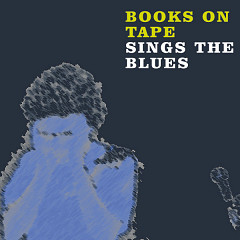
    Perhaps the most startling realization I had while listening to Books on Tape’s Sings the Blues is this: for a record that falls firmly in line with the glitch/IDM genre, there’s nary a laptop to be found on the album. Instead, Books on Tape’s sole member, one Todd Drootin by name, crafts his electronic music with an impressive array of guitars, pedals, samplers, and synthesizers. While this may seem to some an old-fashioned and time-consuming way to produce music that’d be much more easily concocted with computers, the care and diligence Drootin uses to craft his signature sound shines through on every track, taking what might have been a conventional exercise in glitchy abstraction and making it into something fun, captivating, catchy, and, most importantly, booty-shaking.

    The record kicks off with the warm, low-key stereo-panned guitar plucking of Laptop Blues, a track that immediately brings to mind Anticon collective member Why?, and his recent work on both the Early Whitney EP and his stellar full-length, Oaklandazulasylum. The track is incredibly short and immediately segues into the more trip-hop-oriented Republic Of, whose nice beat is accentuated by a melodic, pitch-shifting hum that sounds nothing so much like an old Macintosh laser printer on sedatives. The track also features brief, quiet stabs of funk guitar that add to the atmosphere and serve as a nice counterpoint to the steady thump-tick-rattle of the drum work.

    The next two tracks, See You In Tokyo and She’s Dead To Me, respectively, up the quotient of dark-sounding 80s synths, sounding not unlike something you’d hear in a dance club (although instrumental). See You In Tokyo features a bopping keyboard bass line that uses the majority of the chromatic minor scale to give the track a film-noir feel. It sounds creepy, but the overall effect is more fun than frightening. She’s Dead To Me is immediately more aggressive, featuring a frenetic keyboard riff that soon evolves into glitchy drums and a spastic bass line that flips between going a million beats per minute to sudden minor key repetition as the drums drop out.

    Pointe du pied is fun and relaxed, sounding almost like an outtake from Felix Da Housecat’s utterly ridiculous (and ridiculously fun) Kittenz and the Glitz. The synthesizer chirps on a major key melody while layers of alternately skittery and crunchy beats drop in and out. Girls Up Front plays with your mind a bit, featuring a sound sample that cuts in and out just enough to drive you nuts before the music starts in earnest, layering funky breakbeats over the sample before dropping it nearly entirely for a darker synth line. Death In the Sex Shop starts out quietly enough before delving into a fragmented nightmare of minor key techno beats featuring a wacked out sax solo. Siberian Soundsystem is probably the most conventionally “catchy” track on the album. Drootin plays it mostly straight here, laying down some funky beats and a low-end melody that screams “PLEASE DANCE!

    There are so many good things on this album to recommend that I could literally go on for hours. I bet this thing’s a freakin’ amazing trip on headphones, and I can’t wait for a chance to listen to it on mine. With the majority of IDM music coming out these days seeming either too light and fluffy (most of the Morr Music roster, although I love their stuff) or too academic and dark (Amon Tobin, some of Anticon’s stuff), it’s good to know that there’re electronic artists out there who don’t take themselves so seriously and know how to have fun. Maybe if a few more artists in this genre “sung the blues,” the world of IDM might be a better place.


    There are so many good things on this album to recommend that I could literally go on for hours.

    Sings the Blues in Surreal Sound

    “Critique”, DEA, Surreal Sound, March 15, 2004
    Monday, March 15, 2004 Press

    Vous venez de détruire le boss qui vous attendait à la fin de l’un de ces bons vieux shoot’em up sur une de ces consoles 8 bits d’il y a deux générations, et vous voici au tableau des hi-scores!

    C’est l’une des ambiances que l’on peut retrouver sur cet excellent album qui mele rythmes rapides, lignes synthétiques électroïdes à outrance et instruments terroristes comme en usent Venetian Snares, Kid 606 ou Aphex Twin. Le tout est agrémenté de breaks downtempo qui pourraient être attribués à un groupe hip-hop d’une foire ténébreuse issue d’un film de série Z…

    Cette première réalisation 100% Todd Drootin restitue parait-il l’émotion et l’essence de ses shows que l’on dit fameux! D’ores et déjà je peux vous garantir qu’en live ça doit être vraiment fort! Vivement que cet artiste — étoile montante de la scène électronique de Los Angeles — vienne faire résonner son son dans nos contrées!

    En résumé: très varié, cet album «blues» qui est plein d’énergie contient des sons évoquant les séquences d’intro de la demoscene Amiga, de nombreux samples vocaux ou autres et des beats, tantôt proches de la frénésie, tantôt proches d’ambiances glauques mais non moins kitsches… Le tout est dépourvu de «blues» et sonne fait maison! Et en un mot: incontournable!

    En résumé: très varié, cet album «blues» qui est plein d’énergie… Le tout est dépourvu de «blues» et sonne fait maison! Et en un mot: incontournable!

    Fractures in AllMusic

    “Review”, François Couture, AllMusic, March 10, 2004
    Wednesday, March 10, 2004 Press

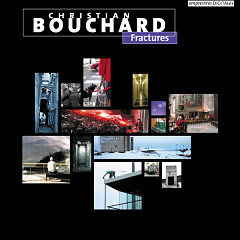
    Christian Bouchard’s first full-length solo album as a composer of electroacoustic music is a very convincing debut. Younger than the average age of empreintes DIGITALes’ roster (he joins the label at 35), Bouchard seems to approach the genre from the experimental electronica angle rather than the more traditionally academic angle of musique concrète/sound synthesis; i.e., Bouchard’s music is more concerned with the electrical-sounding sounds (beeps, clicks, hums) at the heart of the works of composers like Carl Michael von Hausswolff, Leif Elggren, or Ryoji Ikeda than the plastic sound-modeling of Francis Dhomont or Jonty Harrison. And so Fractures is not about large gestures of sonic matter, but about cut-ups, interference, and flurries of data. Angle mort is the only piece of long duration. Its title (“Blind Spot”) and a dedication to a “bike-riding friend” announce a reflection on road accidents, but the piece, although emotionally charged, goes beyond the anecdote. But Bouchard’s main strength resides in the miniature. The three other pieces on this disc are all suites of short movements (nothing over four minutes), dynamically segued. Trois miniatures en suite, the oldest work on this set, is a bit stiffer than the other pieces and hardly breaks away from its “work assignment” nature. On the other hand, the two “Parcelles” suites (a total of 12 segments) offer fascinating sonic kaleidoscopes. Bouchard juxtaposes different points of view, different landscapes, different camera angles, so to speak. He is not telling a story, but only encouraging the listener to establish links between segments based on their sole proximity to each other. The hyperactivity of some movements (fast cut-ups, shifts between field recordings of crowded places and pure electronics) is disconcerting at first and makes for a demanding but very entertaining listen.

    … a demanding but very entertaining listen.

    Rumors of War in Neural

    “Recensione”, Aurelio Cianciotta, Neural, March 9, 2004
    Tuesday, March 9, 2004 Press

    A tre anni dal loro esordio tornano i Metaxu di Maurizio Martusciello e Filippo Paolini, con una nuova prova elegantemente in bilico fra elettronica e limpida elettroacustica, dedicata ad alcuni tra gli ultimi e più significati episodi bellici (ammesso che in qualche modo ci siano mai guerre più significative di altre). Dodici le incisioni, ognuna delle quali contrassegnata da un luogo geografico preciso (Sarajevo, Belgrado, Saigon, le Falkland e New York, ma la metropoli nordamericana non è certo luogo di guerra, come spesso altri vogliono farci credere). Il risultato è comunque di tutto rilievo, la produzione risulta sensibilissima, con un taglio introspettivo, che ci fa riflettere, su come eventi così tragici, in primo luogo producano effetti che sono soprattutto di natura intima (e solo tangenzialmente politica). Martusciello e Paolini (che assieme a Massimo Pupillo portano parallelamente avanti un altro progetto) già in passato hanno dato prova della loro maestria, il primo forte di un background da musicista contemporaneo specializzato in percussioni, il secondo in qualità di dj e sperimentatore interessato all’improvvisazione. Le scansioni adoperate oscillano fra parti liriche e suoni più secchi, tesi, micro-emergenze click, che si assommano quasi a soffocare i pensieri (drammaticamente incombenti ma ancora vitali). Un disco che consigliamo, per rigore ed estrema densità dei suoni: questo duo italiano, saprà farsi valere, anche su palcoscenici internazionali.

    Bleak 1999 in Somamag

    “Tonträger”, Von Falk, Somamag, March 9, 2004
    Tuesday, March 9, 2004 Press

    Tomas Jirku hier mal anders, als man ihn beispielsweise von seinen Releases auf Force Inc. oder Intr_version kennt. Auf seinem 5. Album, welches, wie der Titel schon nahelegt, Material aus 1999 beinhaltet, zeigt er sich von seiner dunklen Seite. Minimale Beats gehen einher mit diversen Radio-Samples, weissem Rauschen und düsteren, schwermütigen Melodielinien, welche dem Ganzen eine beklemmende, trostlose Atmosphäre verleihen. Die Tracks tragen die Bezeichnungen diverser Medikamente — Clindamycin, Cefuroxime, Haloperidol, Lorazepam, Tranylcypromine, … und wie ein Gemisch aus all diesen klingt das Ganze dann auch — ein musikalischer Medikamentencocktail sozusagen. Zu Risiken und Nebenwirkungen…

  • 25
  • 26
  • 27
  • 28
  • 29
  • 30
  • 31
  • 32
  • 33