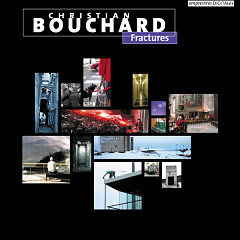
eD: Bouchard Released; Smalley Remastered
Monday, February 9, 2004 New releases

This is a casual listening path, an invitation to travel — not a guided tour per se, more of an itinerary, akin to Romantic-era travel literature. So this will be a listening itinerary, an invitation to discover a highly subjective selection of electroacoustic composers from a specific corner of the world. Our destination
France reigns over European electroacoustic music like a despotic queen. The persisting influence of
So let’s start our journey in one of France’s neighbors, Belgium. The country owes much of its electroacoustic activity to
A jump across the Northern Sea and we set foot on English ground. Birmingham has become an important creative node in electroacoustic music, thanks to the work of composer
Scandinavian electroacoustic music is still too largely ignored on our side of the Atlantic, but empreintes DIGITALes’ catalog allows us to make a short stop to round up our peregrinations.
The last album that I heard that worked the same way as Books on Tape’s new one,
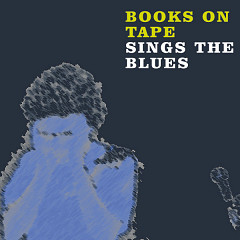
Books on Tape, the moniker of Los Angeles artist
Credit
The latter half of the album returns to the darker side of Books on Tape’s sound. The careening
Jean-François Denis est un pilier important de la communauté électroacoustique montréalaise. On discute avec lui des séries de concerts MusMix (2) et Rien à voir (15), présentées ce mois-ci par l’organisme Réseaux.
Il ne se passe pas grand-chose du côté de la scène électroacoustique montréalaise sans que Jean-François Denis y soit pour quelque chose. Directeur de la maison de disques empreintes DIGITALes, seule étiquette québécoise qui ne fasse paraître que des disques de musique électroacoustique, il dirige aussi DIFFUSION i MéDIA, la porte d’entrée chez nous d’un bon nombre d’étiquettes étrangères du même genre. Le disque
MusMix
Back in the day, I saw a group called Disc play live. Their members — including a young unknown going by the handle Kid606 — took a pocket knife to their CD pile and incorporated their scratched-up play into a mix of power electronics. Using methods that are almost passé by today’s standards, Disc floored me with blasts of The Spice Girls skipping at random over low frequency white noise and digital fuckery. It was dumb, goofy fun, surrounded by loose, highbrow concepts and gifted with enchanting results — pop culture, damaged and regurgitated into something new, exciting and, dare I say it, entertaining.
The duo’s actual approach is unknown, but a record like
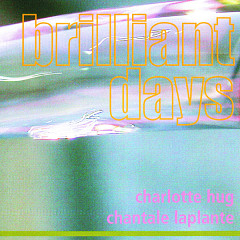
Three tracks recorded in Glasgow, two in Bamberg, Germany by Swiss viola player Charlotte Hug and Canadian laptop musician Chantale Laplante. Sounds from the laptop are diffused in ways that effectively reconfigure both the performance and the space of listening. Hug’s additional use of electronics heightens the sense of a reverberant multidirectional music. She uses radically unorthodox bowing techniques on her viola, yet in this decentred live electroacoustic context each frictional rasp and shrill glide of the bow are assertions of the viola’s identity in defiance of the featureless swell and boom projected from the computer and the nameless sounds Laplante inserts around the sonic field.
It’s tempting to conceptualise the viola as an originary place, a sound source with a history and a well-defined culture and to cast the laptop as a space of reception and transmission, sounds passing through but never belonging or conferring an identity. That distinction is undoubtedly problematic. Certainly the impact of the laptop in improvised music is considerable, its implication far-reaching, posing all sorts of new challenges for acoustic instrumentalists.

![Jean-François Denis [Photo: Brad Ardley (SOCAN), Toronto (Ontario, Canada), September 17, 2025]](https://res.electrocd.com/image.php/image/d/denis_je_15346.jpg?width=n2&cropratio=1:1)