electrocd

Blog

244 results
  • 19
  • 20
  • 21
  • 22
  • 23
  • 24
  • 25
  • 26
  • 27
  • A_dontigny, Louis Dufort, Chantal Dumas, Steve Heimbecker, Mathieu Lévesque, Francisco López, Hélène Prévost in All About Jazz

    “Festival international de musique actuelle de Victoriaville: Day 3”, John Kelman, All About Jazz, May 21, 2007
    Monday, May 21, 2007 Press

    With a festival as inherently risk-taking as the Festival international de musique actuelle de Victoriaville (FIMAV), it’s a given that some shows will work better than others. There may also be failed experiments, but it’s to the festival’s credit that it doesn’t rely on the tried-and-true. Invariably, even the less-successful performances are, at the very least, worth checking out.

    Day three of the 24th edition of FIMAV was all about operating without a safety net — and, as usual, within a wide array of musical contexts — with some of this year’s most and least successful shows yet. […]

    Victoriaville matière sonore

    Contrasting with Signal Quintet’s performance, Victoriaville matière was a strong idea on paper that didn’t always succeed in the implementation. The premise was good: construct a forum for a number of composers/sound artists to create individual pieces based on field recordings made around the Victoriaville area. Have the process overseen by renowned experimental blender of natural and industrial sounds, Francisco López, and link the pieces together into a single work with a broader overriding arc. In addition to López, Aimé Dontigny, Louis Dufort, Chantal Dumas, Steve Heimbecker, Mathieu Lévesque, Hélène Prévost and Thomas Phillips all contributed to the 90-minute show.

    Similar to the Theresa Transistor performance on Day Two, but in the larger Colisée venue, the artists were placed in the center of the hall, surrounded on all sides by the audience and with a sound system facing in around the periphery of the hall. With the equipment setup on a riser with minimal blue lighting, there was little for the audience to watch, encouraging it, instead, to simply absorb the sounds without visuals and to find meanings on a more personal and imagination-driven level.

    The eight pieces were linked by a nature recording of birds, used to allow one artist to leave the center stage so that the next could take his/her place. Other than FIMAV CEO and Artistic Director Michel Levasseur’s usual spoken introduction to the show, there was no applause between pieces, nor was there any announcement of order of events, so it was impossible to know whose pieces belonged to whom.

    Intriguing sounds were many and diverse, ranging from the natural to the artificial, and there was considerable processing applied. Like Theresa, equal importance was given to where individual sounds appeared and to how they traveled around the aural landscape. The problem was that, to a large extent, the approaches used were obvious and often overly dramatic. Lacking the nuance of Signal Quintet (and, because these were solitary pieces, the interaction of the earlier performance), the overall levels were high, the sounds often overly dense and the collages often too busy for the listener to sense any sort of unified statement.

    Sometimes it’s good to make the audience come to the music rather than the other way around, and a better balance of dynamics and more discernable narrative for each piece would have made the entire show more successful. Still, credit is due for an imaginative experiment that, some shortfalls notwithstanding, was well worth pursuing.

    Intriguing sounds were many and diverse, ranging from the natural to the artificial, and there was considerable processing applied.

    petits Big Bangs in Solénoïde Radio

    “Mirages acoustiques”, Solénoïde Radio, no. MA8, May 21, 2007
    Monday, May 21, 2007 Press

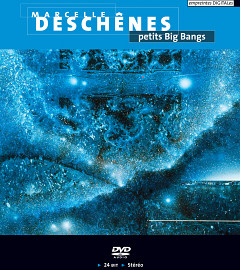
    Au travers de six plages éblouissantes, le label montréalais nous propose un survol attractif de l’œuvre de cette compositrice méconnue. Une sélection qui, de 1976 à 2002, nous emmène dans un univers expansif, vif et lumineux à l’intérieur duquel notre imaginaire se laisse avantageusement abuser.

    … un univers expansif, vif et lumineux…

    Rêve de l’aube in Vital

    “Review”, Frans de Waard, Vital, no. 577, May 21, 2007
    Monday, May 21, 2007 Press

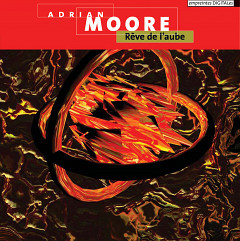
    In the world of composers like Adrian Moore things do not evolve around making CDs, but on playing concerts, preferable on multi-speaker systems for a seated audience (with an arty facial hair, thick glasses, sipping wine. I’m joking here, right?). So it’s been a while since we reviewed Traces, his previous CD by him — see Vital Weekly 298 — and Rêve de l’aube has pieces from the years 2000-04. Moore deals with electroacoustic music: from the power tools in Power Tools (not software, but let’s say real hardware such as a lawn mower) to field recordings of water, children, Venetian gondolas, horses and the piano — how lovely it is when these things are described on the cover. All of the sounds are fed through a wondrous mirage of electronics and bounces back and forth, up and down. Like music on empreintes DIGITALes usually does. It clearly defined style of music, which to my, perhaps perhaps, not enough trained ears, sounds like working through a formula. On one end you feed the sounds in and due to some trademark apparatus the music as we hear comes out at the end. Having said that, I think that Adrian Moore produces some nice music, especially the closing piece Sea of Singularity is quite moving: horses, ducks, the subway and in In Paradisum (the separate parts have titles) and perhaps the religious texture of that is what appealed to me. Not a spectacular disc, but certainly one of the better ones from the label.

    … certainly one of the better ones from the label.

    Trilogie d’ondes in Modisti

    “Review”, Modisti, May 20, 2007
    Sunday, May 20, 2007 Press

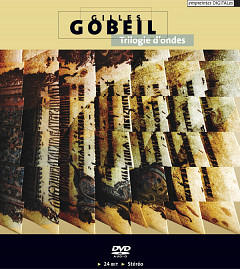
    Apparently starting off from a work for instrument-and-tape format, these pieces broaden the concept in several directions: the instrument featured is an early electronic one (ondes Martenot) and the electronic backcloth features a three-dimensional, spatialized character rendering the interaction between both far more complex. The compositions feature a sophisticated mixture of concerns ranging from concrete sources, sophisticated electronic textures exploring the legacy of acoustic sound masses of contemporary ascendancy and an original musical gesture, managing to orchestrate complex sound in a coherent whole.

    … original musical gesture, managing to orchestrate complex sound in a coherent whole.

    Heimbecker is Going Aerial

    Thursday, May 17, 2007 General

    Steve Heimbecker is one of the contributors of the book edited by Monika Bakke entitled Going aerial. Air, art architecture. The book is published by the Jan van Eyck Academie (The Netherlands).

  • 19
  • 20
  • 21
  • 22
  • 23
  • 24
  • 25
  • 26
  • 27