electrocd

Blog

257 results
  • 35
  • 36
  • 37
  • 38
  • 39
  • 40
  • 41
  • 42
  • 43
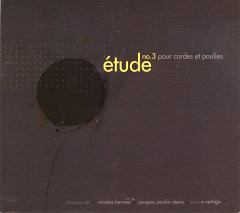
  • Étude no 3 pour cordes et poulies in Surgery Radio

    “Interview”, Eric Hill, Surgery Radio, January 9, 2008
    Wednesday, January 9, 2008 Press

    The worlds of electroacoustic composition and dance are not ones that most people would expect to overlap… what circumstances bring them together here? Why do you think they fit?

    For us, electroacoustic music is as relevant to dance as instrumental music, if not more. Music is music. Electroacoustic music can offer a lot of space, where instrumental music can be more independant and stand alone. This quality, the aptness for ambience, is appealing for choreographers who are looking to encompass their visual work with a supportive soundscape. The fundamental link that unites music and dance is movement. Music is movement. Dance and Electroacoustic music are the composition of gestures that exist in time and space and become meaningful when being shown and heard. Thus, the wonderful union.

    Unlike many electroacoustic works these pieces have definite melodic and harmonic elements that move things along besides the acousmatic sound elements… is this more indicative of how the music is being used as an accompaniment to movement, or is it a primary aesthetic choice in itself?

    The use of tonic sounds (notes) is definitely intentional, almost even a STATEMENT. Electroacoustic music went through a period of total rupture with music from the past, but we don’t believe in this detachment. Our music is the result of many influences including instrumental melody and harmony. The other reason why you will find tonic sounds in our music is that we use a lot of musical instruments as source material in our music. Electroacoustic music is about timbre and sonority, but for us the most beautiful timbres are often those of instruments that were made to be musical. All other found sounds, only widen timbral possibilities and add a level of allusion.

    Outside of the academic world it usually is associated with the general public often has difficulty grasping the concepts at play in electroacoustic music… do you believe there is a strength/purity in this distance from “pop culture” or is it too self-enclosed?

    This is a BIG question that points to many things. We don’t really identify with genres, but believe they are important. Even if it’s not obvious in the music, these labels have a heavy influence on music. The Academics do research that always influence at a certain point in time pop music, just like pop music has always influenced “academic music”. We only have to think of the loop now dominant in pop music, but discovered in a radio research studio. Personally we are very influenced by pop music. It’s difficult not to be!

    Do we believe in distance from pop culture? We believe in the quality of arts and research. That which aspires to bring music-creation further than pop music does. We believe in the purity of elctroacoustic music, close to being the only type of music solely based on LISTENING and not on performance. You have to be a REAL music fan to listen to this type of music because the concept of performance is kept irrelevant. We don’t believe in the confinement of Electroacoustic music. If we want to understand the world that surrounds us, we have to be able to dialogue with others who constitute it. Academicians would gain by attending more pop music concerts, and that pop culture (also secluded in its own world, even if the mass is larger) should experience more research-based art. Wouldn’t that be wonderful!?!?

    The Ekumen collective supports creativity across different art forms, primarily in digital media… do you think it’s possible for creative groups to flourish exclusively online or is an extension into the real world also necessary? What are difficulties you’ve faced when exposing your works to a greater audience?

    It’s possible for a collective to flourish solely through the internet… but how awfully boring! The reason behind Ekumen is to show that we are not just artists trapped in front of their machines. We also collaborate amongst ourselves, amongst humans.

    Again, for a better world, human communication, physical communication is essential. Our work only begins to make sense when exposed in the REAL life, meeting REAL people, and not when we meander through the web.
    For us, electroacoustic music is as relevant to dance as instrumental music, if not more.

    Mâts in Sound of Music

    “Review”, Thomas Millroth, Sound of Music, January 1, 2008
    Tuesday, January 1, 2008 Press

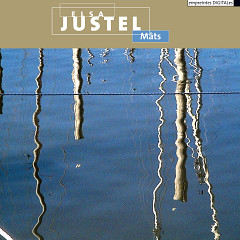
    Kompositören Elsa Justel är född 1944 i Argentina, men verkar i Frankrike. Majoriteten av verken på CD:n är bandverk. Hennes attack är häftig, men framförallt är de ofta relativt korta styckena skimrande och skiftande. De är som ytor där hon lagt ner största mödan på de minsta bitarna. Varje detalj är genomarbetad, genomlyssnad och väl formulerad. Så fogas de samman till olika karaktärsstycken. Ljuden är lätta att föreställa sig i deras rika skiftningar som ekon av bilder. Och mycket riktigt läser jag på konvolutet, att hon också genomfört flera audiovisuella projekt. Dem blir jag nyfiken på. Flödet, rytmen, förändringarna, rörelsen kan påminna om videokonsten med alla sina oväntade språng, där ändå formerna hänger samman.

    Styckena är tydligt komponerade, de har visserligen lätthet, men sällan en livekänsla. Allt är noga övervägt, avvägt. Planerat. Men här och där skjuter hon klanger, ljud som skaver och flyttar kompositionen litet ur spåret. Jag tänker mest på Midi de sable som är skriven för blockflöjt, kontrabas, bassetthorn och bandkomposition. De övertonsrika akustiska instrumenten rör sig som i en annan värld mot bandets abstrakta klanger. Effekten blir förbluffande, ett slags kamp mellan attraktion och motstånd kring ett ständigt glapp.

    Voz in Circuit

    “Critique”, Réjean Beaucage, Circuit, no. 18:1, January 1, 2008
    Tuesday, January 1, 2008 Press

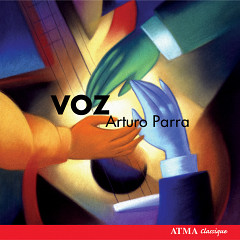
    Le nom du guitariste colombien Arturo Parra est associé à l’univers de la musique mixte depuis son installation au Québec en 1989 (le disque Parr(A)cousmatique, paru chez empreintes DIGITALes en 2002 contient cinq pièces composées en collaboration avec des électroacousticiens, dont plusieurs peuvent aussi être trouvées sur diverses compilations). Sur Voz, c’est bien la guitare acoustique qui est au premier plan, mais comme l’indique le titre du disque, le compositeur-interprète utilise aussi sa voix, et le résultat est souvent très proche, dans son esprit autant que dans son résultat sonore, de ce que peut offrir la musique électroacoustique. Certaines des techniques de jeu développées par le guitariste donnent vraiment l’impression d’entendre des manipulations électroniques (la fin de la pièce Vers la lumière (L’hirondelle) est à cet égard étonnante). L’utilisation de la voix ajoute aussi à cette impression, l’instrumentiste colorant son jeu de chuintements, claquements et de toutes sortes d’autres façons, sans jamais prononcer un mot. Parra indique par ailleurs dans le livret deux moments, dans l’enregistrement, où, «alors que l’instrumentiste n’a pas fait vibrer ses cordes vocales, on croit entendre sa voix.» Il impute cette illusion acoustique à une variété d’algohallucinose, ce phénomène par lequel le corps croit ressentir la présence d’un membre amputé.

    Le disque se compose de quatre pièces en trois mouvements, le total desquelles forme un vaste «poème sonore» de 63 minutes dont le livret expose le «chemin» narratif. Arturo Parra y note aussi son intention de fabriquer un «cinéma pour l’oreille», une expression qu’il emprunte aussi au monde de la musique électroacoustique, mais qui s’applique en effet parfaitement à son style. La prise de son et le mixage final de la guitare et des expressions vocales du compositeur ont été réalisés avec soin (par Chris Leon) et le résultat ouvre de nouvelles voies d’exploration en musique pour la guitare.

    Voz
    … le résultat ouvre de nouvelles voies d’exploration en musique pour la guitare.

    Geisteswissen­schaften in Skug

    “Kritik”, Hans Kulisch, Skug, no. 73, January 1, 2008
    Tuesday, January 1, 2008 Press

    Die erste Solo-CD des Komponisten A_dontigny verweist direkt auf elektroakustische Musik, Audio-Kunst und das weite Feld Electronica. Kurza sarkastische Vignetten, nitch ohne Charme mit einem Haufen von Querverweisen zur Kunstgeschichte une Philosophie. Drei Mitstreiter hat A_dontigny hier: Paul Dolden, Diane Labrosse und Jon Vaughn. Reife Leistung und ein echt tolles Hörerlebnis.

    Mature achievement and a genuinly mad hearing experience.
  • 35
  • 36
  • 37
  • 38
  • 39
  • 40
  • 41
  • 42
  • 43