electrocd

Blog

107 results
  • 2
  • 3
  • 4
  • 5
  • 6
  • 7
  • 8
  • 9
  • 10
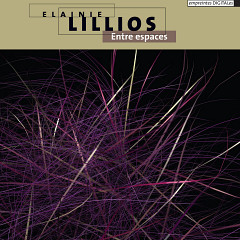
  • Entre espaces in Musique Machine

    “Review”, Josh Landry, Musique Machine, August 23, 2013
    Friday, August 23, 2013 Press

    Elainie Lillios is a new music / deep listening composer whose full length Entre espaces collects a number of her previously completed works ranging from 5 to 15 minutes length. The tracks could be described as close-mic texture studies that interweave electronic elements and digital manipulation with high fidelity recordings of nature and every day elements of civilization.

    Aside from the occasional decisive thunderclap or slamming steel door, Lillios’ music is a blanket of white quietude huddled around a single wriggling / writhing element, a texture of remarkable crispness, sybillance and spacial precision, presented with origins obscured. As with many field recording artists, through the sparsitude of her compositions Lillios encourages us to pay attention to the microcosmic details. We are intended to read meanings into the rustling, scratching, and scraping, and indeed, with the infinitely complex timbres of nature, there is always more information to process upon repeated listening.

    The album opens with Dreams in the Desert, one of the greatest tracks on the album with beautiful ambient transparency. It begins with a strengthening trickle of water, fed through some kind of divine vocoder that enriches the sound with translucent murmers of synthesizer chords. I could listen to this one sound for hours. The middle third of the 11 minute track is occupied by brittle crackling leaves, and sharp ‘whoosh’ sounds like tiny blow darts being shot. In the final third there is a welcome and cleansingly human wash of deep synth drone which rapidly draws us back into the industrialized world. In the warping and windblown sound of the synthesizer I see clouds rapidly passing in fast forward.

    Arturo, another epic, changes tone considerably with the addition of male spoken vocals, presumably by “Arturo” on account of his accent. It’s an extended existential monologue containing such repeated phrases as “There is no such thing as a self-fulfilling prophecy.” The lyrics seem to be discussing the tarot and prophesies of death, an obscure subject with little emotional connotation for me. Arturo’s voice continues to dart between and behind cold quivering echo chamber effects for the 14 minute duration. There is some deliciously chaotic abrasive manipulation in the middle of the track, but this track still feels very long, and without the overt beauty of the previous one.

    Hastening Toward the Half Moon is full of whispers and rapid, ragged breathing, and when a darkly glimmering string tone enters, pitched drastically down into a primordial undercurrent, I’m reminded of the weathered, isolationist mysticism of Lustmord and Lull. The breathing later fragments into a swarm of abrasive slices, and shadows of remote howls cascade through the soupy fog across the hilltops.

    With the 3 concise parts of Backroads, the album becomes more easily listenable and engaging again. Torrential rain sounds recurr in each movement, as well as the screeching and skidding of cars lucky to have nearly missed a wreck. Undoubtedly, this is the most curious 10 minutes of the album, from the strangely ominous sounds of children playing in Tree Tunnel (as if a group of children had discovered something dangerous), to the sudden and welcome break into beat-driven electronica in the second half of Elevator.

    The final Listening Beyond… is organic and wet in texture. There are drips and streams of pristine and pure mallet percussion, electronically arpeggiated in neon bright clarity. Lillios’ whispers cluster first into a nebula, then later are separated, chopped, and granulated. “If you listen deeply, can you hear infinity?,” she speaks. Simple words, but the point is felt in the quietude.

    Many tracks are quite long (10+ minutes) and sparse, and the album is over 70 minutes, just near the maximum capacity for a CD. To listen and focus to the entire album is certainly challenging, and I’m sure if I saw these pieces live I would leave the auditorium with a similar feeling of uneasiness. However, I think this is absolutely intentional, as ‘new music’ is not made for simple entertainment or to conform to anyone’s expectations, but to attempt to express something that has thus far eluded all previous expression, as well as examine the human attention span and listening apparatus. It is a context that allows every gestural sound and its placement to be taken with utmost symbolic seriousness.

    I highly recommend Entre espaces to anyone with patience, a quiet listening environment, and an ear for detail. As far as deep listening recordings go, you can’t do much better than this. There is a world of textural oddness to explore.
    … you can’t do much better than this. There is a world of textural oddness to explore.

    And the Winners of the 6th Destellos Competition Are…

    Friday, July 26, 2013 General

    The Foundation Destellos announced today the results of the 6th edition of its electroacoustic composition competition: the first prize was awarded to Daniel Judkovski for his work El exilio infinito. Three ex æquo second prizes have been awarded to works by Jonty Harrison, John Nichols III, and Sophie Delafontaine. The first prize of the mixed music category was awarded to Timothy Roy for his work Wunderkind; the second prizes was awarded to João Pedro Oliveira for his work Vox sum vitæ.

    Topographies in Liability Webzine

    “Chronique”, Fabien, Liability Webzine, July 23, 2013
    Tuesday, July 23, 2013 Press

    Martin Bédard est un type normal. Enfin, il ressemble à monsieur tout le monde. Rien ne le différencie des autres à cette nuance près qu’il fait de la musique. Mais pas n’importe quelle musique, celle que n’importe qui peut faire. Martin Bédard est électro-acousmaticien, terme un peu barbare, j’en conviens, qui désigne ces créateurs de musique acousmatique et/ou électroacoustique. Une musique qui, en générale, ne s’adresse pas au plus grand monde mais pour des gens qui possèdent déjà des éléments de compréhension. Ces compositeurs s’apparentent souvent comme des chercheurs ou, du moins, ils ont une démarche qui s’y rapproche. Tout cela n’a rien de rock ’n’ roll mais les personnes comme Martin Bédard n’ont jamais prétendu l’être. Enfin, comme tout «scientifique» ce n’est que tardivement qu’il sort son premier album. Certes, il a déjà composé et publié auparavant mais Topographies constitue, alors qu’il a la quarantaine passée, sa première réalisation solo. Nous venant tout droit de Montréal, Martin Bédard a été un élève de Robert Normandeau et le moins que l’on puisse dire c’est que cela se ressent. Topographies est un recueil de compositions réalisées entre 2005 et 2012. Malgré des contextes biens différents il existe une réelle cohérence entre les morceaux qui sont des exemples frappant de la variété de ce que peut offrir la musique électroacoustique dans sa nature abstraite mais hautement libre. Pour autant, Topographies reste dans une certaine norme, ne dépasse pas un certain académisme même si ce disque possède de réelles qualités créatrices, de rythmes ou de mouvements. C’est sans doute le mal récurent à beaucoup de genres musicaux qui existent depuis trop longtemps. La capacité de renouvellement n’est pas en rapport avec ce qui est produit et c’est ce qui est fort dommage parfois. On en est conscient lorsque l’on écoute Topographies même si on admet aisément que Martin Bédard est manifestement parmi les plus doués du genre. Le Canadien construit ce qu’il appelle des «lieux transfigurés», des endroits où le réel s’évapore pour laisser la place à une autre réalité, forcément abstraite, faisant fonctionner notre imaginaire à plein régime. En cela Topographies ne peut pas être un disque décevant parce qu’il remplit pleinement son office sans qu’on y trouve à y redire.

    Martin Bédard est manifestement parmi les plus doués du genre.

    Formes audibles in Power-R kábelek

    “Egy különleges CD-ről nem mindenkinek”, Rudolf Radnai, Power-R kábelek, July 18, 2013
    Thursday, July 18, 2013 Press

    Jópár hete — írtam is erről a topikban — összeismerkedtem a Budapest Jazz Klub “hangmesterével” ennek köszönhetően két tápkábelem szolgál azóta is a keverőpultban, még nem jártak 500 órát, de szólnak így is rendesen. Balázs egy fiatal, baromi rendes tag, csak egy baj van vele imádja a elektronikus imrovizációs zenéket. Ez önmagában még nem lenne nagy probléma, de engem is megfertőzött kicsit, vagy inkább úgy mondanám, kinyitott előttem egy ajtót erre a zenei műfajra. Legutóbb, mikor találkoztam vele lelkesen beszélt egy empreintes DIGITALes.com nevű kanadai kiadóról és főleg a kiadó új lemezéről, Manuella Blackburn Formes audibles című CDjéről.

    Ma megkaptam és belehallgattam… szóval erős idegek és nagyon nyitott izlés kell hozzá, ezért is írtam a címben, hogy nem merem mindenkinek ajánlani. Viszont nagyon szól a lemez, mondhatnám azt is, döbbenetes a hangja.

    A fiatal, Manchesterben élő zeneszerző nőnek ez az első lemeze, pedig komoly neve van az elektro-akusztikus zene világában, nemzetközi fesztiválok nagydíjainak egész sorát nyerte meg. A lemezről csak annyit mondanék, hogy minden szám egy önálló témát jár körbe, a második szám (Switched on) például készülékek kapcsolóinak hangjából komponált zeneszám. Érdekes, sajátos világot tár elénk ez a lemez, számítógépektől és mobiltelefonoktól hangos világunkban mintha tükröt tartana elénk a művész, így éltek, ezt hallgatjátok!

    … ezt hallgatjátok!
  • 2
  • 3
  • 4
  • 5
  • 6
  • 7
  • 8
  • 9
  • 10