electrocd

Blog

113 results
  • 4
  • 5
  • 6
  • 7
  • 8
  • 9
  • 10
  • 11
  • 12
  • Growl in A Closer Listen

    “Review”, Richard Allen, A Closer Listen, July 21, 2015
    Tuesday, July 21, 2015 Press

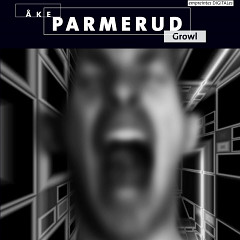
    What do birdsong, vinyl crackle, techno beats and heavy metal growls have in common? They all appear on Åke Parmerud’s latest collection. This seemingly disparate set of subjects unites to form a surprisingly coherent whole. The Gothenburg artist has defied the odds, still going strong at the end of his fourth decade in electroacoustic music. His natural curiosity (“I wonder what would happen if I did this?”) and playfulness (“Get me some growlers!”) combine to form a joyful experience.

    Take for example Electric Birds, the bird composition that once upon a time, Parmerud swore he would never make. Birdsong is one of the most overused tropes in music (especially in ambient – enough already!), yet here the artist still manages to do something new. By isolating specific New Zealand species that sound like electronic instruments, he creates a piece that defies the ears. As he points out in the liner notes, the bass bird is tiny, but really sounds like a bass! While it may be possible that these birds have been dropping in on raves and imitating their sounds, it’s highly unlikely. When Parmerud starts adding electronic touches of his own, the shift is barely perceptible.

    Now to another overused sound: the vinyl crackle. Ever since records first went out of style, nostalgia has produced a strange fascination with static, ironic because many of us are old enough to remember when crackle was a nuisance; we might even return a record and ask for a cleaner copy. A further irony is that the intrusive sound is now used as an inclusive sound, which itself is recorded to a different format. Parmerud’s “ultimate crackle” was initially designed for a 43-channel installation, and we are more than a little jealous of those who were able to hear it as intended; but the recorded version is still a beauty. Beginning (as might be expected) with the sound of a needle entering a groove, Grooves delves into multiple samples derived from countless home recordings, eventually overlapping them to a point that stops short of cacophony but is nonetheless effective. Of course this begs the question, “Can we get this on a record?” I for one would like to stagger these and play a few at once.

    Now to the piece from which the album derives its title: Growl!. The artist sent his youngest son in search of some growlers (in the States, that would denote large jugs filled with beer) to help record a heavy metal composition. This is a lovely image in itself: “Son, fetch your dad some growlers from the corner market.” And wow, are these guys going to need some lozenges. “Hell is us; die we must!” they intone, among other unintelligible words. It’s a powerful piece, bristling with energy and pride; as the vocalists are all from Gothenburg, one can imagine this as a friendly competition that sounds (on the surface) anything but friendly. Raaaaaaaawrrr!

    La vie mécanique includes only the sounds of various machines; it’s a factory gone wild, the type of music that by design is purely industrial. The first sound is that of winding, followed by ticks, rustles, whirs, and finally beats. Visually, one recalls Björk’s In the Musicals, from Dancer in the Dark, but musically, the track has more in common with modern techno, albeit with an early industrial base. A line can then be drawn to the album’s closer, similarly rhythmic although stemming from different sources, including an earlier choral piece and even parts of Grooves. It’s as if the composer decided to invite all of his friends to dine under the same tent, their subsequent conversation revealing their commonalities.

    Growl is a fascinating disc, experimental yet accessible, a wealth of experiences collected in a single binding. At 62, most artists are running on empty; Parmerud still has a full tank.

    Growl is a fascinating disc, experimental yet accessible…

    Fenêtres intérieures in The Sound Projector

    “Review”, Stuart Marshall, The Sound Projector, July 19, 2015
    Sunday, July 19, 2015 Press

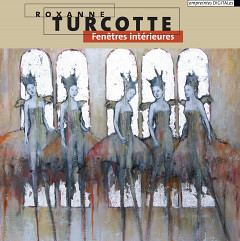
    Canada’s Roxanne Turcotte is more terrestrial in remit, turning eye to the turmoil of a human-ravaged planet (the Fukushima disaster among our many accomplishments), reflecting on our mortality and experience of time and taking a political stand in a piece written for Amnesty International — Tout en rouge — sourced from recordings from a 2012 demonstration an subjected to the usual laboratory procedures. If Elizabeth Anderson seats her compositions in the imagination, then Turcotte’s — produced primarily for installation and radio — are from the heart. Given the number of her dedications to the departed — quite powerfully so.

    At the outset, Fenêtres intérieures opens the window on a naturalistic world of sound and ‘the passing of time seen from the inside’, revealing the numinous in the normal (birds, skates on ice, tires on tarmac) and the magnificent in the mundane [Which is, I suppose, what lies behind so much of this sort of music.], and to remind us perhaps of how much we habitually ignore as we amble about with our Sony headphones. Turcotte seems less concerned with occupying space than with drawing attention to its presence (or absence) via unassuming portraits of our environment (eg the garden aviary of De la fenêtre) that quietly mutate as they grow in stature, as if poised to shock us with a tap on the shoulder the moment we’re feeling safe.

    From an aesthetic point of view I’m less taken with the torrents of (French language) voices that occupy several pieces than I am those consisting of processed, non-human sound per se; particularly those involving musical instruments. OVI (Objet volant identifié) for instance — a pathological study of modified electric guitar (that takes me back to some of the more time-bending instrumental moments on Squarepusher’s mutant jazz Just a Souvenir) — offers welcome respite from the deliberately uneasy cut n’loop vocal antics of Alibi des voltigeurs, and Le piano d’Horowitz manages a similarly deranging feat while almost passing for untreated. At the same time, one finishes listening with the feeling that much has passed the radar undetected.

    At the outset, Fenêtres intérieures opens the window on a naturalistic world of sound and ‘the passing of time seen from the inside’…

    L’envol in The Sound Projector

    “Review”, Stuart Marshall, The Sound Projector, July 19, 2015
    Sunday, July 19, 2015 Press

    Empreintes DIGITALes expands its fold with two more softly-sung heroines of electroacoustic music and at this point one can easily pick a winner among any of the label’s releases, though pick two and you might find little drastic variation. If the label is a leader in its field, its scope is a narrow one: many are the glistening field recordings, processed Japanese musical instruments, hulled and spaghettified voices and avowed interests in humanistic sciences that have graced my humble ears since becoming acquainted [Legion also are the academic accomplishments and international awards held by the composers inhabiting this label.]. But then, why spoil a winning formula?

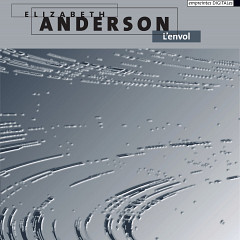
    While not dramatically at variance with those of her peers, the compositions of USA’s Elizabeth Anderson still sound strikingly fresh (to ears not recently acquainted with this music, admittedly) and there’s a comfortable cohesion to the sequencing of two decades’ worth of work (1994-2014): glass-showers pummelling powerful liquid flumes; radio feedback collaged and spewed; riots of industrial klang and proliferating strands of deranged monologue that lend a historical vintage to earlier pieces such as Mimoyecques (a meditation on imprisonment and death). With no piece shorter than eight minutes, these events course throughout like organic silicon life through a cosmic/atmospheric vastness, though there’s plenty of capacity to be startled by such as the abdominal explosions of Protopia/Tesseract, its lines of low profile flutes and bifurcating, rattling particles: variables that interact with a volatility expressive of the many conceptual oppositions (and harmonies) — principally the spiritual and celestial — that form the basis for much of Anderson’s work: the poetic tension of William Blake’s Tyger in Les forges de l’invisible; the companionship of visible and invisible universes in Solar Winds … and Beyond. Accordingly, her work displays all of the dynamic vigour found in the work of her peers, though it inhabits far remoter cosmic real estate.

    Accordingly, her work displays all of the dynamic vigour found in the work of her peers, though it inhabits far remoter cosmic real estate.

    James O’Callaghan in Sound Symposium Blog

    “James O’Callaghan and Objects-Interiors: (Re)presenting Space”, Ellen Ringler, Sound Symposium Blog, July 14, 2015
    Tuesday, July 14, 2015 Press

    On Tuesday July 12, 2016 at the LPSU theatre James O’Callaghan shared his [concert] entitled “Objects-Interiors: the piano as an acoustic Space” as a part of St John’s Sound Symposium. O’Callaghan’s work haunts the theatre and defers the traditional repertoire of (re)presentation. As described by the artist in the programme, “Objects-Interiors is the first in the series of extended-acousmatic pieces investigating the acoustic interior properties of musical instruments. This first piece for piano will scrutinize the piano as an acoustic space, and its possible metaphoric associations with ‘real spaces’. It will move from the ‘rational’ world of the piano-as-space to a surreal juxtaposition of outside and unexpected spaces integrated into the acoustic space of the piano.” O’Callaghan placed speakers inside the piano and weighted its pedals in order to allow the strings to resonate freely, and he employed the GRAIL (surround sound speaker array) in order to play his electroacoustic piece. While the audience listened carefully in the darkness, the artist executed his work from behind a laptop. It seems to me as though O’Callaghan employs his music as a series of deferrals, in order to emphasize the social implications of representation.

    All representation is misrepresentation in the world of the stage, in that as an audience we recognize and subsequently misrecognize what is presented to us. Because sound is representational the audience will consistently and constantly misrecognize what they are hearing and ultimately what it ‘means’. We will always experience misrepresentation because it is mediated by performance and we will always misrecognize representation because it is mediated by the composer. O’Callaghan’s work seems to invite us to think about (mis)representation and the space that it inhabits. By diffusing an electroacoustic piece of music through speakers inside the piano as well as through the sound system of the theatre (itself a kind of performance of his composition), he invites the audience, sitting in darkness, to defer representations of sounds.

    These representations are deferred through the visual of the piano, the sound emanating from the piano, and the sound surrounding the entirety of the theatre space itself. The speakers within the piano help to ‘colour’ the sound, but also invite the audience to ask who/what is represented as well as who/what is absent. When we hear the sound of a piano we may expect to see a musician physically playing the piano on stage – but we do not. Instead the sound emanating from the speakers ‘plays’ the piano by vibrating its strings. When we hear the sound of this piano and wonder about the potential pianist we may ask ourselves who this (absent) pianist could be. What do they look like? What is their skill level? What is their gender, race, cultural background, ability etc? The representation of or lack of representation of a pianist on stage allows us to question ad infinitum who we may expect to see at the St John’s eighteenth Sound Symposium. This deferral of representation invites the audience to develop avoid (mis)recognition and challenge expectations through sound metaphor.

    O’Callaghan’s Objects-Interiors is sonically haunting. Perhaps a part of this haunt is its evocation of the mystery of representation. I was left uneasy most likely because my expectations regarding who is represented in any given space were challenged. The deferral of meaning, the sonic bounce from space to space and place to place disavowed any common assumptions I may have about who and what is (re)presented and who or what is misrecognized at the St John’s Sound Symposium.

    … is sonically haunting.

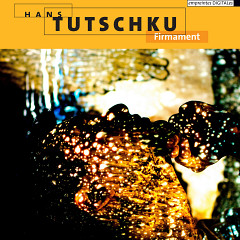
    Firmament in Adventures Through Audio

    “Radio Broken Dreams — Hans Tutschku”, Adventures Through Audio, July 5, 2015
    Sunday, July 5, 2015 Press

    Hans Tutschku began to study music at an early age. In 1982 he joined the Ensemble für Intuitive Musik Weimar, playing synthesizer and live electronics. He studied electroacoustic composition at the Hochschule für Musik in Dresden (Germany), and accompanied Karlheinz Stockhausen on several concert tours in 1989-91 for the purpose of studying sound diffusion. In 1989 he co-founded with Michael von Hintzenstern the Klang Projekte Weimar, a presenter of contemporary music, which presents an annual festival as well as a concert series. In 1991-92 he took part in the international year-long course at the Institute of Sonology (The Hague, The Netherlands). In 1994 he followed the annual composition and computer music course at Ircam (Paris, France). In 1995-96, he taught electroacoustic composition at the Franz Liszt Academy in Weimar (Germany) where he also set up the studio. In 1996, he attended the Royaumont Composition Workshop with Brian Ferneyhough and Klaus Huber (France). He taught at Ircam (Paris, France) from 1997 to 2001, and at the Conservatoire de Montbéliard (France) from 2001 to 2004. In May 2003 he completed a PhD in composition at the University of Birmingham (England, UK) with Jonty Harrison. Since September 2004 he has been working as professor of composition and director of the electroacoustic studios at Harvard University (Cambridge, MA, USA). With the Ensemble für Intuitive Musik Weimar he has realized several multimedia productions with projected images, choreography as well as the music that were presented in numerous concerts in Europe, Latin America and Asia.

    A universe of sound is surrounding us ‘from within.’ It’s composed of our dreams, fears and longings. It only exists within our body, our own imagination. We want to share it; but there are no words, no possible descriptions. We are sitting on a meadow on a warm night, alone, watching the stars. Nobody is disturbing our thoughts. Nobody is limiting our space. We don’t have to rush anywhere; we have time to let go and to follow these sounding creatures… It’s not a nightmare; it’s just the interplay of our imagination.

    Firmament — schlaflos [Firmament — sleepless] was realized in 2010 at Harvard University Studio for Electroacoustic Composition (HUSEAC) (Cambridge, MA, USA) and premiered on July 29, 2010 during the festival Inventionen in St Elisabeth-Kirche in Berlin (Germany). Thanks to Sarah Sun (recorded voice). The current stereo version was realized in January 2015 at the composer’s studio.

  • 4
  • 5
  • 6
  • 7
  • 8
  • 9
  • 10
  • 11
  • 12