Sauter au contenu principal
electrocd

Blogue

201 résultats
  • 9
  • 10
  • 11
  • 12
  • 13
  • 14
  • 15
  • 16
  • 17
  • Ligne de vie: récits électriques, Christian Calon dans AllMusic

    «Review», François Couture, AllMusic, 1 septembre 2001
    samedi 1 septembre 2001 Presse

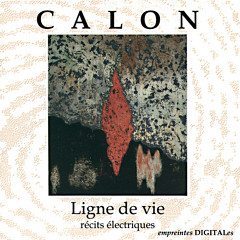
    The release of Ligne de vie: récits électriques marked two important events: the launch of the record label empreintes DIGITALes which would grow up to become a leader in electroacoustic music and establish Montréal as a Mecca in this field; but also the closing of an era for composer Christian Calon, who following this publication would leave Montréal to go back to Europe. This CD contains three long works created between 1985 and 1989. They illustrate the composer’s “first phase,” so to speak. Portrait d’un visiteur (“Portrait of a Visitor,” 17 minutes) takes the listener on an evanescent journey. Synthesized sounds paint an uncertain landscape with very poetic strokes. La disparition (“The Disappearance,” 21 minutes) follows a more determined structure of almost architectural proportions. Bits of classical and foreign folk music have been transformed and embedded in the sonic narrative that recalls Francis Dhomont’s storytelling talents. The latter’s influence is highly detectable in the 40-minute Minuit (“Midnight”), clearly the disc’s highlight. Three fragmented texts form the backbone of this hörspiel. There is no real story, but emotions and metaphors follow a progressing narrative, leading the listener through various stages of the night (the booklet provides an English translation of the French texts). This breathtaking piece points in the direction Calon will follow in the hörspiels from his Berlin period (1996 and on). Ligne de vie: récits électriques is highly recommendable to anyone interested in electroacoustics. Calon’s art is impregnated with a personal touch that makes it unique.

    Calon’s art is impregnated with a personal touch that makes it unique.

    Gilles Gobeil dans AllMusic

    «Portrait», François Couture, AllMusic, 1 septembre 2001
    samedi 1 septembre 2001 Presse

    Canadian electroacoustician Gilles Gobeil is one of the important composers associated with the Montréal label empreintes DIGITALes. His works show an obsession with machines and extreme sonic textures: delicate soundscapes blown to smithereens by the thunderous “bang!” of a door slamming shut. Not as prolific as labelmates Robert Normandeau and Yves Daoust, he has nonetheless a more personal style.

    Born in Sorel (Québec, Canada) in 1954, Gobeil studied music at the Université de Montréal where he earned an M.A. in composition in 1986. He was selected for residencies at the Groupe de musique électroacoustique de Bourges (France, 1991), the GRM (France, 1993), and the Banff Centre for Arts (Canada, 1993 and 1995). He has won prizes at many international competitions, including Ars Electronica and Bourges. In the late 1990s he co-founded Réseaux, a Montréal-based organization dedicated to promote electroacoustic music concerts. His first CD, La mécanique des ruptures, was released in 1994 by empreintes DIGITALes. The composer’s style was immediately recognizable: industrial sounds, ample gestures, violent contrasts. A second CD, … dans le silence de la nuit…, came out in 2001.

    His works show an obsession with machines and extreme sonic textures…

    Sonars, Robert Normandeau dans Amazon

    «Peerless Acousmatica», Steve Benner, Amazon, 21 août 2001
    mardi 21 août 2001 Presse

    Robert Normandeau is a leading figure in the French-Canadian acousmatic school of electroacoustic composition. This collection of his works offers an interesting survey of pieces for tape dating from 1985 to 1999.

    Éclats de voix (“Bursts of Voices,” 1991) was winner of 1st Prize for Jury as well as Public’s Prize at Noroit 91. The work is constructed entirely from computer-processed samples of the voice of an 11-year old — although this source is, in fact, hardly ever obvious. The exquisite sonorities (representing five childhood ‘states’) that Normandeau wrests from his source are entirely captivating (like nearly all of his work) and the piece is an absolute delight from start to finish. The disc’s opening work, Bédé (1990) is an electroacoustic miniature, of just 3 minutes duration, derived from the same source material but making an interesting contrast with Éclats de voix. The source sounds in Bédé are more discernible for what they are; the piece is also rather darker and gives a somewhat more disturbing view of childhood than that presented in the later work.

    The third work on the disc, Spleen (1993) continues the same theme. Awarded the Public’s Prize at Noroit 93, this piece is constructed entirely from processed vocal samples of the voices of four 16-year old adolescents. Its restless pulsing rhythms and sudden mood-swings portray only too well most people’s experience of that time of life and in a way that is impossible to draw away from! Fabulous stuff!

    Matrechka (1986) is a lengthy and highly abstracted work, featuring a complex sound-world (of largely undiscernible origin) which unfolds by degrees, each of its sections revealing another within it, like the nest of Russian dolls of its title. By contrast, Le cap de la tourmente (1985) is a dark and brooding 7-minute ‘movement’ from the much longer “Musique holographique,” which accompanied an exhibit of sculptures with holograms (holosculptures) by Georges Dyens. Its inclusion here feels like something of a filler, to my way of thinking, although it is well worth a listen.

    The closing work on the CD, Ellipse (1999), is constructed entirely from guitar sounds and was originally commissioned by Arturo Parra to form the tape part of a work for tape and guitar. Somewhere along the compositional path, however, Ellipse took a different direction and emerged as a solo tape piece, representing the composer’s half of the intended musical dialogue: as the ellipsis of the title, “omitting… elements of meaning,… allowing the interlocutor, the listener, to fill in the blanks.”

    Overall, this is a worthwhile collection of Normandeau’s music, although it presents nothing that isn’t available on other releases of his music. It is certainly worh having if you can’t locate copies of the empreintes DIGITALes releases.

    … a worthwhile collection of Normandeau’s music…

    Connexion, Évidence matérielle, Traces, Sources / scènes dans Aufabwegen

    «Musik & Kultur», Zipo, Aufabwegen, no 31, 20 août 2001
    lundi 20 août 2001 Presse

    Ein Quell der ungewöhnlichen Sounderlebnisse ist das kanadische Label empreintes DIGITALes, welches fernab reißerischer Methoden in fast wissenschaftlicher Akribie eine Serie mit elektroakustischer Musik von preisgekrönten Komponisten herausgibt. Alle vier CDs stammen von relativ jungen, in der Grauzone zwischen freier Improvisation und akademischer Komposition operierenden Künstlern. Die Klänge sind oft nach kompositorischen Gesichtspunkten einander einverlebt, bleiben aber wild und jederzeit überraschend. So kann man sich hier bedienen nach Herzenslust. Vielleicht etwas schnöde klingt Traces von Adrian Moore. Hier hört man zu oft die surrenden, schmachtenden Sauglaute eines Computers, der die reale Welt in sich aufnimmt und „Musik” herausspuckt. Clonky, aber eben auf ernste Weise; können auch Matthew Ostrowsti und andere. Grandios ist das Werk von Jonty Harrison, dem Leiter des elektroakustischen Instituts in Birmingham. Seine Sammlung von Stükken (fast alle um die 15 Minuten lang) verbindet befremdliche Geräusche mit Klängen derAußenwelt, ohne letztere als reine Projektionsfläche zu verwenden. Die Töne aus den verschiedenen Sphären interagieren und treten in eine Kommunikation. Stark! Die klanglichen Extreme in diesem Viererpack stammen von Denis Smalley. Er bricht mit den Konventionen der Akademika, wonach Töne zwar schräg und abstrakt ausstaffiert sein dürfen, aber bitteschön nicht stören sollen. Sein Werk scheut sich nicht vor häßlichen Momenten, harschen Brüchen und fast industriellem Lärm. Dabei bleibt alles dunkel wie das geheimnisvolle Cover der CD. Louis Dufort wirkt in seinen Stücken wie jemand, der die Regeln des Genres kennt und sie mit genauem Gehör exekutieren will, um hinter ihnen liegendes Potential zu erhellen. Die gelingt ihm am trefflichsten in der Komposition Zénith, die mit pochenden Tönen arbeitet, die sich gegen schrille aber auch flirrend-weichzeichnende Atmosphären behaupten müssen.

    Sondes dans Darklife

    «Review», Gianfri, Darklife, no 6, 8 août 2001
    mercredi 8 août 2001 Presse

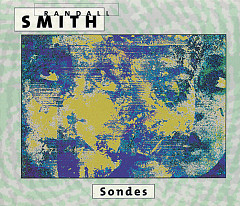
    Another contemporary hard-core avantgardist, Randall Smith hails from Canada and with Sondes gives us a good overview of what one can do by means of extensive tape manipulation and sound processing. The news, here, are that classic instruments such as cello, flute, accordion, double bass crop up in the works, not only dismembered to the bone, but also in bits of unprocessed recordings, although the latter are few and far between. You get a free-jazz kind of feeling of somebody fiddling with microscopic objects, while your CD player appears to be possessed by supernatural forces trying to get your attention. The 15-minute piece Continental Rift is perhaps the most intriguing by virtue of some cello passages of interest, gradually taken over by the sonic manipulation as the piece evolves. I could possibly appreciate this work more, would it be accompanied by some cinematic footage to help stim lating the emotions it aims to.

    … your CD player appears to be possessed by supernatural forces trying to get your attention.

    Connexion dans Darklife

    «Review», Gianfri, Darklife, no 6, 8 août 2001
    mercredi 8 août 2001 Presse

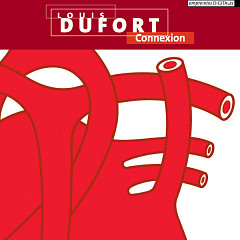
    More “academic” Canadian avant-garde comes by Louis Dufort, who has realised three quarters of Connexion between the conservatory and the faculty of music of the University of Montréal. The structure of this work is essentially an alternation of quite to silent moments and assorted noises of the cracking to hissing to percussive variety, with a couple more dramatic interludes of apocalyptic nature beginning to crop up halfway the third track Zénith. The last of the four tracks, Décap, incorporates, in addition to the aforementioned ingredients, some obsessive loops and industrial elements in a 24-minute long exhausting cavalcade.

  • 9
  • 10
  • 11
  • 12
  • 13
  • 14
  • 15
  • 16
  • 17