Sauter au contenu principal
electrocd

Blogue

201 résultats
  • 13
  • 14
  • 15
  • 16
  • 17
  • 18
  • 19
  • 20
  • 21
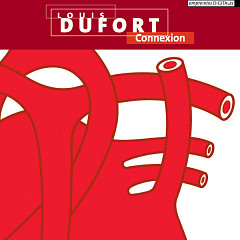
  • Connexion dans Jade

    «Chronique», Julien Jaffré, Jade, 1 août 2001
    mercredi 1 août 2001 Presse

    Louis Dufort, 31 ans, premier prix du Conservatoire de Montréal, compositeur de la compagnie de Marie Chouinard, est un brillant iconoclaste. Il aime ainsi à intégrer des éléments non-musicaux dans sa trame musicale: «Objets, corps, couleurs et anecdotes sonores donnent lieu à des jeux de perception dans lesquelles est immergé l’auditeur. Les matériaux sonores sont ainsi trafiqués pour en soutirer des profils musicaux où poésie et représentation narrative du son servent de balises à l’élaboration de l’œuvre». La limpidité de ses travaux offre un profond vertige soucieux d’allier tradition et modernité. Ses compositions électroacoustiques et atmosphériques sont empruntes d’angoisse, d’images pesantes et d’accalmies majestueusement fluides et dynamiques dans le même temps. Comme si Francisco López signé la BO de «la machine molle» sur Ant-Zen. Impressionnant.

    La limpidité de ses travaux offre un profond vertige soucieux d’allier tradition et modernité… Impressionnant.

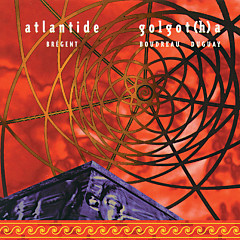
    Atlantide; Golgot(h)a dans Psyche Van Het Folk

    «Review», Gerald Van Waes, Psyche Van Het Folk, 1 août 2001
    mercredi 1 août 2001 Presse

    Duguay participated in 1985 in a radiophonic project called Golgot(h)a, a composition by Walter Boudreau. Let’s face Atlantide first. The texts used for those ideas are not at all noticeable in the music any more, but are completely transformed into the music. In this way they became dissolved by the musical concept. The overall atmosphere is one of a going back into a strange world, which starts from a chaotic but exotic structure, until it finds its peace in it.

    The ideas behind the project came forth from all collected readings from Edgar Cayce which referred to the pre-existence of Atlantis. These readings all warned us in a way not to be lead by power once more and not to fall in self-destructive one-mindedness thinking any more that can lead to a pseudocommunal system that give rise to so many selfdefensing mechanisms that the world itself can get into danger by it.

    The piece was dedicated to Charles Berlitz, author of books on Atlantis, and Jacques Boucher, and was commissioned by Société Radio-Canada. It received the special Jury Price in the Prix Italia in 1985.

    The second piece is based upon inspiration by the Golgotha “as the representation of the drama of a human being confronted with the ineluctable. This long tunnel, of total darkness is a terrible funaral march of a man condemned to a horrible ordeal: the crucifiction.” Unfortunatly this experience is done with many destructive tones and atmospheres, where the purity of the soul in the middle that might even have found its inner piece within its desperate situation has not been expressed or even thought over. In that way it is indeed the confrontation of a common human being in this situation, facing hell directly in all its possible reflections. But even then I can’t believe in such an approach, bringing in mind some Italian horror movies where even the sadest and scariest moments contained some beauty.

    OK. Let’s face this cruelty then. Destructive magical words (with amplified voice into horror), obtruded blasphemous trumpets spread their abuse to the unbearable. In my life I heard many contemporary compositions (Stockhausen, Xenakis, Ligeti…), difficult Free Jazz… but within what I heard this piece has too much destructive power in it. There’s no light in it. It truly is the total darkness. A destructive power towards the inner self. It’s not even a power that can cross that border or stand for itself on its own. This second piece received the Prix Paul Gibson in 1991 from the Communauté des Radios Publiques de Langue Française.

    empreintes DIGITALes dans Jade

    «Chronique», Julien Jaffré, Jade, 1 août 2001
    mercredi 1 août 2001 Presse

    empreintes DIGITALes est le fer de lance de la musique électroacoustique au sens où Metamkine pourrait la définir. Dirigé par Jean-François Denis, il est partagé avec SONARt qui lui distingue davantage les créations instrumentales de studio. Chez empreintes DIGITALes, le radicalisme esthétique est une constante, plaçant d’emblée les productions du label au rang d’objet d’art. Un soin apporté aux pochettes et aux disques, qui sonne comme un engagement quasi éthique, si ce n’est idéologique. Toute cette génération de curieux trouve à présent un réel épanouissement, mûrissement de quelques années de pratiques laborieuses, de doutes successifs, dans le jeu de la construction de leur univers respectif. On peut ajouter l’influence de l’école française concrète (Schaeffer) référence évidente et revendiquée, notamment par Jonty Harrison, même s’ils s’inscrivent en réaction à l’académisme, à l’hermétisme et à la doctrine de la technique. Ces auteurs ont le mérite de considérer l’époque pour elle-même et non à travers des mythologies douteuses ou fantasmées.

    Chez empreintes DIGITALes, le radicalisme esthétique est une constante, plaçant d’emblée les productions du label au rang d’objet d’art.

    Yves Daoust dans AllMusic

    «Portrait: Yves Daoust», François Couture, AllMusic, 1 août 2001
    mercredi 1 août 2001 Presse

    Born in 1946 in Longueuil, near Montréal (Canada), Yves Daoust started the piano at a young age. He began to produce sound tracks in his teens for amateur stage productions. At age 21 he was admitted at the Montréal Music Conservatory, in piano. Two years later he quit, turning to composition and studying with Gilles Tremblay. His discovery of musique concrète in the early 1970s made him realize that he had already done something similar. He learned the trades of film music and sound production with Maurice Blackburn and Norman McLaren at the National Film Board of Canada and spent two years at the GMEB in Bourges to complete his initiation to electroacoustics. Back in 1976 he worked a few years for the NFB.

    His first real tape music piece was completed in 1979, at which time he quit the Board to become one of Quebec’s most important composer and promoter of electroacoustic music. He co-founded the ACREQ (an association for electroacoustic research) in 1978, assuming the duties of president for ten years. He teaches electroacoustic composition at the Quebec Music and Drama Conservatory.

    Daoust’s music touches tape music, instrument and tape, live electroacoustics, and instrumental film music. His dreamy textures and sense of the narrative compensate for the rather classical plasticity of his sonic sculptures. His first tape composition, Quatuor, was awarded the Euphonie d’Or by the Bourges Festival in 1993. An influential teacher, Daoust left his mark on many younger Quebec composers such as Ned Bouhalassa and Daniel Leduc. His first album, Anecdotes, was released in 1991 on empreintes DIGITALes. A second, Musiques naïves, followed in 1998, and a third, Bruits, in 2001.

    His dreamy textures and sense of the narrative compensate for the rather classical plasticity of his sonic sculptures.

    Francis Dhomont dans AllMusic

    «Portrait: Francis Dhomont», François Couture, AllMusic, 1 août 2001
    mercredi 1 août 2001 Presse

    Born in France, electroacoustic composer Francis Dhomont spent the second half of his life between Paris and Montréal. Gifted with a sense of the narrative never matched, he is able to tell captivating tales through acousmatic art. The two parts of his “Cycle of Depths” the albums Sous le regard d’un soleil noir (1981) and Forêt profonde (1996) remain some of the most enduring examples of musique concrète, transcending the genre to touch the core of Mankind.

    Born in 1926 in Paris, Francis Dhomont came to musique concrète through classical music. He studied with Ginette Waldmeier, Charles Koechlin and Nadia Boulanger. Stumbling upon musique concrète at about the same time Pierre Schaeffer did, he abandoned musical composition around 1953 to create only electroacoustic music. Little is known of his works before 1972, as the composer repudiated them. Sous le regard d’un soleil noir introduced him to a relatively larger audience, the album becoming a classic of the genre and a source of inspiration for many sound artists. He created many acousmatic works playing on sound and meaning, but his best results were obtained through the use of dream-like narratives and “cinema for the ear.” His work in the 1990s grew even more evocative, culminating in the 60 minute piece Forêt profonde, a fantasy on fairy tales through the works of Bruno Bettelheim.

    Dhomont was also very active as a theorist. He edited several issues of magazines on electroacoustic music (L’Espace du Son, Circuit), created radio programs for Radio-Canada and Radio-France, taught electroacoustic composition at the Université de Montréal where he maintained a strong influence on younger composers, and co-founded the Canadian Electroacoustic Community. His work has been recognized internationally through numerous awards and prizes, including the Magisterium of the Bourges International Electroacoustic Music Competition in 1988. In February 2001 he received a Career Grant from the Conseil des arts et lettres du Québec, an incredible achievement for an avant-garde artist.

    Paul Dolden dans AllMusic

    «Portrait: Paul Dolden», François Couture, AllMusic, 1 août 2001
    mercredi 1 août 2001 Presse

    Canadian electroacoustic composer Paul Dolden managed to work from within the musique concrète institutions even though his art should have placed him at its very margin. Known mostly for what has been coined his “esthetics of excess,” he stirred the otherwise very calm waters of the genre with his works for tape in which he piles up hundreds of layers of acoustic instruments. His 2-CD set L’ivresse de la vitesse remains a classic of fin de siècle electroacoustics.

    Born in 1956 in Ottawa (Canada), Dolden studied in Vancouver, where he still resides. At first an electric guitarist, cellist and violinist, he toured across Canada and Europe. This hands-on experience with “real” instruments explains his decision to approach tape music without the use of acousmatics. The composer does not use the standard techniques to mold the sounds. He works instead by accumulation, mixing together up to 500 tracks of individually-recorded instruments, in order to obtain the textures he wants. The 1990 Tronia CD The Threshold of Deafening Silence presented his first results and sent an initial shockwave into the academic musique concrète community. L’ivresse de la vitesse (empreintes DIGITALes, 1994), a longer and more conceptualized album, consecrated him as a leading figure in sound art. He was invited to numerous festivals, had residencies at the Groupe de Musique Expérimentale de Bourges in France and the Electronic Music Studio in Sweden, and won an impressive number of awards since his first steps in 1981, including three first prizes at the Bourges International Electroacoustic Music Competition (in 1986, 1988 and 1990).

    Dolden collaborates regularly with artists of the Vancouver new music scene. He wrote for John Korsrud’s Hard Rubber Orchestra and helped François Houle for the tape part of his conceptual album Au cœur du litige.

    L’ivresse de la vitesse […] consecrated him as a leading figure in sound art.
  • 13
  • 14
  • 15
  • 16
  • 17
  • 18
  • 19
  • 20
  • 21