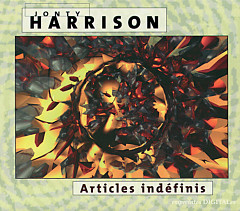
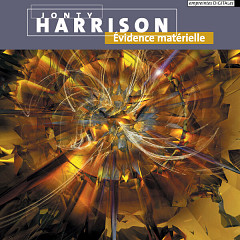
Évidence matérielle is Jonty Harrison’s second CD on empreintes DIGITALes; the preceding one – Articles indéfinis (1996) – being very successful, and this one providing enough material evidence to forecast another electroacoustic chart-jumper!
Klang (1992) is Harrison’s first entry. Some of the base material of the piece was recorded as early as 1981. This pertains particularly to two earthenware casseroles discovered in Denis Smalley’s kitchen… (Man, these guys go back a long time…)
Suddenly, as I’m writing, my mind makes an involuntary jerky cross-reference that is completely unexpected even unto myself, but I think it holds some kind of truth of an intuitive kind: As I’m contemplating the atmosphere around this Jonty Harrison issue, as well as the other two components of The British Connection -concept that just arrived, I feel a similarity with what was happening on the British pop scene in the middle of the 1960’s, when some really sophisticated groups came along, carving out a certain niche for themselves, in a kind of intellectual and artistic splendor, which struck some of us with awe at the time, as we were completely elated with joy at the power of that which rose out of the darnest corners of the mind of the British Isles.
Anyhow, the similarity would be that of a certain splendor, a certain timeless creativity of a loftier, nobler kind, a certain craftsmanship way above the average state of affairs, a flair of excellence – which in turn unfolds a tradition back to the bards and the sages of olden times, and beyond that, to Stonehenge, and beyond, beyond… The atmosphere is such… I believe Harrison, Moore and Smalley would have been poets at the court of the king, and that many a dear Lady would weep at their wordings and phrasings…
Klang (1992) emerges like a glass world of gentle, brittle touches, swirling about you like the mist of a fairy’s airy dance, visible only in very rare lightings, when you’re in a serene state of mind, in and out of vision; now you see it, now you don’t! I can hear the lid being banged shut a few times in Smalley’s kitchen of 1981, but mostly it’s this hovering, circling dance of the fairies, gentle, careful, sensitive – wonderful; like the sunlight reflecting off the long hair of a beautiful long-legged female soaring down a London street (and there are four kinds of Sunsilk Shampoo; one is for you!). I’ve heard a few glass musics, like for instance Denis Dufour’s Bocalises (1977) and Annea Lockwood’s The Glass World (1970) – but this outshines the predecessor by sheer beauty, sheer breezy lightheartedness! It’s spatial, swift, candid! Soaring! Soaring like that one extended, breathtaking many-colored 1965 harmonica exhalation in Donovan Leitch’s Ballad of a Crystal Man…
Sorties (1995) gained Harrison some well-deserved international recognition back in 1996, when the piece was awarded Prix de la Musique Electroacoustique á Programme at the 23d International Electroacoustic Competition in Bourges, France, and consequently released on the double CD of the 9th edition of the releases from the competition; Cultures électroniques 9. From the title of the prize one might deduce that this is programmatic music. It was originally composed for an installation/sound sculpture, which was a collaboration between BEAST (Birmingham ElectroAcoustic Sound Theatre) and graphic artist Lorne Christie. It has to do with fleeing, escaping, from an entrapping interior to an exterior, which in turn turns out to be just another entrapping interior and so forth… (…are birds free from the chains of the skyway…? [Bob Dylan: Ballad in Plain D]). This is more of a concrete piece with original street sounds, footsteps tripping off in the gangways between supermarkets or in the subway stations, children’s voices, trains arriving and leaving, commotion, motion, cars, streets, traffic, squealing breaks, humming generators, slamming doors… and then in a sudden silence; private, close sounds, a door opened or shut… and now the electroacoustic wizardry kicks in, with minute events amply illustrating the inward thoughts of the person in flight, huddling away from one state of mind to another, inside a cab? There are two levels at play here; the interior of the mind, and the exterior through which you have to carry your body through all this weighing gravity of celestial bodies… your body and the celestial bodies and your very existence put to the test in a Russian doll type of world, where one kind of anxiety opens up into another kind of anxiety, and where the final aim can only be to find the right panic… Midway Sorties allows for some weather, and then for the shores of great waters, and birds, flies, bumble bees, voices of children carried on the wind, a single engine propeller plane passing in peace above; an illusion of domiciliary rights – but are these just the lonely sounds of homeliness reaching the thirsty ears of a destitute old-timer (ruined teeth…) on a park bench…? The electronics gradually take on a more vicious guise, and there is probably no mercy at hand… The mixture, the blending of concrete sounds, purely electronic sounds and transiting sounds – is magnificent, almost nauseating! Jonty Harrison knows his craft! He never does more than is needed, in a delicate and most tenderly application of binary film. In an all-encompassing tape-music gesture he lets the summery breeze comb through the leafy crowns of the trees of July, and you sit beneath one of the trees, your back against the trunk, a bottle of mineral water in your hand and lucid thoughts of loss in your mind, as your gaze levels out and locks in a hypnosis of horizons, as the winds blow… (… oh the winds blew high, and the trees did sway; not much from life was I asking… [Donovan Leitch: Ballad of Geraldine])
Surface Tension (1996) utilizes garbage; all sorts of waste; containers etcetera — and tries to extract some significance… and wouldn’t you know it, it succeeds splendidly, as those empty milk cartons and other throw-aways from the garbage can take up position inside a work of high art, electroacoustically composed of decomposing material for the compost! I sort of see this maniac sticking his hands down into whatnot, his microphone protruding down cracks in the shit, collecting beautiful sonic waste products out of the smelly mess… Fantastic! Even here, inside the shit itself, Jonty Harrison manages a plastic, hollow, spatial feel of curves and angles and trajectories, as the genetic codes flare up and fall down like the soot of fire-crackers all around those little boxes, in the waste damp, little boxes made of ticitac, little boxes, little boxes, little boxes, all the same…
Splintering (1997) is dedicated to Jonty Harrison’s parents. With its almost 20 minutes’ duration it is the longest work on the CD. The source material turns out to be wood. In the introductive text Harrison alleges environmental remorse, but also recognizes the deep-forest archetype of our subconscious, with weeping princesses, fire-breathing dragons and wolves disguised as grandmothers… We all share those images, don’t we? While I’m at I may as well make known my theory on the origins of the trolls, the giants and all those secret, somewhat dangerous, risky beings of the forest and the mountains. I think – without much doubt, really – that all our conceptions in that direction, about trolls and giants, are humanity’s memories of our brother race, the Neanderthals, who roamed these vast expanses up to at least 38 000 years ago, and that is almost until yesterday, in the perspective of the emergence and development of Homo Sapiens and the Neanderthals. The last remnants of them – dated to be 38 000 years old — were found in a cave in Brittany, so for endless periods we lived side-by-side with this other human race… Incredible. Now it’s just us left… However, the Neanderthals were bigger than us, sturdier, and in the memories seeping down through the millennia they have taken on the guises of trolls and giants. Remarkable but probable! They still live in the fairy-tales and the age-old legends! Certainly there must have been crossbreeds, but they in turn were probably not reproductive, which is why no Neanderthal traces can be detected in our genetic code. Harrison’s wood piece – piece of wood! – rumbles, rolls… and splinters! The music is sometimes percussive, sometimes gently cracking, always woodying! It goes from sparse brancheries to dense groves, and the naturally occurring and healthy forest fires burn through the piece too… if it isn’t Man again, burning down the forest to make space for cultivation of the land… You can hear the smallest of insects whizzing by and the faintest of creatures rustle a leaf… The nocturnal silence puts a misty damper on events, and there is time for reflection inside the composition of sounds… nose-tip introspection… long-last leg-rest of forest trekkers…
The last piece on this tremendous Jonty Harrison release is Streams (1999). Harrison’s introduction is so well formulated that I’ll quote from it: “The image evoked most immediately is, of course, that of water – turbulent, troubled, restless, at the mercy of wind and terrain, flowing onward to the sea – itself turbulent and in constant motion. Evaporation, clouds and rainfall complete the cycle, which is always renewing, always moving… […] …Streams of data, of consciousness and, most importantly, of perception – the ability to link often disparate elements together and to understand, to ‘hear’, that they are part of one line, one ‘stream of thought’, distinct from other (possibly coexisting) parallel or contrapuntal streams.” That said, it’s not much for me to add, except a respectful bow to the mastery of Jonty Harrison, revealing itself in the masterpieces of electroacoustics herein presented. Good day, Sir! It has been a pleasure!
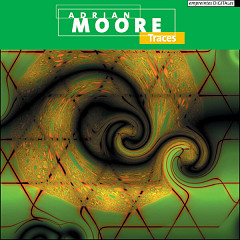
A note on the packaging: empreintes DIGITALes’ packaging has always been inventive, and very beautiful, with an original idea for getting the CD out of the cover, among other features. Lately – as is evident with Harrison’s CD, but applying also to the two other CDs arriving in the triptych The British Connection; Adrian Moore’s Traces and Denis Smalley’s Sources/scènes (and maybe all other new CDs from the label?) – the format has shrunk somewhat, making it perfectly square, with even sides, making the whole look of the deal very neat and compact. I hold nothing against that. Earlier releases provided a booklet with the information, but now you fold out a guarded (folded) inlay made of high quality hard paper, with all the info.