Sauter au contenu principal
electrocd

Blogue

201 résultats
  • 1
  • 2
  • 3
  • 4
  • 5
  • 6
  • 7
  • 8
  • 9
  • Évidence matérielle dans Vital

    «Review», Henry Schneider, Vital, no 298, 12 novembre 2001
    lundi 12 novembre 2001 Presse

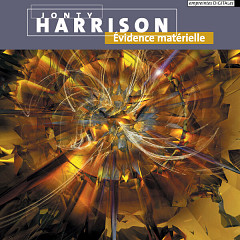
    Jonty Harrison is another British electroacoustic composer and his CD may be the most accessible of three recent DiM [empreintes DIGITALes] releases (Sources/scènes, Traces, and Évidence matérielle). This CD contains five compositions spanning the past ten years. The first piece, Klang, uses the sounds of two earthenware casseroles to which Jonty adds the ingredients of cow-bells, metal rods, and aluminum bars to prepare an eerie meal of reverberating tones. Sorties is about fleeing an interior space for an exterior one, only to find that you are mysteriously trapped in a much larger interior space, like being inside one of those Russian dolls. The sonic sources are recognizable (cars, trucks, trains, walking shoes, children at play) and only add to the dark and brooding atmosphere of the composition. Surface Tension is constructed literally from the dry brittle sounds of packing material (Styrofoam and cardboard) that, after processing, have a somewhat organic texture as the material is put under greater and greater stress. Shifting now to wood and its varied sounds as it is twisted, tapped, burned, and otherwise strained is the subject matter for Splintering. Clocking in at almost 20 minutes, it might be overlong. The final piece is Streams with the obvious water reference. Water can be so melodic and Jonty wrings out all of its nuances in Streams. If you are interested in cutting-edge electroacoustic music, check out the DiM [empreintes DIGITALes] label and, especially, Jonty Harrison.

    … cutting-edge electroacoustic music…

    Traces dans Vital

    «Review», Henry Schneider, Vital, no 298, 12 novembre 2001
    lundi 12 novembre 2001 Presse

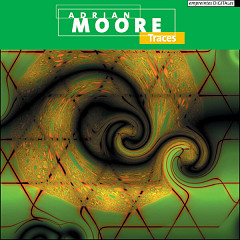
    The music on this CD falls into three categories: the abstract (Junky, Dreamarena), hearing natural sounds in a different context (Study in Ink, Foil-Counterfoil), and electronic manipulation of natural sounds (Sieve). Traces is difficult music. The abstract pieces present glimpses of other music and sound sources through a fog of electronic pops and gurgles. The pieces using sounds in new and different contexts can be quite frightening. The sonic textures are organic and evoke images of crunching bones and tearing flesh. Sieve is a total distortion of the source material leaving the listener lost in space without a point of reference. Traces is music for only the most adventuresome of listeners.

    Traces is music for only the most adventuresome of listeners.

    Things Collapse in on Themselves, V. V. dans Incursion Music Review

    «Review», Richard di Santo, Incursion Music Review, 11 novembre 2001
    dimanche 11 novembre 2001 Presse

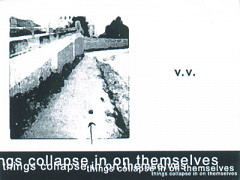
    V.V. is one Ven Voisey, who it seems also runs the Throat label, on which this disc was released earlier this year. Things collapse in on themselves features one track that is just under 18 minutes in length. It begins with the sounds of rain, escalating slowly in volume and intensity until a sudden shift takes place, as if closing the door on the rainfall, leaving only an uneven dripping of water along with random concrete sounds. A simple loop on acoustic guitar creates a slow and repetitive lull in the middle of the piece, accompanied by flashes of static and all manner strange sounds. The noise builds and builds, the guitar disappears, the hiss rises in intensity, the sounds become closer and louder, until the piece finally climaxes, coming full circle as it falls back into the rainfall from the opening sequence. V.V. has created an intense and dramatic piece here, and this short disc is quite enough pique my interest about what might be next for him. Recommended.

    V.V. has created an intense and dramatic piece…

    Bruits, Connexion, Yves Daoust dans Voir

    «Nouvelle vague», Réjean Beaucage, Voir, 8 novembre 2001
    jeudi 8 novembre 2001 Presse

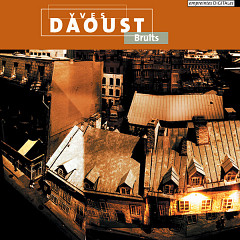
    Yves Daoust contribuait en 1978 à la fondation de l’Association pour la création et la recherche électroacoustiques du Québec (ACREQ). Il dirigera par la suite durant une dizaine d’années les destinées du premier organisme canadien voué exclusivement à ce genre. Aujourd’hui, il y revient à l’invitation du directeur artistique actuel, Alain Thibault, pour participer ce samedi 10 novembre à la troisième édition de l’événement Elektra. Daoust y présentera en création sa pièce Bruits, triptyque environnemental qui donne également son titre au troisième disque que le compositeur fait paraître chez empreintes DIGITALes et qui sera lancé juste avant le concert. La pièce, commande du Sonic Arts Network (Royaume-Uni), est une sorte de carte postale sonore des rues et ruelles de Montréal: cris d’enfants, bruits de la circulation et rumeurs citadines y sont littéralement passés au hachoir pour produire ce que le compositeur appelle un «smog sonore». C’est sans aucun doute l’œuvre la plus ‘bruitiste’ de Daoust jusqu’à maintenant. L’œuvre sera présentée à l’ACREQ dans une version pour huit canaux avec un support vidéographique de Jean-Sébastien Durocher.

    Le disque que Daoust s’apprête à lancer mérite certainement d’être chaudement recommandé à toute personne qui serait curieuse et chercherait à se renseigner sur la musique électroacoustique. Que le titre Bruits ne vous effraie pas. Les quatre pièces présentées ici représentent autant de sous-genres et Yves Daoust y démontre magistralement son grand talent de manipulateur sonore. On y retrouve une magnifique version de la pièce Impromptu, déjà entendue en format «pour bande seule» sur son précédent disque Musiques naïves, mais retravaillée ici en version «musique mixte» avec des interprètes de choix: Jacques Drouin au piano et Lorraine Vaillancourt… au synthétiseur! La pièce La Gamme est une musique électronique réalisée en 1981 sur les «machines à triturer les électrons» du Groupe de musique expérimentale de Bourges. Enfin, Ouverture, commande du GMEB pour le Bicentenaire de la Révolution française, mêle narration et illustration sonore, et rappelle par son thème Le Trésor de la langue de René Lussier. empreintes DIGITALes fera également paraître simultanément des disques de Robert Normandeau et Gilles Gobeil, deux autres piliers de la musique électroacoustique d’ici, disques sur lesquels nous reviendrons. Yves Daoust enseigne depuis 1981 au Conservatoire de musique et d’art dramatique du Québec, où il a développé un programme de composition électroacoustique.

    Preuve qu’il exerce dans ce domaine-là aussi un grand talent, c’est l’un de ses étudiants qui clôturera la soirée avec une pièce qu’il ramène d’Autriche où elle a obtenu une mention lors de la dernière édition des prestigieux Prix Ars Electronica. Louis Dufort nous présentera en effet Décap, une «réflexion sur la décadence de l’homme» en partie tirée de la musique composée pour la chorégraphie Le Cri du monde, de Marie Chouinard, et dont nous avons pu entendre une première version lors de la série de concerts Rien à voir (7) en mars 2000. Également au programme: Tom Sherman et Bernhard Loibner avec leur projet vidéo/musique Nerve Theory et le très attendu Markus Popp, alias Oval, détenteur d’une seconde place aux Prix Ars Electronica 2001.

    … chaudement recommandé…

    Yves Daoust, Louis Dufort dans La Presse

    «Après Mutek, le Média Lounge et le Montréal électronique groove [MEG], revoici Elektra… 2001», Alain Brunet, La Presse, 8 novembre 2001
    jeudi 8 novembre 2001 Presse

    À compter d’aujourd’hui et ce jusqu’au 17 novembre 2001, deux week-ends consécutifs de musiques électroniques, présentations multimédia et performances robotiques sont prévus à l’Usine C. Les œuvres de Markus Popp (Oval), Monty Cantsin, Yves Daoust, Jean Piché, Louis-Philippe Demers, Louis Dufort et Nerve Theory y sont attendues.

    «Nous avons loué la Cadillac des systèmes multimédia», annonce fièrement Alain Thibault, compositeur réputé et directeur artistique de l’Association pour la création et la recherche électroacoustiques du Québec (ACREQ).

    Pour la troisième année consécutive, donc, Elektra se propose «d’établir le lien entre les différentes cultures contemporaines issues de l’utilisation créatrice des nouvelles technologies.» Rappelons que, dans le cadre d’Elektra, l’ACREQ a déjà produit des œuvres importantes du répertoire international multimédia et électroacoustique; y ont été présentés des créateurs tels que Granular Synthesis, Ryoji Ikeda, Pierre Henry et Karlheinz Stockhausen.

    Alain Thibault n’a, d’ailleurs, aucun mal à situer Elektra 2001 parmi les autres manifestations électroniques du genre qui se tiennent à Montréal.

    «Ce que nous présentons dans bien des cas, soulève-t-il, ce sont des œuvres à grand déploiement comme les performances robotiques. Parce que nous disposons d’un lieu pour le faire, parce que nous savons quoi louer, parce que nous avons plus de connaissances au plan de l’équipement multimédia. Le système européen que nous comptons utiliser pour Elektra 2001 n’a rien à voir avec ce qu’on peut entendre dans d’autres festivals de même nature. Au dernier Media Lounge, par exemple, on n’a pu compter sur des installations aussi sophistiquées. Au niveau technique, personne ne nous bat, j’en suis certain.»

    La première série de concerts, donc, s’ouvre ce soir avec: SPIN de Jean Piché et FausTechnology de Purform. Ces pièces multimédias (musique électronique, animations et traitements d’images numériques) ont été conçues spécifiquement pour une projection sur trois écrans. On assistera, soutient-on du côté de l’ACREQ, à un tour de force technique qui consiste à créer une seule image panoramique avec les trois surfaces de projection (10,5’ x 42’).

    Demain, c’est le retour d’un animal de la performance, connu au cours des années 80 sous la bannière néoïste, animal réputé pour ses prises de sang en direct… On rappellera que Istvan Kantor, alias Monty Cantsin, avait repris contact avec le public montréalais en 1999 avec la performance Executive Machinery. Toujours obsédé par les objets de la bureautique, il revient cette année avec une nouvelle installation robotique, un groupe de performers torontois et son plus récent corpus vidéographique. Repossessing the Body-Machine, la nouvelle performance de l’artiste multidisciplinaire Istvan Kantor, sera ainsi présentée en première montréalaise.

    Samedi, le musicien allemand Markus Popp alias Oval présentera une performance «Powerbook live». Au sujet de Markus Popp, les producteurs d’Elektra affirment qu’il est probablement l’artiste européen le plus en vue de la scène electronica. La veille (demain, 18 h), Popp expliquera sa démarche artistique et son projet OvalProcess lors d’une présentation multimédia au Café de l’Usine C.

    Également au programme de samedi, Nerve Theory nous proposera une performance vidéo/sonore intégrant les images et la voix du new-yorkais Tom Sherman ainsi que la musique du viennois Bernhard Loibner. Toujours au même menu, les trois tableaux de Bruits du compositeur électroacoustique montréalais Yves Daoust. Cette musique, conçue spécifiquement pour huit canaux, sera diffusée pour la première fois avec un support vidéographique réalisé par Jean-Sébastien Durocher. Enfin, on aura droit à la première diffusion en salle de Décap de Louis Dufort, une pièce pour bande de 25 minutes qui a valu à son auteur l’obtention d’une mention, catégorie «Digital Musics», lors du dernier Prix Ars Electronica qui se tient à chaque année en Autriche.

    Présentée trois soirs consécutifs les 15, 16 et 17 novembre, la pièce de résistance de Elektra 2001 est la performance robotique de Louis-Philippe Demers. Grand déploiement, vous dites? Pas moins de 48 membres robotiques identiques seront accrochés à une impressionnante charpente métallique évoquant la forme d’une arène. Robots, musique électronique et projections vidéo, expérience visuelle et auditive en perspective.

    On notera en outre que la politique de prix peu élevés d’Elektra 2001 (15$ pour tous, 10$ pour les étudiants) favorise l’accessibilité du public aux arts électroniques. Notez que l’entrée est libre (gratis!) pour la soirée d’ouverture (aujourd’hui) et pour la conférence de Markus Popp-OVAL (demain).

    Clair de terre dans Sonoloco Record Reviews

    «Review», Ingvar Loco Nordin, Sonoloco Record Reviews, 1 novembre 2001
    jeudi 1 novembre 2001 Presse

    It’s with a certain nervous apprehension and an expectant joy that I listen to very new music, and any piece of art stamped 2001 has got to be considered within that framework. It’s NOW! music; telling tales about the present and the recent. Even if the subject matter should happen to be antique stuff, the way it is expressed is now, simply by its placement on that timeline. I’m very curious about things like these; new expressions of art; art providing one of the finest and most refined essences of human life, reflections on human life.

    Robert Normandeau’s name is mentioned with respect by connoisseurs of electroacoustic music. He is a founding member of the CEC (Canadian Electroacoustic Community), and he has a number of very good CDs to his credit, for which he has been amply praised and awarded.

    Malina (2000) (for Brigitte Haentjens) is the first track on this factory-fresh CD from empreintes DIGITALes. The piece is developed on the contents of a play, which in turn is based on the 1971 novel Malina by Ingeborg Bachmann (1926–1973) – an example of how the arts may spill over into each other’s domains in a fruitful way. The stage adaptation of the text is a poetic reading of it, which, says Normandeau, “makes use of the unsaid, silence, and atmosphere in a way that allows the music a place that it seldom enjoys in theatre.” Indeed the soaring beginning is a lone but husky shakuhachi, which immediately moves into a layer behind a sonic film of moist weather and soft caresses of oriental erotism, wherein blowing mouth-sounds whisk the rushing air around the corners of wet words, unspoken and silent, just hinted at by the bulging oral cavities which form soundless atmospheres of unheard echoes and immobile gestures towards the heart and the stars. The sometime choo-choo train sounds call up visions of Vietnamese rice fields, through which an elevated embankment with a rail runs, while on high the falcons circle, certain to spot their pray, remaining in these Normandeauisms in patient spirals of restful movements, eyes gleaming with the intense gaze of birds of prey. The squeaks of un-oiled carriages, dragged along mud roads by small people in large hats, rise out of Malina, and even if these associations were in no way intended by the composer, he has no power over them when the music has left his workshop. The associations stirred by his electroacoustics inside somebody else’s brain, way across the Atlantic Ocean, in a Scandinavian rural outpost, whirl as they will, and all I can do is jot down these notes of the fleeting images passing on the inside of my eyelids…

    Erinyes (2001) (for Anne-Marie Cadieux) is centered around the voice, springing out of the voice, a voice carrying no morphemes of meaning, solely offering onomatopoetic mimicries, shadowy movements of subconscious intentions, disappearing in the mist of amnesia and the defensive act of mental repression. The vocal sounds used herein were taken from a production of Sophocles’ Electra set up by Brigitte Haentjens in Montréal in April of 2000, for which Robert Normandeau provided the music. The Erinyes were “the keepers of the shadows” in Greek mythology, and their chief purpose was to punish evildoers, but they put a scare on anyone… Normandeau puts the voices through a number of treatments, but he likes to focus our attention on the method of “freezing”, i.e. stopping the sound and investigating it inside out. I don’t suppose there is much need of scientific explanations into this. The main thing is the result, the experience — the creative flow – and it’s at play here! As a demonstration of the fast flight of the frightening creatures of the ancient Greeks, this way of casting the shadows of sounds down a vocal fast-track is ideal, filling your listening night with eerie notions and creepy feelings of guilt and remorse; too late, too late… Violet clouds are gathering, and darkness falls from on high… “Mama, put my guns in the ground; I can’t shoot them anymore…” – and could I clear my conscience of guilt I’d be a saint or a god, but being but a human under these cold stars, they could be coming for me; the Erinyes…

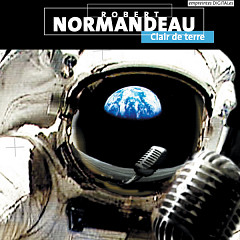
    In Clair de terre (1999) Robert Normandeau makes use of his collection of sounds, gathered during the passage of ten Earth years. In his introduction Normandeau lingers on the peculiarity of humans to historically always place themselves or the world in which they live at ground zero, at the center of the universe. This has been the case, as when the humans believed that Earth was the center, around which the rest of Creation was revolving. Later they thought that their local star was the center. One peculiarity which remains till this day (which Normandeau doesn’t mention) is that the humans of today – especially Western Man – honestly believe that this life is the one and only life, but of course it will in time be obvious even to westerners that we’re passing through a chain of lives, which no one really can estimate the length of – and life in itself does not end; it’s our perception of Time; of beginning, of end, which is wrongly perceived. Normandeau points our attention towards the more practical and widespread cosmic awareness – on the materialistic level –, which began with the first photographs of Earth taken from space, clearly – in a very brute way – placing our home among the stars. Subsequently the camera and its artistic or scientific terms determine this piece. Clair de terre – after an overture – is divided into twelve section, which all “systematically explore the grammar of cinematography”, transposed into the language of electroacoustics. The titles are Cadre étroit (espaces clos) (“Narrow Frame [Close Space]”) – Couleurs primaires et secondaires (“Primary and Secondary Colors”) – Mobilité des plans (“Camera Mobility”) – Montage rythmique (“Rhythmic Editing”) – Montage métaphorique (“Metaphoric Editing”) – Durée des plans (“Duration of Shots”) – Clarté (éblouissement) (“Brightness [Dazzling]”) – Taille des plans (“Proportion of Shots”) – Couleurs ternaires (“Ternary Colors”) – Micro montage: Obscurité” (“Micro Editing: Darkness”) – Cadre large (espace ouvert) (“Wide Frame [Open Space]”). Each of the twelve moments of Clair de terre is “composed of a soundscape, an object’s sound, the sound of a musical instrument and vocal onomatopoeias.” The “Overture” introduces a blipping sound, as from a scientific instrument or probably some monitoring instrument at Kennedy Space Center, because you hear the nervous conversation of people intensely involved in something in the background. The basic rhythm of the blips keep on resounding, but in the bass, in deep, rhythmic waves pounding the shore of the mind, the beaches of human understanding – as sweeping, soaring trebles bore away into deep space, extending our conception of the Universe and ourselves… Other sections of the work are quite different, though, with crunchy micro sounds nibbling at our sleeves, falling like bread crumbs around our kitchen tables, blowing up like sharp dust in our faces, half blinding us as we head for fresh water… In yet other sections deep drones rumble through our conceptions of Time and Space, in a post-romantic delusion of Wagnerian tragedies and large-scale intrigues, involving all the Nordic deities of old. One soundscape has the Doppler effect of a passing train move by in – perhaps – a Pierre Schaeffer homage. There really is no end to the ingenuity of Normandeau at setting these collected sounds of his at work in elaborated, colorful images of imagination. His sonic palette has many colors, many timbres, many surprising – and beautiful – evolutions.

    … deep, rhythmic waves pounding the shore of the mind, the beaches of human understanding — as sweeping, soaring trebles bore away into deep space, extending our conception of the Universe and ourselves…
  • 1
  • 2
  • 3
  • 4
  • 5
  • 6
  • 7
  • 8
  • 9