Sauter au contenu principal
electrocd

Blogue

267 résultats
  • 24
  • 25
  • 26
  • 27
  • 28
  • 29
  • 30
  • 31
  • 32
  • Chemin de fer, Magali Babin dans lowercasesound

    «Commentary», James Coleman, lowercasesound, 10 mai 2002
    vendredi 10 mai 2002 Presse

    From: “JC JC” <james_39@h…>
    Date: Fri May 10, 2002 4:12 pm
    Subject: Magali Babin

    I first became familiar with Magali Babin’s work when she performed in Baltimore, USA’s High Zero Festival of Experimental Improvised Music in 2000, and was immediately attracted to her work. Magali is very active in Montréal’s vibrant experimental music and sound art scene, and primarily works with amplified metal/objects and transducers.

    Acoustic/amplified/contact mic’d metal materials and metallic found objects have had an interesting history in experimental music/sound art/electroacoustic music, ranging from, for example, Harry Bertoia’s “Sonambient” sound sculpture recordings, Xenakis’ “Orient-Occident,” and Einstürzende Neubauten, among numerous others.

    So i was looking forward to her new CD, Chemin de fer, on No Type. I got it a couple of days ago, and it’s been living in my CD player since then. In the face of the aforementioned history, I have to say that Magali’s take, approach, and resultant sonorities and sounds from her chosen sounds and objects are utterly unique and new. She manages to disclose small, mostly quiet, magical, mysterious little universes of sound. Another thing that emerges from listening to this work after enjoying the beauty of the pieces is how literate and articulate Magali is with her chosen materials and tools — there is a very broad language of sound in these recordings that will reward careful listeners. Added bonuses include the piece Pluie de homards which was mixed with the piece “Rain” from the CD “Warm Coursing Blood” by Ian Nagoski, one of the more interesting people working in drone these days, and beautiful packaging. I have a strong feeling that this disc is going to be one of the few releases each year that really speaks to me, and I’m already hooked.

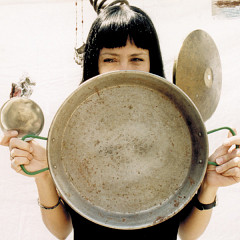
    Another thing that emerges from listening to this work after enjoying the beauty of the pieces is how literate and articulate Magali is with her chosen materials and tools…

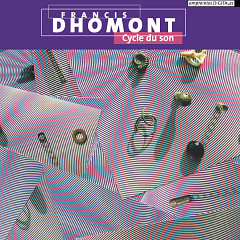
    Cycle du son dans Where’s the Beat?

    «Where’s the CD Review?», Matthew McFarlane, Where’s the Beat?, 6 mai 2002
    lundi 6 mai 2002 Presse

    Francis Dhomont has become legendary both in his native France and his adopted Canada. As one of the founders of what many call the “Montréal School” of acousmatics, Dhomont’s musical style is all his own. How exciting therefore that empreintes DIGITALes has released another disc of his music. This disc is comprised of four linked works: Objets retrouvés, AvatArsSon, Novars and Phonurgie. Each piece pays homage to the history of musique concrète and electroacoustics. Novars strikes me as the strongest of the three. Dhomont has clearly constructed this piece with a lot of thought about musical structure. Quotations of Schaeffer and Machaut never sound forced or inconsistent with the other material. Moreover, it is Dhomont’s placement of sound, the use of repeated gestural fragments and his fabulous feeling of sonic space that makes not only Novars but in general the whole disc wonderful. Without a doubt more difficult than his previous discs like Forêt profonde Dhomont always draws us to his unique sonic environment.

    Dhomont always draws us to his unique sonic environment.

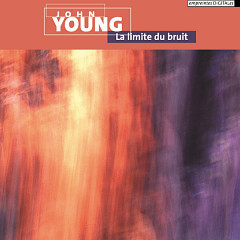
    La limite du bruit dans Brainwashed

    «Review», Graeme Rowland, Brainwashed, 5 mai 2002
    dimanche 5 mai 2002 Presse

    The title translates as ‘The Edge of Noise’ which is very appropriate as this New Zealand based electroacoustic composer takes the everyday sounds of swings, rainfall and breath through magnified journeys and thorough transformations. The inherent noise in all these sounds is honed and clarified to its limit and then stretched and pulled into new elastic shapes, but there’s always a compositional rigour and exactness that keeps this far from chaotic onslaught.

    Pythagoras’s Curtain starts with what sounds like chalk on a blackboard colliding with door knocks. Lots of creaking, low squeaking and rustling follow, panning from speaker to speaker. The sounds are deployed with precision and meticulous attention to stereo picture detail. Sudden drones burst out and rupture against nature. The title refers to the way in which Pythagoras would lecture from behind a curtain and draws a parallel to the way in which acousmatic music requires deep attentive listening divorced from other senses. Similar brutal yet focused transformations occur in the other pieces. Inner takes sharp intakes of breath and overly dramatic exhalations on an asthmatic nightmare trip which opens up gaping windswept canyons from the human lung before collapsing it into wheezing asphyxia and abstracted whirling vortices. There’s a very claustophobic feel to much of this breathscape. Virtual takes recordings of wind through a similar if predictably more violent ride, but the feeling here is of open vastness. The squeaking swing that Time, Motion and Memory hinges on instantly recalls Pierre Henry’s ‘Variations Pour Une Porte et Un Soupir’ but takes on forms far beyond the capacity of old tape splicing, as Young reimagines the swing as a giant pendulum cutting back and forth through other environmental sounds. There’s a thick fog of nostalgic childhood memory gathering for the most moving and haunting track here. It’s soon washed away by the rain falling from the Liquid Sky, in crisp drenched drain swilling eddies. This is perhaps the most varied and violent track by default as the different surfaces that rain hits flood wide sonic spectra. Through academic studio alchemy enabled by empreintes DIGITALes, John Young makes explicit the drama and strangeness of everyday sounds, and draws deep shadows in the spaces between them.

    John Young makes explicit the drama and strangeness of everyday sounds, and draws deep shadows in the spaces between them.

    La limite du bruit dans Where’s the Beat?

    «Where’s the CD Review?», Matthew McFarlane, Where’s the Beat?, 4 mai 2002
    samedi 4 mai 2002 Presse

    In trying to get a grasp on John Young’s musical style and own personal language I wondered whether it might have anything to do with the remoteness of his native New Zealand. Right from the opening work, Pythagoras’s Curtain, Young’s musical style places itself out of the confines of the traditional acousmatic school. It’s the daring simplicity of it all that I like so much. Don’t listen to this disc while bathing your pet parrot or doing your dishes. Sit down, quiet the environment around you and prepare to listen very carefully. Inner, demands the same attention as the first. Young’s exploration of sonic manipulation is wonderful here, as is his conceptual use of space. Unlike the mind chilling drones and loops of recent EA discs, Young explores dry and often nearly extinguishable sounds. Young’s exploration of rain sounds in Liquid Sky is wonderful. Until more than two minutes into the sixteen-minute piece, the sounds are dissected until they are unrecognisable. There is something shocking about all of this. Young throws us for a loop by pulling out his sound microscope and delving into the inner recesses of a few sounds. A very interesting disc.

    It’s the daring simplicity of it all that I like so much.

    Elsa Justel, conférences et création, été 2002

    jeudi 2 mai 2002 Général

    La compositrice Elsa Justel présentera une conférence ainsi qu’un cours de maître au premier festival de musique électronique et électroacoustique en Russie, tenu à Saint-Pétersbourg du 19 juillet au 1er août 2002. Par ailleurs, sa composition acousmatique Gwerz sera créée le 3 juin 2002 lors du 32e festival de Bourges, «Synthèse 2002» (France).

    Installation interactive de fuchs-eckermann

    jeudi 2 mai 2002 Général

    Le duo d’artistes fuchs-eckermann» (Mathias Fuchs, Sylvia Eckermann) présente l’installation interactive Expositur — A Virtual Knowledge Space au musée d’art contemporain Kiasma à Helsinki (Finlande), où plusieurs salles d’expositions de différents musées sont reliées par un environnement de jeu basé sur la technologie Unreal.

  • 24
  • 25
  • 26
  • 27
  • 28
  • 29
  • 30
  • 31
  • 32