Sauter au contenu principal
electrocd

Blogue

113 résultats
  • 11
  • 12
  • 13
  • 14
  • 15
  • 16
  • 17
  • 18
  • 19
  • 26 janvier 2015: Pierre Alexandre Tremblay au CTM Festival à Berlin

    mercredi 21 janvier 2015 En concert

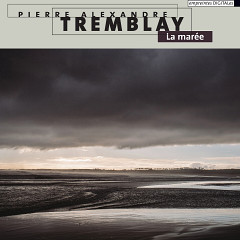
    Au CTM Festival 2015, Pierre Alexandre Tremblay et Sol Rezza se partagent le concert du 26 janvier 2015 au HAU2 — Hebbel am Ufer. Pierre Alexandre Tremblay y présentera la création de la pièce acousmatique asinglewordisnotenough I alors que ses pièces La rupture inéluctable et Still, Again — déjà disponibles sur le disque La marée — seront respectivement interprétées par la clarinettiste Heather Roche et la soprano Peyee Chen.

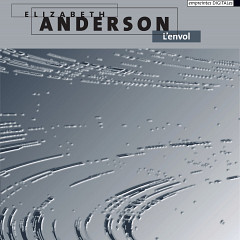
    L’envol dans SEAMUS Newsletter

    «Recording Reviews», Tom Dempster, SEAMUS Newsletter, 1 janvier 2015
    jeudi 1 janvier 2015 Presse

    Spanning twenty years of output, L’envol reflects Elizabeth Anderson’s trajectory, from the dialogic, event — driven, and directly cinematic Mimoyecques, to the abstracted, texture — carried, more deliberate (… and Beyond). This is not to suggest a lack of kinship between then and now; if nothing else, the works presented here point to a galvanization and redoubling of technique. Like a painter applying layers of paint, removing some material, repainting, removing, and covering again, Anderson’s works, obliquely and at times directly, engages with a satisfying process of building, removing, and finding ways to erase delineation. Her sound world is unified as though it were fog marrying a forest at dusk: an obscured but not precisely static system of pitchless textures, with elements slowly coming to light (as in the inexorably chilling yet moving opening to Solar Winds). Throughout these works, Anderson places focus on timbral and spectral space and organic evolution of material, featuring small, yet energetic, flashes of warm light that delicately pull the listener deeper and deeper into these gently hallucinatory worlds.

    One of the more striking works on the collection is 1994’s Mimoyecques, a programmatic work inspired by the eponymous fortress in Marquise, France. Using separate readings about World War II, Anderson collects a kind of private monologue from persons speaking in the languages of prisoners during the War — Bulgarian, French, Czech, Danish — over a dozen, all told. Beyond the crystalline introductory passages open the doors of the fortress, the narratives one by one tumbling forth in what becomes a potent, if not heady, documentary of an invented memory. The narrative moves from French to a superimposition of Hebrew, German, and Russian, and the work builds to a dizzying and visceral climax, with a vocoded chorale of one arising from the collapse of the sonic material.

    Protopia/Tesseract (2005-2007), inspired by Madeleine L’Engle’s A Wrinkle In Time, examines Anderson’s interpretation of spatio — temporal compression. In two movements, the first is a more slowly — evolving sound world, with shimmering, veiled threads that surface and disappear amidst a roiling, warm underpinning. A lightning bolt or a collapse of the universe onto itself and the listener is in the thick of a crowd, which spins away, as though it begins to orbit the background textures (which have, at this point, continued to transform). The second movement — the track which closes out the album — is a luxurious wash of timbres that seems to be in near — constant motion. The ensuing dizzying sonic journey — with strata moving at various speeds against each other — surrounds and consumes the listener, and the material, arresting in its own right, becomes further compelling as the spinning web of sounds somehow transmogrifies into an embrace, which itself slowly dissolves into the ether.

    This ineffable warmth and richness prevails, particularly in the most recent pair of works, Solar Winds (2012) and … and Beyond (2014). Solar Winds — which Anderson constructed in part by incorporating acoustic translations of electromagnetic phenomena — emerges from a true nothing, with perhaps one of the most haunting and affecting opening gestures this side of Norgard; the chime and decay gesture more than a minute in, despite the relative low amplitude intensity, is tremendously effective, garnering a momentary stunned listener. And this is crucial to Anderson’s technique: in an almost Webern — like way, a single small gesture or event in the right part of the spectrum can have the impact of an unexpected rimshot. … and Beyond, a companion piece to Solar Winds, questions the very nature of the universe and the universe beyond one’s own mind. Again mapping astronomical information into the work (though I am compelled to ask how), Anderson creates a quietly lavish shifting plane of textures that ultimately moves into a realm of pulse and rhythm. The work, despite the quasi — programmatic nature of the piece as a vessel to look beyond the known, seems rooted in the very organic and very terrestrial as the work seems to inhale and exhale — and even has a heartbeat (or perhaps two) — as it maneuvers us through an unknown universe. The stunning yet restrained piece concludes with what may be tantamount to an acousmatic question mark.

    Drawing her inspirations from a wealth of subjects — but in this release, predominantly science and speculative philosophy — Anderson’s works are still somewhat spare in texture. Even at their most active and intense, the works are never adipose and remain texturally pellucid, smoldering aural embers that flare and glow, an inviting field of uniform color that inexplicably remains in constant flux, simultaneously drawing us in while engaging our most primordial senses of alertness. The works — rich, eloquent yet efficient, and strangely beguiling — are studies in an intense subtlety and an economy of spectrum coupled with a mastery of pacing, all the more remarkable in how the concentrated material can conjure up and propel the imagination.

    … a satisfying process of building, removing, and finding ways to erase delineation.

    Who Has the Biggest Sound? dans Gramophone

    «Gramophone talks to… Canadian composer Paul Dolden…», Gramophone, 1 janvier 2015
    jeudi 1 janvier 2015 Presse

    … about The Un-Tempered Orchestra and Who Has the Biggest Sound?

    Who Has the Biggest Sound? is the most substantial of the two pieces on the CD…

    In this work, I go on a journey around the world, looking for sounds produced by insects and animals. Who has the most beautiful melody? Who can play the fastest? I found a direct relationship between animals of a specific geographical region and the unique music style from that area — for example, when it’s slowed down, the rhythm of crickets matches flamenco and other Latin rhythms; the rhythm and pitch-bend of barnyard animals matches country and western music. This project suggests that humans hold their musical creative abilities in too high an esteem.

    One wouldn’t necessarily think you were always using sounds from nature…

    I didn’t want a nature-sounding work — you should only hear pure music. But what you are in fact hearing is the sound of insects and animals translated on to musical instruments, and into a musical structure we can understand.

    Are the sounds electronically generated?

    All my music is based on the live performance of instruments. Musicians are hired and recorded one at a time — although I play all my own string parts, from violin to double bass, from banjo to electric guitar. I then do whatever editing is needed before mixing all the tracks together. On average, my ‘virtual orchestra’ comprises 400 members, and the size of different sections changes within a piece or even within an individual movement.

    What’s The Un-Tempered Orchestra about?

    Part of my ongoing quest since the 1980s has been to make us feel vibrations or music in a different way. I find our tuning system quite ugly and its vibrational combinations a cliché. I use the recording studio to create vibration or frequency patterns that you cannot achieve with conservatory-trained musicians in the concert hall. In this particular piece, I’m fascinated with non-octave tuning systems and the emotions and colours they create. When there are no octaves, it forces the ear to feel new sensations.

    What are your musical influences?

    I listen to all types of music from across the world and these genres are put through a huge ‘Dolden filter’ when I sit down to write. Who Has the Biggest Sound? is a piece in which I most directly mimic the colours and gestures of other genres — country, rock, Latin, Baroque — although this has a lot do with the musical material that the insects gave me! But the work isn’t simply a pastiche of styles, as each section is united by the use of the same melodic and harmonic material.

    What can your music offer traditionalists?

    Classical listeners may be turned off by the distorted guitars and pounding drums but an ‘ideal listener’ will be open-minded enough to join me on a journey into microtonal heavy-metal hell and through to sustained, blissful, consonant choirs accompanied by soft instrumental sounds. I believe this ‘ideal listener’ exists in the mind of every artist.

    On average, my ‘virtual orchestra’ comprises 400 members…

    Who Has the Biggest Sound? dans Gramophone

    «Review», Laurence Vittes, Gramophone, 1 janvier 2015
    jeudi 1 janvier 2015 Presse

    For his first new recording in nine years, and 20 years after his breakthrough two-CD set, L’ivresse de la vitesse, which The Wire listed as ‘one of the top 100 recordings of the 20th century’, Montréal-based Paul Dolden reportedly spent 8000 hours in the studio preparing his electroacoustic works Who Has the Biggest Sound? (2005-08) and The Un-Tempered Orchestra (2010) by layering together hundreds of studio hours of live, acoustic recordings, complete with the composer’s own narration at some points. It’s easy enough to throw the resulting 71 minutes into your daily mix at what seems like a reasonable volume level and let it buzz randomly and pleasantly through your daily soundscape. It’s only when you crank up the volume, however, that the impact of Dolden’s conceptual juxtapositioning, combined with the stunning spatial precision of the recording, begins to cook. At times the ideas are so refreshing that they tumble over themselves in almost gleeful haste. And the strong theatrical flow of the 15 tracks of Who Has the Biggest Sound? seem to group themselves into a series of larger episodes — most notably the rambunctious energy of The Saddle Song and My Hound is Out of Harmony, and an absorbing trio of Village Orchestra dance experiments — before concluding inevitably with a track of More Unanswered Questions. For the six tracks of The Un-Tempered Orchestra, despite the occasionally awesome dimensions of its super calliope-sized sound, the nature of Dolden’s philosophical conceit would seem to require close, intimate attention to nuances at those tightly squeezed intersections where space and intonation collide.
    … the ideas are so refreshing that they tumble over themselves in almost gleeful haste.
  • 11
  • 12
  • 13
  • 14
  • 15
  • 16
  • 17
  • 18
  • 19