Sauter au contenu principal
electrocd

Blogue

4252 résultats
  • 549
  • 550
  • 551
  • 552
  • 553
  • 554
  • 555
  • 556
  • 557
  • 21 situations dans Espace sculpture

    «De nouveaux espaces sonores», André-Louis Paré, Espace sculpture, no 59, 1 mars 2002
    vendredi 1 mars 2002 Presse

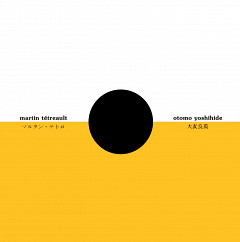
    Dans la lignée de la musique bruitiste, voici des artistes qui font du son une matière à sculpter. Jean-Pierre Gauthier est du nombre. Sur son disque Machines consentantes et Hachures (1999/2000), on entend le son de percussions mécanisées, de flûtes et appeaux automatisés, de tôle de garage vibrante et d’interférence radio tout à fait audible. Ce sculpteur d’instruments bricolés travaille parfois en tandem avec Mirko Sabatini. Mais avec son CD intitulé MK. Orchestrin, le batteur italien s’est offert un disque solo où s’entend avec plaisir le fruit d’une longue recherche sur le son et la mécanique de l’instrument. Martin Tétreault est lui aussi un artiste du son que l’on croise régulièrement dans le milieu des arts visuels. Un de ses nombreux disques fut réalisé avec le Japonais Yoshihide Otomo. Dans 21 situations (AM 069), ils ont manipulé autrement que les DJs des tourne-disques produisant ainsi une rencontre sonore inusitée.

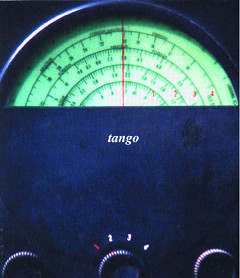
    Tango dans Revue & Corrigée

    «Critique», Pierre Durr, Revue & Corrigée, no 51, 1 mars 2002
    vendredi 1 mars 2002 Presse

    L’auditeur éventuel ne s’attend bien sûr pas à une compilation des meilleurs tangos. Peut-être et plus sûrement pense-t-il à un détournement de cette musique? Ou alors à une vision sonore de la déconfiture argentine, un peu premonitoire, certes?

    En fait, il n’y a pas réellement de rapport avec le tango. Ou alors de manière très fortuite, si le récepteur de radio accroche dans sa recherche un émetteur branché sur ce langage musical.

    Le Tango de Martin Meilleur est en effet un montage sonore réalisé à partir de sons bruts captés sur les fréquences en ondes courtes, au moyen de divers récepteurs. Ces captations ne sont pas retraitées — le lecteur se rappelle peut-être Devil’s music de Nicolas Collins retraitant, lui, la matière sonore captée — mais collées, juxtaposées, quelquefois amplifiées. Le résultat en est un enorme patchwork radiophonique mondial: l’auditeur passe d’une émission culinaire ou d’un bout de musique à une radiodiffusion d’un spectacle ou à une retransmission d’informations diverses, intégrant tous les sons parasites, naturels (genre perturbation météorologique) ou inherents à la qualité du récepteur. La mondialisation à domicile, en somme.

    … un enorme patchwork radiophonique mondial…

    3 mars 2002: Dufort présente sa symphonie portuaire

    vendredi 1 mars 2002 En concert

    Louis Dufort est le compositeur invité cette année pour diriger la Symphonie portuaire aux abords de Pointe-à-Callière (Montréal), le dimanche 3 mars 2002 à 14h. Intonarumori, pièce pour bande, cloches et sirènes manipulées en direct par un logiciel de sa conception et concue spécialement pour l’événement, sera aussi retransmise en direct sur les ondes de la Chaîne culturelle de Radio-Canada.

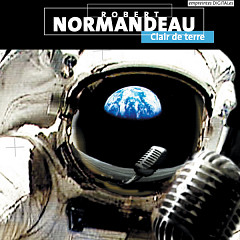
    Clair de terre dans Revue & Corrigée

    «Critique», Pierre Durr, Revue & Corrigée, no 51, 1 mars 2002
    vendredi 1 mars 2002 Presse

    Il y a quelque chose de paradoxal dans cet enregistrement de Robert Normandeau. Les techniques mises en œuvre dans cet enregistrement s’apparentent a des études à partir d’un son bien définit retravaillé par les techniques des studios électroacoustiques: le shakuhachi (flûte japonaise), la voix, divers instruments subissent ainsi divers traitements sonores. Dans la musique dite «contemporaine», cela aboutit trop souvent à des musiques froides et sans âme. Et pourtant il s’agit là de véritables séquences narratives, à l’image des titres — celui de l’album, par ailleurs pièce principale du recueil, précédé par Malina et Erinyes, respectivement titre d’un roman autrichien et nom des «gardiennes de la vie humaine» selon la mythologie grecque. La pièce la plus prenante des deux pour l’auditeur est certainement la seconde, avec parfois cette mise en abîme de la voix, proprement surprenante voire inquiétante et certaines sonorités ne sont pas sans rappeler les «oiseaux» de Hitchcock. La longue suite Clair de terre, apparaît plus conceptuelle dans son propos: se servant d’une des images les plus marquantes de la seconde moitié du siècle écoulé, Robert Normandeau construit une douzaine de séquences évoquant par leur intitulé des techniques cinématographiques mais destinées à relativiser ou — c’est selon — à revaloriser des sons plus ou moins communs perçus avec le même regard distancié que celui du voyageur de l’espace. Mais l’utilisation qu’il fait des sons issus de divers instruments, objets ou situations, a le mérite d’être des plus concrets, laissant là aussi libre cours à l’imaginaire de l’auditeur, qui peut tisser sa propre trame narrative, avec quelques points d’appui plus ou moins imposés par l’identification du son traité.

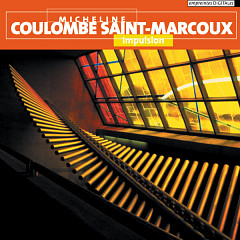
    Impulsion dans The WholeNote

    «Review», David Olds, The WholeNote, no 7:6, 1 mars 2002
    vendredi 1 mars 2002 Presse

    Perhaps more artistically creative than the scientific genius Hugh Le Caine, Quebec composer Micheline Coulombe Saint-Marcoux (1938-1985) was another Canadian pioneer in the field of electroacoustic music. In 1968, at the suggestion of Iannis Xenakis, she went off to Paris to study at the Groupe de recherches musicales and also attended classes with Pierre Schaeffer, one of the original exponents of “musique concrète.” Returning to Montréal in 1971 she worked with colleagues Otto Joachim and Gilles Tremblay to establish an electroacoustic studio at the Conservatoire de musique de Montréal where over the next fifteen years she created an impressive body of work. Coulombe Saint-Marcoux made significant contributions in a variety of areas: exploration of the voice as an instrument; the integration of electroacoustics with other artistic disciplines; reflection on the role of women composers; and experimentation with spatial trajectories to make the movement of sound more palpable to the listener.

    Although many of her compositions include live performance with pre-recorded tape, the disc Impulsion focuses on the purely electroacoustic aspects of Micheline Coulombe Saint-Marcoux’s compositional activity. It is a fitting tribute that this important historic document should be released by the Canadian success story empreintes DIGITALes, a Montréal label that twelve years after its founding boasts 65 titles in its catalog, featuring 76 composers and a total of 344 electroacoustic compositions. One suspects that none of this could have been achieved without the groundwork laid by the likes of Hugh Le Caine and Micheline Coulombe Saint-Marcoux.

    Coulombe Saint-Marcoux made significant contributions in a variety of areas…

    The Freest of Radicals, No Type dans Ampersand Etcetera

    «Review», Jeremy Keens, Ampersand Etcetera, no 2002_3, 28 février 2002
    jeudi 28 février 2002 Presse

    DIFFUSION i MéDIA, the Canadian electroacoustic hub (there are a few reviews lurking in back issues around here), had an earlier intersection with a different cultural axis with the final Asphodel sombient set A Storm of Drones which included a disk of empreintes DIGITALes excerpts. Now they have entered into an agreement with No Type to release disks – this compilation begins an arrangement that will see CDs and 12” singles from No Type. And No Type should need no introduction – it is (to my mind) the best web music label and a credit to the vision of David Turgeon. He has released, on a regular basis, MP3 singles (which are really multitrack eps and minialbums, 65+ to date, following earlier excursions into longer albums) that offer an eclectic range of surprising and satisfying musics. The diversity is astonishing from glitch through ambient into beaty techno and various other forms of techno – you may not like it all, but it is a wonderful musical resource and education. And I am expecting the same from this 36 track double album (which when I read that it was coming guessed it would be a ‘best of’ [not in itself a bad thing], but it is all new). The structure of the set reflects the two broad contexts of No Type: of the two disks, Bait contains the glitchy ambient, while Switch has more rhythmic melodic techno. But neither exclusively. Now, a 36 track compilation is a terror to review – too much to try and describe each track, and unfair to pick favourites, I’ll go for the impressionistic response as we move through them.

    Running through Bait: droning fuzzy electro with deep slow, moody; more droning, faster and active, building, buzzy, deep noises, talking; light bubbly driving electro, good mood change; minimal tones, crackles that build and fade, sudden eruptions; complex but musical collage – layering crackling with chimes, clockwork sounds, metal tones build, fade; minimal modulated loop – old synth?, jumpy echoed; music trying to get through a crackling bed, very separated cacklefuts swaps with big tones; spacious collage of chimes (some looped to make a rhythm), thumb piano, gong, clattering metal (Harpo Marx!) and scooped pebbles, opens the cd out again; tones and unstable drum machines, builds, a break of crackles and peeps, returns; loungey pulses of electricity rhythms with faint keyboard wisps, gentle; electroacoustic machines click buzz dits, bursty; demented jazz, live drums whistles and swirls, jumpy; a slow trip through blips, scratches and thuds; building slow ambient pulsing like a breathing beast, simple piano later; noisy crackling, harsh, balanced by a smooth beat; the numbers recordings trying to emerge (eventually succeeding) from under static and through a groovy, edged techno; off-key guitar with drums, slow and surprising, piano and strings; guitar processed and looped a la Zammuto; chattering noises alternate with massed whooshes with inner subtleties.

    Now into Switch disc (or is it the other way around?): rising tones weave into madness providing a disorienting opening; complex groovy techno; shifting between slow sampley, computer game rhythms, slow rolling tones – nice variation; electroacoustic playing with kitchen and other loops; processed voices, moving between lighter and darker moods, varies a lot; looped dirty D’n’B, horns later; rhythm and movement through crackles distortion noise, hidden voices; another electroacoustic playful piece – walking, accordion, pulses, bells, piano; nice breezy rapid clicks twops perky melody; choppy D’n’B; segues into clicky surface with lovely stuff going on behind; into smooth loungey, slow scrapey squiggles; mysterious and complex forward and backward tones, crackles, grows; rapid clicky cd jumps, slow piano over; tonal and complex rhythms combined; dirty noises and driving techno; edgy crackling with a distant melody to take us out.

    A well constructed and nicely balanced set – there are many ‘names’ from the No Type roster, but also other voices adding breadth and interest for those familiar with the label. Generosity in positions means most tracks are short – few get beyond 6 minutes – but with enough time to display their sounds. Generous for the buyer too, as it is single-CD priced: go out and buy it.

    … No Type should need no introduction — it is (to my mind) the best web music label…
  • 549
  • 550
  • 551
  • 552
  • 553
  • 554
  • 555
  • 556
  • 557