Sauter au contenu principal
electrocd

Blogue

4252 résultats
  • 92
  • 93
  • 94
  • 95
  • 96
  • 97
  • 98
  • 99
  • 100
  • Espaces tautologiques dans Cultuurpers

    «(On)gehoord in December: Zo dichtbij dat de hamers tegen je voorhoofd slaan», Sven Schlijper, Cultuurpers, 17 décembre 2016
    samedi 17 décembre 2016 Presse

    […]

    Hamers tegen je voorhoofd

    Geluidkunstenaar en componist James O’Callaghan presenteert vanuit Montréal een viertal akoesmatische werken die het midden houden tussen hedendaags-gecomponeerde muziek, concrète experimentalisme en sound art-installatie. O’Callaghan heeft een zeer verfijnd oor voor kleuring van klanken die hij aantreft in omgevingsgeluid, found sounds, ruimtelijke akoestiek, maar ook in minutieus onderzochte typische eigenschappen van timbres van akoestische instrumenten.

    O’Callaghan is uiterst nauwgezet en kundig in het tonen van niet alleen deze brede variëteit aan materialen, maar evenzeer de muzikale vorm. Die vorm lijkt in eerste instantie nauwelijks tot geen coherentie te hebben en bol te staan van toevalligheden. Bij nadere beluistering echter blijkt O’Callaghan’s werk een meeslepende viering van niet alleen het veelkleurige palet, maar ook van resonanties die hem zelf verbazen. Dat laatste vindt hij alleen al door de herhaling van procedures: imitatie, versterking, verdichting, stapeling, herneming.

    De componist zet de toehoorder midden in de piano, waarbij snaren die tot het uiterste gespannen worden voor ze knappen. Ze galmen tussen een subtiel gekletter van waterdruppels, terwijl de klankkast als woodblock gebruikt wordt en de hoogste noten door pure sinusgolven tot voorbij de gehoorgrens worden doorgetrokken. Alle geluiden staan tot elkaar in een organische relatie die de avontuurlijke luistergang van de componist presenteert. De cd is daar een momentopname van.

    O’Callaghan vertelt een verhaal in geluid dat hij samenstelt uit een veelheid aan originele klanken. Die tocht zélf heeft minimaal even veel mogelijke ‘resultaten’. Dat geldt in live-uitvoering, maar ook voor playback in de concertzaal tot aan de stereo thuis of per hoofdtelefoon onderweg. De nodeloze herhaling is bij O’Callaghan dan ook vooral niet versteend, maar een open uitnodiging ruimten te blijven verkennen, verklanken en beluisteren. Als het moet met je oor in een vleugel, zo dichtbij de hamers dat ze tegen je voorhoofd slaan.

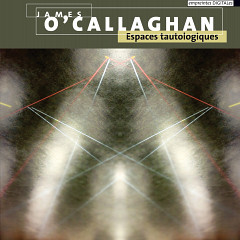
    O’Callaghan heeft een zeer verfijnd oor voor kleuring van klanken die hij aantreft in omgevingsgeluid, found sounds, ruimtelijke akoestiek…

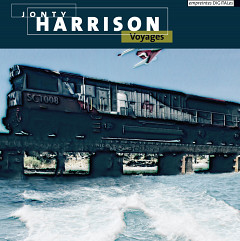
    Voyages dans 5:4

    «New Releases», Simon Cummings, 5:4, 4 décembre 2016
    dimanche 4 décembre 2016 Presse

    In Espaces cachés and Going / Places, two recent works by Jonty Harrison on a CD called Voyages from empreintes DIGITALes, the ‘actual’/’virtual’ interplay emerges entirely from Harrison’s use of field recordings. Specifically, the way he shapes and positions them into large-scale tapestries that exist at the delicate liminal point between authenticity (raw and untouched) and artifice (clearly juxta-/superimposed). The latter is emphasised throughout the fourteen minutes of Espaces cachés, something of an essay in qualitative shifts and jump cuts between assembled groups of sound sources. The effect is cinematic, the episodic nature of the piece resembling a sequence of discrete ‘scenes’ — which somehow declare and defy their artificiality at the same time — demarcated by brief moments of disorientation. As its modest but ambitious title suggests, Going / Places doesn’t simply expand this idea, it explodes it, resulting in a 60-minute soundscape in which the structural divisions are no longer clear-cut and often themselves feel like an integral part of the activities captured in the field recordings. At its world première at HCMF 2015 I wrote about the “transparency of Harrison’s methods of collage and juxtaposition”, resulting in music that “certainly isn’t ‘electronic’, and one even hesitates to call it ‘acousmatic’”. That’s even more the case in this two-channel version, which sounds awesome through headphones (in no small part due to the fact the sounds were recorded ambisonically) and has the effect of turning one’s listening space into a vivid kaleidoscopic whistle-stop tour of the globe. But it’s more collage than reportage, and Harrison’s moulding of the recordings into complex fabrics turns Going / Places into a stunningly vivid piece of uncanny metarealism that encapsulates both the physicality and the psychology of the present experience together with aspects of memory and anticipation.

    … a stunningly vivid piece of uncanny metarealism…

    Pierre Alexandre Tremblay dans 5:4

    «HCMF 2016: Seth Parker Woods […] », Simon Cummings, 5:4, 26 novembre 2016
    samedi 26 novembre 2016 Presse

    Friday at HCMF began with a recital by rising star cellist Seth Parker Woods. I’ve had the opportunity to see Woods play once before (at HCMF 2014) and the experience was a highly impressive one, so I was very much looking forward to seeing him in action again. He did not disappoint, performing four challenging works, two of which involved live electronics. […] The unquestionable highlight of the concert, though, was Pierre Alexandre Tremblay’s asinglewordisnotenough3 (invariant), which provided both a composition masterclass in its seamless, aurally non-hierarchical interaction between acoustic and electronic, as well as a performance masterclass in its bravura display of frantic virtuosity from Woods. The work’s narrative was excellent, progressing through a series of evolving episodes each fuelled by the cello, many of them rhythmically taut (though never sounding metrically fixed) with a tendency later to expand out into more sustained soundscapes where the cello’s material was more buoyant. Utterly thrilling, and Woods unstoppable performance was outstanding. […]

    … a composition masterclass in its seamless, aurally non-hierarchical interaction between acoustic and electronic…
  • 92
  • 93
  • 94
  • 95
  • 96
  • 97
  • 98
  • 99
  • 100